Home » Industries » Retail and FMCG » AI‑Driven Demand Forecasting & Predictive Analytics
AI-driven demand forecasting and predictive analytics are critical for retail and FGC organizations to anticipate customer demand, optimize inventory, and improve supply chain efficiency. These solutions leverage advanced analytics and machine learning to provide accurate forecasts and actionable insights.
However, many organizations still rely on manual forecasting, historical data analysis, and disconnected systems, leading to inaccurate predictions, overstocking, stockouts, and lost revenue opportunities. This impacts operational efficiency and customer satisfaction.
By integrating these capabilities, INT. enables retail and FGC organizations to improve forecast accuracy, optimize inventory, and drive data-driven growth.
Retailers need forecasting tools that are predictive, adaptive, and omnichannel-aware — built to handle uncertainty, not just history.
Shared demand view for category managers, planners, vendors, and supply chain partners
Predict return rates and plan profitable exit strategies for low-velocity products
Smart replenishment triggers that balance cost of stock vs. cost of lost sale
Distinguish between footfall-based demand and app/web/marketplace patterns
Model what-if scenarios for BOGO, bundles, flash sales, and optimize discount depth
Auto-detect demand spikes from social mentions, web traffic, loyalty behavior, or search volume
Hyper-granular predictions across product, location, and time dimension — auto-refreshed daily
Combine sales history with weather, seasonality, holidays, influencer trends, and POS velocity
Combine sales history with weather, seasonality, holidays, influencer trends, and POS velocity
Hyper-granular predictions across product, location, and time dimension — auto-refreshed daily
Auto-detect demand spikes from social mentions, web traffic, loyalty behavior, or search volume
Model what-if scenarios for BOGO, bundles, flash sales, and optimize discount depth
Distinguish between footfall-based demand and app/web/marketplace patterns
Smart replenishment triggers that balance cost of stock vs. cost of lost sale
Predict return rates and plan profitable exit strategies for low-velocity products
Shared demand view for category managers, planners, vendors, and supply chain partners
In modern retail, the edge doesn’t come from selling more — it comes from anticipating smarter.
Analyze past sales data, seasonal trends, and demand fluctuations
Define scalable AI models for demand prediction
Connect ERP, POS, and supply chain data sources
Build models and simulate demand scenarios for planning
Ensure reliability, precision, and continuous model improvement
Launch models and refine predictions based on real-time data
We build intelligence at the core of your demand stack — connecting storefront, inventory, weather, web, and behavior to deliver decisions, not just reports.
Built using industry-specific datasets and retail ontology — from fashion to electronics to groceries
Fine-tuned to your product categories, store clusters, and planning rhythms
Real-time sync with stock, transactions, campaigns, and shipment schedules
Visualize prediction accuracy, variances, and explainability across SKUs and stores
Handle millions of daily forecasts with cloud-native infrastructure
Suggest ideal mix per store or region — based on margin, trend velocity, and past lift
With INT., your forecasts adapt faster than the market — and get sharper with every cycle.
INT. combines retail expertise with advanced AI and analytics to deliver forecasting solutions that improve accuracy, reduce costs, and enhance decision-making.
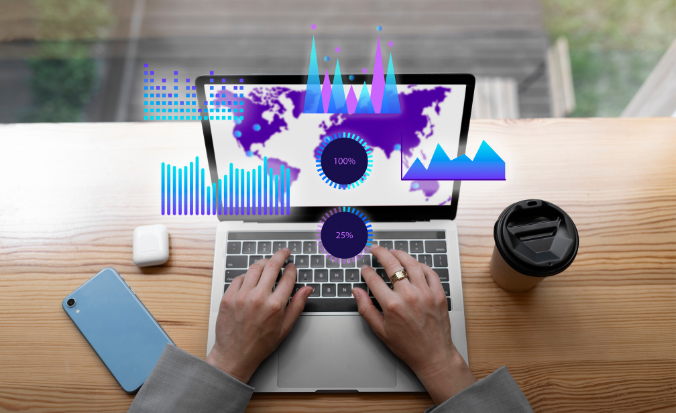
We’ll benchmark your current forecasting models and identify where machine learning can unlock higher margins and lower missed opportunities.
You’ll receive:
INT. is a leading provider of AI-driven forecasting and analytics in retail and FGC, enabling organizations to improve demand planning, optimize inventory, and drive data-led growth with 28+ years of expertise.






AI-driven demand forecasting helps retailers and FMCG brands analyze purchasing patterns, seasonal trends, and customer behavior to predict demand more accurately. Combined with AI & Analytics and Cloud-based data systems, businesses can optimize inventory planning, reduce overstocking and stockouts, and improve supply chain efficiency across distribution networks.
Predictive analytics enables retail and FMCG businesses to anticipate market fluctuations, optimize procurement, and improve distribution planning using real-time and historical data. Integrated with Digital Engineering and Managed Services, predictive systems help businesses improve operational visibility, reduce delays, and ensure better inventory movement across supply chain operations.
AI-driven forecasting helps retailers maintain product availability, optimize replenishment cycles, and improve delivery timelines. Combined with Customer Experience and CRM Services, these capabilities help businesses deliver personalized shopping experiences, reduce fulfillment issues, and improve customer trust and engagement across omnichannel retail environments.
Predictive analytics solutions help FMCG businesses identify sales trends, understand consumer demand, and optimize pricing and promotional strategies. Integrated with AI & Analytics and Integrated Digital Marketing services, these insights support faster decision-making, improved campaign planning, and more efficient allocation of operational and marketing resources.
Cloud & DevOps services provide the scalability, processing power, and operational reliability required for AI-driven forecasting platforms. Combined with Managed Services and Digital Engineering, cloud-enabled systems help retailers process large datasets efficiently, improve platform performance, and ensure real-time analytics accessibility across business operations.
Businesses should look for expertise in AI & Analytics, Digital Engineering, Cloud infrastructure, CRM Services, and retail operations. A strong technology partner should understand forecasting models, consumer behavior analysis, inventory optimization, omnichannel commerce, and scalable data ecosystems tailored to retail and FMCG business environments.