

Executive Summary
Financial institutions are among the most targeted organizations for cyberattacks due to the sensitive customer and financial data they manage. As digital banking, cloud adoption, and online transactions continue to grow, maintaining a strong cybersecurity posture has become increasingly challenging. Managed security services help banks and financial institutions continuously monitor threats, respond to incidents, and maintain compliance while allowing internal teams to focus on core business priorities. In 2026, outsourcing security operations has become a strategic investment for building resilient and secure financial ecosystems.
- Financial institutions face increasingly sophisticated cyber threats.
- Continuous monitoring helps identify and respond to risks faster.
- Managed security improves compliance and operational resilience.
- Expert security support enables secure digital transformation.
Introduction
The financial services industry is rapidly embracing digital innovation to deliver seamless customer experiences and improve operational efficiency. However, this transformation has also expanded the attack surface for cybercriminals targeting banks, payment systems, and financial platforms.
Cyberattacks such as ransomware, phishing, account takeovers, and insider threats can lead to significant financial losses, reputational damage, and regulatory penalties. To effectively address these challenges, financial institutions require around-the-clock monitoring, proactive threat detection, and rapid incident response.
Managed security services provide the expertise, technologies, and continuous protection needed to safeguard critical financial operations. Looking to safeguard your banking operations against evolving cyber threats? Talk with our cybersecurity experts to build a secure, future-ready financial ecosystem.

What Are Managed Security Services?
Managed security services involve outsourcing cybersecurity operations to specialized providers that continuously monitor, detect, investigate, and respond to cyber threats.
These services typically include:
- Security monitoring
- Threat detection and response
- Vulnerability management
- Incident response
- Security reporting
- Compliance support
This approach enables financial organizations to strengthen their cybersecurity capabilities without maintaining large in-house security teams.
Key Benefits for Financial Institutions
24/7 Threat Monitoring
Cyber threats can occur at any time, making continuous monitoring essential.
Round-the-clock monitoring helps organizations:
- Detect suspicious activities early
- Respond quickly to security incidents
- Reduce attack impact
- Improve overall security visibility
Continuous monitoring minimizes business disruption and strengthens operational resilience.
Faster Incident Response
The speed of incident response often determines the severity of a cyberattack.
Dedicated security teams help:
- Investigate security alerts
- Contain cyber incidents
- Reduce recovery time
- Restore critical services efficiently
Rapid response reduces both financial and operational risks.
Enhanced Regulatory Compliance
Financial institutions must comply with strict regulatory and data protection requirements.
Managed security providers help organizations:
- Monitor compliance controls
- Generate audit reports
- Maintain security documentation
- Support regulatory readiness
This simplifies compliance while reducing organizational risk.
Stronger Enterprise Cybersecurity
Modern enterprise cybersecurity solutions combine advanced monitoring technologies, threat intelligence, AI, and automation to provide comprehensive protection across enterprise environments.
These solutions help financial institutions:
- Protect customer data
- Secure digital banking platforms
- Reduce cyber risks
- Improve overall cyber resilience
A proactive cybersecurity strategy enables banks to stay ahead of evolving threats.
Access to Security Expertise
Cybersecurity requires highly specialized skills that are often difficult to build internally.
By leveraging experienced security professionals, financial institutions gain:
- Threat intelligence expertise
- Security best practices
- Advanced monitoring capabilities
- Continuous security improvements
This ensures organizations remain protected against emerging cyber risks.
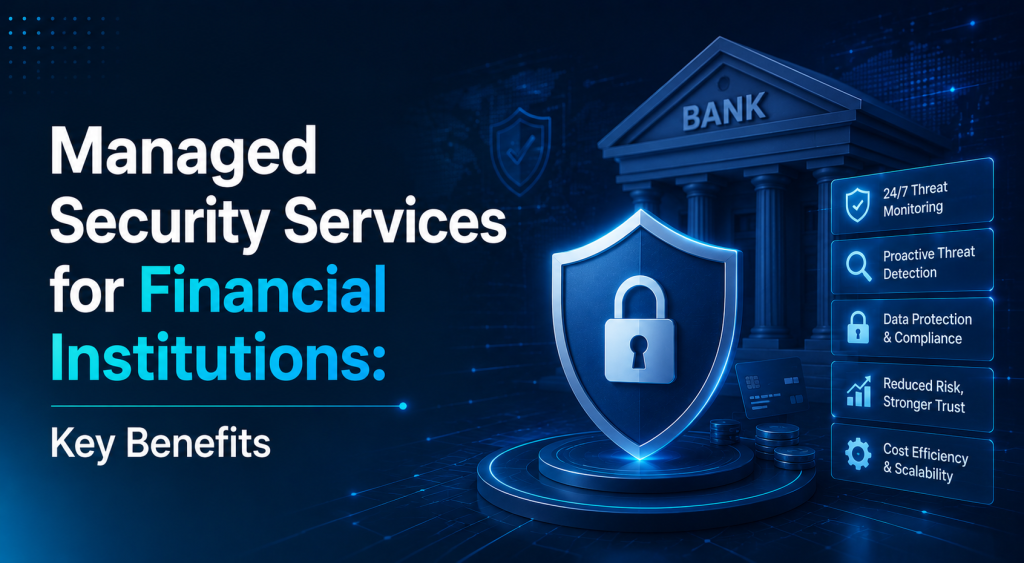
Why Financial Institutions Choose MSS Services
Many banks and financial organizations are adopting MSS Services to strengthen security while improving operational efficiency.
Key advantages include:
- Reduced operational burden
- Scalable cybersecurity capabilities
- Lower infrastructure costs
- Continuous security monitoring
- Improved business continuity
Managed services allow internal IT teams to focus on innovation while experienced security specialists handle evolving cyber threats.
Future of Managed Security in Financial Services
Cybersecurity is becoming increasingly intelligent and automated.
Future trends include:
- AI-powered threat detection
- Zero Trust security architectures
- Predictive threat intelligence
- Cloud-native security monitoring
- Automated incident response
Financial institutions that embrace modern managed security strategies will be better positioned to protect customers, maintain compliance, and support digital transformation.
Conclusion
As cyber threats continue to evolve, financial institutions require more than traditional security tools to protect their digital environments. Managed security services provide continuous monitoring, rapid incident response, regulatory support, and expert guidance that strengthen cybersecurity resilience.
By adopting enterprise-grade security strategies, banks can reduce cyber risks, improve operational continuity, and deliver secure digital experiences that build customer trust and support long-term growth.
Protect your financial institution with INT.’s managed security services designed to strengthen cyber resilience and ensure regulatory compliance. Let’s Connect.
FAQs
1. What are managed security services?
Managed security services are outsourced cybersecurity solutions that provide continuous monitoring, threat detection, incident response, and security management.
2. Why are managed security services important for financial institutions?
They help protect sensitive financial data, improve regulatory compliance, reduce cyber risks, and provide 24/7 security monitoring.
3. What are enterprise cybersecurity solutions?
Enterprise cybersecurity solutions are integrated technologies and services that secure networks, applications, endpoints, cloud environments, and sensitive business data.
4. How do managed security services improve compliance?
They support continuous monitoring, security reporting, audit readiness, and adherence to regulatory requirements.
5. Why are MSS services becoming more popular in banking?
MSS services provide access to cybersecurity expertise, advanced technologies, and continuous protection while reducing operational complexity and security costs.