Tag: technology

Here is how to get started with AI and ML for your business

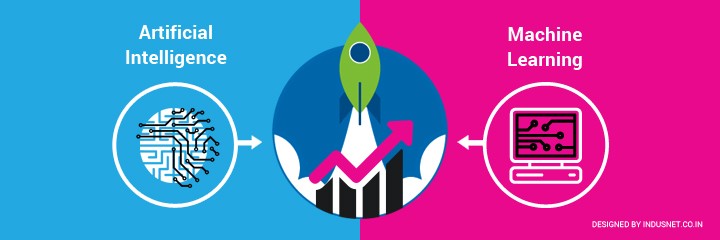
Who could possibly blame the IT manager or the CEO of a company, who has watched Spike Jonze’s 2013 film Her and concluded that artificial intelligence and machine learning signal something ominous? While most news headlines either glamorize or sensationalize artificial intelligence, the reality is much more nuanced. Artificial intelligence has already begun to revolutionize businesses all over the world, and it is only a matter of time before everyone else will have to play catch-up. Delaying the adoption of artificial intelligence and machine learning comes at the cost of being left behind, and eventually having to hurriedly implement AI and ML. The time is ripe now to adopt artificial intelligence and machine learning in small and incremental phases, using agile methodology. Let us take a look at why and how every business in any industry vertical should implement AI and ML, without affecting one’s core business. Understanding machine learning and artificial intelligence in simple terms Artificial intelligence, in layman’s terms, is a machine’s (computer’s) ability to mimic human cognition, such as learning and problem-solving. Its applications and scope range from building autonomous cars, advanced medical treatments, Internet of Things (IoT), advanced statistics and computational intelligence, etc. Machine learning is the ability of computers to learn without explicit programming. In other words, machines can be programmed to learn independently, without human supervision or intervention. While machine learning has many applications, the most popular application is in the form of deep learning, which is about building mathematical algorithms that process large amounts of data. These algorithms are often called neural networks, as they mimic human information processing. Artificial intelligence and machine learning will be used by almost every business to detect anomalies, recommend products, improve services, or predict trends in the very near future. More than 90% of the 100 early-stage startups we met in the last six months plan to use machine learning to improve customer experience. Currently, businesses that have already implemented AI and ML can be classified into two groups: those that use AI/ML in their applications and services, and those that build and develop AI and ML middleware for others. Get Started with Artificial Intelligence and Machine Learning Now If you feel intimidated by the quick advent of AI and ML, allow us to put your worries to rest. Instead, make the best use of AI and ML by keeping aside technicalities, and by identifying simple and non-business critical areas. Look at AI and ML as an innovation project that can be started small, and built upon gradually as the technology evolves. It is not necessary to bring dramatic and disruptive changes to your business. Practically, you can enhance every area of your business in small and non-critical ways using AI and ML. Let us look at possible scenarios in each department. Here are some of the areas where you can introduce AI/ML without affecting your core business: Business intelligence Predictive analysis helps you access trends, predict outcomes, and provide better solutions. Use old databases for rich insights, or merge AI with your BI tools to access insights and predict outcomes. Customer service Choose from improving search results, boost sales, retargeting potential customers, personalizing content, engaging visitors with a chatbot that answers queries related to products, etc. The sky is the limit. Enterprise asset management Use AI to manage contracts and assets, predictive behavior analysis and alarms, automated intelligent processing and standardization of data. Etc. Customer Experience Provide AI chatbot assistants to your customers, or use deep insights to enhance customer experience. Use machine learning to improve search results based on user behavior. Human resource Surprise your employees with accurate appraisals, incentives, and payouts. AI does not understand human concepts of prejudice and bias. Sales and marketing Design and implement sales & marketing campaigns based on deep insights derived from machine learning and AI. Predictive analysis can help you develop marketing campaigns that are prophetic in nature. Manage your social media without having to be online 24/7. Product development and production Machine learning is most often used in product development and service enhancements. You can use machine learning in the most innocuous manner to improve your product development and production. Procurement and inventory management Track your raw materials, predict when you might need to replenish, and intelligently procure the best at the lowest rates. Distribution Monitor fleets, track packages, and provide shipping and delivery services that are on the dot. There’s a storm approaching? Predict it before it happens, and have a contingency plan. Strategize AI/ML implementation Now that you know AI and ML can be implemented incrementally in almost all business areas, it is time to strategize the entire implementation process. In 6 easy steps, you can implement and use artificial intelligence and/or machine learning as part of your innovation project, without interfering with your core business. Identify safe targets to innovate Think about the problems you currently have in your business, and which one is the least critical to everyday operations, if changes were brought. Choose from the list above, and identify targets that could be safely innovated with AI or ML. Look around for inspiration If you are unable to decide what might be a safe target, look at what your competitors are doing. If none of your competitors are doing anything related to AI or ML, you might even want to find inspiration in adjacent industries. Assess your budget for innovation It is advisable to start small, as that helps you remain confident throughout your innovation project. Assess how much you are willing to spend on bringing innovation to your chosen area. Choosing open source technologies is another tried and tested method to innovate, as it costs lesser. Look for agile vendors Once you identify the area you wish to innovate, look for vendors with similar agile mindsets who believe in adopting and implementing technology incrementally. Implement AI innovation slowly but steadily As discussed earlier, it is important to adopt artificial intelligence slowly, as it gives you time to adjust to the

Read More »

Top Implications of Cyber Attacks on Enterprise Mobility Software

With an increasing number of companies opting for enterprise mobility software, the question of securing data and seeking protection from cyber attacks has become an issue of paramount importance. It is now becoming clear that companies need to subscribe to enterprise mobility management (EMM), and strong security services in order to protect data and privacy. While data, technology, infrastructure, and productivity are all hit when cyber attacks take place, there can also be legal and unforeseen implications that may put businesses at risk, if adequate measures aren’t taken. Key facts By 2021, the cost of damage caused by cyber crimes is expected to shoot up to $6 trillion, twice the amount since 2016. Companies spent $80 billion on cybersecurity services and products in 2016. By 2021, this expenditure is likely to exceed $1 trillion. More than 4 billion people will be online by 2020, which means, there will be so many potential hacking victims. Bloomberg reports that the next WannaCry attack can cost insurers $2.5 billion. There are dozens of Android devices that come pre-loaded with malware. An astounding 8.5 million cyber attacks were conducted in 2016 just on mobile devices. Ponemon mobile security survey revealed that only 39% of respondents had some level of mobile security feature in place. The rest were unprotected. Let us take a look at the top implications of cyber attacks on enterprise mobility solutions. Loss of data Most cyber attackers are now aware that a large amount of data is stored on applications and mobile data servers. If they are trying to harm a certain corporate entity, this is where they usually go. Moreover, cyber attacks may take down entire sites, including mobile data, which can lead to irretrievable loss of data. In a survey conducted by Economist Intelligence Unit (EIU) recently, private intra-company communications were held to be the most important asset by 14% of respondents, while strategic plans & initiatives and regulated data were held to be important by 12% of respondents each. Customer information was deemed to be the most important asset by 10% of the survey respondents. This study was sponsored by VMWare. The solution is to invest in data storage plans that secure all your files and ensure against loss of data. Also, these services make copies your data so that nothing is lost forever, even if you are attacked sometime. Consider contacting both cloud and on-premises storage companies. Data theft and misuse A potential cause for concern is cyber-attacks leading to theft of data. This is a more serious situation than the loss of data, as sensitive information may be used by malicious entities for their own ulterior motives. In fact, theft of data and its misuse has been described as the single most serious implications cyber-attacks. McAfee recently revealed that dead apps which haven’t been updated or secured are particularly vulnerable targets for cyber-attacks and data thefts. McAfee Mobile Threat Research revealed that more than 4,000 apps on Google Play were discarded without informing users, making their data vulnerable to misuse. To protect yourself against theft of data, invest in a good encryption service and make sure that all your dates encrypted and saved securely. It is also important to restrict access to sensitive data depending on time, place and person. Consider an overhaul of your BYOD policy as well. Impersonation and identity theft While theft of data is a serious concern, what troubles many e-commerce entities is that cyber attackers can easily steal consumer information and customer-related private information. This can lead to serious implications such as impersonation and identify theft, both of which have been described as anxiety-provoking for companies. Luka Malisa et al (2016) published a conference paper in 2016, in which they revealed that among the 150,000 mobile apps they analyzed, more than 40,000 impersonation cases were detected. They concluded that impersonation detection was possible if closer scrutiny was given to user interfaces of these apps. To protect yourself and your customers from impersonation and identity theft, invest in encryption and secure data storage services. Ensure that backups are encrypted too, so that identity cannot be stolen easily. Identity theft is a reality and millions of customers and consumers are already victims of these cyber-attacks. It is also important to focus on the UI/UX of the app so that it’s not vulnerable to impersonation. Legal consequences What could be worse than being attacked by hackers and losing data? Being sued by your clients and customers for loss of data and identity theft. Thousands of companies have faced litigations costing them millions of dollars because critical information was either leaked or stolen, leading to loss and other consequences. Legal consequences of being victims off cyber-attacks can be quite serious and it is something that you should seriously consider. In the UK, individuals can sue a company for causing them distress, while in the US, individuals can file class action suits against businesses that have rendered their data vulnerable. In the UK, fines can run up to 500,000 pounds, whereas in the US, 2-5% of annual turnover maybe confiscated as fines, according to an article published in the Infosecurity Magazine. To protect yourself from legal consequences of being victims,cyber-attacks ensure that you insure your service against hacking attacks and lose data. While insurance provides a layer of legal security, a better option is to make sure that you are protected from hackers themselves. Financial consequences An important consequence of cyber-attacks is a loss of money and financial losses. Financial consequences can be multi-faceted. You might have to spend money on retrieving data, on bolstering existing infrastructure, paying compensation, hiring detectives or cyber sleuths, legal expenses, etc. Financial consequences alone should force you got consider strengthening your cybersecurity. It is reported that companies spent a staggering $80 billion in 2016 alone on cyber-security products. This figure is expected to cross a trillion dollars by 2021. As an example, just WannaCry attack cost insurers more than $2.5 billion. If you were wondering how much the actual

Read More »

Hiring In a Post-Weinstein World : Blockchain to the Rescue

In the immediate aftermath of the Harvey Weinstein saga, human resource departments across industry verticals have had to deal with a tsunami of harassment complaints, leading to dismissals, compensations, and expensive lawsuits. Every hiring manager, whether at BBC or at a smaller organization, has asked the same question to themselves: “Why didn’t I learn more about whom I was hiring? How could I have avoided the embarrassment that my hiring decision caused to the company?” They could not have made a better decision anyway. Because they simply didn’t have access to verified and validated information about every candidate that applied. They probably had access to a one-sided, colored, and mostly favorable review of the candidate. If they had access to blockchain, they would have made better hiring decisions and avoided complex and unsavory situations. What is blockchain? Often described as a digital ledger, blockchain securely records every transaction, communication, or event that must be recorded and verified. Consenting parties contribute data to a shared network where a varying number of people record transactions in a ledger that only grow over a period of time. Once recorded in the ledger, information can never be altered or edited. Instead, blocks of transactions get stacked on top of one another in a permanent manner, with each block lending itself to be accessed by those who have the authorization to do so. Every block forms a chain with its preceding and succeeding block, thus validating the entire chain of blocks from the beginning of time to eternity. All these complex and encrypted recording of transactions take place automatically in the backend with the help of blockchain software. In other words, information stored in blockchain is literally indestructible. To tamper with information stored in blocks, a malicious entity will have to edit information on every computer where the block is stored, at the same time, which simply isn’t possible. Digital ledgers can be public, private, or semi-private. They can vary in size and may grant anonymous access or may not. How blockchain revs up the hiring process Blockchain technology has been around for many years now, and people usually associate it with Bitcoin. However, blockchain technology has many other important implications, especially in the hiring process. With every event that could influence a hiring decision recorded in blockchain, forming that perfect team gets so much easier. As a norm, hiring managers have depended on background checks, recommendation letters, references, qualification assessment authorities, etc., to access a wide range of opinions regarding a candidate. On top of these varied sources, a hiring manager also has to qualitatively evaluate a candidate during many rounds of interviews. BBC alone saw more than 25 claims of harassment after the Harvey Weinstein scandal kicked off. Somewhere, every hiring manager knows, if they had access to verifiable insight into a candidate’s character and conduct, all this could have been avoided. Blockchain not only helps you verify a candidate’s credentials and identity, it helps you evaluate his or her character and past conduct. As blockchain isn’t controlled or stored on a single server, data stored cannot be tampered with. Blockchain technology is all about transparence, made possible by decentralization of technology and distribution of digital ledgers across nodes. No block is stored only on a single computer but is rather stored on shared networks, which makes tracking and verifying each event and data so much more credible. In other words, a candidate cannot present only their most favorable reviews, while keeping unfavorable evaluations hidden. To put things in perspective, blockchain encrypts every verified document or event related to a candidate, right from the recommendation letters written by processors to certifications earned, appraisals in previous organizations, any legal issues, defining events in social media activity, and helps build a psychographic profile of the individual over a period of time, all backed by hashes stored in previous blocks. Clear benefits of using blockchain during hiring: Execute hiring contracts when certain conditions are met Conduct audits in a super-efficient manner Store and access verified files Use blockchain in combination with predictive analysis to foresee employee outcomes Use smart contracts to protect all your intellectual property, and prevent employee fraud and theft Track and analyze social media content Use distributed ledgers to develop and access universal digital identities Avoid expensive lawsuits and claims Create a safe working environment for the rest of your team Add value to your organization and team by hiring someone who will fit in Evaluate candidate’s compatibility with your work culture Between you and your candidate, there will be no middlemen Blockchain removes the need for middlemen and intermediaries, ensuring that information sought about the other entity is validated and guaranteed as “true” by blockchain technology. If you plan to hire a new senior-level manager for your organization, you can not only make sure that he actually got that Yale degree he claims to have, but also make sure that he did not bully someone at a job he held 10 years ago. As an employer, you will have access to his education, grades, conduct, and character, joining and exit dates at previous organizations, performance scores, etc. In other words, blockchain acts as an instant background check, especially when it can correlate events and information recorded in social profiles. For example, if you gain access to Blockcerts, you can immediately access verified and validated records of an individual’s qualifications. What makes blockchain truly remarkable is, you do not have to depend on just the quantifiable measures such as scores, certifications, and lack of criminal history. You can access qualitative information about a candidate built up over years, thanks to recommendation letters, appraisals, performance reviews, etc. Combine all this with predictive analysis and social media data, the sky is the limit. Build better teams, and a safer workplace In the end, blockchain helps you foresee whom you are hiring if they are fit for your team, and how you can reduce risks associated with hiring someone you don’t know much about. You

Read More »
how-chatbots-made-insurance-investment-easy

How Chatbots are Changing the Insurance Industry?

Chatbots are the new holy-grail of augmenting customer engagement and brand presence. They are proving to be very useful in most industries including the insurance industry. With the help of intuitive chatbots, insurance companies are able to explain complex products to their customers, drive brand engagement, and improve sales and distribution. The retail insurance companies have low revenue per customer and the majority of them have an email or IVR based phone network for customer service. Thus, providing a personalized experience instantly becomes a struggle leading to high dissatisfaction.  In the Chabot Customer Readiness Index published in 2017 by PWC, they highlighted that the current impact of a chatbot is pretty low as the industry is yet to accept it completely. However, they also highlighted that the ability of chatbots in handling user information and providing instant help about insurance claims and approvals assures that the future is significantly bright. Here, we have covered some of the insurance companies which have already implemented chatbots to manage their operations efficiently. 1. NEXT Insurance California-based insurance company, NEXT Insurance has launched an insurance chatbot on Facebook Messenger with which small businesses can get quotes and buy insurance. The insurance company partnered with insurance software development SmallTalk to tailor the attributes of the chatbot. The chatbot can provide tailored insurance policies which match small business owners’ needs. The chatbot gives quick and precise responses which drive customer engagement. 2. Lemonade New York City-based peer-to-peer (P2P) online insurance firm Lemonade is becoming prominent in the InsurTech space as the company heavily relies on its app-based chatbot Maya and Jim which are alter-egos of the company’s real-life employees, Maya and Jim. Backed by Artificial Intelligence, the chatbots can craft personalised insurance for customers right in the Lemonade app. The chatbot responds quickly to every type of customer query. Customers can enter the details of belongings that have been stolen or lost for getting their claim approved in no time – the whole process is carried out by the AI-guided chatbots. 3. Trov Trov is the first on-demand insurance for personal items such as electronic gadgets, home appliances, sports equipment, and musical instrument. Trov is based on the mobile platform and is a platform for larger insurers. The company has integrated a chatbot in their app which handles customer query and claims. Prior to validating the claim, the chatbot asks customers about the incident. And after accepting the claim, item(s) are either replaced, repaired or provide reimbursement to the users. 4. Bajaj Allianz General Insurance Co. Ltd The insurance sector in India is adapting fast to new technologies. Bajaj Allianz General Insurance Co. Ltd, a private general insurance company (a joint venture between Allianz SE and Bajaj Finserv Limited) has rolled out a chatbot named “Boing.” Boing has been designed to offer 24/7 customer assistance by responding to customer queries. The chatbot is at its initial stage and has an easy to use interface. The chatbot can currently address queries such as Registering a motor claim Locating workshop Locating Branch Locating Hospital Checking claim status Checking policy status Boing currently is active on the company’s official website. 5. GEICO American auto insurance company, GEICO (The Government Employees Insurance Company) had rolled out a new “virtual assistant” (which is basically a chatbot). The chatbot, called “Kate,” is available through the company’s mobile app. Kate allows customers to get their questions answered quickly, view billing information, and inquire about policy coverages. Apart from answering queries, Kate can even help customers navigate the GEICO mobile app. The chatbot is available 24/7. 6. ICICI Lombard General Insurance Ltd ICICI Lombard General Insurance has launched a chatbot platform known as MyRA which has been designed to answer customer queries regarding insurance policy proposals.  Through the chatbot, the company can now answer customer queries in real-time. With the use of Artificial Intelligence, the company is now able to automate the query management process without human intervention. Since its launch, the chatbot has come as a great help to over 60,000 customers as it has been utilized in almost 4000 cases. MyRA also allows customers to compare products which make it easy for customers to make better decisions. If the chatbot is unable to address customer queries, then it transfers the chat to a customer care executive.  7. Birla Sun Life Insurance Birla Sun Life Insurance (BSLI) is the first insurance company in India to launch a chatbot. The chatbot is known as Disha and it has been designed to communicate with customers in a natural way to provide an enhanced customer experience. The chatbot can help customers with their basic needs, issues, and obtain instant premium quotes. With a personal interface, BSLI’s chatbot is faster and makes query-solving interesting. Customers can enter their query either through the menus (which the chatbot shows) or by typing messages. The chatbot is available 24/7and customers can access it through various platforms including the desktop website, mobile, and Facebook. 8. Insurify Online car insurance shopping platform Insurify has leveraged social media and Artificial Intelligence by implementing an intuitive chatbot (“virtual insurance agent” as they call it) on Facebook Messenger. The chatbot can help customers compare car insurance quotes from top companies. The chatbot can match the right coverage package for customers according to their needs. The virtual insurance agent even monitors rates and let customers know about the best deals. Best of all, it is available 24/7. 9. Excalibur Insurance Excalibur Insurance has integrated a chatbot named “Aiden” which appears on the home page of the insurance firm’s website.  According to the CEO and president of Excalibur Insurance, Jeff Roy, the acronym “AIDEN” stands for “Artificial Intelligent Digital Excalibur Navigator.” The chatbot has been designed to help customers navigate the website 24/7. Apart from being able to handle multiple customers at once, AIDEN also provides consistent service. Jeff Roy foresees the future iterations of the chatbot as “Robo-advisors.” 10. GetInsured California-based health insurance company GetInsured has launched a chatbot that works on Facebook Messenger. The chatbot has been designed to help the customers

Read More »

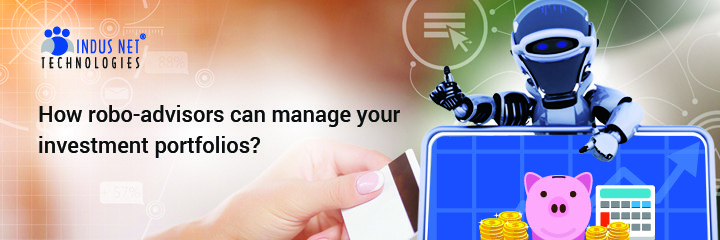
Robo-Advisors are Gaining Popularity in FinTech

Investing our hard-earned money is always risky. In fact, any sort of investment and asset allocation is complicated.  And with thousands of investment plans and advice openly floating in the market, we often end up spending a huge amount of time thinking where we should invest. We also worry constantly about how we should go about the financial planning depending on the market dynamics. The arrival of robo-advisors disrupted the traditional fintech sector and changed the way investment models worked so far. Though the term, robo-advisor nearly is nine-years-old, these so-called online wealth managers are increasingly becoming popular in the FinTech services and are building the portfolio for the investors according to their personal needs. What are robo-advisors?  In simplest terms, robo-advisors are computer programs who invest money for the clients in the market. Investors will be asked certain questions about their investment plans, time period and risk tolerance. Robo-advisors using machine learning, big data, and algorithms will manage an ETF (exchange-traded fund) portfolio that best suits the need of the investors online with little or no human intervention. Also, when and how the market moves, the robo-advisors will adjust the portfolio of the client. Interestingly, it was during 1998, the year of Great Recession, when Betterment unveiled to the world the financial innovation, called robo-advisor.  And within a few years, these automated investment platforms driven by artificial intelligence, are one of the developing innovations in the FinTech sector. As indicated by consulting firm AT Kearney, assets under management (AUM) by robo-advisors will take a leap by 68% annually to a gigantic 2.2 trillion in the coming five years.   Robo-advisors have evolved into three distinct models with all sharing the same goal. Fully delegated approach: This model involves standalone firms such as Betterment that use algorithms to recommend stocks and manage portfolios. Their advice is based on user profiles including investment goals and risk tolerance. Their target customers are new retail customers who are not habitual investors. Assisted advisor approach or hybrid robo-advisors: These combine computerized recommendations coupled with on-demand advice from a human being. Established companies like Vanguard’s Personal Advisor offer the hybrid approach for existing clientele. Advanced approach: This model uses complex algorithms to create and manage portfolios. Such companies use in-depth approach model to target HNI/ wealthy investors. Interestingly more firms, dealing with finance, insurance, wealth management and investment gradually understand the disruptive potential of this new innovation and are either buying, building or partnering with robo advisory firms. Now, for the online brokers, who were once-upon-a-time stock brokers, before the Internet revolution completely changed the way finance services were handled, robo advising looks more or less of an electronic service for them. Having said that, traditional companies shouldn’t rush and shift to digital technology suddenly. Reason? Well, let’s not forget they have a number of aging investors who prefer to take decisions from a human advisor till now. In short: at times, they prefer the human touch more than digital. Those firms need to educate the elderly clients about digital platforms and their advantages. This will reduce human liability to manage clients on a day-to-day basis and focus on expansion. Also, it’s important to understand that robo-advisors periodically review recommended portfolios. So, if there is any change in funds or new funds are added, robo-advisors provide relevant reasons for you to decide whether or not to make any changes in your portfolio.  It is important to note that most automated platforms are structured around long-term investments with little or no human intervention in recommended products. But what do you do in short-term investments? In short-term investments, market volatility or in cases of personal emergencies, the automated advisory platform at the most sends the clients’ reminders that he/she is deviating from the long-term goals. However, cash flow and behaviour management suggestions are only offered by full-service robo-advisors. Popular robo-advisors for your investment needs It all started with Betterment, the online investment company based in New York City. Today, they have over $7.3 billion in AUM. From automatic rebalancing, handling diversified portfolios, tax-loss harvesting to managing your IRA, the robo-advisors will be at your disposal for all your financial needs. We list a few companies who are offering customized computer-generated advice. Betterment Wealthfront Nutmeg WiseBanyan Schwab Intelligent Portfolios Vanguard Personal Capital Rebalance IRA Motif Investing Acorns FutureAdvisor Fidelity Go SigFig Blooom LearnVest Now, it is interesting to watch that robo-advisors, which started off in the US are now finding major support in different parts of the world. The market of automated investing is growing at an exponential pace and major players from different countries are increasingly becoming a part of this FinTech journey. From Switzerland, UK to Asia-Pacific (APAC) region, the rising popularity of robo-advisors can be felt in the financial space. As indicated by BI Intelligence, the APAC region will represent $2.4 trillion in robo advisor AUM by 2020.Also, clients across all asset classes are interested in robo-advisors, including the opulent class. According to BI Intelligence, 49% of high-net-worth individuals i.e. HNWIs across the world would consider having a robo advisor manage at least some portions of their money. BI also indicated that by 2020, 60% of these HNWIs would invest 20% of their assets in robo-advisors.In most cases, robo-advisors are considered to be the economical way to invest in contrast to traditional wealth management firms. Agreed, there are challenges for both robo-advisors and traditional firms, which rely on human advisors, to acquire customer base and modulate strategy respectively. So, let’s wait and watch how more investors respond to the new arrangement. Reference: Fox Business, CB Insights, USA Today,   Wall Street Journal, invstr, Forbes, Business Insider, Mint, Economic Times 

Read More »

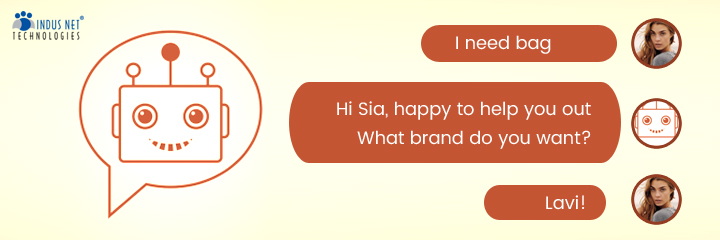
How Businesses are using Chatbots today?

Exactly a year ago, Mark Zuckerberg had said that people will be able to talk to Messenger bots just like they talk to friends. Since then, there has been a lot of chatter about the evolution of chatbots and how these automated computer software programmes will make our job easier. Presently in the world, messaging apps have become the easiest and most effective form of communication. In this age, chatbots, powered by Artificial Intelligence (AI), has become the key method customers interact with business.   Chatbot is the newest kid in the world of tech. Chatbot is just like your personal customer service assistant. And, everybody (read: big, small and medium-sized companies) is obsessed with it. From booking dinner reservations, ordering flowers to renewing insurance policies, chatbots have certainly made our life manageable, easier and productive. What is a chatbot? According to ChatbotsMagazine.com, “A chatbot is a service, powered by rules and sometimes artificial intelligence that you interact with via a chat interface.” You can explain your needs via text messages and chatbots, powered with AI, will help you to organize your life in a better way. And the best part is: the user does not have to download and install an app. All he/she needs to do is type some text and they will get answers instantaneously. From WeChat, Slack, Kik, Telegram to Facebook Messenger and Amazon Alexa, bots are becoming the main interface between humans and machines. Chatbots have surely become the biggest thing in the world of technology. 2016 saw the evolution of chatbots in the business world, especially companies dealing with a huge database. Though chatbots are still in the early stages of adoption among the masses, however, the way chatbots are influencing the tech world; it’s only a matter of time that the masses and businesses become increasingly dependent on this computer software programme. According to a report (Humanity in the Machine) from media and marketing services company Mindshare, 63 % of people would consider messaging an online chatbot to get in touch with a brand or business. Yes, that’s the enormous power of chatbots today.   Biggest players such as Facebook, Google, Amazon, Apple, and Microsoft are already in the race of chatbots. Microsoft tested its new AI chatbot, “Zo”, in December 2016. Understanding the disruptive potential of these chatbots, several companies across the globe are jumping onto this bandwagon of ‘chatbots’ and provide interesting services to customers. Today, intelligent AI chatbots use machine learning so that the chatbots can understand the reference and perform much more intricate tasks than what a bot does.  AI-powered chatbots are not only helping consumers save time at work. They have given a huge thrust to the digital ecosystem, especially when it comes to e-commerce advice, automated customer support, and conversational experiences.   Phil Libin, managing director at General Catalyst is all praise for bots. “Within a few years bots will be in the fabric of everything,” he had reportedly said.   Evolution of Chatbots Chatbots aren’t new. They have been in existence since 1966, when an MIT professor, Joseph Weizenbaum, developed an AI agent named ELIZA. In the early 2000s, Chatbot Smarterchild became popular when it was made available on AOL Instant Messenger and Windows Live Messenger (previously MSN Messenger). As mentioned, 2016 was the year when the world started taking chatbots seriously. Today, chatbots are giving tough competition to mobile applications. According to an article in engadget, chatbots are new-age mobile apps. Businesses all across the globe are investing heavily in the chat economy. And with the exponential rise in AI, tech companies are hell bent to develop functional and interactive bots to engage with consumers in a superior and effective way. Chatbots can be found on platforms: WeChat Facebook Messenger Kik Telegram Apple iMessage Slack SMS In a recent survey by Oracle, 80% of business owners stated they want to implement chatbots by 2020. So, what are the main factors favouring chatbots? Chatbots are always available unlike customer care executives, which work on hourly basis. This results in better customer interaction and increases the brand’s engagement with the customers.   Businesses can use chatbots to engage in one-on-one conversation with countless customers via messenger Unlike a mobile app, you don’t need to download a chatbot. Just search for a chatbot from within a messaging app and start chatting. Hence, it reduces the number of apps on your phone. Developing a chatbot is less expensive and hassle-free in comparison to developing an app for a business The simple and easy interface makes chatbot easy to use Depending on the relevant data collected by the chatbots from the customer, the business owners can customize messages for the potential consumers, thus achieving higher conversion rates Chatbots can help you streamline the operations of your business, analyze customer data and improve marketing and sales. Chatbots can be useful to promote new products by notifying the customers. Though this hottest young technology is still finding its ground, it goes without saying that today large brands and also small businesses are rolling out chatbots to streamline their working operations. Here are the 5 key sectors where chatbots are creating maximum hullabaloo: Banking and finance Travel and hospitality Restaurants Healthcare Ecommerce Chatbots in banking and finance   The banking and financial sector is one of the earliest adopters of chatbots. From handling everyday payments, balance enquiry and updates, history of transactions to the renewal of insurance policies, fraud redemption, and money transfers, AI-powered chatbots have moved out of the labs and is redefining the financial and banking operations. With chatbots, the banking and insurance officials can have a more effective customer engagement. Also, the work force replaced by chatbots can be employed for other crucial activities in the banking sector. In March 2017, Next Insurance launched their first chatbot for Facebook Messenger. This definitely benefitted the small businesses to buy insurance via chatbot. Next Co-Founder and CEO Guy Goldstein, was quoted saying, “70% of our customers are buying insurance on their phones. Enabling

Read More »

‘Beacon’ of hope for the Retail Sector

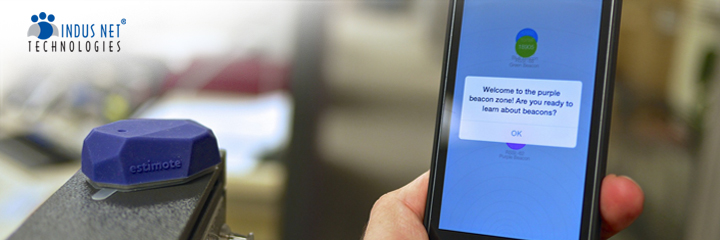
Did you know that the rise of smartphone shoppers boosted online retail spending to a record number of £133bn in the UK last year? Also, nearly 56% users of smartphones want to receive location-based offers on their devices once they are near a store. Mobile phones have completely revolutionized the way we shop. Yes, we know it’s an obvious today. The digital world has completely reshaped and redefined the retail industry, with online sales hitting the roof.  The raging popularity of e-commerce platforms, especially Amazon, hasn’t gone down well with the brick-and-mortar retailers. They are literally feeling the heat. Big players such as JC Penny announced that it will close down nearly 140 stores and two distribution centers in the coming months. This isn’t good news for the retail sector.   So, does this mean that brick-and-mortar retail stores will finally cease to exist? What should retailers do to entice the audience so that they feel compelled to step into their stores? There’s a popular saying that every cloud has a silver lining. Many of the brick-and-mortar stores today have made a smart move by adopting beacon technology to win back customers. This technology has also helped them gain their lost ground to a certain extent. Since most of the urban shoppers today are hooked onto smart devices to browse and research online for anything and everything, retailers are increasingly adopting this latest technology to tap the potential customers, win loyalty and drive sales. Fact is: retail is the most popular sector where beacon technology is being used now. What is beacon technology? In simple words, beacons are small devices (approximately 3cm x 5cm x 2cm), which use Bluetooth Low Energy (BLE) to transmit signals to smartphones within a short-range. Bluetooth LE is a proximity technology and the main purpose of beacons is “proximity marketing”. All you need to do is install this device or devices anywhere inside a retail store. It sends out signals to the app users whenever there are in the vicinity of the store. Beacons communicate with smartphone apps over Bluetooth, thus authorizing the retailers to send alerts to the devices of the customers. This way the brands can gather information on the shoppers’ movement inside the stores. Also, it enhances the shopping experience and makes shopping easier and quicker for the customers once they are inside a store. Types of beacon protocols Though the technology, “Bluetooth” was initiated by Nils Rydbeck, CTO at Ericsson Mobile in Sweden, and by Johan Ullman in 1989, it was in the year 2013, when Apple introduced iBeacon that the world stood up and took notice of beacon technology. In mid- 2013, Apple introduced iBeacon, the first beacon protocol in the market. In July 2015, Google announced Eddystone. Google’s beacon platform can transmit URLs to mobile devices, which can then be opened in a mobile browser. Beacons vs iBeacon Beacons are the hardware devices that send out and receive BLE signals. iBeacon, on the other hand, is a technology built into Apple devices that allows iPads and iPhones to scan for Bluetooth devices within a range. List of 10 beacon hardware manufacturers in the world: Estimote Gimbal Radius Networks BlueSense Gelo Sensorberg Glimworm Now, according to a report in BI Intelligence, these minute devices are the rapidly-growing in-store technology since mobile credit card readers. So, why are the retail giants taking resort to beacons, also called proximity beacons, to smarten up a store? Here are the top 4 reasons why beacons are winning the hearts of the brick-and-mortar retailers: More customer engagement by offering contextual information, targeted messages and notifications   Building customer loyalty by sending personalized discounts and coupons in real-time   Providing insights on customer purchase behaviour to enhance the shopping experience   Providing contactless payment Beacons increase customer engagement Imagine, you are outside a shopping mall and the phone starts buzzing. You receive a notification reminding you to buy some clothing items. Beacons can encourage you (read a shopper) to come inside the store and complete the shopping. Now, once you enter the store, you start receiving messages explaining how to select the clothes. Retailers are leveraging the power of beacons to engage customers in the following ways: By sending welcome messages, promotional deals, reward points and pop-up alerts to a customer’s smartphone based on their shopping activities. By assigning sales assistant to a customer who spends considerable time near a particular product/section By pushing real-time offers to customers inside the store. It enriches the shopping experience and also helps in customer acquisition and retention. By flashing the descriptions of a product on the smartphone’s screen once a customer approaches a particular product inside the store. Did you know the Swan Centre in the UK became the first shopping mall to use beacons, which allowed them to organise in-store campaigns for its visitors? Using beacons to strengthen customer loyalty In today’s cut-throat competition, customers have countless options and can easily switch from one retail brand to another if they are not satisfied with the product or the service. Here the customer loyalty programs come into play. They are highly crucial for retailers to strengthen their relationship with the customers and also accelerate sales. According to a survey, 76% of customers believe that loyalty program strengthens their relationship with brands. Here’s how retailers can win the trust of the shopper and also convert visitors into buyers through beacon technology:   The moment a loyal customer walks into a store, beacons allow retailers to send style tips and personalized content based on the location and purchase history. Retailers can use beacons to thank the customer for a purchase and also reward shoppers who have been loyal to the store.      Did you know over 40% of shoppers look for offers on their smartphones while they are inside a store? Collecting customer data through beacons If a retail chain wants to present a supreme shopping experience to its customers, it should be aware of its customers’ buying patterns.

Read More »

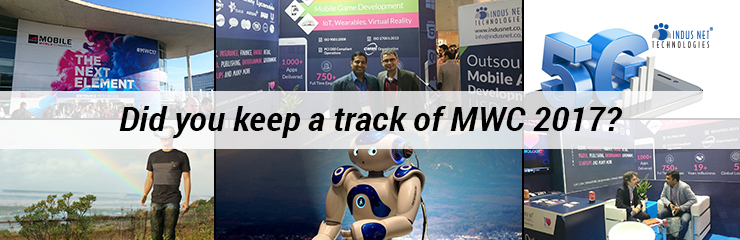
Let us walk you through the MWC 2017

Let us walk you through the MWC 2017 (in less than 4 minutes – it’s worth every second) Mobile World Congress (MWC) has evolved as a major go-to-event for the mobile industry. It is much more than an expo. It is a meeting point of business leaders from mobile industry, tech-geeks, enthusiasts, startups and other eco system players. It has amazing product launches that make waves around the world. It has thought-provoking keynote and panel sessions, and last but not the least – a peek into the future through 4YFN (4-years-from-now) expo and innovative exhibits. In recent years, we have seen an exponential increase in business executives from totally unrelated business domains, which is a clear indication on the impact of digital on every business, and mobile’s leading role in the same. As a premium mobile technology company, MWC finds a permanent place in our annual calendar. This year we saw four major trends that are worth thinking through:  VR/AR is for real and has application Artificial Intelligence (AI) is here to stay  Innovation Multiplier through SDKs 5G is round the corner And, not to forget the media stunt pulled by Nokia, by bringing back a new colorful avatar of Nokia 3310, which was its iconic phone in early 2000. It was great fun, generated a lot of interest on social media, got Nokia a brand boost – but that was the end of its impact, to be honest. VR/AR is for real, and has application. Virtual Reality (VR) and Augmented Reality (AR) seems to be coming of age.We now see widespread adoption,piped up due to the major sale of VR headsets last Christmas. Every gadget manufacturer – Samsung Electronics, Qualcomm, Nokia, etc. have their own headset to cash in the demand of this new gadget. We strongly believe that VR and AR will continue to gain traction with more applications and commercially feasible use cases emerging at every corner. Bharat Berlia, CIO of Indus Net Technologies states – “Certain industries like training and education, real estate and complex engineering have gained massively from using VR and AR. VR can provide a real world interface, and AR can set the context.” He further cites the example of a major engineering company which uses VR to conduct training on airline engine maintenance across their workshops around the world, without getting into logistics nightmare. VR and AR are also finding major application in advertising and communication. Did you know a 360-degree immersive video advertisement of Hong Kong Airlines was 35x more effective than the same advertisement in 2D format? The increasing importance of immersive VR videos was one of the most-discussed topics at MWC. Brands and advertisers will soon be rushing to create VR content driven by emotional storytelling, to engage better with their target audience.Indus Net  Technologies also develops VR and AR content and applications, including mobile games; for its global clientele. Artificial Intelligence (AI) is here to stay Artificial Intelligence (AI) finally seems to be stepping out of the academia and making its impact felt in the hyper-competitive commercial world of digital. And, it has moved at a faster speed than we imagined even few years back. We have near perfect voice-to-text conversion, which might eventually change the way we interact with computer or computer driven systems. Our image recognition is improving beyond believe, and it is visible in form of the autonomous car madness, that we see and hear everyday. Robocar, a self-driving electric racing car using Artificial Intelligence (AI), manufactured by Roborace, drew a lot of attention when it was launched at MWC this year. LINE also announced that it is developing an AI digital assistant, called Clova. Olay also unveiled an AI-powered selfie skincare app, which will help women with skin problems. Yes, it goes without saying that AI has taken the global tech community by storm. According to Global Market Insights, the global AI market is likely to grow nearly 81% compound annual growth rate (CAGR) from 2016 to 2024. Interestingly, Abhishek Rungta, CEO, who juggles multiple responsibilities has been using bots, powered by AI to streamline his daily plans. He is enamoured by Eva bot, which helps him in sending gifts to his business clients. Abhishek also uses Amy Ingram, a bot, to schedule his meetings. “This saves time and helps me to organize my day better.”- admits Abhishek. Innovation Multiplier through SDKs We also met several startups and businesses who are doing innovative stuff, and are letting you build those innovations within your business app through their SDKs and APIs, which are licensed on pay-per-use or pay-per-build. The range of innovation is mind boggling, starting from: Consumer behavior tracking App analytics VR/AR capabilities Bot engines AI engines / Image recognition and processing App testing App performance improvement. The list is endless. This area will become extremely busy in years to come and innovation from the smallest companies will find it way to the largest corporation through such an ecosystem. 5G is round the corner Though still in discovery mode, and mostly in labs, 5G is being talked about a lot. 5G is expected to change the way mobile works and how it is used. The impact is far beyond speeds,higher throughput or greater energy efficiency. The applications that will evolve with connected societies will be far more critical – be it sending senses across the network, app as a service, friction-less shopping experience, or driverless vehicles, or banking for the unbanked. Technology leaders from across the value chain have been hard at work to develop 5G concepts and prototype use-cases, many of which will serve as the backbone of modern 5G networks. It was a great experience to watch some of the research demos and learn about the use cases. And, last but not the least, we saw and experienced those phones which we will see in commonplace in next few months and years. There were lots of interesting product launches, but we were so overwhelmed by the above areas, that we did not

Read More »

More Power To Women In Technology

How many times have you heard the saying that diamonds are a woman’s best friend? Before you start pondering, here’s another thought to ponder. Not every woman has similar likings. Swarnali Nandy, Project Manager- Enterprise Mobility, Indus Net Technologies, would rather get her hands on the latest iOS devices than a sparkling piece of diamond. Swarnali is a woman of today. A woman, who is more inclined towards IoT (Internet of Things) than sequined dresses. Instead, she likes to chase her dreams and fulfills them. It’s a known fact that IT industry is dominated by men. An article in Tech in Asia reported that only 30 percent of India’s tech force constitutes of women and nearly 36 percent get promoted to supervisory positions. We know the numbers are not encouraging enough at this moment. However, Indus Net Technologies (INT) is surely making a difference in this sector. The organization provides an employee-friendly ambiance. There’s no employment segregation by gender here. This award-winning digital service company, which helps enterprises to leverage the power of the Internet through the cloud, mobile, social and analytics, believes in embracing ‘technology’ in every avatar. Going by the mantra, I Love Technology, the company instill the love and passion for technology among the employees. The overwhelming love for technology is also reflected strongly in the women employees. Indus Net Technologies has several women team leaders. Women here come up with cutting-edge tech solutions and lead the team with confidence and determination. The women at Indus Net Technologies overcome challenges, have the authority and inspire others. Indus Net Technologies is all for gender equality and also believes that women’s participation is crucial for the company’s growth. Let’s hear what our women leaders at Indus Net Technologies have to say about their personal struggle and professional achievements. It’s time we get inspired by them. Swarnali along with her team has developed some of the most successful mobile apps such as IDBI Federal, Axis Bank, and Bridgestone to mention a few for the company. Like every woman, she too faces the challenge of balancing home and work. But she gladly informs that INT doesn’t support gender biases. “We mostly deal with overseas clients. Hence, we are required to be available anytime. But INT has given me the flexibility to perform my duties from home too. ” says Swarnali, working happily at INT. Paromita Dutta, Team Leader — Client Relationship Management, informs she can map her growth at INT. She credits INT for being a transparent company. Like every working woman, who needs to manage home and job, she needed a company where there are stability and growth. “INT provides a conducive environment for women. Though we face a number of challenges being an Indian working woman in our professional life, INT promotes healthy work-life balance,” says Paromita, who is also working at INT for more than four years. Though Paromita comes from a sales background, she has also fallen in love with technology during her tenure at INT. “In today’s time, if you don’t update yourself with the latest technology, then you will become redundant after a time,” she says. Scientists say women are better multitaskers than men because a brain of a man requires more mental energy to tackle multiple jobs than a woman’s brain do. The hard reality is a woman is required to take care of her family and then pursue her dreams. It’s a challenge that most women today have accepted. She juggles many roles in her lifetime and sets examples in every role she takes up. Women in positions of power at INT also juggle multiple responsibilities both at home and workplace. And she is an achiever in her own right. Take the example of Munna Das, Team Lead – Enterprise Mobility. She has adroitly led a team and came up with some innovative and successful apps for clients. But it hasn’t been an easy life for Munna. A single mother (she has a five-year-old son) with ailing parents, every day is a challenge for her. But Munna is happy INT recognizes the true potential of an employee irrespective of the gender. Men and women at INT work side by side and sit together and brainstorm to find innovative business solutions. INT recognizes and nurtures female talents. “Women have great adjusting power and they can adapt to any situation. The HR team at INT is powerful and take care of the female employees,” says Munna, who has worked on projects such as MGH and IDBI Federal. Having been in the field of technology for 11 years, Munna loves that she gets to learn something new each day. “Technology is rapidly changing and that’s challenging. At the end of the day when I know that I have been able to overcome a challenge, I feel empowered,” she smiles. We at Indus Net Technologies strongly believe that men and women should be treated equally as members of society every day of the year.  

Read More »

Why Swift Is Being Used to Build Apps on iOS?

For a long time now, developing apps for iOS and Mac devices has entailed learning Objective C, and building upon what already existed in C. A few years ago, Apple announced Swift, its own open source programming language that is quickly finding acceptance among developers. Swift was built to replace C and Objective-C as the de-facto programming languages of Apple platforms, both traditional and embedded. There are many advantages to using Swift as the primary development language for Apple platforms. Swift is easy Most younger developers are familiar with languages such as Python and often find the complexity of C and its derivative Objective-C, difficult. For those who are looking for a powerful but easy programming language, Swift is a great choice. Swift does not have any of the kinks that come with Objective-C. You do not have to use those multiple punctuation marks, you do not need to use frackers too many times, and surprisingly, coding in Swift is almost like coding in English language. What’s more, Swift is easy to learn, and easy to execute. People who know other programming language will find it easier to adopt Swift. Swift is safer Objective-C has always been a source of bugs and errors. While it is a powerful language, the fact that it is so complex makes it difficult to secure. With many loopholes in it, Objective-C has been a security analyst’s nightmare. Not so with Swift. Swift is very clear and warns you when you write sub-standard code. These compiler errors help you to identify mistakes as you code, and you will be able to fix bugs and also save money. For instance, if you get your app developed by an agency in Swift, you will probably be focusing less on fixing bugs and conducting your business efficiently. Swift reduces errors It is a well known fact that developers maintain 2 files when working with Objective-C. What Swift does is, it eliminates the need for developers to work with two files. This reduces errors greatly, and ensures that the code written for an app is clean and error-free. The way Swift is built is also partly responsible for making it less error-prone than other programme languages. It ensures that unexpected behaviour is reduced, and apps function as they are required to. You don’t want your customers to write that your app started to act strangely in the reviews, do you? Swift is cohesive There is a lot of cohesion within Swift. It unifies the programming language in such a way that you do not have to worry about a memory management. Apple ensures that Swift manages memory automatically and that too in a very efficient manner. You can expect your apps to function without lags, and this is very important in graphic-intensive platforms such as iOS. With tactile development coming into picture, this becomes all the more important. Your users will not feel that your app is broken, when their tactile interactions run smoothly. Swift reduces ‘legacy’ Swift is a compact language and it does. not require reams of code to be written. If you have already begun to process of moving from legacy systems to something more modern, consider moving to Swift development part of that strategy. When you get your app developed in Swift, you are ensuring that the code is simple. This means, if there are any changes to be made, or any customization, it is a lot swifter, pun intended. In fact, if you already have an app developed in Objective-C, you can reduce the line of code by almost 3 times. Swift is cleaner As discussed earlier, Swift requires less code, and moves away from legacy programming techniques followed in Objective-C. This ensures that the language is cleaner and simpler. This is reflected in the app quality as well. Your app will feel a lot less cluttered and easier to work with. And of course, if you are looking for customization for changes within your app, Swift is easy to customize as it is cleaner. Thanks to the implicit namespaces within Swift, your developer can maintain the same code file across several projects of yours. This eliminates the bookkeeping which is required in Objective-C. Swift features dynamic libraries Swift comes with dynamic libraries which allow your developer to link chunks of executable code to your app. Whenever newer versions of Swift are released, the apps gets easier to update. While dynamic libraries have been supported by Macs for quite sometime, iOS now supports them too. This means there is no need to write code unnecessarily each time Swift is updated. This reduces your overall expenditure on development. Overall, this helps to maintain a responsiveness on iOS apps, while also enhancing performance. Swift enhances interaction Swift comes with something called Swift Playgrounds. This ensures that developers can test code without having to create the whole app. The Playground makes the process of building an app very interactive, and developers can continuously check small packets of codes to see if they are going in the right direction. If you are thinking about custom views and specific customization, this is something that will certainly help you reduce time and costs. Most importantly, the entire app need not be built just to check if a part of the application is working well. Playgrounds allows your developer to keep checking the app’s code as he builds it. Swift is part of the future of iOS and Mac OS development While objective C will continue to find relevance and takers, Swift will be increasingly used by developers, especially the Youngers ones who have just begun to start their careers. This is mostly because older professionals are more comfortable working with Objective-C, whereas the younger ones are more comfortable working with Swift. While Swift has its obvious advantages, it does not make it inherently superior Objective-C, which is a more complex and time-tested language. Both have their uses, advantages and disadvantages. However do speak too your developer to understand which

Read More »
MENU
CONTACT US

Let’s connect!

Loading form…

Almost there!

Download the report

    Privacy Policy.