Tag: technology

10 Tips to Optimize Your Explainer Video for Search Engines

The Tech Opportunity In Indian Healthcare Services

The marriage of Indian healthcare with technology has been a productive one, with both parties anticipating a never-ending honeymoon ahead. If there were ever a metaphorical statement for the rapidly growing health-tech segment in the country, then this would be it. In fact, even NITI Aayog agrees, based on the clarion call given by its CEO, Amitabh Kant, highlighting the growing health-tech opportunities to the Indian healthcare system.   Governmental Innovation Is Propelling The Sector The Indian Government is laying a steady foundation for the growth of digital healthcare and newer platforms. The Ayushman Bharat Digital Health Mission has been a game-changer and Amitabh Kant, the NITI Aayog CEO, stated that it is now on the technology players, start-ups, and healthcare players along with other stakeholders to create new offerings in the field of digital health which meet growing demand and spur the same as well. Amitabh Kant’s statements came at the 8th Annual Summit of Nathealth and assume greater significance once you consider the backdrop. The country already has the infrastructure to create “compelling, accessible healthcare solutions that provide equitable access and can be rapidly deployed and scaled up” as per Kant. Take other factors into consideration like the increasing penetration of internet connectivity and smartphones throughout the country and the increasing trend towards e-pharmacy, telehealth, and digital healthcare solutions during the COVID-19 pandemic, and you get the picture. Digital healthcare or health-tech presents a massive opportunity for growth, particularly in still-nascent segments like technology-driven home healthcare, e-diagnosis, and e-pharmacy services. Conventional healthcare institutions, investors, and start-ups would find this the right time to enter the space and “build a position which would be hard to beat in subsequent years” according to Kant. Now take the National Health Policy of 2017 into context. It creates a roadmap for creating a digital health-tech-based ecosystem and integrates various aspects like health delivery, cloud, wearables, and IoT (Internet of Things). It also envisions a National Digital Health Authority for the regulation, development, and deployment of digital healthcare solutions throughout the entire care spectrum. The policy recommends deploying digital solutions for greater efficiency of the entire healthcare setup along with better outcomes, in addition to ensuring a healthcare information system that caters to all stakeholders. The aim here is to ensure superior outcomes in terms of quality, access, reduced disease burden, affordability, and better tracking of health-based citizen entitlements. Some other Government initiatives that have struck a chord include the following: The National Health Stack concept, which became the National Digital Health strategy and the final National Digital Health Mission, launched on 15th August. Integrated health data and information portal with the aim to integrate EHR within the purview of the medical setup. Pradhan Mantri Jan Arogya Yojana 2.0 IT portal which wishes to integrate insurance and provider platforms for various benefits. Every individual will have a health ID, offering access to integrated healthcare solutions, enabling Universal Healthcare coverage and delivery. How And Why India Is Bullish On The Health-Tech Opportunity? Consider a few facts in this regard: E-health services and similar platforms may completely revolutionise healthcare. 65% of current e-commerce users are projected to use digital healthcare offerings in the future. Nathealth created its vision paper which emphasised Rebuilding, re-structuring, and re-imagining resilient healthcare systems in India in a post-pandemic era. The clear takeaway is that the pandemic ushered digital healthcare into the mainstream and consumers now consider it a necessary service. KPMG reports indicate a valuation of INR 116.6 billion for the digital healthcare sector in 2018 while this is anticipated to touch INR 485.4 billion by the year 2024, indicating a 27.4% CAGR (compounded annual growth rate)  in this period. With face-to-face interaction going down, patients are increasingly opting for online services in healthcare, with a demand for solutions that enable more affordable healthcare consultations and accessible interfaces. The digitalisation of the healthcare space is helping in filling up availability gaps in Tier-II cities and rural zones. E-Pharmacies have also helped in transparent price listings and better consumer options along with better accessibility. KPMG estimates this opportunity at a whopping $30 billion in healthcare technology. It has also talked about how start-ups will play vital roles in enabling healthcare access throughout the country. Estimates of 70% of the population of India (roughly 892 million individuals) living in rural zones with limited/zero healthcare access and the fact that India spends just 4.7% of the GDP on healthcare, throw up the magnitude of the opportunity. KPMG encourages start-up hubs for encouraging more players to invest in the health-tech space and advocates national and local Governmental support for the same along with a health innovation fund. The biggest pharmaceutical players, hospital brands, and diagnostics brands should adopt a mentorship role and sync with these health-tech companies. The market size was estimated at $830 million for telemedicine in India (as of 2019). It is projected to shoot up to $5.5 billion by 2025 (indicating a 31% CAGR). The NITI Aayog and Ministry of Health and Family Welfare have already released their telemedicine guidelines, with more than 1 million consultations taking place by December 2020 via e-Sanjeevani in 550 Indian districts. Health-tech in India grew by 51% (annual) in 2021 as per Redseer, collectively encompassing consultation, pharma, and diagnosis. 47% is the growth in the NPS (Net Promoter Score), indicating how customers are more inclined towards using e-health platforms and are clearly recommending them to their loved ones. The Redseer report also highlighted how the average consumer acquisition cost had reduced for players, indicating scope for growth and profitability. E-Pharma still dominates this segment owing to rewards and discounted offerings. Redseer estimates acceleration in GMV to $9-12 billion by 2025 for the e-Health space and possibly $40 billion GMV by 2030. The Take-Aways (What Is Happening And What Can Happen?) Indian mainstream healthcare is at the tipping point of future-proofing itself through technology, while meeting rising demand via technology. These are the core takeaways that we need to keep in mind. Indian healthcare industries

Read More »
Indus-Net-Technologies-La-Exactlly-Are-Now-E-Commerce-Development-Partners

People First, Computers Second

Have you watched the documentary The Man vs. The Machine? Do you remember the historic match of the reigning global chess champion Garry Kasparov versus the IBM computer Deep Blue?  If not, let’s refresh your memory once. On May 11, 1997, Deep Blue became the first machine to defeat a world champion in a six-game match under conventional time constraints.  After witnessing the historic match, many people started to believe that machines would take over the world in the coming years.  Imagine a world without people and full of computers. So, will there be life? No, because creativity is the soul’s spark. It’s the people who have souls not machines. It’s the people who create lives, and machines serve the role of catalysts.   People are an integral part of a business’s success. The three pillars or Ps of a successful business model are: People, Process, and Product. We often hear the advice to focus on the three Ps and everything will fall into place. But with time, companies focus predominantly on the process and product of our businesses and keep our people at bay.  Why people-centric?  Business leaders are increasingly recognising the advantages of building people-centric companies that prioritise employee happiness. Many companies emphasise the importance of their employees in their mission and vision statements. But the question remains, how many business leaders practise what they preach? What does it actually mean to ‘put people first’?  Well, if we consider the formal definition of ‘employment’, it goes something like this – “The fact of someone being paid to work for a company or organisation” This is true to some extent. But the reality is that employees are still considered like gears in a machine whose main function is to generate outcomes mechanically and consistently. The return on investment of an employee is equal to whatever output he or she produces on behalf of the company.  The understanding and recognition that an employee will contribute to a company to the extent that they feel appreciated, respected, and recognised is lacking from this outmoded equation. The finest companies recognise and understand this, which is why they prioritise their employees. Can computers make judgments? If we think deeply, computers assist people in analysing and comprehending patterns as well as future possibilities when making judgements. But they are incapable of making judgments on behalf of humans.  Humans are innovative and creative. Unlike computers, humans can create and invent new things. But computers work with mechanical brains designed and programmed by humans.  Computers have artificial intelligence (AI), whereas humans have intellect and emotions. Businesses need to strike the perfect balance between humans and machines to get the best results.  “Tools are just tools” Do you know what Steve Jobs said in an interview? He said, “Technology is nothing. What’s important is that you have faith in people, that they’re basically good and smart — and if you give them tools, they’ll do wonderful things with them. Tools are just tools. They either work, or they don’t work.” AI should complement rather than replace human intelligence Humans rely on the memory, computational capacity, and thinking abilities of their brains. But AI-powered robots rely on data and instructions input into the system. In many businesses, AI is used to automate repetitive and redundant clerical jobs. On the other hand, human brains can focus on higher level activities that require critical thinking and decision making.  Road ahead While investments in technology increase manifold YoY, resulting in disruptions and failures alike, a World Economic Forum report forecasts that 133 million new jobs are expected to be created by 2022, and guess what, not one of those hirings will ever result in a 100% failure.  At the end of the day, it’s our people who make the difference. When you establish a business on the foundation of its employees, you have a solid platform on which revenues can organically grow and legacies can be naturally built.  

Read More »

INT. – An evolutionary journey over 22 years!

Yesterday, Indus Net Technologies completed 22 years in existence. It has been an enthralling journey, though a slow one by today’s standards. Few thoughts: It has been an interesting journey. Some highlights and thoughts on the journey: – Headquartered and built out of Kolkata, which lacked a suitable eco-system, manpower, client base to build a tech business in the digital domain. In effect, we always discovered and/or created our way from the ground up. Think of it as a bunch of freshers with zero experience in building a company. This was repeated at every phase. Kolkata has come a long way since then, and so have we. – It was a bootstrapped business. We used the formulae of multiplying revenue by reinvesting. We continue to do so! – It was a service business. We did not know what a product business is when we started off. But, when we realized how important Intellectual Property (IP) is to business value creation, we invested in IP to strengthen and defend our business model. – We pioneered digital outsourcing for small business in our early days, created innovative marketing models and communication, which got copied by tens of thousands of aspirational digital entrepreneurs. We are not complaining. Imitation is the best form of flattery. – When the time came, we challenged the goliaths when we won deals against them, until it became a routine for us. Within the last few years, we have 40+ top brands from India engaged with us. – It has not been one business or the same business that started. It has changed several times over time to adapt to the industry, to adapt to client requirements, and to adapt to my own learnings and exposure. It started as a web hosting company, evolved into a web design and development business, further transformed into an agency for agency model, before it became a technology powerhouse for outsourced product development for enterprises (banking, insurance, public services, pharma). We continue to evolve! The one thing that has not changed is that – the undiluted focus on the client’s success. – It has evolved from a transactional business to an extremely strategic partnership-driven business. We serve less number of businesses, but serve them well, make bigger impact on the end-users in a more meaningful way. Today 85% of our business comes from existing clients and are retained business. – We have had many failures, which has taught us what not to do, or how to do things in the right way. We had our share of frustrations. – We have dabbled in venture building, digital education, our own charity, our own cricket tournament, and most interestingly our own digital success summit. These engagements keep us energized and open venues of new innovation, ideas, and expressions. – We invested in startups. We acquired companies. Some succeeded, some failed. We will keep exploring inorganic growth and improve the probability of our success based on our past experience. – Our team has also evolved with us. We have been able to keep most of our guys engaged for a considerable period with us in our journey. When we moved slow, the faster guys found a faster train. We moved fast, some slower guys were left out. We understand this is the nature of the business. We are investing and working to improve on this. – We are only getting started. We can see a solid growth path in front of us. We unfolded INT V2.0 in 2015. This was the first structured five-year plan. We learned that we need a shorter long-term plan. We are going to unveil INT V3.0 this year. The new INT. will be more aggressive, more focussed, flatter (as an organization structure), more open culture, more business domain centricity, and more fun. – We will continue to focus on learning, and spreading the knowledge; in cutting through the hype, misinformation, and bullsh*t, to empower businesses with real sustainable value. We seek all your support and guidance. On to next many decades… Thank you, everyone, for your on-going support. Keep showering your love and faith on us.

Read More »

What we learnt from Tech Events from around the world this month?

The spring & summer are the starting point for tech events, conferences, summits, and exhibitions across the world. Whether you could attend or simply tracking the social media, these events truly give you a wide knowledge of activities in the world of technology. In this blog, we have carefully curated some of the best tech events held in March 2018 across multiple industries, all around the globe, from Silicon Valley to Las Vegas, Nepal, Sydney, London, Japan & more. Strategies & trends revolving around latest emerging technologies like Data Science, Cyber Security, Front-end development trends, Blockchain, Robotics, AI & Machine Learning were the main focus for all these events. Let’s quickly roam through the significant happening in these events : Women of Silicon Valley : Listing to the great @ariannahuff “Culture is key, if a culture is toxic it is going to effect the bottom line. When a culture is driven by burnout people act out and when men act out women pay the price.” #WinTechSeries #womenintech #leadership pic.twitter.com/Jdoeb3Ajia — Stacy Wakefield (@smwakefield) March 21, 2018 DigiDay Publishing Summit : Interesting results from the poll at the top of the #DigidayPublishing Summit. Ninety-four percent of conference attendees think there is a UX crisis. pic.twitter.com/w1ZboBdIph — Brightcove (@Brightcove) March 21, 2018 https://twitter.com/JasonJedlinski/status/976575586259820544 IBM Think 2018 : The #IBM motto THINK came into use in 1920s by founder Thomas Watson. In 1990s Denny Wainwright came up with ThinkPad based on notepads used by IBM staff that had leather cover printed with word « Think » https://t.co/c8ZQ5cyrfj @baumtweet #think2018 pic.twitter.com/y6LIbmoHOI — Evan Kirstel #B2B #TechFluencer (@EvanKirstel) March 19, 2018 https://twitter.com/IBMFinancing/status/976428386963791872 #IBM #Chairwoman #Ginni #Rometty addressing 30K+ clients joined all across the globe during IBM #Think2018Great start with amazing addresses. Lot to learn from her as an individual She is undoubtedly among the great #Leaders and #InspiringWomen #thINK2018 https://t.co/jXk44jygzc — Rudra Shankar Roy (@rudrasroy) March 22, 2018 Token 2049 : … "One day Syrian refugees will return home to find someone else living on their property, they'll be asked to prove it was theirs, how will they when all records were destroyed along with the old government. Blockchain will benefit these kind of people the most" #Token2049 pic.twitter.com/NvsBIJ0YsE — Daniel Dumbrill (@DanielDumbrill) March 21, 2018 https://twitter.com/token2049/status/976278333095755776 Tech4SGDS Nepal : Great experience interacting w/ @RealSophiaRobot at the #Tech4SDGsNepal event to showcase how #Innovation can foster development & improve public service delivery @UNDP_innovation @UNDPNepal @UN_Nepal @ASteiner @UNDPasiapac @NepalYIL @nehub_ @HaoliangXu @NYCNepal pic.twitter.com/SoytiUYMul — Renaud Meyer (@renaudmeyer) March 21, 2018 AdTech: Sydney : https://twitter.com/Ben_Shute/status/976665679658041344 https://twitter.com/bandt/status/976694491812786177 Dev Mookerjee #IBMWatson delivers keynote speech @adtechANZ Infuse your marketing stack with AI #adtechSYD pic.twitter.com/fuqONuJD8a — Annette (@Carey001ane) March 22, 2018 Future London Academy: Design Thinking & Innovation Week : This is the new branding and packaging for Archer Farms coffee. These illustrations and design allows for a clear and engaging way to show flavour cues, origin, roast levels, etc. We absolutely love this design! ☕️😍 #archerfarmscoffee #archerfarms pic.twitter.com/L6lGzTNgAK — Future London Academy (@FLondonAcademy) March 20, 2018 As the year progresses, we will be coming up with more such updates. Make sure to check this space often!

Read More »

How Dedicated Hiring Is Helping Our Canadian Customers Scale Their Business

Canada’s burgeoning corporate scene is often cited as an example of how businesses can function smoothly while also ensuring the rights and interests of employees. Most Canadian businesses depend on outsourcing to reduce costs, focus on core business activities, and access talent locally unavailable, among many other reasons. Yet, outsourcing is a topic that often raises eyebrows in this famously polite and civil country. Let us take a look at how outsourcing evolved in Canada, and what businesses across this northern giant are currently doing to scale and multiply their profits. Evolution of outsourcing in Canada in the last decade Like in most developed countries, Canadian businesses began to seek cost-effective solutions across the world to meet growing IT and HR demands, since the 1990s. Companies have often depended on India, the Philippines, Bulgaria, Poland, and other offshoring destinations to meet their business targets. In the last few years, Canadian banks have sometimes received bad press for embracing outsourcing as a business strategy, with critics pointing out that Canadian employees aren’t adequately compensated for the loss of their jobs. Yet, IDC Canada revealed that its survey found an increase of 45% in outsourcing contracts signed, especially in the area of infrastructure support tasks. IT offshoring is a $3 billion business in Canada and a strategy that has proved to work in the last 10 years. Early last year, CIBC was criticized for offshoring its jobs. However, companies often save between 30% and 40%, when they outsource maintenance and development tasks to India. A Deloitte report suggests that outsourcing is going to witness growth in all areas surveyed such as HR, IT and finance. To find a middle ground and appeal to both sides, Canadian companies are increasingly depending on the dedicated hiring model to access talent, reduce expenditure, and scale quickly. Dedicated hiring offers Canadian companies the proverbial cake that can not only be had but can also be eaten. How the dedicated hiring model is helping organizations meet HR Challenges specific to Canada Much like everywhere else in the world, Canadian companies have had to face growing HR challenges such as attrition, higher compensation demands, the inability to find the right talent and changing employee attitudes. An interesting observation that has been made is that top-level executives have been leaving jobs too, increasing attrition levels among C-level executives. As Canada faces an immense shortage of manpower and as immigration does not suffice HR requirements for more manpower, dedicated hiring has come to be a palatable solution. Dedicated hiring has also impressed the critics of outsourcing as this model does not actually lead to job losses in Canada. Instead, it allows corporations to hire external employees on demand, for a specific duration of time. Currently, Canada faces a number of HR challenges such as: Inability to find required talent within Canada Inability to provide the compensation that local employees demand A growing realization that it is not necessary to hire full-time employees for short-term projects Young Canadians often switch jobs quickly, leading to a state of uncertainty among businesses Inability to scale, because enough budget can’t be allocated for marketing A negative attitude towards a traditional model of outsourcing All these problems can be addressed with a dedicated hiring model, as it enhances the profitability of companies while ensuring existing employees’ jobs aren’t threatened. Dedicated hiring model allows Canadian businesses to sign contracts only for a limited number of hours or for the duration of a project. Such a contract gives them access to full-time employees employed by vendor companies, at a fraction of the cost.  Most importantly, dedicated hiring ensures that short-term tasks and projects which need specialized skills can be completed seamlessly. Finally, dedicated hiring offers a sustainable model to scale for businesses that are driven. There are a number of examples of how dedicated hiring is helping Canadian companies to succeed and grow. Let us take a look at some examples. Digital Marketing Agencies: While every company needs some sort of digital marketing assistance, dedicated hiring ensures that there is always a digital marketing team on the standby to address all requirements related to social media and digital platforms, without ever having to hire a full-time team. A trucker based in Ottawa hired our digital marketing services to provide social customer service to his clients on Twitter. In addition, the client also used Indus Net technologies’ dedicated explainer video production team to publish corporate videos on YouTube, which the client later used as sales collateral as well. IT Service Partners: There is nothing more panic-triggering than having to hire a developer who knows an exotic programming language, but his skills are required only for a few days or months. Many of our clients have hired our development teams for all kinds of short and long-term projects, without ever having to hire anyone full time. A Nova Scotia-based eCommerce store hired our Kotlin language programmers to build and maintain their website. Our dedicated hiring model helped the client finish the project quickly, and do what they are best at doing: selling online. Startups: Startups often have very little money to spare on development, social media, HR and other functions. In fact, many startups are run by just one person alone, and it simply is not possible for one person to execute so many roles. A dedicated hiring model allows fledgling startups to offload their burden on vendors, while they can focus on building and marketing their business. Many Canadian startups hire our dedicated hiring solutions for various reasons. An Ottawa-based public relations startup hired our app development services to launch a time-specific application for their own clients. Our dedicated hiring model ensured that app development was completed in a short time, without having to hire anybody full time. What to expect next? In 1964, Bob Dylan wrote and sang “The Times They Are a Changin”, and we must admit they will continue to change in the future too. To ensure businesses are well-equipped to face the demands

Read More »

How Digital Transformation is Revolutionizing Offline Retail Experience

Before we go any further, allow us to declare that retail is here to stay. It is alive and kicking, and the boundaries between brick-and-mortar stores and online stores have already blurred, highlighting the importance of omnichannel marketing. Most online and offline resources discussed omnichannel experience as a novel concept in 2017, but conversations in 2018 will focus on the digital transformation that is already brewing in offline retail experience. With omnichannel experience taking centre stage, retailers and industry insiders have certain urgent priorities to focus on. These include, understanding technologies that are revolutionizing retail, setting up a budget for making changes, and promoting innovation within respective niche markets. With that in mind, digital transformation can be clubbed under these 3 categories which we shall discuss below. Technologies to watch: Bluetooth beacons, Internet of Things, Artificial Intelligence and chatbots, in-store applications, in-store push notifications Digitizing operations: Online access to inventory, communicating inventory needs before arrival, mobile wallets and digital checkouts, personalized recommendations, dynamic pricing Bringing digital to the store: Creating a multisensory experience, data and predictive analysis, enhanced customer support, social media tools, focusing on in-store experience Revving up the technology front at retail stores It would be foolhardy to assume that everyone wants to simply order products online without ever visiting a store. In fact, most people would rather walk into a store, physically touch the product they want to purchase, see it with their own eyes, or try it on themselves, before making a purchase. But they will use their mobile devices when they are inside your store. Using technology to create multi-sensory experiences for your customers is important to drive up sales. Retail stores across the world have begun to combine elements of Bluetooth, artificial intelligence, and the Internet of Things to create unique shopping experiences for customers who walk inside stores. Conversations are no longer about which technology is better to use in a store, but the focus is more on how all technologies can be used to create a holistic shopping experience for the customer. In other words, we are in a retail situation where various digital technologies intersect at retail stores to provide unique shopping experiences that are omnichannel in nature. Who is doing what: A number of retail chains began to experiment with Bluetooth beacons and internet of Things in 2017. While Sainsbury’s toyed with Bluetooth beacons, Singapore-based A Better Florist began to offer chatbot experience to clients so that they can track their orders quickly and easily. Sainsbury’s push notifications were delivered to customers when they arrived at the store, highlighting the importance of in-store applications and notifications. Here is what you can take from this: Consider speaking to digital consultants to understand how various emerging and existing technologies can be used together to create unique omnichannel shopping experiences for your customers in-store. Digitize your offline retail operations to deliver a friction-free shopping experience What could be worse than visiting an online store and realizing a product that is listed is not available anymore? What could be more unfortunate than having something in stock but not displaying it on the website because of communication and technology errors? A customer walking into a retail store and realizing the exact product that they want is not available. Nothing hurts a brand more than a customer walking away in disappoint from a retail store because a product that they wanted and assumed was available, isn’t. To avoid such situations, digitizing operations is a boon to retailers. When customers have access to available inventory at each retail location, they can simply look up on their mobile phones and arrive at the store, knowing for sure that what they want is indeed available. in fact, they could even call up your store (or text your chatbot) to inform you what they want to try or take a look at so that the product in question is ready to be tried or observed as soon as they arrive at the store. To ensure there are no literal abandoned shopping carts, you could urge them to pay via mobile wallets or ensure digital checkouts. Personalized recommendations based on various psychographic data will help you to cross-sell and upsell as well, right when they are at your store location. Want to tempt the reluctant customer who is looking at something longingly but is about to walk away? Deliver push notifications to their mobile phones and offer discounts and coupons, thanks to dynamic pricing. Who is doing what: Decathlon, the French sports apparel chain, offers online access to its inventory so that people can check beforehand what is available at their store locations before venturing out. Those who don’t want to try the products at a retail store can simply order them on the same website. Decathlon’s unique marketing strategies have helped it to digitize its operations and become a world leader in sports apparel in a very short period. Here is what you can take from this: understand how you can enhance the shopping experience by using technology and by digitizing your operations. A retail store that is efficient and that which operates flawlessly makes customers happier than anything else. Use the myriad technologies available to create a friction-free shopping experience for your customers. An immersive shopping experience keeps your customers hooked Another area that is transforming retail experience is the actual process of shopping. By providing a multisensory experience using technology, many retailers are making it cool to shop offline again. After all, it is a human tendency to rebel against what is the norm. If shopping online is the norm today, there is an equal number of people who would rather go to a store for a more immersive and sensual shopping experience. One way to enhance the shopping experience at retail stores is by understanding each customer personally, and by providing personal and customized attention to everyone that walks in. Let’s face it. Everyone likes to be treated like a king or a queen. This is

Read More »

Is your ERP solutions partner as efficient as your ERP System?

“The era of digitalization has made the business world of today complex and volatile. The software can support a company, but it can also act as a brake when it is inflexible and obsolete.”   – Rödl & Partner ERP systems are revolutionizing the world of retail and how. Nowadays, all entrepreneurs with an expansive base of operations choose to simplify their business processes by deploying management systems like the ERP. The future of Enterprise Resource Planning Systems has never been brighter, and it has become a popular management technology in India as well. However, procuring an ERP for your enterprise isn’t enough to ensure seamless performance and worry-free round-the-clock management. Being an intricately designed software interface, ERPs require impeccable servicing, from the moment a need for it is identified, right up to its installation. A solution partner will be there beside you every step of the way to help you adapt to the changing landscape. Besides offering comprehensive advice and innovative solutions, any ERP consultant worth their dime provides holistic support for companies with international operations. Remember, your ERP is as good as your ERP partner. To get the most out of your software, you must work alongside a good service provider. ERPs afford a future-oriented user-experience IT strategy for the enterprises of tomorrow. Today, they are capable of dexterously managing every aspect of your business. They can put your company “on the road to success, especially in the core areas of planning, reporting, finance, controlling and logistics” (Rödl & Partner). In the increasingly automated retail landscape, ERPs are becoming a necessity rather than a mere luxury. Once the need for an ERP system is recognized, an informed decision must be made regarding the kind of ERP your enterprise needs. In this respect, it is advisable to consult a solution partner before settling for the ERP you’ll ultimately choose to engage with. “Failure is incumbent when you invest in things without thinking long and planning ahead of them”.  Remember that selecting the right software is a lot like signing a business contract—not easily retractable once implemented. After you’ve made your mind up and committed to the planner, you are in it for the long haul. This is primarily because the initial investment involved in installing an ERP is very high. Therefore, replacing it due to dissatisfaction with the existing system is not really a viable option. Furthermore, developing a level of intimate familiarity with the model (of your choice) is of paramount importance, if you’re uploading control and access to your enterprise onto the resource planning system. This offline to online transition is made easier with the help of an expert to walk you through the imminent changes likely to take over your operations model, post-installation. Constant maintenance, monitoring, and upgradation of the ERP software is also required, and for that, it is crucial to avail the services of a reliable ERP solutions partner that is as efficient as your ERP. In addition, it is better for you and your ERP system, if your solutions partner is prompt and proficient intending to immediate hiccups, glitches, and related issues that are bound to appear in your enterprise technology with time. High responsiveness to ERP-related emergencies is always a quality that determines the reliability quotient of your solutions partner. There needs to be a team of skilled and intuitive personnel ready for dispatch, whenever the need arises, at any point during the product’s lifecycle. If you’re curious and skeptical about how much enlisting this support system will cost you (especially considering the lump-sum investment in purchasing the ERP software), frankly speaking, that is a small price to pay if you consider the amount of savings ERP implementation will generate for you. But if you want to get the implementation right, a good consultancy can maximize your ERP’s competitive potential. In an ideal world, the software would work endlessly without bugs, hardware wouldn’t break down and employees would run like clockwork with fail. But disasters happen with technology, just as easily as human resources. To avert the loss of productivity caused by such unavoidable breakdown of man-made systems, ERP solution partners come into play. In case of deciding on a consulting partner, take into account the scale and type of your business. Based on your needs, you can either opt for a full-service provider or problem specific services. To select the right solution for your business, understand exactly how much the project will cost at each stage and chalk out the timeline for each phase. Having a thorough discussion about price can prevent future surprises and disappointment, including the Upfront cost, Support coverage, and Recurring costs. Complete understanding and clarity about the partner’s role from start till end will help shape a contract both parties are happy with. Remember to include:  Timeline of go-live  User-friendly  Support & Services  Regular upgradations on current statutory  Bug fixing timeline A good partner will offer you solutions commensurate to and appropriate for your company. There is a host of specialized services that are offered in addition to the common ones: Strategy and innovation consulting Requirements analysis and implementation Improvement of your business processes Operation of the total solution including application management There is a popular saying in the business stratosphere, it is no longer enough to manufacture a good product; it needs to be followed up with good servicing. The same applies to the ERP market as well. Without a reliable and efficient solutions partner to fall back on, the entire prospect of improving your business operations with your new state-of-the-art ERP goes for a toss. To get you up and running quickly, Breeze offers ERP Implementation service to meet your business management needs and get you started quickly. Choose from: Rapid Essentials Implementation Service, which covers essential key functional areas and goes live user training Essentials Plus Implementation Service, where you can include additional requirements tailored to meet your business’ specific needs Customised Implementation Service, designed specifically for your business FEEL FREE TO CONTACT US FOR A

Read More »

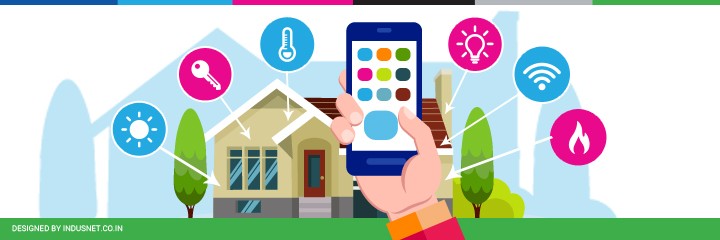
Home is where the intelligence is: Smart home trends for 2018

Who doesn’t love a comfortable, easier, secure and convenient lifestyle? The alarm goes off and your perfect cup of hazelnut coffee is ready in no time. Rich and nutty, just the way you like it. And the best part: you can make the coffee without having to leave your bed. Smart homes give you the ultimate power to control and manage your home-sweet-home (office too) through advanced software and networks that are becoming increasingly easier to monitor, grasp and use. Even a few years ago, this would sound straight out of a fairy tale or a sci-fi movie. But today with smart homes, you can make a pot of coffee from anywhere using your smart device. That’s the power of technology and that’s how home automation is changing our lives. From voice-activated smart speaker Amazon Echo, who will be at your beck and call, to smart lighting which would automatically turn on the moment you ring the doorbell, now even the shades of your window can be adjusted via mobile apps without getting up from bed in the morning. Smart home and Internet of Things (IoT) are completely redefining our way of life. Home automation is a booming market with the US having the highest smart home penetration rate, followed by Japan and Germany. According to the global smart home market, the market size would reach a value of more than 40 billion US dollars by 2020. This is extremely encouraging news for both tech giants and venture capitalists who are pouring money for further innovations in the smart home sector. The real estate scenario has also undergone a sea change because of this. Realtors and builders are increasingly adapting to these new innovations and helping to increase awareness about smart homes in the buyers’ market, informing them about how these “intelligent homes” communicate with the residents. It is not surprising that the largest consumer segment is constituted by millennial, a bunch of tech-savvy citizens who have a completely different approach when it comes to investing in properties. Their preferences are now being taken into account to make the homes more modern. According to a report by Coldwell Banker LLC, more prospective home-buyers are looking for their homes to be automated, or at least for those that have the potential to be automated. In India, the concept of smart cities has been gaining ground more than ever. It shouldn’t be long before India starts adapting smart homes in a larger way. Startups in India are already jumping onto the bandwagon on home automation and technology students are also trying to make breakthrough innovations in this domain. According to a report published by RedSeer Consulting in 2015, home automation market in India is expeditiously growing and is expected to reach Rs 8800 crores by 2017! Santanu Mukherjee, head of digital marketing, Indus Net Technologies, admits that India too is welcoming home automation with open arms with several players already ruling the market. However, he also agrees that it will take some time before home automation finally finds its stronghold in India. According to Mukherjee, the primary reason is the lack of awareness in this sector. “Till now, the majority of the buyers in India consider a property with smart IoT devices as too luxurious an investment. The high product cost of home automation is also inhibiting consumers from exploring this space. As of now, smart homes are a super luxury component in a developing nation like India,” he says. Here are 5 ways to turn your home into a smart home:  1. Let’s get connected The entirety of your home must first and foremost be connected by WiFi  “so powerful and fast” that all the smart home IoT devices in the house are connected. Here are five WiFi systems you might use when implementing smart home technology: Samsung Connect Home Smart Wi-Fi System Google Wi-Fi system Eero Luma Home WiFi System Linksys Velop 2. Safety matters No one wants to compromise when it comes to the security of your most-prized possession, your house. IoT has made it easier to set up smart security systems. Today you can control the security and comfort of your home remotely, via a smart device which monitors feed from the security cameras (indoor and outdoor), window sensors, door locks, motion detector, smoke detectors, water sensors to garage door openers, thus connecting your home to the above-mentioned Wi-Fi network. You can keep a watch on all the activities 24X7 using your smartphone and apps. Alerts in the form of emails and text messages are sent to you on the go. “Security is a big issue, especially for working couples who depend on external help to manage their kids. However, reliability on external help is questionable. To address this issue, a smart home can be a great help. You can monitor what’s happening at home from afar”, says Mukherjee. Here’s a list of five smart home devices, which will keep your home safe: August Smart Lock Nest Cam Outdoor iSmartAlarm Netatmo Presence Samsung Digital Door Lock SHS-P718 3. Look who’s talking “Alexa, switch on the light. Alexa, adjust the thermostat.”- Smart homes today enable you to prepare a hearty meal, book a cab or play your favourite song by just talking to voice-activated smart-home systems such as Amazon’s Echo and Google’s Home. Thanks to advancements in AI (artificial intelligence) and Machine Learning (ML), speech recognition technology has revolutionized home automation. Through Amazon’s voice assistant, Alexa (you can talk to her through Dot, Fire TV, Echo, Fire Tablet and the Tap) you can remotely control many functions of your house. Google Home is also integrated with a number of smart home systems such as thermostats and water leak sensors. Microsoft’s virtual assistant Cortana already works at your command, but now the tech giant is planning to launch Cortana soon in the home automation market. According to reports, it won’t be long before Apple’s Siri smart speaker participates in home automation market. 4. Let there be light How many

Read More »

Handheld POS and IoT are set to revolutionize India’s retail industry. Is your ERP ready?

The world of retail is all about invisible players. In the current economic scenario, whenever a sector shows promising trends, powerful and unseen forces rush towards it and accelerate its growth. Similarly, the exponential boom in the retail sector today would not have been possible without the parallel technological advancement, especially in the field of management technology like ERP systems. For those who are unfamiliar with the role of Enterprise Resource Planning Systems in global and local retail today, ERP is essentially an extremely effective tool that integrates diverse functions of the enterprise and corporate responsibilities by incorporating the most successful practices, to improve research and development, facilitate rapid decision-making, encourage cost reduction, monitor fleet and dispatch management, track revenues, and sustain better customer relationship management (CRM): in short, it provides a greater managerial insight and control on the entire process. ERP Trends to look out for in 2018 IoT is the future and it’s high time we acknowledge how integrally everything else is linked to it. According to Forbes, “The analytics revolution, edge computing, and 5G cell processing—are all driven by the IoT at their core….up to 40% of all compute will happen at the edge in just the next couple of years.”  Trends that are already in place abroad and will eventually make their way into the retail sector in India, all focus on greater automation. ERP is set to bring about an increase in outsourcing and global partnerships by integrating key business operations into one system so that you can conduct your business from anywhere with anyone in the world. According to an article published in Solutions Review, “With improved technology and streamlined global logistics, supply chains have released manufacturing from the limitations of geography. Moving information, data and products from one location to another has never been easier, faster or cheaper than it is today.” With the advent of Cloud computing and SaaS making its foray into the domestic ERP market, further operational and infrastructural costs are likely to reduce, because the mainframe server and company database can now be uploaded and accessed online. This eliminates logistical and administrative factors too, now that the mediator is replaced by a bot. Recently launched Breeze ERP  is also uploadable on the cloud and encapsulates standards that ERP systems around the world will be expected to meet in the coming year. Moving towards a handheld POS system When it comes to purchasing and transaction, ERP’s today offer a handheld POS system which enables automated registration of responses and details from the consumer’s end, and quick secure payments without any third person intervention. Such ERP’s are becoming increasingly common at restaurants, departmental shops, and online delivery transactions. Besides the handheld point of sale functions, this feature also provides an organized and consolidated database for gathering customer information, registers shifting trends, and managerial functions based on these trends.  Recently launched with state-of-the-art upgrades and features, Breeze ERP’s highly functional interface is set to make monitoring and managing sales on the seller’s end simpler. Besides reducing workload and managerial responsibilities by a considerable extent, Breeze ERP is extremely efficient in multitasking and simultaneously overseeing various modules involved in the life of a product from the warehouse to customer’s doorstep: manufacture, distribution, inventory, invoicing, financial accounting, customer relationship and servicing. It is this 360° approach that elevates Breeze ERP to the level of a self-sufficient support system for the modern retailer. The role played by technology in retail is thus indisputable at this point. The fullest extent of its potential needs to be grasped at both ends of the demand and supply spectrum. Only then can we transcend rote modes of trade and manufacture, and transform retail into a space for vision and innovation. With Breeze ERP, this is finally a reality well within your grasp. In case, you want to see it in action, request for a demo. Do you agree that ERP can be the next game changer in the world of retail? Tell us what you think in the comments below.  

Read More »

Which Blockchain Model Should You Choose To Begin With?

Of all the emerging technologies today, it is blockchain that is discussed most often, yet implemented only by niche entities. One of the reasons why blockchain has not caught up as quickly as we might have assumed is, it feels intimidating even to larger enterprises. In reality, blockchain is accessible, easily implementable, and extremely useful for a business to enhance security, do background checks, maintain records, comply with regulations, and meet various governance and business requirements. As a decentralized public ledger of all transactions, blockchain is proving to be a revolutionary way to maintain a record of all transactions and to ensure that every transaction takes place smoothly without ambiguities. However, it may seem overwhelming in the beginning. To achieve operational efficiency through blockchain, it helps to choose the right blockchain model and start incrementally. Understanding and demystifying blockchain A blockchain is a distributed database, which acts as a tamper-proof ledger of all transactions and events that a group of entities (or even a single entity) might want to record. As the information is stored on multiple computers, making changes to recorded data (or events) on a single computer will not result in changes across the network. On the other hand, whoever tries to make those changes to recorded data (or events) can easily be tracked. In other words, blockchain ensures that all digital transactions are stored permanently, and any revisions made to it, whether authorized or unauthorized, is always recorded, along with previous versions of the data. Everything stored in blockchain is protected by advanced cryptography keys, adding an impenetrable layer of security and privacy. Today, such secure and tamper-proof public ledgers of digital transactions can be used to store and maintain assets, validate and manage identities, contracts, policies, and more. Blockchain is revolutionary because : It is transparent and remains in a constant state of consensus Functions as a distributed network via large number of computers, eliminating security threats Data is always tamper-proof and stored permanently. Changes made to data need to be authorized, and unauthorized changes are impossible across a distributed network Identical blocks of information are stored across a network of hundreds to millions of computers, making data stored on blockchain incorruptible Transactions are immutable. Once agreed and implemented across a network, it can’t be undone What kind of blockchains are available for businesses to use? It is natural to wonder if there are different kinds of blockchains for various needs, or if there is a one-size-fits-all model. Blockchain technology can be customized and implemented for every business need, and there are three major kinds of blockchain networks that can be deployed today. Public blockchain In a public blockchain, every authorized person can read, send and validate transactions without explicit prior permission. This is particularly useful when decentralization is needed in peer-to-peer situations. You might want to understand a public blockchain as being similar to Wikipedia, where any editor can make changes to a document, though previous versions are always available, and no change can go unnoticed. Public blockchains are great because : Every authorized user can make transactions on a common platform, and remain anonymous too Circumvent third-party vendors, as intermediaries are not required to facilitate transactions between users Affordable to implement Safe and secure Changes need not be permanent and can be discarded if they are not in the interest of the entire system Application developers do not have overarching powers beyond developing apps However, a public blockchain isn’t without disadvantages. They are : Resource heavy, and in the long-term, prove to be expensive as computational requirements increase with time and frequency of use May not be suitable for fast-paced transactions like trading, as transaction verification process can be delayed by a couple of hours Privacy may not be sufficient for regulatory transactions at enterprise level Decentralization may lead to possibility of collusion, and unintended consequences Private blockchain A private blockchain comes with more privacy and a greater degree of control. Only a certain organization or a group of individuals have write permissions and only they can create new transactions within the network. Authorized individuals and groups may have read permissions. As there are restrictions imposed on read, write and validate permissions, private blockchains are not distributed or decentralized to the level of a public blockchain. Private blockchains are perfect for intra-business usage where only company executives have access to the network. It is also the perfect blockchain solution where outside-interference or activity is not required. Private blockchains have a number of advantages such as : Suitable for traditional business and governance models Transaction costs are low, as computational power required is lower as well Cyber attacks are eliminated because blockchains are immutable, and in a small and closed network, the identity of the attacker can easily be established Transactions go through quickly as only a few devices need to verify them With restricted access comes better privacy A few drawbacks of private blockchains are : Decentralization can’t be compared with public networks Easier for those with write permissions to unilaterally make changes in spite of disagreements, if any Lacks the openness of public blockchains Is there an alternative to public and private blockchains? Well, there is. As both public and private blockchains come with their own drawbacks, there is a hybrid version of the two, also known as permissioned or consortium blockchain. In a permissioned blockchain, write permissions are not assigned to a single organization or a few individuals. Instead, a few pre-determined entities control the process of validating transactions consensually. They also have the permission to assign read permissions. Permissioned blockchains come with the immutability and efficiency of public blockchains, with a degree of privacy seen in private blockchains. A consortium blockchain (permissioned blockchain) is easily scalable, private, and consensual. Transaction costs are low, and you can start implementing it right away. Making a choice It is always difficult to make decisions related to technology, but one must make them when the time is ripe. Every blockchain model comes with its

Read More »
MENU
CONTACT US

Let’s connect!

Loading form…

Almost there!

Download the report

    Privacy Policy.