Tag: technology

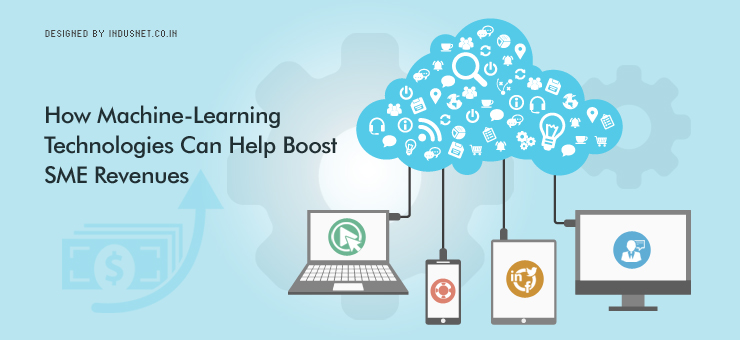
How Machine-Learning Technologies Can Help Boost SME Revenues

The term machine learning was first coined in 1959 by Arthur Samuel, as a field of study that gives computers the ability to learn without being explicitly programmed. Machine learning focuses on the development of computer programs that evolve when exposed to new data. This enables computers to screen and sort data through self-learning and prediction techniques. Computers employ artificial intelligence techniques to learn by itself through repetition and experience. With big data in picture, machine learning today has grown into potentially a highly significant field of study.  Businesses can gain tremendously from machine learning solutions. Machine learning solutions require highly skilled engineers who can build and maintain these solutions. However, small scale businesses usually do not have enough resources to construct their own solution; so, enrolling for machine learning as a service on a cloud is the best way forward to experience its multifold advantages and boost revenues. Machine learning solutions are enabled to extract quality data from big data. For a business website, blog or social media page that generates a tremendous amount of data on a daily basis, it is practically impossible to sort data manually.  And if the data is left unprocessed or unutilized, a business can lose out on many opportunities and market sentiment due to its failure to discern the data. The following article will briefly explore how machine learning solution can help SMEs in many ways: Generate valuable content A lot of user-generated content is produced on company websites in the form of feedback, comments, and reviews.  Content produced by users does not guarantee any authenticity.  It can be vulgar, false, abusive, or completely negative.  Machine learning solutions filter out objectionable content without human interference or manual tagging.  The result is that users can view only quality, relevant, and unbiased content. Email service providers having been using this technology for a long time to filter out spam emails, which we often find in the junk folder.  Machine learning solutions enabled mailing software to identify spam and bots on its own based on artificial intelligence.  And the ability to filter spam keeps increasing every day based on experience. Similarly, user-generated content can be filtered by implementing machine-learning solutions for websites, blogs and social media handles of a company. Recognize visual content Content generated on the internet is not limited to text but also images and videos. Usually, users need to manually describe and tag visual content for analysis. However, machine learning services are enabled to automatically annotate images. Such solutions use semantic classifiers to recognize objects based on color, texture, shape and edges. Filter objectionable visual content Businesses can tremendously benefit by automatically filtering objectionable visual content on social media platforms like Facebook, Pinterest, Twitter, Instagram or their blog. This can save a lot of time which otherwise is consumed in manually scanning every image or video uploaded on social media handles. This is important considering the amount of visual content generated every day. Moreover, visual content can be more sensitive or offensive. Identify images relevant to a specific product On the other hand, it empowers businesses to identify images that are relevant to their brand across their network or probably across the web. If any person uploads an image that relates to a specific product and is relevant to a business, machine-learning solutions would be capable of identifying such content. Businesses can measure the impact of their campaigns, product’s fondness among users, and conduct other analysis. This is aptly applicable to online retailers who significantly rely on visual content. Help users find better products Machine learning is suitable for users who search for better products on the web. Google Image Search, Pinterest, TinEye are popular services that use content-based image retrieval system and greatly rely on the machine-learning algorithm to help find users better products, locate the source of image and web pages, find higher resolution versions, get more information about an image. There are many e-commerce services that utilize machine-learning technology to help its customers quickly browse and find a better and highly relevant product depending upon their likings and preferences. It can suggest new products to customers by deploying machine-learning strategies. Provide efficient customer support Machine-learning solutions have found great acceptance among customer service areas. Customers generate different types of queries on company’s website through the contact us forms. For e-retailers, the load of customer queries is even higher. It is extremely difficult to manually go through the content of each query, tag and then re-route the query to a specific department. The cost of handling queries can be hefty for a small business owner. Moreover, this delays customer query resolution and businesses can lose out on customers. On the contrary, if customers are asked to fill complicated forms to generate a query, the possibility is that customers will feel frustrated to do that and will never go ahead. Machine-learning solutions are capable of identifying content in the query form and directing it to the specific department for query resolution. Understand customer behavior It is necessary to understand the market sentiment to drive critical business decisions. For instance, if a business does a test launch and wants to track consumer opinion across the web, it can monitor so by deploying machine learning techniques. Marketers can deploy machine-learning solutions that can specifically track consumer review forum apart from their social media handles like Twitter, Facebook. Social media listening has gained a lot of traction over the last few years. Consumer opinion spreads like fire on social media and some controversial posts can instantly become viral. Keeping a tab on market sentiment will help marketers to understand customer behavior and design better solutions for them. Invest in machine-learning services to grow Machine-learning as a service has remarkable potential in future and is still at a nascent stage. It is clearly understood that machine-learning techniques are an absolute necessity for modern marketers. Higher the capability of an algorithm, the more useful it is to the user and the business. Customers are central to

Read More »

Can We Automate Lead Nurturing?

Lead nurturing involves a number of marketing strategies that try to convert people into buyers or customers. This obviously does not happen overnight and it is important for marketing teams to nurture those whom they identify as leads. While gathering leads and generating leads are themselves huge tasks, it is a bigger task to nurture those leads that they have in their database. Writing emails once in a month and then forgetting all about it is simply not going to do the trick. There will need to be a more extensive and complex strategy in order to nurture those valuable leads. For this to happen, some sort of automating is required. Otherwise, it will not be possible to gain control of the leads to converts pathway. There are many ways with the help of which you can nurture your leads in an automated and regular manner. It may come as a surprise that such as a delicate and fragile relationship can actually be automated. In the world of marketing, it is always a combination of automation and direct human-to-human interaction. You must always bear this in mind before setting forth to automate your lead nurturing. Otherwise, you might end up looking like a salesy robot that will ultimately drive away leads. The answer to the titular question of whether one can automate lead nurturing is a resounding ‘yes’. However, care must be taken to ensure that this automation is not abused or misused by marketing teams. In this article, let us take a look at how automation can help you with your lead nurturing process. How can an automation tool help in lead nurturing? What is really required is an automated and multi-step campaign that effectively catches the imagination of your precious leads. Using automation technology will help you to better understand your leads and thus, come up with a strategy that will help you to nurture them. It is all about remaining relevant in a time when too many companies will be trying to nurture your leads while you try to do so yourself. Thus, the key is to come up with an automated lead nurturing strategy that is effective and is not about simply staying in touch. Automation tools should be programmed to nurture your leads in such a way that situation where leads are likely to make a purchase are recognized the real-time so that they can be contacted and further persuaded to make that final decision to purchase. All this needs to happen without looking like you have set up an automation system. The trick is to respond immediately and automatically to every behavior that comes across as sales-ready. This might include visiting certain web pages on your website that are product oriented or these leads talking on social media about making a purchase. For this, you need a software program that is vigilant and always aware of your leads’ online behavior. Understanding the multiple ways in which a lead nurturing tool helps you An automation tool helps you to reach every sales lead personally and promptly, leading to a more positive opinion about your company. This is not possible when humans do the same job. A good automation tool also helps you to come up with a good email marketing strategy that is customized to groups of people, rather than everyone at once. These emails can be written based on the demographics and psychographics of the leads. You might also be able to customize landing pages with information that is most likely going to attract your leads. This can be done with the help of previous communication with your leads, which too is a form of lead nurturing. Similarly, forms and registration pages can be customized based on your leads and each lead may get a page that is customized to their liking. This helps to increase sales and enhance customer satisfaction. Each time a lead opens, reads or clicks on something or responds to your call to action, you can choose a different action from your side to take place. This kind of streamlining is not possible if these activities are not automated. At the end of the day, automation helps you to measure and analyze success. Measuring helps you to assess ROI and analytics will help you come up with better lead nurturing techniques. At the end of the day, automation certainly helps you to strike a better relationship with your leads, a relationship that might transform into a long-term customer relationship. The relationship between social media management and lead nurturing With the influence of social media increasing, it is important to stay abreast with all the social conversations about your company. Whenever someone talks about your company in a neutral or favorable manner, that person is a lead. You need to ensure that this individual or entity is nurtured in the future on social media and also in private email communication. So, use social media automation tools to recognize social communication and conversations about your company and begin to nurture those who are talking about you. This is something that is not possible to do so with manual tools. Looking ahead Certainly, with more people using the Internet than ever before, the need for an automating lead generation will increase. You will need to follow up the automated lead generation with a genuine human to human communication as well. With an increasing number of people communicating online and on social media, you will not be able to hire extensive social media teams to keep track of all the communication that takes place. An automation tool will help you to sort out leads and choose the ones that are most likely to convert. These leads can be further nurtured with the help of your staff contacting them directly. At the end of the day, we must realize that lead nurturing is neither fully automated nor fully manual. It needs to be a symbiosis between the two methods. This will certainly help you to

Read More »

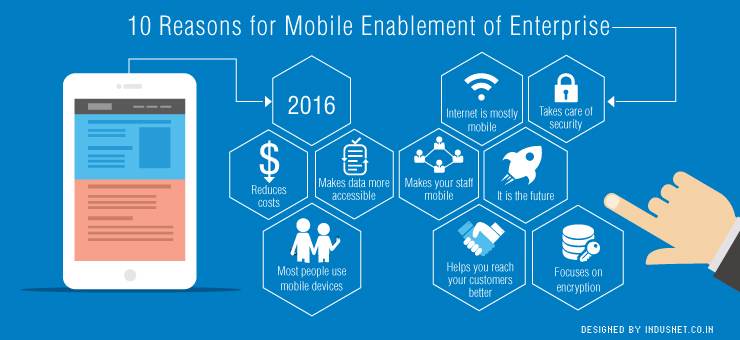
10 Reasons for Mobile Enablement of Enterprise

Enterprise mobility is an idea that started out as a suggestion but is not something that even the smallest of companies agree that they can’t do without. More and more companies are lunging forward to include app strategies and mobile websites in their IT policies. This is certainly helping them in almost all respects. By ensuring that mobility is given the respect it deserves, companies are able to reach target audiences which were once invisible. This is especially true in emerging economies such as India and China, where most people access the Internet using mobile devices. Not only this, enabling mobile enterprise helps you to kick start next generation ERP and HRMS modules, all of which help you to become a leaner and better organization. With this reality in background, it makes sense for you to understand why you must go ahead and engage in mobile enablement of enterprise, if you still have not done it. In this article, let us take a look at 10 reasons why you must enable enterprise mobility now. 1. It is 2016 It goes without saying that we are hurtling towards 2016 and beyond. It just makes practical sense to enable mobile enterprise, which includes coming up with a strategy to develop apps, design responsive websites and also using cloud services on your mobile devices. As we move farther into the 21st century, we will realize that it is going to be a truly mobile world. 2. Reduces costs Enterprise mobility is done with a purpose. IT not only increases efficiency but also reduces cost. You will not have to spend money on legacy systems and software programs, all of which also need additional expenses with respect to storage. Enabling mobile enterprise helps you to save costs and even make some profits in the long term. Cost reduction is certainly one of the most important goals of all companies today. 3. Makes data more accessible Data is usually saved and stored in cloud servers. When it comes to mobile applications, all the data generated will be stored in secure servers, which helps to ensure that you have a steady access to whatever you have saved, whenever and wherever you choose to access it. The days of lugging around a storage device are long gone. Making data should be a priority for a number of reasons such as ease of access, reduction of time and increased efficiency. 4. Makes your staff mobile Technologies such as field force management and options such as BYOD (Bring Your Own Device) make staff more mobile. They will find themselves freer and more at liberty to concentrate on important tasks. This invaluable freedom translates to enterprise profits in the long term. Certainly, who would want to lose these benefits in days like these? Staffs that are mobile will always be able to reach your target goals easily. 5. Helps you reach your customers better Mobility is one of the best ways to reach your target audience. No matter where they are, you can always reach them on their cellphones and storage devices. This helps you to gain their loyalty and also send notifications when required. At the end of the day, this translates to more leads and converts and better sales. Enterprise mobility will certainly help you to target a larger audience. Customer acquisition is an important part of enterprise mobility. 6. Most people use mobile devices It is becoming increasingly clear that people have begun to use mobile devices more than desktops and laptops. This is because mobile operating systems are vastly superior to what they used to be back in those days. Moreover, mobile devices are more democratic, making computing more accessible to everyone. This means, more people use mobile devices than legacy systems like they used to just a couple of years ago. With Android and iOS taking over the world, you simply can’t afford to be left behind. 7. Internet access is mostly mobile Most traffic that websites receive today originates from mobile devices. This means, most people are accessing your websites on mobile devices. To add to this, people prefer using apps and that means, you need to start investing more in enterprise mobility. This is a trend that is likely to become a pattern in the next couple of years. This habit will likely continue in the years to come. 8. Takes care of security All data is stored on cloud-based servers. Your data and information remain safe and security is taken care of. Moreover, whenever you wish, you can choose options such as remote wipe, which will delete all data on certain or all devices if you choose to do so. Certainly, this is something that will interest most enterprise clients. Security must always be one of the most important priorities for every company. 9. Focuses on encryption Mobility is all about data security, privacy and encryption. Encryption is one of the main reasons why people and companies are choosing to use mobile devices and applications. World class encryption technologies ensure that no information is lost or deleted or accessed by people who do not have permission to do so. This bit of technology is what is making a number of companies to go mobile. Encryption may sound complex, but it is also very important in today’s world. 10. It is the future Last but not the least, mobility is the future. You simply have to do what everyone else is doing, even if you have your own hesitations. By choosing to enable mobile enterprise, you will reduce costs, increase efficiency, automate manual tasks and also gain new leads and customers. After all, this cannot be too bad for your company, could it be? Brace yourself for future and go mobile! Conclusion We have already witnessed a paradigm shift with respect to enterprise mobility. You can choose not to be part of this revolution at your own risk. While you may feel it is something that does not concern you, it is becoming increasingly clear

Read More »

10 Ways Automating Helps in Customer Acquisition

Automating one’s business process helps us in a number of ways. It helps us to become leaner and better organizations that can focus on what is actually important. In other words, companies can eliminate unnecessary tasks and automate them while they can concentrate their focus on core business activities. Automating usually involves CRM, HRMS, ERP, Field Force Management and even mobility. Of course, there are other ways in which a company can automate its processes. With the advent of new technologies, it is becoming much easier to automate tasks and business processes. Curiously, all this automation has another advantage. It helps companies to acquire new customers. In this article, let us take a look at how companies can use automation to acquire customers. 1. Improve marketing strategy Automation helps you to improve your marketing strategy by leaps and bounds. This is because of all the added features and analytics that you can squeeze out of your automation tools. It is simply not possible to do so when you are doing things manually. Marketing requires a lot of number crunching and though we may not realize it, automating certainly helps to give a boost to existing marketing strategies. This only means you will get more customers. 2. Social media management Closely behind marketing strategy is social media management, If you have a business you will know how important it is to manage your social media and engage your followers if you want to build a good brand identity. It all boils down to communication and conversations with your potential customers. This is not humanly possible if you want to do all the social media management yourself. It also does not make sense to hire a number of employees to do your social media management. A better idea is to actually automate this process so that you can focus on more important things. 3. Content management Social media management cannot happen without content management. While your content writers and editors may write excellent content, what has been published needs to be shared across offline and online platforms. Moreover, you will need to have a deep understanding about buyer personas in order to make your content strategy work. By automating content management process, you will be able to write the kind of content that will most likely help you to gain customers. 4. Market research Whether you want to engage in social media management or content marketing, equally important is market research. A good market research helps you to understand your market, competitors, target audience and potential customers. Demographics, psychographics and other related data can be automated and analyzed with the help of analytical tools. These reports can be used to create marketing strategies which too can be automated. All this will help you to find the right kind of target audience who are more likely to purchase your goods or services. 5. Help in lead generation Automating also helps you to generate leads. Whether it is by asking web visitors to take action or respond to your call to actions, you will invariably need to automate this process. For instance, all the emails can be automatically collected by a tool which you can use to send out marketing communication. This automation helps you to generate potential leads. If people respond to your marketing communication or show interest, they could probably consider leads. 6. Lead nurturing Once you find your potential leads, you need to nurture them. This is done only through the help of social media communication, email newsletters and also certain events. How often and when you should be contacting them depends on how free you are to engage in lead nurturing. Lead nurturing tools, on the other hand, help you to automate this process and thereby help you to focus on what is really important: focusing on your core business activities. 7. Offer better customer service One of the most important uses of automation is CRM. Customer relationship management helps you to resolve issues, attend to customers’ needs and focus on building valuable relationships with them. All this helps you to create a more customer-friendly image and that is very important to acquire new customers. After all, older customers bring in new customers and if you want to acquire new customers, you will need to treat your existing customers well. This means  you will have to automate your customer service as well in order to increase efficiency. 8. Speedy resolution of complaints Once you automate your customer relationship management, you will also need to focus on speedy resolution of complaints that customers may have. This may require more human reasoning than other areas. Still, automating responses and confirming ticket numbers and other such tasks done manually can be avoided. This will help you to project yourself in a positive light. After all, everyone likes to be responded immediately. You may not be able to do this on your own without a certain level of automation. 9. Increased transparency At the end of the day, automation helps you to bring in transparency and root out bureaucracy. This is simply because software programs are quicker than human beings. If customers try to reach you and are unable to do so, it is going to leave a bad impression on them. The best way to solve this problem is to automate tasks, which will ensure that everything is done transparently. This also avoids red tape and certain malpractices your employees may engage in. 10. Superior security There is nothing more important than security and privacy today. For these two factors to be given attention, you need to ensure that all information and consumer data is stored safely. It is also better if most of this data is processed by machines than humans. This will ensure that information remains secure and private. After all, encryption helps you to keep all data safe from prying eyes. This will eventually add to your credibility and help you acquire new customers. Automation not only helps companies

Read More »
what-is-field-force-management-banner

What Is Field Force Management?

There are a number of businesses that have a direct sales force or a number of staff working across different locations in various parts of the country or the world. They may be selling products face-to-face to your clients or they may be taking products back or they may even be collecting information or making people fill up forms. How do we manage this huge workforce that is out there on the field and doing their jobs? How do you tally the results with the investment or even better, try and make changes to existing field plans? It is increasingly clear that there needs to be a certain sense of discipline and streamlining of field operations. This is one of the reasons why it is important to automate certain tasks within field sales and operations. This helps you to track your assets remotely and contact with your workforce when required. They may also be able to get in touch with you if it is required. Most importantly, engineers, sales representatives and customer care executives can easily send information, scanned receipts and other crucial information to you in a standardized and streamlined manner. This helps in regulating your business and also bringing some order to what is usually a very chaotic way of working. In this article, let us take a look at what field force management is and how it is going to help you. Why you must choose field force management Field force management tools help you to stay in control all the time. They automate what can be automated and leave only the most human-human interaction left to your staff. This helps you to keep a record of all interactions and important data within a database, without you having to manually go through sales receipts, complaint slips and other such details. In other words, a field force management tool is a godsend to companies. Moreover, these tools help to automate several aspects of your staff’s work, leading to an increase in productivity and motivation. By streamlining operations, you will also ensure that important stakeholders are well informed and management visibility is enhanced. This helps you to make smarter decisions and finally help you to serve your customers better. At the end of the day, field force management is similar to an enterprise resource planning (ERP) solution but is vastly different. It is specifically targeted at staff that work on the field and is intended to make them and your work more streamlined, transparent and easy to track. Cloud-based solutions help you automate better Field Force Management is usually cloud-based which means all data is stored and accessible on secure cloud servers. There is no question of losing important data or not being able to retrieve something important. If something goes missing, there will usually be a backup available. Field force management tools include the software, the hardware and also the kind of training that is required for users to use it efficiently. The software usually helps in saving and processing information while the hardware helps employees to enter important data into devices while they are on the job. Sometimes, field force solutions can also be a mobile app that negates the need for a specific or special device. This is very important when it comes to field jobs as carrying different devices can prove to be a cumbersome job. At the end of the day, field force solutions are meant to reduce the burden on staff and not actually inadvertently increase it. All the information that is stored on the cloud can be run through analytics software so that you get the kind of reports that you are looking for to improve your business. The actual process of field force management A field force management tool helps you to remain in contact with your staff while they are at work on the field. This helps you to track your personnel in real-time. Field personnel or your staff can log in and enter their attendance using a smartphone. You can assign that particular day’s task remotely using a web console or your own smartphone. Next, they can carry out whatever duties they need to while you get all the alerts that you set to receive. This helps to increase transparency. You can choose to receive alerts on your phone or on your desktop. Finally, staff can tag completed tasks with audio and images, instead of having to type reports. This helps to focus more on the job than on job reporting. Last but not the least, location tags help you to ensure that the job is done in the right place. Your staff will not be able to take your generosity for granted. All in all, a field force management tool helps you to track and control your staff without you having to be physically present with them and this is the beauty of this tool. Looking ahead Finally, we need to remember that field force management helps companies to reduce administration cost and increase production. This helps to automate data integration which is usually done with the help of cloud servers. Moreover, you can set invoice parameters that help you to also keep track of stocks, inventories and engage in P.O. and task management. A number of field force management users also use it as a tool to engage in credit management. Banks and insurance companies particularly find this tool helpful as payments can be received on the job, instead of asking customers to pay online or offline. This also helps in building valuable customer relationships and enhance loyalty. Thirdly, a field force management tool helps to increase planning efficiency. This means you will be able to allocate tasks and optimize routing. All this helps to increase your ROI at the end of the day and get back the money you invest on-field force management. Finally, you will have more control over production and sales thanks to the automation of data collection. You will also have more

Read More »

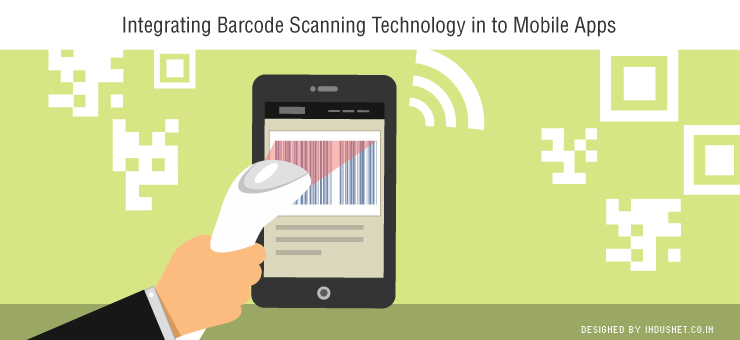
Integrating Barcode Scanning Technology in to Mobile Apps

It doesn’t require a genius to know a little about barcode technology. Barcodes have now existed for a very long time and no one would dispute that this particular technology is not very revolutionary. Yet, this simple and modest technology might have something going when it comes to mobile technology. You may ask, why anyone would use barcode technology when there is near field communication (NFC) and other more advanced tools. The answer is, barcodes are very simple and can easily be integrated within applications rendering them quite useful, especially when you are selling products. A barcode reader can read and output printed barcodes with the help of a computer. All it requires is a light source, a lens and a light sensor that will help in translating optical stimuli to electronic data. Barcode readers also come with decoders that help to analyze barcode data and then send the content to an output port. With this in mind, it should not come as a surprise that barcode technology is simple but useful to use and can easily be integrated into applications that aren’t specifically designed for barcode reading. In other words, barcode technology can help your existing or future ecommerce application to act as if it were on steroids, even while using a technology that has existed for years. Nothing revolutionary but certainly very useful. In this article, let us take a look at why integrating barcode scanning technology into mobile apps may be such a good idea. What are the technological prerequisites for barcode scanning integration? Cellphone cameras that do not have auto-focus are not very suitable for barcode reading or scanning. It is important that a cellphone has at least a minimal camera capability before being able to read the barcode. However, 2D barcodes and codes such as the QR Code and Data Matrix work well with or without auto-focus. This is one of the reasons why so many app developers are using QR codes even when they are quite old-fashioned themselves. Now, NFC is not always supported on every cellphone. However, QR codes can be read on any cellphone that has a functioning camera. For this reason alone, a number of app developers are looking at integrating barcode scanning technology, in the form of QR Code reading so that people can easily read and send information just by taking pictures. This has worked well with most clients who try to keep information secure yet freely available, without users having to enter or type a lot of data. For example, contact cards are shared using QR Codes, while product information can similarly be shared as well. These common barcode formats ensure that codes are quickly and accurately read so that prospects do not lose interest in taking action to your call. Barcode scanning can help you in a number of ways. Some of the applications can be as follows: Movies and music: If you are offering some kind of entertainment related sales, it becomes easier to barcode CD catalogs, MP3 playing, DVD/VHS catalogs and others. This helps to keep a count of titles sold and also, people will not have to physically search for titles. All the information related to a particular title will be visible on their screens. Books and magazines: Similar to music and movies, books and magazines can easily be barcoded as well. Most books have an ISBN number. Books also have other information such as number of pages, weight, volume, hard or paper bound, and other such information. All this can easily be stored in barcodes which consumers can easily read on their mobile devices. Consumer goods: Goods such as groceries, perishables, non-perishables and other products can be barcoded. If you are selling them online, it just becomes easier to repeatedly sell the same goods without having to burden the user to enter information again and again. This also helps to enter nutrition information and even making shopping lists. Life simply becomes easier. Personal property inventory: If you thought this was all that barcodes could do, they can also help in more serious matters such as information that is required to be entered into personal finance software. Scanned receipt images can be associated with appropriate entries and paper copies can slowly be eradicated. This helps in going green as well. Retailers: No matter what you sell, barcodes help in cataloguing and tracking all goods and products that are sold. Moreover, consumers will not have to ask you questions each time they visit your store, online or offline. They simply have to take a picture of the barcode and all the information about that particular product will be available to them. Maintaining barcode experience across devices Of course, you can ensure that the better cellphone your user has, the better your app experience will be. People who use the simplest of camera cellphones may use the simple barcode scanning on your application. However, if it is a smartphone with auto-focus camera, Google’s Android, Apple’s iOS and Microsoft’s Windows Mobile can all be used to scan barcodes. While Apple’s iOS does not have barcode scanning technology built into, there are a number of third party tools that can help in scanning barcodes. Certainly, one only needs to decide upon using barcode scanning within their apps so that there is less burden on both the app owners and the users, when it comes to information collecting and reading. Looking ahead Barcodes are ubiquitous and they make things really easy for consumers to gain information about your product. Similarly, you can use barcodes as a marketing strategy to help consumers get the information they want about the products that you are selling. The best part about all this is that barcode scanning technology can be integrated within applications, even if the app is designed for a different purpose. If you are considering upgrading your existing application with barcode technology or plan to integrate barcode scanning with your brand new app, it is quite easy to do so.

Read More »
How Automating Can Help the BFSI Sector

How Automating Can Help the BFSI Sector

Automation tools can be used in a wide number of sectors. Across industries, automation has helped companies to grow profits, increase efficiency and also heighten accountability. All these results come in after getting rid of manual tasks which only complicate things. Instead, people can be asked to focus on more analytical and reasoning-based tasks that need actual human intervention. We are more familiar with automating human resources, business processes of an organization and CRM. Yet, it turns out that the Banking, Financial services and Insurance (BFSI) sector stands to gain the most. With so many numbers and repetitive tasks involved in this sector, it only makes sense to understand why automation might be good for this particular industry. In this article, let us take a look at how automation might help the BFSI sector to get its groove back and also impress upon its customers. After all, the BFSI sector is not doing particularly well in the wake of bad economy and worldwide crises. Thus, automating this sector has a lot of advantages. Banking sector In the banking sector, one can expect more penetration of growth in the rural areas. If automation is bright into practice, it becomes easier to tackle increasing amounts of financial data, credit disbursement and also maintaining the quality of assets. Similarly, automation helps to reduce risks and improves risk management mechanism. Last but not the least, banking officials are some of the first across industries to adopt new technologies. When we automate banking processes with the help of a banking software development company, customers find credibility in the financial process, which is what is most important. To gain trust and credibility, it is important to carry out tasks quickly and efficiently. Automating most banking transactions help to build trust and also increase the credibility of banking institutions. If we are talking about rural areas, this is only more relevant. Insurance sector In the insurance sector, we see a number of people not understanding the policies and which ones to choose from the many that are available. Building portfolios can be made easier when insurance choices are automated. Customers can be encouraged to fill up details on their own without requiring human interaction. This is made possible through applications and web forms that automatically collect and process data related to insurance claims and applications for policies. When it comes to insurance, there is a huge need for accuracy in the pricing of risks. Similarly, rural markets can be easily targeted when most insurance processes are automated. It becomes easier for on the field staff to reach out to rural customers, sometimes making use of field force management and other tools. It is for this reason that insurance should look towards automation as well. Financial services Financial services include payment gateways, mutual funds, stock trading and other such services. It only makes sense why this sector might stand to benefit from automation. If we look at the stock market, there are always fluctuations that the customers would like to be aware of. These fluctuations and changes can be notified to customers in real-time on their mobile devices. Stock purchasing and selling can also be automated. For instance, a customer might want to sell shares when the price of a stock dips below a certain threshold. Similarly, mutual funds also stand to gain from payment automation. On the other hand, payment gateways mandatorily require some sort of automation. Otherwise, online buying and selling would be impossible. If we look at all these factors, it becomes clear why BFSI stands to gain so much from automation. Common factors that encourage BFSI sectors to automate While these are three different sectors with very different approaches to automating, there are certain factors that are common to all three. All three sectors depend on credibility and trust. Without trust and credibility, customers will not trust either bank, insurance companies or financial service providers. The only way we can rest assured that things are credible is when we know that the services that we offer are efficient, quick and transparent. There should be no room for human errors. Human errors are often misconstrued as deliberate errors to misguide or deceive customers. Thus, when number crunching is automated and when data processing is done in the cloud by software programs, you will only need to concentrate on building that valuable human to human relationship. This helps to grow your BFSI organization in stature and importance. We are seeing a number of BFSI entities automating almost everything that was once considered the domain of clerks or mid-level managers. Now, most of these tasks can be automated in order to increase efficiency, build transparency and root out malpractices. Future trends in the BFSI sector In the near future, we can expect the BFSI sector to lunge forward towards automating most of its processes. This will help the BFSI entities to move towards mobility as well. Automation and mobility are inextricably linked today and for a very good reason. Most of our customers use mobile devices and they expect everything to happen fast. Linking automation software programs to mobility will help BFSI entities to satisfy their customers and also make things easier to process. This may include looking for new customers, serving existing customers, crunching numbers and a variety of other tasks. Only the most complex tasks and that require human intervention can be carried on manually. The rest of the tasks and processes can easily be automated. If BFSI entities begin to automate more, we will actually see a more transparent and efficient world tomorrow. It will take a little while before BFSI entities completely immerse themselves in these newer technologies. Customers on the other hand have already adopted both automation and mobility. With this in mind, it only makes sense to hurtle towards a world that is automated and mobile-oriented. This is not only good for customers but also for BFSI entities that are already reeling under the effects of world economic crises. Automation

Read More »

The Leading Tech Companies Form Alliance to Develop Open Source Format for Online Videos

The tech titans Google, Microsoft, Cisco, Mozilla, Intel, Netflix and Amazon formed an Alliance for open media to develop next-generation video compression technology and codecs in the public interest. Compression improvements would pave the way for high-resolution videos that download faster and look better. The Alliance aims at meeting the growing demand for high-quality video, imagery, audio and streaming across the increasing number of diverse devices and their users worldwide. Each of them will contribute to create an open, royalty-free “next-generation” video format that shall adhere to the following principles –  Optimized for the web  Supportive of copy protection  Flexible for commercial, non-commercial and user-generate content  Interoperable and open  Scalable to any contemporary device at any bandwidth  Capable of consistent, high-quality and real-time  video delivery  Optimized for hardware and designed with low computational footprint According to Mozilla, the plan is to release the standard under Apache License 2.0 instead of working in isolation on independent standards. “Customer expectations for media delivery continue to grow, and fulfilling their expectations requires the concerted energy of the entire ecosystem,” said Gabe Frost, the executive director for the alliance. Besides, Ian LeGrow, manager of the Windows partner group at Microsoft opined “Streaming video is where we’re all headed”. The tech giants are assuming that their mission will successfully challenge the powerful force of MPEG (Moving Picture Experts Group) that has produced many widely used compression standards to dominate video distribution. Our Digital Marketing Project Manager, Mr. Souvik Bhattacharyya in support of the mission said that such a movement will pave the way for a new format which will offer seamless streaming media without any security hazards unlike Flash format videos with countless security glitches. This open codec based format is likely to take over the web very soon and is targeted to offer top notch experience across all devices. Source: Cnet.com, Techtimes.com,

Read More »

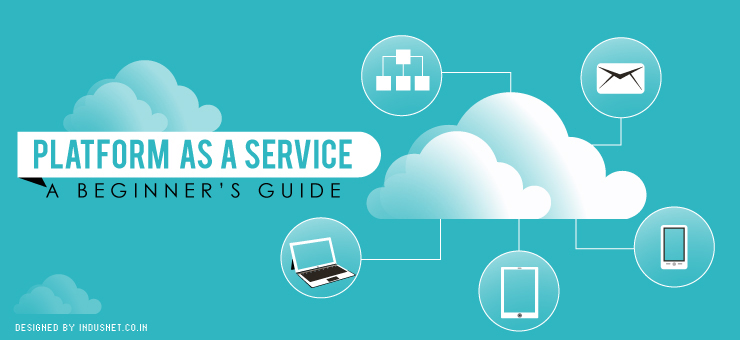
Platform as a Service: A Beginner’s Guide

Platform as a service is the most difficult and confusing to characterize as it is often mistaken with Infrastructure as a service or other cloud computing services. The key factor that defines PaaS is the fact that it allows developers to build and deploy web applications on a hosted Infrastructure. PaaS has an elastic quality that helps in expanding the cloud to accommodate infinite data. PaaS has its own unique set of characteristics that makes your experience of using Platform as a Service more enjoyable one and it can save your time and cost. With increasing costs and unavailability of resources, models such as the PaaS are growing in their stature & importance. It is not only the small and medium sized companies which use PaaS but also the larger ones. There are both technical and economical reasons to adopt PaaS as a preferred cloud computing model. In this article, let us take a look at what PaaS is and how it is used. PaaS for developers A common misconception that prevails is that cloud computing is only for network administrators and this forces us to lose out on many benefits & solutions to tackle certain problems. In a typical setup without PaaS, the tasks involved in setting up a server are acquiring and deploying server, installing operating system, configuring operating system, testing & running it to check whether it works and a hundred more steps. Setting up a new server and hosting an environment while copying the existing data can be really painstaking but if you have PaaS, you would have something called a Virtual Machine (VM) through which you can pass the information to the server like in a USB Flash Drive. This reduces the need for IT infrastructural investment and encourages developers to focus on what they need to really be doing – developing. Some of the advantages of PaaS are as follows: 1. Rapid testing and deploying PaaS provides you an opportunity to the development teams to try different configurations, multiple machines and different locations to assess performance by running stress tests and also check compatibility & response in novel ways that would be next to impossible in a local environment. When the testing becomes quick, deploying also becomes quicker. It saves the developers a lot of time and reduces cost. Most importantly, rapid testing and deploying helps you to build a better business by ensuring that your clients and customers are never left waiting for updates, finished products & other such things according to the way your business might use PaaS. 2. Portability Like we mentioned earlier, PaaS has the option of Virtual Machine or VM, which helps in carrying the existing data on a new server without any hassle. The platform needs to be agnostic to the underlying infrastructure and allow companies to move the application from one IaaS to another. Systems that don’t use PaaS have to spend days to reincorporate data and this uses up a lot of employees’ time. PaaS avoids the unnecessary chaos by its feature of portability. This helps to enhance flexibility within an organization and increase productivity. 3. Dynamic Allocation In today’s competitive market, when there are millions of options to choose from,  IT teams need to be flexible enough  to quickly test or put a new feature of an application or a new service in the market. It needs to be ensured that before launching it on a large scale, it needs to be tested on a small section of clients. Although seemingly difficult, it has become much easier with PaaS and cloud computing. PaaS, when hosted on IaaS, gives you the option of multiple accesses again, reducing time drastically. This helps in encouraging the dynamic cloud process, which is also slated to be the future of cloud computing. 4. API     Application Program Interface or API plays a huge role in making PaaS perform tasks such as user authentication and storing & retrieving files and it can also sometimes help in making calls directly to a database; the platform needs to have a well-documented API. This will contribute in making your business have the flexibility of creating and customizing a software application to interface with the platform, which meets the specific requirements of the company. 5. Availability and scalability The biggest concern about any software or a server is its availability and whether it will be adaptable to your company’s requirements. When you choose a platform, it needs to be easily accessible and available anywhere at any time. If you choose something that isn’t available or is difficult to access, it can cause a fatal damage to your company’s success as you will have to invest a lot of time and energy to just install it. Another important aspect is scalability of any service. PaaS gives you the power to scale the improvements or the problems that need to be solved accurately. The platform needs to be smart enough to take the full utility value of the elastic capacity of an underlying infrastructure. It needs to be able to handle all the requirements of an application. If you want your PaaS model to be successful, make sure that you choose a platform that will help your company’s overall outcome. 6. Boosts Internal Entrepreneurship Due to cloud computing, companies no longer need to put in efforts in maintaining and choosing systems. They can focus on the business aspects of the companies, which is the core constituent of any entrepreneurship. PaaS quickens the development and deployment on an online infrastructure possible. This, in turn, helps to empower visionaries and boosts internal entrepreneurship. All a company has to do is to set aside some budget for PaaS and encourage the IT team to utilize the PaaS to come up with innovative ideas and strategies. The best part is they don’t have to worry about the maintenance and any kind of fixed tariff. 7. Security When we talk about cloud computing of any kind, the biggest concern that arises is about the security of

Read More »
Internet-Culture

10 Internet Subcultures You Need to Know

Have you ever found yourself amazed at the number of internet subcultures that are around today? Ever since the evolution of the Internet, there have been a number of Internet subcultures that have catered to all sorts of audiences across the world. Internet subcultures often evolve rapidly, and many online subcultures emerge from niche communities that form around shared interests. These internet subcultures tell us a lot about how people live, how people use the Internet and how things can often change before we know. Internet subcultures can be defined as a lifestyle that is enabled by some sort of internet connectivity, but is exclusive to a certain group of people. Now, that may not seem particularly interesting but you need to know your subculture to operate within a digital space. Digital marketing and digital professions ensure that we know what we are doing, and that includes knowing all the Internet subcultures. In this article, we have compiled a list of Internet subcultures that are worthy enough of discussion. In fact, these subcultures are quite important, and if you know them, you could turn out to be the most informed person in your group, and that is not a bad thing at all. Internet Meme If you already didn’t know what an Internet meme is, you should probably visit the website of “Know Your Meme”. An Internet Meme is a style, action or idea that goes viral on the Internet and has a certain amount of mimicry or satire behind it. It could be anything from a picture with a caption that goes viral to a group of people dancing to the tune of Harlem Shake. A good example for this is the “Ridiculously Photogenic Guy”, who became a meme after his picture of running with a smile was published online. A simple Google search will yield a number of pictures which have been published with captions. Otaku Japan has a number of subcultures and Otaku is one of them. Before that, Japan has also inspired a number subcultures both online and offline. Otaku is a Japanese term for those who have interest that veer towards obsessions. These obsessions could be related to Manga or Anime and has had a negative connotation for a long time. However, a lot of people on the Internet have begun to identify themselves with Otaku, which relates to positive comic imagery inspired from Anime and Manga publications. Manga and Anime Manga and Anime themselves have given rise to several internet subcultures. A quick Google search will yield us a number of forums and clubs dedicated to Naruto, one of the Anime protagonists. There is also an Internet subculture that fetishizes Anime characters. The more we understand these subcultures, the better we will be able to address our target audiences. Thus, no matter how bizarre these subcultures may sound to us, we need to know them. If you have to design a social media campaign for Anime fans, you know what you should be doing: design campaigns that specifically cater to their interests! Otherkin Otherkin is a subculture of people who believe they are not human beings but ethereal beings such as vampires, ghosts, elves and even demons. They are primarily Internet-based and share their ideas, thoughts on forums that are dedicated to them. One can easily find them on social networking sites. Elvenkind Digest is one of the oldest Internet resources for Otherkin. If you plan to design a campaign for them, make sure that you know which ethereal being they most identify with and create a campaign that will attract them. Cosplay Cosplay is yet another Internet subculture that is a short form for costume play. People belonging to this subculture dress up in costumes and accessories that are inspired by a particular character. This character is usually inspired by manga, anime, video games and even films. They usually post the pictures on social networking sites and thus, their connection to the Internet is crystallized. Japanese street fashion is particularly inspired by cosplay and vice versa. One can also say that this subculture is somehow related to role play. Video Game subcultures There are a number of video games that attract huge fan followings. Super Mario, Pacman and others are immensely popular among Internet users. They predominantly use social networking sites to share their ideas and nostalgia for these games. One must be particularly attentive to their needs as video game fans are very common and most tech professionals tend to play video games anyway. One of your colleagues could be a video game fan. GPS dating With the rise of smartphones, GPS based dating applications have become very popular. They have become so popular that there are GPS based dating application for every fetish out there. There are applications for those who prefer ‘bears’ and also for those who prefer “lolitas”. In fact, online dating applications which use GPS have given rise to a new subculture. If you are planning to start a dating website or a social networking site, you need to know that there are already a number of GPS-based applications catering to every fetish out there. How different are you from them and which subculture are you targeting at? You need to answer that question. Secret groups Internet comes with a lot of secrecy, though that secrecy is not accessible to most of us. Yet, there are a number of people who use applications such as Tor to communicate in secrecy. These secret clubs and societies which are formed online give space to the disadvantaged, especially those who are unfairly prosecuted in their repressive countries. Nevertheless, a number of people have also misused these spaces, leading to blacking out of these websites. Secret groups tend to be very elusive and do not let outsiders in easily. Hashtags Surprisingly, a number of subcultures can be found readily on Twitter. These Twitter subcultures are defined by the use of their hashtags and those who use that hashtag are immediately recognized

Read More »
MENU
CONTACT US

Let’s connect!

Loading form…

Almost there!

Download the report

    Privacy Policy.