Tag: mobile apps

Patient Engagement Through Health Apps

Enhancing Patient Engagement Through Mobile Health Apps

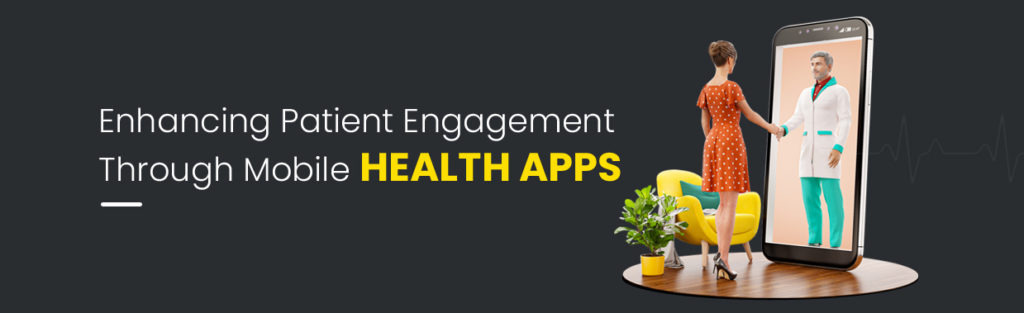
Patient engagement is a strong buzzword today, particularly at a time when the entire healthcare industry is taking the digital route.  The conventional system is fast evolving into a more efficient and highly effective one with better patient engagement in healthcare being a focal point.  In this context, mobile health apps now make a compelling case for themselves with a view towards bolstering patient engagement, enabling better care quality, easier management of medical records and data exchange, and taking care of several other tasks in the bargain.  There are several kinds of apps that can be leveraged in this context, including urgent or emergency care apps with alerts, general hospital apps for information and engagement, referral apps, outpatient apps, and tracking apps to name a few.  How Mobile Health Apps Are Boosting Patient Experience   Mobile health apps are ushering in major changes for the entire mainstream healthcare ecosystem, enabling several aspects including the following: EMR/EHR Integration This is one of the key things to note if a healthcare provider is wondering how to engage patients in their healthcare journey. This helps patients manage, store, and control their health records, while also enabling hospitals with population health management. Healthcare interoperability also goes up considerably throughout hospitals as a result.  Notifications, Feedback, And Updates This is another patient engagement-related feature. SMS notifications keep patients updated about ongoing treatments and appointments while giving them a robust feedback mechanism at the same time. Profiles Of Doctors Another one of the unique patient engagement solutions is to have transparent information on the profiles of doctors, their credentials, their expertise, and soon. Healthcare providers can also leverage analytics for matching patients with specific doctors.  In-App Consultations Patient engagement also goes up considerably with mobile health apps facilitating in-app consultations with doctors and healthcare providers. This can be either through video or text.  It can be integrated with the ability to instantly access patient history and dispatch prescriptions that patients can use thereafter. This can also solve the remote healthcare problem in under-served areas throughout the country.  At the same time, it also helps patients who wish to get timely advice without sitting in lines at outpatient centres. Tele-health is one of the biggest emerging trends in the global healthcare space and this is where mobile health apps hold the key towards its successful implementation.  Appointment Scheduling Scheduling appointments with doctors can be a simple affair through suitable apps, completely eliminating the need for calls and anxiety. Patients can choose their doctors and book dates and times when they are available.  Medicines And Test Bookings Patient engagement can also be boosted with app-based access to medicines and other essentials, based on prescriptions issued by doctors. At the same time, they can also avail of features like booking tests across a variety of categories, either at healthcare centers or their homes, depending on what is feasible.  Why Mobile Health Apps Are The Future Of Better Patient Engagement  There are several advantages to using mobile health apps for stellar patient engagement. These include the following: Higher transparency in terms of doctor information, availability, costs, and patient information.  Easier management/access as far as patient details are concerned, with physicians being able to access data swiftly. Boosts interoperability across hospitals and enables better treatments.  Quicker physician/doctor consultation, higher quality of care with more personalization, and easy tracking of progress.  Greater control of patients over their healthcare treatments.  Saves the time and energy of patients, while freeing up resources at hospitals.  FAQs How can mobile health apps enhance patient engagement? Mobile health apps can enhance patient engagement with easier data management and access, appointment bookings, telehealth consultations, and higher control over healthcare treatments.  What features should a mobile health app have to be effective? Mobile health apps should have features for data integration, appointment bookings, consultations, prescriptions, payments, test bookings, notifications, and other helpful resources.  Are there any privacy concerns with using mobile health apps? Privacy concerns exist in terms of the proper management of confidential patient information in a secure manner by healthcare providers. The Cybersecurity and governance protocols have to be strong in this regard.  How can healthcare providers encourage patients to use mobile health apps? Healthcare providers can encourage more patients to use mobile health apps by advertising their offerings and promoting the key benefits of saving time, money, and energy. 
Read More »

Does Every Company Need to Have a Mobile App?

Most companies today are moving towards enterprise mobility and many of them seek to have mobile applications of their own. While mobile applications provide a great opportunity to engage the audience and communicate with them, it may not always be the best option for every company. Sometimes, the business of the company might be such that an application may not be required. In a different scenario, a big budget app may not be required but a simple one might do the trick. There is also a tendency these days to erroneously assume that apps replace websites. This is not true. Enterprise mobility is not only about mobile applications but it encompasses a lot of other areas. Yet, companies choose to go the app direction, and it is not always an advisable thing to do. Apps are made with specific purposes under specific circumstances. They need to be viable for the business and its objectives. Unfortunately, too many companies have tried to develop apps that lie ignored and unused by intended target audiences. This does not mean apps are not required, but they may not be necessary for every organization. Consider these questions before settling on a mobile application: Do you have the budget? Apps cost money. It is not easy for a small company to invest in a top notch application and expect that everything is going to go smoothly. Apps need updates, their security needs to be very high, and they also need to be very intuitive. All this costs money and if companies do not have the budget required for an app, it is probably a good idea not to venture into this space, as a sub-standard app is only going to place the company in a poorer position. Do you really need it? A lot of times, you may not need an app. Your company probably just needs to invest in web development. Maybe your website just needs a mobile website and not a mobile app. There are a number of situations where you will not need a mobile application. Consider your situation wisely, and only then must you make a decision. What purpose does your app serve to you or your audience? List all the benefits and advantages of the proposed app. What business purpose does it serve you? Is it going to bring any value to your consumers? How is it going to help them? Can’t this be solved just by adding features to a mobile website? There are a number of questions you need to ask yourself before you decide to have an application. Do not hurry up. As you can see, there are a number of reasons why you may not need mobile applications. Most importantly, you need to consider if you are going to really make any profit from the mobile app. Otherwise, you might just be crossing your budget and investing in something that may not be urgent. However, investing in web development, lead generation, social media campaigns, etc are more urgent. Even more urgent is the need to automate and move most of your data and processes to the cloud.

Read More »

Google Brings Android Auto To Drivers’ Phones

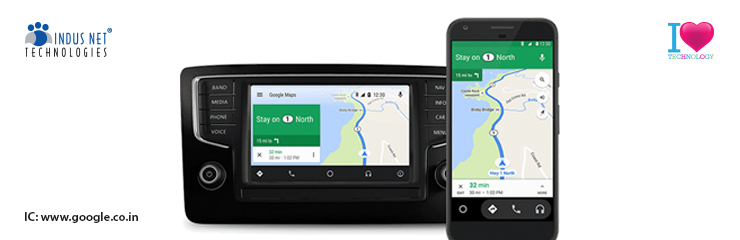
All old and incompatible cars will be able to access Android Auto through phone. Anyone with Android 5.0 or above can access directions, communications and music without any distraction behind the wheel. Phone can be connected to compatible car display or mounted on dashboard to bring your favorite apps in one place. Update your Android phone if need be, but keep that old car going. #apps

Read More »

Manipulate Who You Are Online

To handle privacy concerns, SudoApp allows users to create and delete temporary/ permanent identities. All identities allow you to have a different name, email id and phone number. A second app SudoPay allows you to create one-time or multi-use credit prepaid debit card  to  use  along  with  your identities  in  case you are apprehensive about credit card frauds. Let’s hope users don’t fall prey to identity crisis. #apps

Read More »

Integrating Barcode Scanning Technology in to Mobile Apps

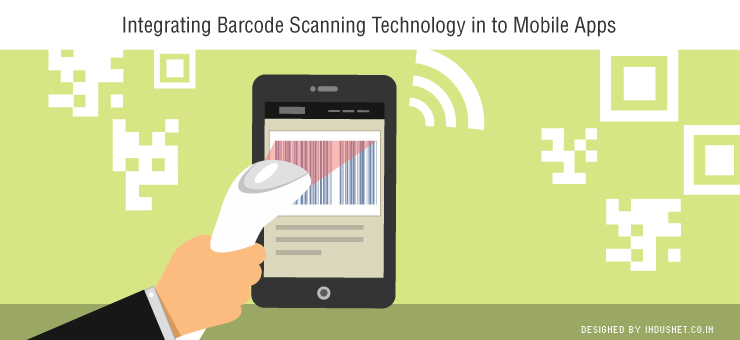
It doesn’t require a genius to know a little about barcode technology. Barcodes have now existed for a very long time and no one would dispute that this particular technology is not very revolutionary. Yet, this simple and modest technology might have something going when it comes to mobile technology. You may ask, why anyone would use barcode technology when there is near field communication (NFC) and other more advanced tools. The answer is, barcodes are very simple and can easily be integrated within applications rendering them quite useful, especially when you are selling products. A barcode reader can read and output printed barcodes with the help of a computer. All it requires is a light source, a lens and a light sensor that will help in translating optical stimuli to electronic data. Barcode readers also come with decoders that help to analyze barcode data and then send the content to an output port. With this in mind, it should not come as a surprise that barcode technology is simple but useful to use and can easily be integrated into applications that aren’t specifically designed for barcode reading. In other words, barcode technology can help your existing or future ecommerce application to act as if it were on steroids, even while using a technology that has existed for years. Nothing revolutionary but certainly very useful. In this article, let us take a look at why integrating barcode scanning technology into mobile apps may be such a good idea. What are the technological prerequisites for barcode scanning integration? Cellphone cameras that do not have auto-focus are not very suitable for barcode reading or scanning. It is important that a cellphone has at least a minimal camera capability before being able to read the barcode. However, 2D barcodes and codes such as the QR Code and Data Matrix work well with or without auto-focus. This is one of the reasons why so many app developers are using QR codes even when they are quite old-fashioned themselves. Now, NFC is not always supported on every cellphone. However, QR codes can be read on any cellphone that has a functioning camera. For this reason alone, a number of app developers are looking at integrating barcode scanning technology, in the form of QR Code reading so that people can easily read and send information just by taking pictures. This has worked well with most clients who try to keep information secure yet freely available, without users having to enter or type a lot of data. For example, contact cards are shared using QR Codes, while product information can similarly be shared as well. These common barcode formats ensure that codes are quickly and accurately read so that prospects do not lose interest in taking action to your call. Barcode scanning can help you in a number of ways. Some of the applications can be as follows: Movies and music: If you are offering some kind of entertainment related sales, it becomes easier to barcode CD catalogs, MP3 playing, DVD/VHS catalogs and others. This helps to keep a count of titles sold and also, people will not have to physically search for titles. All the information related to a particular title will be visible on their screens. Books and magazines: Similar to music and movies, books and magazines can easily be barcoded as well. Most books have an ISBN number. Books also have other information such as number of pages, weight, volume, hard or paper bound, and other such information. All this can easily be stored in barcodes which consumers can easily read on their mobile devices. Consumer goods: Goods such as groceries, perishables, non-perishables and other products can be barcoded. If you are selling them online, it just becomes easier to repeatedly sell the same goods without having to burden the user to enter information again and again. This also helps to enter nutrition information and even making shopping lists. Life simply becomes easier. Personal property inventory: If you thought this was all that barcodes could do, they can also help in more serious matters such as information that is required to be entered into personal finance software. Scanned receipt images can be associated with appropriate entries and paper copies can slowly be eradicated. This helps in going green as well. Retailers: No matter what you sell, barcodes help in cataloguing and tracking all goods and products that are sold. Moreover, consumers will not have to ask you questions each time they visit your store, online or offline. They simply have to take a picture of the barcode and all the information about that particular product will be available to them. Maintaining barcode experience across devices Of course, you can ensure that the better cellphone your user has, the better your app experience will be. People who use the simplest of camera cellphones may use the simple barcode scanning on your application. However, if it is a smartphone with auto-focus camera, Google’s Android, Apple’s iOS and Microsoft’s Windows Mobile can all be used to scan barcodes. While Apple’s iOS does not have barcode scanning technology built into, there are a number of third party tools that can help in scanning barcodes. Certainly, one only needs to decide upon using barcode scanning within their apps so that there is less burden on both the app owners and the users, when it comes to information collecting and reading. Looking ahead Barcodes are ubiquitous and they make things really easy for consumers to gain information about your product. Similarly, you can use barcodes as a marketing strategy to help consumers get the information they want about the products that you are selling. The best part about all this is that barcode scanning technology can be integrated within applications, even if the app is designed for a different purpose. If you are considering upgrading your existing application with barcode technology or plan to integrate barcode scanning with your brand new app, it is quite easy to do so.

Read More »

The Emergence of GPS-based Apps

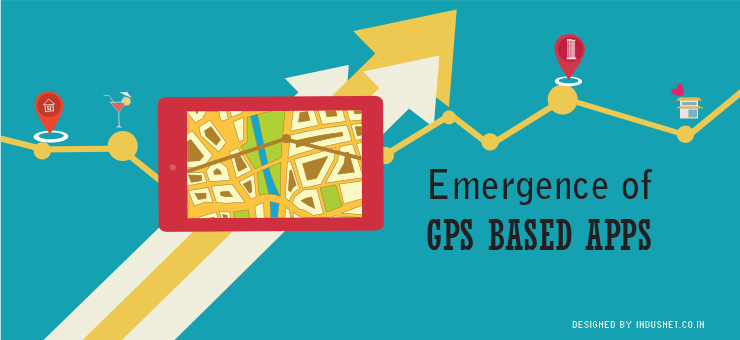
The last time you wanted to meet someone interesting for a date, you probably opened one of the many apps available to look who is near you. You also probably opened another app to see which restaurants or bars are nearby, if you were visiting a new city. Of course, there are always those meet-ups nearby that you can check out, when you are in another city. All these tools help you to meet interesting people, access services and products close to where you currently are and also receive help with respect to maps and directions. All this is possible because of the GPS technology. There has been a spurt of growth in the realm of GPS-related apps and this is something that one must take note of. GPS based apps are becoming an everyday-part of life, if they haven’t already become. As more people adopt smartphones, we will see a greater need to choose GPS-based applications as our main format for marketing locally. The GPS technology can be used in a number of ways today. It has almost changed lives, and people are warming up to the idea of GPS-based apps even before they are being released, calling for a growth in developing such location-based apps. Is GPS right for you? If you have a business that caters to a certain geographical area, you could try using GPS-technology in your app. Most businesses that are local can somehow integrate GPS into their apps. This helps clients or customers to figure out where you are, though maps usually do the same thing too. By using GPS, you will be more accessible to your target audience and they will be able to reach you quickly. The tendency today is to find a service provider who is physically closest to the user. This means, if someone is in the vicinity of where your business is located, if you are on a platform where your location can be tracked, it is better to integrate GPS somehow. There are many existing apps that help you to make use of GPS without having to design a new app. Yellow pages and classifieds have their own apps which help people to search for businesses closest to them. You could start with getting listed on those apps. This will help you to be more visible and approachable to clients and customers who are in the vicinity. Mind you, a number of your competitors might already be using GPS-based technology. The future of GPS GPS certainly is going to be a big part of our future. It can be used in innumerable ways and it helps businesses to reach their clients and customers easily, without having to actively participate. When the customer opens an app and looks for businesses nearby, yours must be listed. It becomes that easy for this client or customer to approach you. GPS works best for companies and businesses that are geographically based. If your business caters to a particular geographical community, it would be wise to get listed on a GPS-based application. If you wish to have your own GPS-based app, you should have a good reason to do so. You might even consider your GPS-app to be a product on its own. If you are willing to consider your app to be a product on its own, feel free to speak to our app development consultants who would be better able to help you make a decision. At the end of the day, it is important to note that GPS is here to stay and will remain an important part of today’s application ecosystem.

Read More »

Mobile Advertising 101

Introduction Mobile advertising is the most popular form of advertising. It is the most exciting frontiers in interactive advertising. Part of the success of mobile advertising can be attributed to the growing demand and reach of mobile devices in addition to the evolution of sophisticated smart phones. Internet has now been reinvented on mobile devices, so as the advertising. Mobile advertisement is an essential pillar of online marketing strategy. Each and every company/business is trying to reach to as many customers as possible and mobile as a medium is successfully catering to the need. Advertisers are shifting focus from mainstream computers to Mobile devices, hence smaller, personalized and interactive form of advertisement is also gradually gaining popularity. In the latest “Mobile Advertising and Marketing 3rd Edition” report  by Berg Insight the global mobile marketing and advertising market will grow from € 1 billion in 2008 to € 8.7 billion in 2014 which is a 43 percent Compounded Annual Growth Rate. At that value it will be 11.7 percent of total digital advertising. The number presented above gives an idea about how mobile advertising is gradually playing an important role. Mobile Advertising ecosystem The mobile advertising ecosystem involves several intermediaries between the “Advertisers” and the “Consumers”.  When a message has to be conveyed from an Advertiser to an intended consumer, it has to be processed through Ad agency, Content publishers, Mobile Carrier and finally to the Consumer. The figure below gives workflow of a typical mobile advertising campaign: Types of Mobile Advertisement Mobile advertisement is of various types. They vary from a simple SMS to rich media ads like animated graphics and video. These ads can be highly targeted and can be displayed based on user’s behavior. Let’s discuss below the various forms of mobile advertisement: SMS (Short Messaging Service) This is the primitive and simplest form of mobile advertisement and exists from a long time ago. This kind of advertisement is supported by all the mobile phones and hence it has the highest reach. But the conversion rate for SMS ads is very low. Whatever information a brand wants to convey to the consumers is composed in short message and sent via a SMS gateway. SMS advertising is suitable for sending coupon and special discounts. Retail, restaurants and entertainment markets get benefitted through this form of mobile advertising. If this SMS ad is used excessively by sending same message to a number multiple times, it cause irritation among customers and can be fatal to a brand. Text Ads These kinds of ads are displayed like a normal text on mobile websites. These ads are currently responsible for 50% of mobile Internet traffic as they fit in almost any mobile device and mobile web browsers having Internet access. The Text ads like normal desktop ads contain 3 lines of text and a URL that links to the advertiser’s website. Image Ads The image ads can be of 2 types. One that is served through MMS and another served through Mobile websites. This is a popular method of advertising. The image ads include both static and animated images. In image ads via MMS, the advertisers load static and animated images to an ad server and the ad server identifies the mobile device and serve related ads. In the image ads via mobile sites, the ads images are embedded on the mobile web pages and appear while browsing the mobile sites. Graphical Banners There are various types and size of graphical banner ads available for mobile. These ads may be quite interactive and can have call to action button placed on it. The difference between image ads and banner ads is that image ads might not have a clickable component whereas the graphical ads have a clickable component. Video Ads These kinds of ads are usually supported by high end mobile devices and resemble mainstream advertisement. The ads that are displayed on TV or websites can also be displayed on mobile devices. For example while playing videos in sites like youtube, few of the videos want you to see the video ads before the actual video is played. Embedded Ads These kinds of ads are generally part of free mobile games or apps and displayed during game play. Push Notification/Scroll Ads These kinds of ads are pushed to your mobile device and appear when the mobile device is idle. Usually these ads ask you to perform some action to deliver further content. These ads are served through the mobile operator. Mobile Ads Transmission Options Mobile ads can be served via various medium as given below: Short Messaging Service Multimedia messaging Service Premium SMS Subscription based SMS service Wireless Access Protocol sites Mobile Web Mobile Operator (via caller tunes and IVRS) Streaming media Broadcast Media Mobile Ad Network In order to facilitate the mobile advertising, the mobile ad networks play an important role. These ad networks are the one where advertisers meet the publishers. Below are a list of global renowned ad networks: Admob Admob has been acquired by Google in 2009. It is one of the world’s largest mobile advertising platform. It serves as high as 40 billion banner and text ads per month across mobile web and mobile apps. iAds iAds is a mobile advertising platform from Apple. iAds has been a part of iOS 4. It helps third party application developers to embed advertisement into the apps they build for iPhones and iPads. inMobi Founded in India, inMobi is the largest independent mobile advertising network in the world. It is a performance based mobile advertising network and helps advertisers reach their target audience and publishers monetize their content. It started as an SMS based search platform. Microsoft Adcenter Mobile advertising solution from Microsoft offers both display ads and search advertising. According to Microsoft the mobile display ad solution connects to nearly 50 million unique users and the mobile search ad solution leverage the partnership with Bing and Yahoo and reaches to almost 28 million users. Apart from the above list of ad

Read More »

How to Build Successful Mobile Apps?

As Smartphones are constantly evolving, people are preferring to go mobile to be able to have information access at fingertips. At present the number of mobile devices has exceeded the number of desktop computers. According to Microsoft Tag’s survey for the year 2011, there are over 4.3 billion mobile phones and out of that over a billion are Smart Phones. A Smart Phone becomes really smart when it is feed with Apps. According to a survey by Nielson usage of Mobile App is about 56% of all action performed in smartphones. This shows the immense popularity of the Mobile Apps. When we look at the number of approved Apps in Apple’s App Store or Android Marketplace (the 2 most widely used Smart Phone OS platform) it becomes more obvious. Almost half a million in each of them, they really look like saturated. But opportunities are still there to make a fortune out of a Mobile App. Not all the Mobile Apps developed are successful. So what are the differentiating factors that separate the successful Apps from the failed one? We have compiled few tips which need to be considered before developing a Mobile App and making it successful.   Researching to Generate Idea Thorough research before finalizing development of an App is very essential. With thousands of apps in Marketplace chances are high that your App will be a replica of another existing App. If you still decided to work on an existing App you can find out what is lacking in the existing App and come up with an improved one which will generate interest in people and your App will be widely used. Choice of Mobile OS Once you are done with your research to finalize what you want to develop, you need to decide the platform for which you will be launching the App. As Native Mobile Apps are not cross platform compatible they need to be developed separately for each platform like iOS, Android, Windows or Blackberry.Windows and Blackberry marketplace having less number of apps, any newly added app will have greater visibility contrary to iOS and Android. But Android having highest market share worldwide (approximately 38% by April 2011 and expected to reach 49% by mid 2012) you can have more number of users when you develop a native App for Android and it really clicks. The following image from Nielson’s report shows the market share of different smart phone OS in US. The table below shows Gartner’s data on Sales volume and market share in percentage of mobile devices by Operating System. The figures for 2012 and 2015 are expected. Know Your Target Audience When you finalize the type of app you are going to develop you have to identify the audience for the App. Each App present in any market place is targeted towards a specific group of people. So when you successfully identify the audience for your App their needs will be clearer to you and you can work out how well you can satisfy them. This one done successfully is like owning half the battle and nothing will stop your app from being successful. Ease of Usage No one prefers complexity and that holds good even for Mobile App. While designing the app make sure the interface is aesthetically appealing and it has an easy to follow navigation. Whatever features your app might be providing, if it is not easy to use, it will not take a second thought by the users to press the delete button. So good features combined with aesthetically appealing UX design will make you App a hit. Naming your App Name of the App plays a vital role in App’s success in the marketplace. So giving a proper name to your App is a very important step in your App development cycle. The name should be catchy, should have a high recall value and should properly demonstrate what purpose the App serves. Social Integration Try integrating your app with social tools like Facebook and Twitter. These will let the users interact with their social profiles through the App and their feeds can be updated through the App. You can even allow login to the App through Facebook and Twitter. Marketing Even though your App is completely unique and addressing the most sought after requirement in mobile space, if it does not reach to the target audience, it is of no use. So a strong marketing campaign to improve the App visibility is very important. The below chart from Nielson’s report on how consumers find branded mobile app will help in creating a proper marketing campaign: Updates and Customer Support Your App should undergo constant development and new features need to be added as and when needed. This also keeps the competition out of your reach. The App should come with proper support in the form of tutorial and help file as well as email and phone support when required. Once you reach at the top in order to sustain your position you need to be engaged with your users. Be active on social media and communicate with your users by asking for feedback and answering their queries. Also encourage them to vote for your App in the marketplace. All the above points when kept in mind while developing a mobile App will definitely make your App successful.

Read More »

Introduction to M-Learning

M-Learning or “Mobile Learning” is a form of learning through mobile devices. It is a flexible form of learning as you do not need to be at a predetermined location at a predefined time. You can take up learning at your own convenience even while you are on the go using portable devices like Mobile, Mp3 players or tablets. Like any other forms of learning m-learning also offers collaboration among students and instructors and instant tips and feedback can be shared. M-learning is the next big revolution in mobile technology. E-Learning is a passe and M-Learning is the beckoning future. The capabilities of mobile devices are gradually increasing which is facilitating further development in M-Learning technology. When the concept of M-Learning evolved a decade ago, no one imagined that it will undergo such phenomenal development. Thanks to the rapid growth in mobile technology and evolution of mobile phones into Smart phones. Types of M-Learning M-Learning comes in various flavors as discussed below: mVLE Based Learning This is an extension to Virtual Learning Environment like Moodle and Atlas. These E-learning providers have started offering Mobile Apps for facilitating learning through Smart Phones. So Mobile users can take advantage of activities happening in the non mobile version of the environment. Apps based learning There are specific mobile apps that help in improving vocabulary, mathematics and other skills. This is kind of discrete learning. This method supports interactive learning and hence works pretty well. There are free and paid apps available on different platform in the app stores which can be installed on the smart phone to begin study. Podcasting It is a form of passive learning where in the study materials are provided in the form of audio files. These can be played using mobile phones or mp3 players. Podcasting is more effective if it is accompanies with related slides and videos. If the audio podcast is instructional and allow users to follow certain instruction and perform task while listening to the podcast it becomes more effective. Augmented Reality Based Learning Augmented reality is a direct or indirect view of a real world based on the images captured through mobile phone camera and using the GPS. This technology can be utilized to impart M-Learning in a sophisticated way. Through Augmented Reality based learning users can input information and interact with other users as well. The HARP (Handheld Augmented Reality Project) project from Harvard University is based on an Augmented reality game to teach students Math and Science. Experience Based Learning This is a mode of learning that utilizes the device functionalities like GPS, Camera to enhance the user experience while learning. Students can share information on the fly while on a field visit. Content Delivery Based Learning This is another passive learning. The learning materials can be distributed in the form of ebooks, SCORM packages or html files to be read in mobile devices. These method is mostly available for Smart phones. Game Based Learning Game based learning is a very effective way of teaching with highest memory retention. This method is quite popular in offline learning as well as in E-learning. Due to the development in mobile technology it has now been offered through mobile too. Social Learning Social learning is also known as collaborative learning. This involves users networking with other users as well as peers using social network. Social Networking sites like Facebook and Twitter are facilitating this with their mobile apps. Technical Approach to M-Learning While building M-Learning products and services the sole goal is to reach the maximum possible audience. This means the technology used to build it, should be supported on wide range of devices. With that said, cross platform technology for building apps or relying on mobile web is the only option at hand. The existing web standards like HTML, JavaScripts and CSS can be used in imparting M-Learning through mVLE and content delivery methods. The rapid development in Cross platform Frameworks like PhoneGap and Titanium enables cross platform applications to access device features which were only recently been possible through native apps. This approach is fulfilling much of the limitations offered by web approach. However for Game based learning or Augmented Reality based learning which requires sophisticated 3D technology no other substitute is available then going through the native apps and porting it to different platforms. The image below shows technical approach for various M-Learning techniques: Few M-Learning Mobile Apps As we discussed above, there are variety of M-Learning techniques. Some may require you to download an App and some can be done without use of any dedicated apps. Given below are few useful mobile apps related to M-Learning: Moodle Mobile Moodle Mobile is an extension of Moodle web. With the help of this app, you can get connected to your Moodle account and track progress of your course as well as take up course from your mobile. You can even download many courses for offline viewing. Teachermate As not all the students in a class posses same capability, it is very essential to impart them individual instructions while teaching. Teachermate differential instruction system helps teachers in imparting individualized and targeted reading and math instructions to students. Martha Speaks Dog Party This is an app for children to improve vocabulary. A study indicated that children, who played this, were managed to improve vocabulary by 31 percent. Dictionary Apps Dictionary.com is a quite popular mobile apps available in all of the smart phone platform. Orient Longman and Cambridge have also come up with paid mobile app based on their paper dictionary Johnny Grammar’s Quizmaster Johnny Grammar’s Quizmaster for Android is a grammar related app in a quiz form. It has everything related to English grammar like spelling, vocabulary and grammar. Managing Content for M-Learning People often think that mobile learning is delivering e-learning on smaller devices, which is not exactly true. M-Learning has much more potential than eLearning. There are Mobile Learning Management Systems (MLMS) which can be used to create interactive contents suitable for

Read More »
MENU
CONTACT US

Let’s connect!

Loading form…

CONTACT US

Let’s connect!

    Privacy Policy.

    Almost there!

    Download the report

      Privacy Policy.