Tag: cloud

MakeYourTax: A Web-Based Tax Filing Solution for CAs and Enterprises

The new financial year has already begun and most of us have finished filing for returns in the nick of time. In fact, studies reveal that for accountants and CAs, the weeks preceding tax filings are some of the most stressful, leading to reduced performance and quality of life. People get stressed out on tax issues simply because numbers are scary, and filing tax returns involves a lot of number crunching. A simple mistake can cost a CA his client. While chartered accountants are trained to do this, even they find it difficult to handle different clients and may inadvertently make errors. Existing tax software programs require you to install them physically on a computer, making your system slow and inefficient. Also, you may not be able to rectify or correct issues on a different computer or from a different location, requiring you to file your returns on the computer where the tool is installed. All this leads to a reduction in efficiency and a gradual loss of man hours which could be used for something else. The solution to all these problems is MakeYourTax, a unique income tax returns filing web-based application, a joint venture of Indus Net Technologies and Taxmantra. How does MakeYourTax help CAs and enterprises? MakeYourTax is a cloud and web-based app that requires no installation and is available 24×7. It is easy to use and all you need to do is log in once to start filing your returns instantly. This is the perfect tool for those who are working from multiple office set-ups. MakeYourTax supports all ITRs and you can directly upload XML files, negate the requirement for entering data manually. This web-based application is perfect for chartered accountants (CAs), accountants and enterprises. The tool is specifically useful for chartered accountants, who often go through a reduction in efficiency because of older legacy taxation tools. This cloud-based filing system helps CAs to delegate work to junior interns, and it makes filing ITR and e-TDS of different clients a breeze. If you are a CA, you will no longer have to struggle through manual installations, performance audits and regular updates of your software. All this happens in the cloud, without you ever having to do anything. In other words, chartered accountants can finally leverage the power of cloud computing. If you are a chartered accountant and were wondering how MakeYourTax will help you, this section will help you to understand its main features. A taxation solution with full features The app covers ITR 1, 4S, 2, 2A, 3, 4, 5 and 6. You can easily make revisions and rectifications. In other words, MakeYourTax is a full-suit taxation app that solves all your problems as a CA, and you can simply focus on growing your business and nurturing your clients, instead of worrying about technicalities and software issues. Cloud-based solution MakeYourTax is a cloud-based app that does not require any installations or upgrades. This means the app is always up-to-date, ready to serve you, help your crunch numbers and make your work a lot easier than you might ever imagine. It is incredibly fast and can scale up during demand seasons such as the weeks before tax-filing deadlines. If your interns are not able to come to your office, they can simply work from home. This allows you to hire more interns and employees, especially if you do not have a large office. Helps you collaborate As MakeYourTax is a cloud-based app, you can easily collaborate with your team and also your clients across the world. The application provides simultaneous access, which makes coordinating and collaborating very easy. With a single license, you gain access to a multi-user, multi-location platform that easily solves all your tax-related problems. Easy to use As a CA or an accountant, you might worry about how difficult this software might be to use. The app has been designed with non-IT professionals in mind and is thus very intuitive and easy to use. In fact, even junior interns can use the application easily. If you need support, our trained tax professionals will help you and clear your doubts. Data protection and security When it comes to sensitive data such as tax-related numbers, data security is of utmost importance. MakeYourTax has been designed with protection and security of data being high on the priority list. All data is kept private and the app features 256-bit SSL encryption. With encrypted back-ups being the norm, you never have to worry about your stored data falling into wrong hands or it getting lost. With guaranteed data backups and security, you can heave a sigh of relief and focus on your work. Future updates and features In the future, MakeYourTax is going to receive even more features as it is updated regularly and automatically over the cloud. Some of the features that will be available soon are TDS returns preparation and filing, service tax returns preparation and filing, and VAT returns preparation and filing. Moreover, we have a list of other useful features that we plan to introduce soon. With more than 30 years of experience in the field of taxation, our team consists of veterans who know what it takes to crunch numbers efficiently. Our team has filed more than 300,000 tax returns for their clients and managed more than 8000 businesses. The team’s technical expertise is sound too, with more than 18 years in the technology sector. MakeYourTax.com costs INR 9850/- per year for unlimited usage, multiple users, and multiple offices, for one firm. We also offer a white label tax filing portal which will help you acquire new clients, but this comes at an additional cost. All along, no matter what questions or doubts you have, our experienced team will be happy to assist you. If you would like to understand more about the application and how it can specifically help you, please feel free to contact one of our representatives and they will be glad to help you.
Read More »

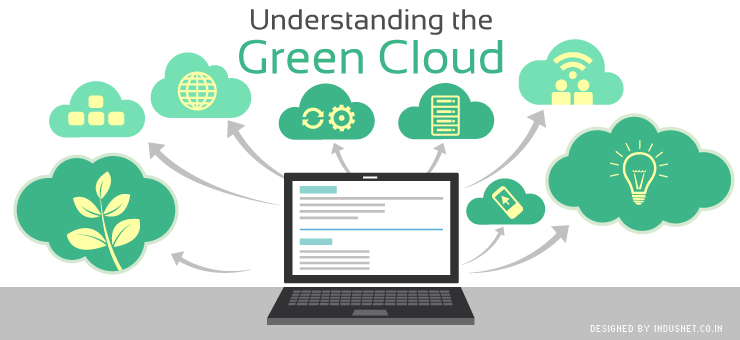
Understanding the Green Cloud

Most of us have already begun to opt for cloud computing in one way or another. Whether we choose to automate our HR processes with the help of an HRMS or we choose to install ERP solutions in order to automate business process, most companies today engage in cloud computing. Yet, companies are not aware of the benefits of green cloud computing. In other words, they still need to understand the importance of using the green cloud. Green cloud computing refers to an infrastructure that is less harmful to the environment and that requires less cooling systems to store data and run processes. Obviously, companies that offer green cloud services tend to be more expensive than the ones that offer just cloud computing, without mentioning anything about environmental regulations. It is important to understand that IT infrastructure is responsible for a very heavy carbon footprint and most of us are guilty of causing burden to an already overburdened ecosystem. Thus, the onus is on us to choose services that are verifiably green in nature. That includes opting for cloud services that are green and environment-friendly. Facing the green cloud reality We all know that global warming is a real issue that has not been tackled effectively. In the industry circles, there is a tendency to avoid these issues but what most business owners do not realize is that when they go green, they also improve their brand image. In fact, by choosing to work with vendors who are environment-friendly, businesses can proudly claim to be doing their bit in making the world a better place to live in. Cloud computing infrastructure involves thousands of data centers that utilize enormous quantities of power. While all the data is stored in the cloud and everything is enabled by the internet, physical structures are still very important to running these processes. It is just that cloud clients do not see these physical equipment and imagine themselves to be free from causing power consumption. Unfortunately, most cloud servers still consume a lot of electricity and we are all complicit in leaving behind carbon footprints. Thankfully, there are a number of developments underway already.  Cloud vendors are investing in energy efficient data centers  Vendors have begun to recycle their equipment and discard them safely  Clients have begun to understand that just because they do not use physical infrastructure  does not mean they are no longer responsible for carbon footprints  Both vendors and clients look for projects that come with a green tag so that they can            improve their brand  Most companies are willing to pay a little extra if green technology is involved in cloud      computing What you should do in order to go green Green cloud thus encompasses a variety of strategies that are utilized in order to be environmental friendly. When you choose cloud computing services, it makes sense to sign contracts with companies that are decidedly green. Speak to the representatives and ask them what they are doing in order to reduce power consumption, how safely they discard their electronic waste and if they are actively propagating a green cloud culture. All this will help you to be a part of the green cloud revolution, which helps you to promote yourself as an environmentally conscious company. In today’s world, it is ever more important to be ethical and environmentally conscious. You can start with doing your bit by choosing to work with green cloud computing companies.

Read More »

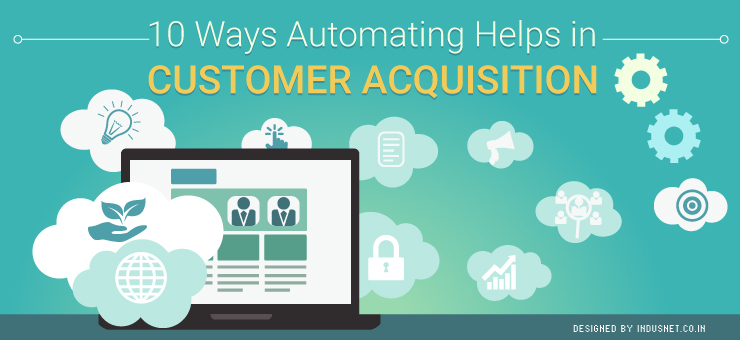
10 Ways Automating Helps in Customer Acquisition

Automating one’s business process helps us in a number of ways. It helps us to become leaner and better organizations that can focus on what is actually important. In other words, companies can eliminate unnecessary tasks and automate them while they can concentrate their focus on core business activities. Automating usually involves CRM, HRMS, ERP, Field Force Management and even mobility. Of course, there are other ways in which a company can automate its processes. With the advent of new technologies, it is becoming much easier to automate tasks and business processes. Curiously, all this automation has another advantage. It helps companies to acquire new customers. In this article, let us take a look at how companies can use automation to acquire customers. 1. Improve marketing strategy Automation helps you to improve your marketing strategy by leaps and bounds. This is because of all the added features and analytics that you can squeeze out of your automation tools. It is simply not possible to do so when you are doing things manually. Marketing requires a lot of number crunching and though we may not realize it, automating certainly helps to give a boost to existing marketing strategies. This only means you will get more customers. 2. Social media management Closely behind marketing strategy is social media management, If you have a business you will know how important it is to manage your social media and engage your followers if you want to build a good brand identity. It all boils down to communication and conversations with your potential customers. This is not humanly possible if you want to do all the social media management yourself. It also does not make sense to hire a number of employees to do your social media management. A better idea is to actually automate this process so that you can focus on more important things. 3. Content management Social media management cannot happen without content management. While your content writers and editors may write excellent content, what has been published needs to be shared across offline and online platforms. Moreover, you will need to have a deep understanding about buyer personas in order to make your content strategy work. By automating content management process, you will be able to write the kind of content that will most likely help you to gain customers. 4. Market research Whether you want to engage in social media management or content marketing, equally important is market research. A good market research helps you to understand your market, competitors, target audience and potential customers. Demographics, psychographics and other related data can be automated and analyzed with the help of analytical tools. These reports can be used to create marketing strategies which too can be automated. All this will help you to find the right kind of target audience who are more likely to purchase your goods or services. 5. Help in lead generation Automating also helps you to generate leads. Whether it is by asking web visitors to take action or respond to your call to actions, you will invariably need to automate this process. For instance, all the emails can be automatically collected by a tool which you can use to send out marketing communication. This automation helps you to generate potential leads. If people respond to your marketing communication or show interest, they could probably consider leads. 6. Lead nurturing Once you find your potential leads, you need to nurture them. This is done only through the help of social media communication, email newsletters and also certain events. How often and when you should be contacting them depends on how free you are to engage in lead nurturing. Lead nurturing tools, on the other hand, help you to automate this process and thereby help you to focus on what is really important: focusing on your core business activities. 7. Offer better customer service One of the most important uses of automation is CRM. Customer relationship management helps you to resolve issues, attend to customers’ needs and focus on building valuable relationships with them. All this helps you to create a more customer-friendly image and that is very important to acquire new customers. After all, older customers bring in new customers and if you want to acquire new customers, you will need to treat your existing customers well. This means  you will have to automate your customer service as well in order to increase efficiency. 8. Speedy resolution of complaints Once you automate your customer relationship management, you will also need to focus on speedy resolution of complaints that customers may have. This may require more human reasoning than other areas. Still, automating responses and confirming ticket numbers and other such tasks done manually can be avoided. This will help you to project yourself in a positive light. After all, everyone likes to be responded immediately. You may not be able to do this on your own without a certain level of automation. 9. Increased transparency At the end of the day, automation helps you to bring in transparency and root out bureaucracy. This is simply because software programs are quicker than human beings. If customers try to reach you and are unable to do so, it is going to leave a bad impression on them. The best way to solve this problem is to automate tasks, which will ensure that everything is done transparently. This also avoids red tape and certain malpractices your employees may engage in. 10. Superior security There is nothing more important than security and privacy today. For these two factors to be given attention, you need to ensure that all information and consumer data is stored safely. It is also better if most of this data is processed by machines than humans. This will ensure that information remains secure and private. After all, encryption helps you to keep all data safe from prying eyes. This will eventually add to your credibility and help you acquire new customers. Automation not only helps companies

Read More »

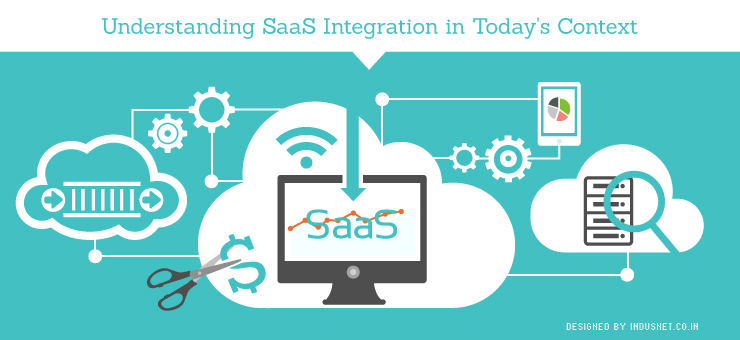
Understanding SaaS Integration in Today’s Context

Software as a Service (SaaS) has slowly become a norm among SMBs partly because of the variety that it offers and also because of the cost effectiveness. Certainly, SaaS is here to stay and with cloud computing finding enormous acceptance even among larger companies, SaaS will begin to witness an increase in its size and stature. Most companies do not realize that they are already engaging or integrating SaaS in one way or another. If you are using a software program that is available when you plug into an internet connection, you are probably using a SaaS solution. It has helped a number of companies to gain access to software that they previously couldn’t have afforded. SaaS brings proprietary and often expensive software programs to people and companies who can’t normally afford them. Software programs are run on cloud servers and clients use them as required, whenever they need to. The best feature of SaaS probably is that it can be used from anywhere in the world and programs need not be installed on individual computers. This means, companies will save a lot of money not only on software programs but also on storage devices and computer hardware. They will not need to purchase servers or invest in computer storage devices that store all the database. Instead, everything is stored and processed in the cloud, leading to an efficient and streamlined approach towards IT. Most companies want to reduce costs Companies certainly want to be able to reduce the amount of money they spend on software programs. It is simply not economical to spend hundreds or even thousands of dollars on software solutions only to realize that they can no longer store the data they have used. Many companies also belatedly realize that the software solution which they purchased is simply not for their business. When this happens, they often regret having spent thousands of dollars on one single software program. A SaaS solution on the other hand allows the clients to choose the modules they specifically want, with the ability to turn off or unsubscribe from those very services when they do not need them anymore. This flexibility allows companies to try software solutions and then decide upon the one that is best suited for them. SaaS thus helps companies to reduce costs. This is a truism that most companies are well aware of now. So, SaaS integration is likely to grow in the near future, specifically because of the financial advantages it presents. Many companies cannot afford proprietary software Proprietary software solutions cost a lot of money and they do not come with the same level of freedom as a SaaS module. In a SaaS module, clients are free to choose the modules that they need and they usually only pay for what they use. There are also hybrid modules that let companies to combine SaaS with on-the-location software programs. The problem with proprietary software solutions that are legacy based is that they are just too expensive and they also require a lot of storage space. Most companies simply do not have the kind of IT budget that is required of them to purchase these programs. Moreover, it may also not be what they require. What really happens is that they end up spending more money on something that may not be entirely useful for them. IT departments are looking at leaner operations It is also becoming increasingly clear that heavy software programs are not necessary for every company. Some companies may require just a few modules of a larger suite. IT departments have been insisting on this for a long time now and it is only a matter of time that CEOs also understand this. Leaner operations mean less maintenance, less storage and even less cloud computing requirements. After all, even SaaS can be reduced to a minimal level if one knows what is required. IT departments within companies have begun to stress on the importance of not buying entire software suites which may not be required for a company’s business operations. Software as a Service effectively solves this problem by making only those features available to companies which they need the most. SaaS is growing with cloud There was a time when there weren’t too many options with respect to services available on the cloud. Now, almost every kind of software program is available on the cloud and that too on a SaaS model. This has helped a number of companies to access software programs that they earlier couldn’t have. In other words, we can say that SaaS is growing alongside cloud computing and that is a very impressive development indeed. Cloud computing is expected to grow phenomenally in the coming years. It is only a matter of time before legacy programs are rendered old fashioned and outdated. More companies will begin to use SaaS in order to reduce costs and also access programs that they previously couldn’t have. What we can expect within the domain of SaaS Certainly, we must look at SaaS integration alongside Platform as a Service (PaaS) and Infrastructure as a Service (IaaS). SaaS, PaaS and IaaS are the three major revolutionary changes that are occurring within the domain of information technology. This revolution is aided by cloud computing and integration of IaaS, SaaS and PaaS as and when required will be the norm in the coming years. One just needs to wait and watch to understand how phenomenally SaaS integration is likely to become a part of our business lives. In the years to come, we expect to see more companies switching over to SaaS or at least integrating SaaS within their existing IT frameworks. All this eventually leads to the democratization of technology in general. This also means, there will be room for innovation and increased ROI for companies involved. 2016 will likely see these changes sooner than what we witnessed in 2015 and this is certainly a positive development. In other words, SaaS integration will help SMBs and

Read More »

Why Customizing Open-source Applications Is Good For Your Business

Most business clients often overlook the appeal of open source software programs. In their minds, open source is tacky, free and not worth a second look unless a business is crumbling and cannot afford proprietary applications. This is very far from the truth. WordPress, one of the best content management systems in the world, is open source. A number of other software programs that you probably believe are proprietary are also open source. CPython, for example, is open source too. What businesses do not realize is that open source platforms have unique advantages that are actually good for businesses. They come with a community support system that is not really possible in proprietary platforms. Open source applications thus designed are actually more advanced than many private apps because developers from around the world put their heads together to create them. One of the major complaints that businesses have of open source platforms is that they are ‘common’. With a little customization, any open source software can be deemed good enough for corporate use, and that is a fact that is understood by a number of people. Customizing helps more than you might imagine While customization services do cost money, the versatility and cross-platform abilities of open source apps cannot be discounted. Even if we take the example of just WordPress, it is quite clear that themes do cost money. When we choose to customize the themes, they will cost a little more than that. In spite of all this, WordPress continues to be one of the most widely used content management systems around the world. Obviously, there are certain advantages to using open source platforms. While we agree basic open source apps may not be great for businesses, customizing them and using them to your benefit will help you to achieve your business targets easily. All that is required is to find a good consultancy that has experience customizing open source software programs for their business clients. In this article, let us take a look at why you should be customizing open source software applications and why it is good for your business. More people than you can imagine currently use open source software programs More than 86% of companies in non-technical sectors use some level of open source software within their IT departments. This is because, open source apps reduce supplier risks. They are also more innovative in nature thanks to the community spirit that drives open source platforms. However, because open source is available to everyone, your competitors maybe looking at the same software program too, much to your discontent. In order to ensure that you have an obvious advantage over your competitors, you can choose to customize your open source apps. Customizing not only involves changing the look and feel of the software but also certain functionalities. After all, it is important to understand that open source programs come with common codes but these codes can be customized to suit your unique requirements. Some of the obvious advantages of customizing open source programs are as follows: 1.      Cost-effective While customizing does cost money, we must remember that it will still cost a lot cheaper than what it probably would if you choose to buy proprietary software solutions. Open source applications that are customized for your business will stand apart from that of your competitors and will also work out financially if you are struggling as a company. Moreover, cost benefits are higher in open source models as you not only save money on initial investments but also end up spending less on maintenance. A number of custom solutions allow you to seek third-party assistance from the open source community once the initial customizations are done. 2.      Access to open source community The open source community is large and vibrant and gathers professionals from all walks of life from across the world. This means, your app might have a bit of goodness from every tech culture possible in the world. Once you have an application built on an open source platform, you will also find it easier to approach any freelancer who works on these platforms in open source communities. It just makes things easier for you as a business owner. You will not have to depend on customer service provided by proprietary software platform vendors. That is a big benefit you might want to look at. 3.      Freedom from proprietary software solutions Proprietary software solutions seem attractive and may include customizations and after sales support. Yet, if you want to switch to a different platform, you will end up losing a lot of money that you initially would have invested. These solutions may not be compatible with other software solutions and you might need additional coding or development to make them compatible. It should also be mentioned that proprietary software solutions come with license agreements that will restrain you from making changes, in most cases, to the original software program. If you are looking for freedom, open source solutions are the way to go forward. 4.      Enhanced security It is a misconception that open source solutions do not offer the same kind of security that proprietary software platforms do. On the other hand, hundreds and thousands of developers work on these open source platforms and when there are security glitches, they immediately come to their notice. Regular patches that are released will help you to avoid security glitches that may arise in the future. You can also choose to encrypt your data at an additional cost as part of the customizations that you request from your vendor. All in all, open source software programs do not pose any security threats to your data. Prospects of using open source programs in future Certainly, as awareness increases, more people will begin to choose open source platforms to build their applications. All it probably requires is some customization work which can easily be done by professionals at a cost that is less than purchasing proprietary software programs. Moreover, using

Read More »
How Automating Can Help the BFSI Sector

How Automating Can Help the BFSI Sector

Automation tools can be used in a wide number of sectors. Across industries, automation has helped companies to grow profits, increase efficiency and also heighten accountability. All these results come in after getting rid of manual tasks which only complicate things. Instead, people can be asked to focus on more analytical and reasoning-based tasks that need actual human intervention. We are more familiar with automating human resources, business processes of an organization and CRM. Yet, it turns out that the Banking, Financial services and Insurance (BFSI) sector stands to gain the most. With so many numbers and repetitive tasks involved in this sector, it only makes sense to understand why automation might be good for this particular industry. In this article, let us take a look at how automation might help the BFSI sector to get its groove back and also impress upon its customers. After all, the BFSI sector is not doing particularly well in the wake of bad economy and worldwide crises. Thus, automating this sector has a lot of advantages. Banking sector In the banking sector, one can expect more penetration of growth in the rural areas. If automation is bright into practice, it becomes easier to tackle increasing amounts of financial data, credit disbursement and also maintaining the quality of assets. Similarly, automation helps to reduce risks and improves risk management mechanism. Last but not the least, banking officials are some of the first across industries to adopt new technologies. When we automate banking processes with the help of a banking software development company, customers find credibility in the financial process, which is what is most important. To gain trust and credibility, it is important to carry out tasks quickly and efficiently. Automating most banking transactions help to build trust and also increase the credibility of banking institutions. If we are talking about rural areas, this is only more relevant. Insurance sector In the insurance sector, we see a number of people not understanding the policies and which ones to choose from the many that are available. Building portfolios can be made easier when insurance choices are automated. Customers can be encouraged to fill up details on their own without requiring human interaction. This is made possible through applications and web forms that automatically collect and process data related to insurance claims and applications for policies. When it comes to insurance, there is a huge need for accuracy in the pricing of risks. Similarly, rural markets can be easily targeted when most insurance processes are automated. It becomes easier for on the field staff to reach out to rural customers, sometimes making use of field force management and other tools. It is for this reason that insurance should look towards automation as well. Financial services Financial services include payment gateways, mutual funds, stock trading and other such services. It only makes sense why this sector might stand to benefit from automation. If we look at the stock market, there are always fluctuations that the customers would like to be aware of. These fluctuations and changes can be notified to customers in real-time on their mobile devices. Stock purchasing and selling can also be automated. For instance, a customer might want to sell shares when the price of a stock dips below a certain threshold. Similarly, mutual funds also stand to gain from payment automation. On the other hand, payment gateways mandatorily require some sort of automation. Otherwise, online buying and selling would be impossible. If we look at all these factors, it becomes clear why BFSI stands to gain so much from automation. Common factors that encourage BFSI sectors to automate While these are three different sectors with very different approaches to automating, there are certain factors that are common to all three. All three sectors depend on credibility and trust. Without trust and credibility, customers will not trust either bank, insurance companies or financial service providers. The only way we can rest assured that things are credible is when we know that the services that we offer are efficient, quick and transparent. There should be no room for human errors. Human errors are often misconstrued as deliberate errors to misguide or deceive customers. Thus, when number crunching is automated and when data processing is done in the cloud by software programs, you will only need to concentrate on building that valuable human to human relationship. This helps to grow your BFSI organization in stature and importance. We are seeing a number of BFSI entities automating almost everything that was once considered the domain of clerks or mid-level managers. Now, most of these tasks can be automated in order to increase efficiency, build transparency and root out malpractices. Future trends in the BFSI sector In the near future, we can expect the BFSI sector to lunge forward towards automating most of its processes. This will help the BFSI entities to move towards mobility as well. Automation and mobility are inextricably linked today and for a very good reason. Most of our customers use mobile devices and they expect everything to happen fast. Linking automation software programs to mobility will help BFSI entities to satisfy their customers and also make things easier to process. This may include looking for new customers, serving existing customers, crunching numbers and a variety of other tasks. Only the most complex tasks and that require human intervention can be carried on manually. The rest of the tasks and processes can easily be automated. If BFSI entities begin to automate more, we will actually see a more transparent and efficient world tomorrow. It will take a little while before BFSI entities completely immerse themselves in these newer technologies. Customers on the other hand have already adopted both automation and mobility. With this in mind, it only makes sense to hurtle towards a world that is automated and mobile-oriented. This is not only good for customers but also for BFSI entities that are already reeling under the effects of world economic crises. Automation

Read More »

Insurance Basics: Understanding Claim Management Solutions

There is a lot more awareness about insurance these days than ever before. With marketing and social media strategies helping insurance companies, we see an increasing number of people buying policies for everything they possibly can. While it is a good sign for insurance companies, a lot of people also claim insurance these days when things go wrong. It is difficult for financial institutions to review every insurance claim manually. Reviewing these claims alone costs a lot of money and resources. Insurance officials admit that they spend more money on processing claims than they would actually do on marketing or getting people to buy policies. At the end of the day, insurance companies want people to buy policies and not actually have to pay insurers money when they file claims. One of the ways insurance companies can ensure that both customers and the companies are happy is to use automation software programs. Claims management solutions help insurance companies to do precisely that. They help in running operations so that customer service is improved and errors are minimized, leading to customer satisfaction and also reduction of time resources. Insurance companies can also ensure that legal formalities and payment handling are done automatically, all of which previously required expensive legal and clerical staff support. With all this in mind, it only makes sense to go ahead with claims management solutions full on. In this article, let us take a look at what a typical claims management solution does. What does a claims management solution actually do? A good claims management solution offers adjudication support all through the timeline of a claim. This applies to both personal and commercial claims. Whether it is about the first notice of loss or reducing the payments made to claimants, these automation solutions increase customer satisfaction and boost revenues. A good claims management solution helps insurance companies to setup claims and then process first notice of loss. Next, it helps the company to investigate these claims and engage in adjudication and subrogation. Along the way, these solutions provide important analytics which help in understanding the severity of the claims made and also detect frauds, if any. Further, it also helps in certain consulting operations including benchmarking, lean transformation. Last but not the least, a claims management solution is a software program, which means, you receive the best IT support you possibly can for your insurance company. All this helps to streamline the claims processing system and ensures enhanced customer support and satisfaction. How claims management solutions help you enhance customer relationship Claims management solutions also provide data correction and call center services. These are important points of contact that help customers and your staff to reach a sort of agreement. When a customer makes a claim, it needs to be entered in an orderly manner before being processed. Manual entry of claims can lead to inadvertent errors and mistakes. Automating this process helps in increasing transparency and ensuring that you don’t fall victim to fraudulent claims nor will the customer miss out on genuine payments that you should be making to them. All in all, these sorts of solutions accelerate claims processing and builds a healthy attitude towards insurance companies in the market. It should be well noted that most of the time customers even choose not to make claims because the process of doing so is so convoluted. When making insurance claims are automated, it helps the customer to enter data himself or herself, without your staff having to do so. In case of disasters or emergencies, your customer will appreciate this speedy processing of claims. Cloud based solutions only help you to take it all a step further Claim management software solutions are cloud based and ensure that all data is stored on cloud servers. This means, all the data related to insurance policies are encrypted and there is no chance of this data being accessed by unsavory individuals. It also helps to know that all this can be stored for a relatively lower cost than you probably would if you still used legacy systems. Moreover, the reports, the metrics and the analytics help you to understand wider insurance trends that will help you to make policies with respect to claims processing. Claims analytics provide valuable data and reports with respect to what is really happening and that is something that you as an insurance company cannot take for granted. After all, it is known that more than 80% of an insurance company’s costs go towards claims and claims processing, even if they are not paid back to the customer. Automating this expensive but repetitive task ensures clarity, transparency and also a more contemporary approach towards solving problems. What the future holds for insurance companies with respect to automation Insurance companies will likely see an increased number of claims being made in the near future, simply because of the sheer number of people who buy insurance policies these days. This means, companies will need to be wary of fraudulent claims and also ensure that they don’t end up paying more than what they legally are required to. Next, companies will have to be wary about storing encrypted data and this should be done only on a trusted cloud server. All this data should be processed and analyzed by trusted claims management software programs so that malicious entities do not get hold of your customer’s valuable data. A good claims management system will ensure that all data is processed effectively and safely and that everything happens quickly. It also ensures that you have access to good customer care and that your company always has access to top-notch IT solutions in the form of claims management solutions. Last but not the least, insurance companies should start moving away from legacy systems and programs and opt for cloud-based technologies that will help them to automate their regular tasks and focus on what is really important. After all, it is important to maintain a balance between understanding why

Read More »

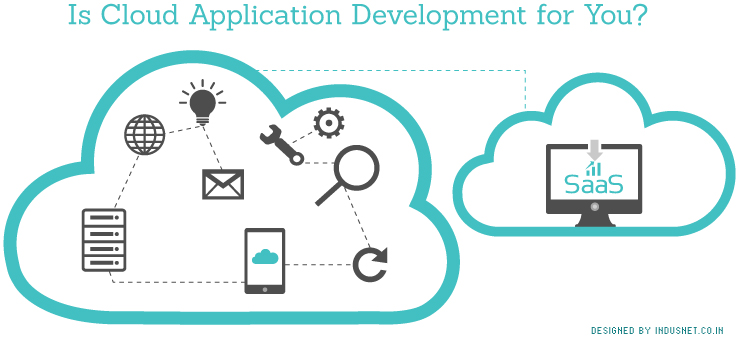
Is Cloud Application Development for You?

Developing applications on a cloud-based platform entails your development team acquiring suitable skill sets. Despite its challenges, it distinctly leverages the capability of your organization. Cloud application development can be done in SaaS (Software as a Service), IaaS (Infrastructure as a Service) and PaaS (Platform as a Service).  According to a recent Gartner report, “Enterprise IT spending on public cloud computing, within addressable market segments, will overtake spending on traditional IT in 2025. In 2022, more than $1.3 trillion in enterprise IT spending is at stake from the shift to cloud, growing to almost $1.8 trillion in 2025.” The statistics clearly indicate that cloud application development is becoming crucial for organizations’ IT mix. Developing applications in the cloud comes with ample benefits like: Enabling developers to take virtual snapshots of troubling applications Leveraging economies of scale Improving productivity Cost efficiency and lifecycle management Challenges faced by developers Due to its ability to run the same program on many different systems, Java is one of the top cloud programming languages. Here we have listed some of the unique challenges faced by Java developers during development: 1.      Fragmented data As the business grows, the number of cloud applications deployed increases. Every application solves a different business problem. But this has resulted in fragmentation of business data across various disconnected applications. Developers are increasingly using low-code platforms to build applications. Though data can be easily tracked and may look to be at the same place, it is actually fragmented. Writing custom point-to-point integration in APIs or by adopting a standalone cloud integration platform like Zapier, Dell Boomi or Informatica, can solve this problem. Nonetheless, this task does require a specialized skill set in the development team.  2.      Understanding application resource dependencies A cloud application often runs in a distributed environment with at least two servers deployed for the operation. The primary focus for a developer is to understand application service dependencies. Application service dependencies include databases, message servers etc. In a cloud environment, several services interact amongst each other and developers can’t be sure what IP address the application uses. On the contrary, in a traditional application development environment, identification of resources is easy and a developer knows what service is being used by the application on deployment. Hence, the developer needs to understand service usability and be able to locate resources. Quite often, developers use a discovery pattern to find the services. In a Java application environment, the developer gets JNDI (Java Naming and Directory Interface) that helps in locating the services required. Resource mapping during deployment helps developers to avoid hard coding by following a logical sequence. 3.      Addressing horizontal scalability In cloud computing, horizontal scalability is the ability of the application to connect with multiple hardware or software such as servers when required. The connection enables the whole system to function as a single logical unit. Cloud applications, owing to their parental nature, are horizontally scalable. But unfortunately, not all applications are horizontally scalable.  This issue can be resolved by writing applications in a manner that renders them potentially scalable. 4.      Precautionary measures Localizing data storage can be fatal to your cloud infrastructure. The essence of cloud computing is to have distributed data management to dodge server failures. Furthermore, developers must rely on location patterns to abstract physical IPs rather than using physical IP or disk-based locators to find out resources for using in the application. 5.      Testing application in the cloud Developers often face the challenge of testing the application in a cloud environment. The transition process of application from the local environment to the cloud environment for testing is not free from glitches. Only a smooth transition will ensure product development cycle. So, the use of appropriate testing tools is important for a smooth transition. 6.      Inability to differentiate The majority of the organizations are relying on the same technology and same cloud-based platforms. So, it has become difficult for them to offer unique features to their clients. This undermines their ability to gain a competitive edge over others. No doubt, the development of cloud applications is cheaper and more efficient. But developers need to devise new capabilities, new strategies and follow an innovation-driven approach to entice their clients. Advantages of application development in the cloud The leading cloud-based development platforms in PaaS and IaaS include Google App Engine, Amazon Web Services, Microsoft Azure and Salesforce.com. Metrics review has already proven that cloud application development offers a lot of benefits like: 1.      Save application development and deployment time The application development time in the cloud is significantly lowered owing to the cloud platform’s ability to streamline the development process. The platform is further capable of quickly getting development assets online. Traditionally, the development of custom applications used to take months as developing a complete application required additional components. However, with cloud computing services, developers can quickly avail all the required software and tools in the cloud working their way out more efficiently. Furthermore, cloud applications can be deployed quickly by getting into production mode thus enabling less time to market. 2.      Cost-effective development environment By delivering applications through the SaaS model, organizations can save a lot of costs. Both financial and infrastructural worries have been side-lined by incorporating cloud computing services for application development. The capital investment required to set up a complex environment for building, testing and deploying custom applications was unfeasible for many small-scale organizations. The subscription models in cloud computing offer the clients the flexibility to spend as per their demand and avoid tying up additional hardware/ software costs. 3.      Simple and efficient Developers can easily access applications through a web browser. Even the most complex enterprise-level applications are developed without actually getting into technical complications. 4.      Optimum utilization of resources The IT resources are efficiently utilized while application development in the cloud. Moreover, applications utilizing virtualized IT services are technically more efficient and

Read More »

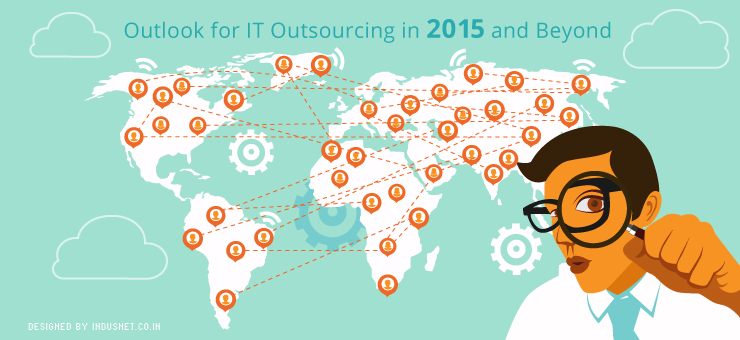
Outlook for IT Outsourcing in 2015 and Beyond

IT outsourcing is undergoing an evolution and is going to be driven by changes in consumer demands. New service providers are entering the market while the existing providers are exploring new markets. Enterprises will continue the trend of shared critical business operations and IT services to keep a tab on cost, minimize errors and enhance productivity.  The growth in IT outsourcing in 2015 will continue under the substructure of skilled staff, high service quality and business process excellence. Optimization of cloud-based platforms, data driven sourcing, outcome-based pricing and standardization of business process are going to be some of the leading trends in outsourcing. The following article will give a detailed outlook for IT outsourcing.  1.      Sourcing to be data driven With rising complexity in sourcing, increased awareness level of clients and growing project uncertainties; data and analytics is going to take a center stage. The clients will explore opportunities through data measurement and analysis. Enterprises can make informed business decisions and plan accordingly. A thorough knowledge about sourcing channels will help the clients to design a sourcing strategy.  The intricacies of why, where and what will be answered lucidly with handy data. Data analysis also helps clients to understand how sourcing needs to be done. Since a lot of end-consumers and stakeholders get affected through sourcing decisions, data analysis will help clients to manage project and meet expectations of all the parties involved.  However, one must remember to take a representative figure of data sets to avoid being misled due to insufficient data.  2.      Cloud optimization Cloud will no longer be seen as a new technology.  Security and business continuity concerns looming over the businesses till last year will be put to rest by opting for a hybrid model where critical applications are hosted privately while general applications are hosted on a public cloud. A majority of the businesses will host their existing applications in cloud through SaaS model. Internal IT teams will align themselves with the cloud-based platforms for cloud application development through IaaS and PaaS infrastructure. On the other hand, large enterprises will dive into application analysis and testing on an individual basis. This is crucial to operate cloud infrastructure at optimized level and keep a check on cost escalation due to system inefficiency. Apart from that, cloud strategies will continue to evolve with deployment of point solutions. 3.      RFP loses sheen Request for Proposal through bidding process is often time-consuming and is going to be blotted out in 2015. In rapidly evolving IT environment, RFP is plainly anachronous and there is a considerable gap between proposal closure and business requirements. Business requirement change by the time proposal is sealed. Under such circumstances, it is important to look for purchasing processes that are fast and flexible. Businesses can explore the option of enterprise marketplaces where business requirements are instantly analyzed through data analysis and a suitable proposal is generated automatically.  Similar purchasing processes can be explored as this will enhance competition among service providers thereby helping the clients to choose the best. Market leaders need to work collaboratively with service providers to make this process work.  4.      Business leaders to participate actively in IT purchases IT purchase decisions have become critical to core business functioning. A wrong purchase decision can cost a business significantly.  The year 2015 will witness more top leadership involvement in technology purchase. Product engineering teams are likely to deal with IT purchases as well because they are capable enough to understand the implications of IT on product and service. Likewise, suppliers will target new buyers and evolve their selling approach. IT will observe a shift towards service brokerage model.  Decisions on application development in cloud and application subscriptions will be taken at a strategic level with CEO, CFO, COO and CIO involved deeply. IT expenses, quite often, are more than budgeted. Ultimately, businesses are going to look for IT savings through rationalization, integration and superior service selection and measurement.  5.      Multiple service providers Clients are going to spread their cloud application portfolio and look for different service providers for specialized requirements. The number of service providers per client will witness a dramatic increase in 2015. As a result, compliance, legal and governance obligations will increase for the client. There is going to be an increasing requirement for application portfolio managers due to application-focused approach. Bundled services are slated to be discontinued as application specific service will be focused upon to form a suitable mix of on-premise / off-premise, public / private cloud applications. SaaS integration will increase to integrate cloud applications with traditional on-premise applications. SaaS integration solution by SaaS providers will play a major role in managing the integration process which not only integrates data but helps in overcoming organizational inefficiencies, improve productivity and plug in gaps in performance.  6.      Neutralizing supplier risk Project risk rises if client is dependent on a single service provider. In the event of a failure which could be due to any reason, businesses are badly affected. Ultimately, it’s the end customers who bear the brunt causing lack of trust in the services. Clients are going to take supplier risk factor analysis seriously in 2015 and incorporate supplier risk into planning, proposing solutions and taking action for different risk events on real-time basis. The outsourcing teams will be conscientious while deciding upon the location of service provider considering the geopolitical risk factors involved like struggling economy and political turmoil.  Neutralizing supplier risk is also essential due to growing uncertainties like shrinking labor pool, rising cost of labor, changes in law, and weather.  7.      Renegotiation of contracts Over a last couple of years, clients have favored multi-vendor or tower-based outsourcing approach for the avoidance of lock-in to a single outsourcing service provider.  However, in future, clients are going to focus upon multi-sourcing cloud-based model.  Clients and service providers who have already entered into contracts last year will look forward to renegotiate with new SLAs. Moreover, cloud-based models are quick to implement and clients will again avoid vendor lock-in

Read More »

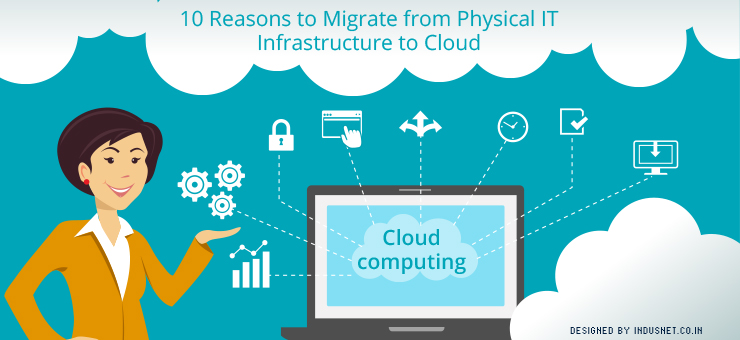
10 Reasons to Migrate from Physical IT Infrastructure to Cloud

There is a buzz with cloud adoption advocators and supporters in the market. All kinds of organizations whether big, medium or small, irrespective of their sector, are rushing to make cloud an integral part of their business. Among them, there are groups of people who do not support cloud and claim it to be disastrous and a threat to business security. It was understandable to hold such views when public cloud was introduced a couple of years ago, but not anymore. It is important to note that cloud is a broad term and is largely classified into three categories SaaS, PaaS and IaaS. The most common model used by small enterprises is SaaS i.e. Software-as-a-Service, as it can be easily delivered over the web browser and is cheaply available on subscription basis. SaaS is usually run on public cloud. On the other hand, many large enterprises use IaaS (Infrastructure as a Service) model that delivers computer infrastructure. Here the users do not have to invest in servers, software, and datacenter space or network equipment. Instead they buy fully outsourced IaaS service that manages everything for them. It is high time you move to the cloud, if you haven’t already Irrespective of the cloud model chosen, cloud technology has delivered obvious benefits to modern businesses. It has become a strategic imperative for organizations to delve into cloud and adopt it. The core agenda of IT teams using cloud is to ensure governance and keep a tab on cost. The cloud is typically used for web hosting, email hosting, productivity solutions, back up/ recovery, security and monitoring, application hosting, and content filtering. Many organizations have learned to use cloud as a hybrid model (a combination of private and public cloud) and safeguard their organizations from security threats. In the following article, we will discuss ten important reasons to migrate from physical IT infrastructure to cloud. 1.      Security Security has remained the topmost concern for many IT executives owing to deployment of data on shared resources. It is also important to note that the kind of capability delivered by cloud technology is incomparable to any other traditional on-premise infrastructure. A certain level of concern for security is justified owing to high stakes. However, the unwarranted criticism generated by cloud computing is largely a hoax by rancorous elements because; security of customers’ data is actually the selling point of vendors. Security in cloud systems is governed by the highest level of recognized data protection standards managed by professional IT experts. While cloud vendors have strong systems in place to protect data centers, it is simultaneously the responsibility of clients to ensure that appropriate firewall, and strong passwords are in place. Moreover, the responsibility of employees (especially those accessing cloud on smartphones) in protecting critical organizational data can’t be annulled. Depending upon the business sector, both clients and vendors need to be compliant with regulatory compliances like HIPAA, SAS70, and PCI DSS.   2.      Paradigm shift from capex to opex Once you are able to outsource your hardware and software requirements with cloud computing, the risk factor of managing infrastructure is significantly reduced. Your capital and operational expenses will plummet like never before. As you need to deploy few internal IT resources, there is considerable release of tied-down capital. Most of the cloud vendors charge as per pay-as-you-go method, and clients find it easier to bear the expenses from their operational costs. The relieved capital expenditure can therefore be reinvested to a more deserving area in business to stoke your business expansion plans.  3.      Flexibility Cloud technology offers you the flexibility of operating under open standards. The open standards allow you to avoid vendor lock-in. You can rope in different vendors for meeting different business requirements. You can also shift your outsourced service from one vendor to another. It gives you an opportunity to trade off risk by dispersing your services and bypassing single vendor dominion. Furthermore, it encourages competition among vendors where the client is bound to get the best.  4.      Economies of scale A simple concept of economies of scale is applicable in cloud computing as well. The cost per unit can be reduced significantly by increasing the number of units produced. The cost savings that cloud technology brings in is unquestionable. It is almost impractical for an organization to hire staff of world class caliber and deploy multiple servers of high capacity to meet their needs. On the contrary, a cloud vendor can easily offset these cost concerns by having a long clientele.  5.      Real-time synchronization helps to collaborate and service customers better Most of the leading cloud service providers have developed mobile and tablet applications which allow the users to access cloud solution remotely and on-the-go. Productivity solutions like ERP and HRMS deployed on cloud are easily accessible on smartphones through applications. This enables employees to work together on a project seamlessly. Cloud can be remotely updated by a sales employee and instantly viewed by a production employee. Thus, cloud helps in plugging the gap in communication and information relay. Customers can be updated in real-time about order status and marketing executives can improve their responsiveness to the market by instantly viewing the sales data and tracking marketing campaign.  6.      Reliability You can rely on cloud services ten times more than you do on your on-premise system. Cloud brings along with it a high level of reliability by minimizing downtime to negligible. It is the sole responsibility of the cloud vendor to keep the systems up 24 x 7. Even if maintenance has to be carried out, it is done without affecting the businesses dependent on it. A cloud vendor specifically considers all types of failures like overflow, timeouts, and network failure before deploying the solution. For the same reason, they believe in storing multiple data copies to maintain system continuity. On the other hand, with on-premise system, you are completely left to fend for yourself. Getting an instant help during downtime seems out of reach. Ultimately, you lose business and

Read More »
MENU
CONTACT US

Let’s connect!

Loading form…

CONTACT US

Let’s connect!

    Privacy Policy.

    Almost there!

    Download the report

      Privacy Policy.