Tag: cloud

Top Tech News; 20 October 2016

EU Court Allows Storing IP Addresses of Visitors to Prevent Cyber Attacks If you own a website and were wondering why it should be a legal issue to store IP addresses even if that helped you to prevent cyber attacks, the European Union’s top court seems to understand your skepticism. Website owners can now store users’ IP addresses in order to prevent “denial of service” and other forms of attacks. This comes as a big relief to web admins in the EU. #security SAP’s HCM Service Comes to Azure If you are using Microsoft’s Azure platform, you will soon be able to use SAP’s “SuccessFactors” cloud-based Human Capital Management (HCM) service as well. This move is expected to help companies to manage their employees better. Azure is one of the most popular open developer platforms out there, and this new partnership will enhance its adoption. #cloud TRAI Seeks Stakeholders’ Opinion on M2M Communication The Telecom Regulatory Authority of India wants to know what stakeholders think of machine-to-machine connectivity. Networked devices are increasingly becoming popular and M2M communication is expected to champion the cause of Smart Cities in India. It is no wonder TRAI wants to know what stakeholders think of M2M communication. #telecom Book Ola or Uber Directly from Google Search Booking a cab late in the night just got easier. You know longer have to wait for Ola or Uber apps to fire up. You can look for these cabs right from Google Search on your smartphone. Google announced this new facility in a blog post. #app Apple’s Updated Macbooks Are Coming Those of you looking for a new laptop might want to wait for a week. Apple just announced an event on October 27th, and it is almost an open secret that new MacBook Pro models will be announced. Extensive feature updates and overall design upgradations are expected. #corporate

Read More »

How to Save Money on Cloud Computing?

It now need not be explained to people that cloud computing saves money. This is the primary reason why people choose cloud computing models. It is clear that as you read this article, thousands of businesses worldwide are wondering how best to use cloud technology to reduce their costs, access technology that is otherwise prohibitive and simply make things easier so that their business can grow and make more profits. Yet, cloud computing is not free. It costs money too. Sometimes, it can cost a lot more than you expected, especially if you do not understand cloud computing very well. Even those who understand cloud computing, make the same mistakes that others do, and end up spending unnecessary amounts of money on IT expenditure. Here is the shocker: if you thought you are already saving money on cloud computing and you needn’t read any further, you can still cut down on costs attributed to cloud computing itself. In fact, there are a number of ways through which you can reduce cloud computing expenditure, and save crucial finances that can be used for other purposes. [php snippet=1] Don’t try too much customization Most companies make the mistake of asking for too many customizations. This may seem like a great idea but customization costs money. If you choose SaaS products as they are before customization, you get a lot of things for free. A few customizations can be avoided if they are not critical. In other words, focus on what you want to do with the software, and do not worry about making the tool the way you dream it to be. This way, you will save money. Keep things simple It is always a good idea to keep things simple, even in cloud services. Do not add services or functions that you do not need and ensure that integrations are as simple as possible. You could choose a multi-platform approach as many workloads run better on this sort of model. Moreover, if your cloud computing functions are simple, you will not have to worry about unnecessary downtimes. Do not think of scaling if you can’t afford it A lot of companies always have big dreams. Now, having big dreams is not a bad thing. It helps organizations to be optimistic and ambitious. However, if you think of scaling when you are not yet starting out, you will incur unnecessary expenditures. Be conservative and think of scaling only when profits are increasing and more business is looming in the corner. Scaling up cloud computing should never be an option until you can afford it. Don’t use what you do not need Many cloud vendors offer a lot of bells and whistles. If you are out there to gain certain benefits from the cloud, do so without accepting all that is sold to you. In other words, do not use what you do not need. Strip down your cloud based tools and you will notice that you will not only feel leaner but a lot more efficient. Learn to manage your data Unnecessary data can cause your storage to run out very quickly. While it feels like there is unlimited space in the cloud, there isn’t. For every file that you retain, or for every unnecessary app that you run, or for every report that is fed into the software, you are using up your storage space. Once you cross a certain threshold, you will have to purchase storage at an extra cost. The only way to deal with this problem is to manage your data well. Do not move everything to the cloud The cloud is the hottest topic among enterprises, and most companies are way too eager to move everything to the cloud, so that they can feel self-satisfied that they have gotten rid of their legacy tools and are now pretentiously in the cloud. Unfortunately, storms will brew very soon if one takes a reckless approach. It makes sense to analyze what needs to be moved to cloud and what would be better left off the cloud. Give emphasis to security While cloud saves a lot of money, it comes with certain security risks for which you alone will be responsible. Speak with your cloud service provider to find out how you can avoid cloud related security risks and what you can do to protect yourself from malicious threats. By placing an emphasis on security, you will avoid unnecessary costs related to damage control once security has been breached. Choose the right cloud service provider Last but not the least, you need to know and understand the approach your cloud vendor takes. If your vendor is selling you a lot more than you need, and is not constructively asking you to reduce cloud expenditure himself, you may smell a rat. Moreover, an efficient cloud service provider will help you save money just by providing great service and products, which ultimately is the best way to save expenditure. You can indeed reduce cloud expenditure As you can see from the list above, there are a number of ways you can further reduce costs associated with cloud computing. Most companies are not realizing that there is a good chunk of money that can be saved while using cloud services by foregoing unnecessary customization, by keeping things simple, by not scaling when one can’t afford it and by not using what one doesn’t need, one can save a lot of money on the cloud. Unnecessary data can be discarded and managed in more efficient ways, so that you do not have to purchase extra storage. Also, by avoiding moving everything to the cloud, you can again save money. By ensuring that you are taking all security-related precautions, you can avoid unnecessary expenses that come with damage control once a security breach occurs. Last but not the least, your cloud service provider should understand that cloud computing can save money even further, even when the client or the vendor has not thought about

Read More »

Ensuring App Security: An Opportunity and Challenge

The number of people who use mobile phones has dramatically increased, and unsurprisingly, enterprise mobility has grown in size and stature. With enterprise mobility becoming the next big technological spend, mobile security remains one of the thorny issues for most clients and vendors. Mobile app security, which is even less discussed, has been described by some pundits as ‘Wild West’. To look at some facts that are disturbing, almost all apps available on Google Play for the Android platform were hacked at least once. 56% Apple’s iOS apps were hacked. The proportion of free apps that were hacked was marginally lower. This just means, apps are not as secure as most people believe them to be, especially if they have not been developed by reputed technology companies. With BYOD (Bring Your Own Device) being the policy in place, app security is a very important issue that needs to be taken seriously. Let us take a look at some of the things that can be done to keep data and devices safe, especially when an app is compromised. In the best case scenario, the app should be impenetrable but one must always be extra cautious. [php snippet=1] How to ensure app security? The first step should be to secure the app’s code. Mobile malware usually look for vulnerabilities within an app to gain access. A recent report revealed that more than 11.6% mobile devices are infected by malware at any given point. However, there are many tools that can help developers to detect vulnerabilities and seal security loopholes. While business apps pose less of a problem, consumer apps may have more vulnerabilities. The next step would be to secure the devices. You need to bring in policies that will ensure that jailbroken devices are not used at work. Thirdly, data needs to be secured. moving all data to the cloud is actually a good idea, with mobility becoming the new reality.It helps to keep data safe on a third party server where it might be encrypted. Remote wipe facilities can ensure that data is erased before a device gets into wrong hands. Last but not the least, security needs to be ensured while people make purchases on apps. Apps provide a very convenient platform for e-commerce but they also pose security threats. All these can be overcome when developers take the necessary actions. Threats present developers with an opportunity The more enterprises move towards mobility, the more they will have to start thinking about app security. Applications are not always secure and they can pose a mighty challenge to developers to keep them safe from malicious threats. This is also an opportunity for coders to come together and bring solutions that do not have loopholes. While it is indeed a wild world out there, it presents developers with an opportunity to push limits to make applications secure. Mobile and cloud security is already very impressive, if we are talking about premium services. Yet, it is necessary to use these threats as opportunities to make things safer for users.

Read More »

Top Tech News; 30 Sep 2016

Amazon Fire TV Stick With Voice-Search Remote The new Amazon Fire TV stick comes with a quad-core processor and supports faster Wi-Fi as compared to its dual-core predecessor. Amazon hopes to buy off consumers by generously giving away voice-search enabled Alexa remotes along with the stick without charging a penny more. Yet the offer may sound lame to those who eagerly anticipated 4K support. #tech #entertainment Twitter Repackages Website Conversion Tracking Building upon existing objective-based campaigns, Twitter launched a dedicated service that lets advertisers cost-efficiently track website conversions throughout the marketing campaign. Advertisers can further take advantage of predictive shopping and bidding expertise of TellApart besides leveraging Twitter’s Audience Platform. The company also rebranded its Website Clicks Offering as Website Visits. Let us hope repackaging attempts are more than a face-saver for the sinking ship. #social Play Your Favorite Games From Anywhere  With a vision To free gamers from constant upgrade cycles and expensive hardware, Parsec launched a new technology that now delivers ultra-smooth low latency streaming experience. You not only remote control your gaming PC from anywhere, but can share it with friends or invite them to play with. Forget about owning a gaming hardware when you can simply rent it on cloud. It’s absolutely a new high in cloud gaming. #cloud #entertainment Personalized Filters For Flight Bookings Employing its complex predictive algorithms, Hopper mobile app could tell flyers the best time to book their ticket to get a better bargain. Further exploiting its algorithm, Hopper now lets flyers book non-stop flights filtering low-cost carriers or flights with a long haul. The new feature called Watch Filters even allows you to remove basic fares from search options to look for the best and not just the cheapest option. Boasting 95% prediction accuracy, Hopper has a lot going for it.  #apps #corporate Houseparty App Marred By Scaling Problems Houseparty, a live video-streaming app targeted at younger audiences lets you chat with up to seven friends simultaneously. A friend of a friend can enter your chat and a banner warning “Stranger Danger” flashes on your screen. You wave at other users to invite them to join the chat or call for privacy if you feel that way. With rising popularity of Houseparty among teenagers, this is another wobbly attempt by Meerkat to fulfill its dream of making it big. #apps

Read More »

Top Tech News; 28 Sep 2016

Forget Allo, Use Signal Instead If Google’s Allo scared you away with its less-than-secure record keeping practices, you can use Signal on your desktop now. Praised by Edward Snowden and other whistleblowers and security experts, Signal has been available on iOS and Android as a highly encrypted service. Now, the app can be used on desktop too. #apps Dynamics CRM to Feature Smart Assistant If your company uses Dynamics CRM as the main customer relationship management software, you can now look forward to a mobile-friendly relationship assistant. Microsoft announced the feature soon after Salesforce announced it was bringing AI to its Sales Cloud. The AI-fueled assistant will notify Dynamics users if there is any action they should take. #crm #AI WeChat Announces Apps within an App WeChat, Tencent’s popular chat application will now feature web apps within the app. This will help users to avoid installing apps to perform various functions. Developers can now work with video, GPS, WeChat pay and other APIs within the app. Only time will tell if the ‘app within an app’ concept will work or not. #development Facebook Apologizes for Displaying Skewed Video Metrics Facebook admitted that a key metric of its video viewership was erroneously being displayed in an amplified manner. The metric for average user time on videos was displayed incorrectly, misleading users to believe the videos were viewed for much longer. This revelation may affect Facebook’s reputation in the area of video advertising. #digital #marketing Cisco and Salesforce Team Up on CRM, IoT and Cloud Cisco and Salesforce are coming together to develop new services in IoT and CRM. Both the companies want to complement each other with this new partnership and offer more integrated solutions to customers. This includes a number of cloud-based solutions too. #corporate #crm #IoT #cloud

Read More »

Is Cloud Security Improving? A Trend Analysis

Cloud computing, as we all know, will continue to galvanize the way technology is used and optimized by businesses across the world. As more and more businesses move their data and development to the cloud, more security risks may pop-up in the future. For this reason, cloud security has been a buzzword for long and is now an essential part of R&D among cloud companies. Ways to mitigate security threats, breaching of privacy, identity thefts, safety of stored data, etc have been hot-topics in the world of cloud security. In their book Cloud Computing: Implementation, Management, and Security, John W. Rittinghouse and James F. Ransome describe cloud security as the top most priority of cloud vendors and service buyers. According to them, an IDC survey revealed that security ranked as the greatest challenge among CEOs of companies. With this in mind, we might want to question ourselves if cloud security is improving, and if it is, what the current and future scenes look like. [php snippet=1] The virtualization avalanche A staggering number of companies have quickly evolved to make use of cloud technology and access hardware and software services which they previously couldn’t. This has led to a deluge of data being stored on cloud servers, while apprehensions remain on both sides. Software as a Service (SaaS), Platform as a Service (PaaS) and infrastructure as a Service (IaaS) are the three environments that enterprises are making use of and all the three have enabled small and large businesses alike to hone up their on-shore activities and infrastructure. This avalanche of virtualized data is going to pose a problem to cloud vendors, and more studies will be required to find how to manage this avalanche of data that is hurtling toward cloud servers. Security is the single most concern of most vendors and buyers alike. What is the current status of security in the cloud? The authors in the same book mentioned above consider that having proper fail-over technology is a concept that is often overlooked. They argue that mission-critical applications need to be online no matter what, even if it means risking certain mission-non-critical applications going offline. Both the vendors and buyers need to define critical and sensitive data, and differentiate that from regular data. This will lead to the problem of data-level security, which remains difficult to measure. More companies must be encouraged to choose cloud services that are military-grade in encryption, when it comes to storing the aforementioned sensitive/mission-critical data. Most importantly, the current worry has been to secure the information and data deluge that is currently taking place. Threats may include thefts, data loss, partial damage to servers, physical damage to hardware where data is stored, hackings and even malware. When we look at these threats, it becomes clear that not much has changed since early 2010s when the same issues bothered fledging cloud service providers. End-users accessing the cloud A Symantec survey revealed that most end-users, or employees, don’t know or care about security challenges of cloud services. With so many companies using cloud computing for their technology needs, the question of threats posed to data by end-users themselves is a question that is often raised. Even in 2016, this problem has not dissipated and probably will not in the near future. What really is required is security governance in companies, and policies that are made clear to end-users. End-users may not even be employees. They may be freelancers, contractors, and sometimes, just consumers. With this in mind, this is one area that will need a lot of attention in the future.  Unbridled and unmanaged access to cloud services is not the answer or the route that companies should take. Instead, they may consult with their cloud service provider to chart policies that are more effective to keep data secure. Mobile devices and cloud security One of the most important reasons why cloud is so popular today is because of the mobile nature of it all. You could be carrying your cellphone or tablet, or using a desktop at home and you will still be able to access sensitive data related to your company. While this can be a good thing, it poses a lot of problems to not only your company, but also to cloud service providers themselves, who are often caught in the midst of threats created by end-users and actual external malicious threats. A good way to deal with this issue is to ensure that mobile devices are enhanced with security features, and that mobile security becomes an important feature of cloud computing. The trend looks highly mobile, and mobile cloud security will be a topic that will be hotly debated this year and the years to come. The concept of privacy Privacy as a concept needs to be taught to end-users of your application. While vendors can often explain privacy requirements and the importance of it all to clients, clients often are not as bothered about security as vendors are. The end-users often do not understand the privacy risks that come with using cloud technologies. For this reason alone, it is important for companies to brief employees about privacy issues that may occur if sensitive data is compromised. Unfortunately, the concept of privacy, to most people, seems like distant storms happening in a country far away. Yet, these clouds (pun intended) that are a threat to cloud computing need to be carefully studied, understood, and resisted. The only way to do this is by educating ourselves, and by taking extreme measures to keep all data secure. So, what does it all come down to? Certainly, not much has changed in recent years when it comes to cloud security. The same challenges remain and most people seem to be taking these threats for granted, almost admitting that they are a part of life, just like cloud computing now is. However, a more proactive stance needs to be taken in the months and years to come, with regard to cloud security and data

Read More »

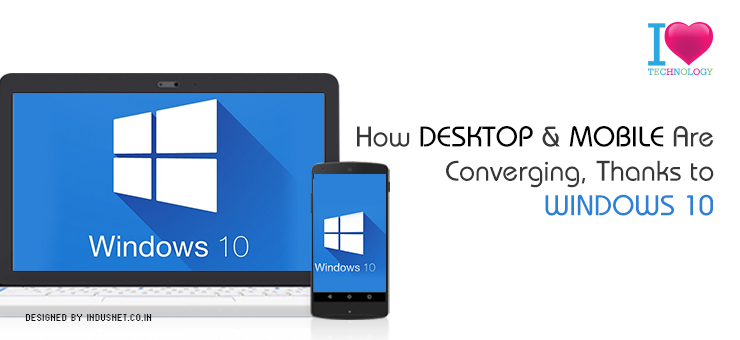
How Desktop and Mobile Are Converging, Thanks to Windows 10

When Windows 10 was launched last year, it did not attract a lot of attention. Most people did not like the interface and people were unsure how the updates would be released. However, the new operating system comes loaded with features that take computing to a different level. More specifically, they bring mobility and desktop experience together. This is very crucial in a world such as today’s because most people access the internet on their mobile devices. Bringing uniform experience to all devices With a nearly identical code for all Microsoft devices, universal apps run on desktops, smartphones, tablets and even on other Microsoft products such as Surface Hub and the Xbox. Windows 10 has been described by Microsoft as an operating system as a service, where extra features may be delivered at an extra cost, and giving free updates to basic users. The ultimate goal of Microsoft is to ensure that Windows 10 is installed on at least one billion devices eventually. Whether it is likely to happen or not is different. We need to remember that Windows-run mobile phones are not popular and they may never reach mainstream acceptance. However, we need to understand what Windows 10 is really doing in a larger capacity. It is bringing mobility and desktop computing together, and that is something that even Apple is working on. [php snippet=1] Using cloud to bring better synchronization between mobile and PC Those of you who use Macs might know that iCloud syncs all the data to your iPhones and iPads simultaneously, as you type. Microsoft takes this experience a step ahead. All the app data and other preferences will easily be available on all the devices you are signed on to. This brings synchronization of data to the next step. We can clearly see where we are headed to. Regardless of the device we use, all our data will run on clouds, helping us to switch devices anytime, without losing content or making several copies of the same file. This is very crucial when it comes to business computing and mobility. All data needs to be available on all authorized devices at the same time. Talking about business mobility, Windows 10 also has taken extra care to ensure security and safeguard privacy. Encryption has been used extensively to provide the kind of safety that an enterprise grade operating system needs to provide. All this leads to a new direction of Microsoft and for computing in general. Bringing mobile and desktop experiences with the help of cloud computing has been central to this game plan. Microsoft gets it right Certainly, Windows 10 will remain a dominant force in the world of computing. Its importance has decreased because of mobile devices, and a gradual move towards other operating systems. However, the fact that Microsoft has understood what is really important, in this case, mobility, is a heartening sign, and should be looked at as a positive development. Though Windows mobile phones are not popular, this certainly is a step in the right direction.

Read More »

Today’s Top Tech News

Oracle Is All Bombast after Launching IaaS Data Centers Oracle’s Larry Ellison claimed Amazon’s lead in the cloud business is over, because Oracle just released its second generation IaaS data centers. Fanciful as it might sound, dramatic claims such as these have a PR value, and declarations such as these get written about quickly. Larry sure knows how to grab some headlines. Will Oracle’s IaaS solutions outpace Amazon’s products? Only time shall tell. #corporate #cloud Google to Launch AI-powered Chat App Google is soon going to release Allo, an AI-powered chat application that lets you call people in your contact list. What sets this app apart is, it makes use of expression tools and helps you co-ordinate with your friends and family easily. Will people warm up to yet another chat application, even if it is AI-powered? #apps #AI Google Launches Trip Management App Google has released a new app to manage your trips and travels, and it is available on iOS and Android. Google Trips helps you book plane tickets, make hotel reservations and even guides you around the town you are visiting. You can download most of the content, allowing you to use it online and avoid international roaming charges. #apps DropBox Sneaking Into Mac Computers? DropBox is apparently using a dirty trick to gain access to Apple Mac OS X computers. SQL databases are being tampered by DropBox to access Mac OS X computers, according to Phil Stokes, a developer and blogger. DropBox defended the SQL trick by saying it is required to run its app on Apple computers efficiently. #security #storage Outsourcing Giant Mitie Warns of Reduced Profits With Britain’s exit from EU looming, outsourcing giant Mitie has warned that its profits will be ‘materially below’. Mitie may not be the only company to be affected by Brexit and other outsourcing giants are running into issues too. Could this bit of news affect other outsourcing companies in the UK too? #outsourcing

Read More »

Today’s Top 5 Tech News

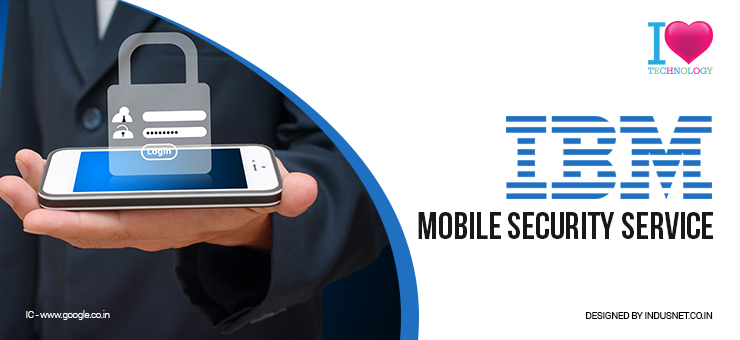
Get Closer to Your Neighbors with Nextdoor No, it’s not meant for dating the girl next door. Nextdoor social app is designed to encourage social interaction among neighbors and keep each other alert about criminal activity in the area. Successfully running in the US and the Netherlands, Nextdoor has now arrived in the UK.  Let us hope it outlives many departed social apps. #social   YouTube’s Another Attempt To Become Social YouTube has launched a Community Tab on its platform that allows channels to share text, GIFS, live video and more just like Facebook, with its subscribers. The service launched in beta version will be available on select channels for the time being. YouTube’s previous attempt to be social was Google+ integration that failed miserably. #social   Facebook Counters Fake With New Technology Facebook is working on a new system that helps to suppress fake stories and news baits from showing up in Trending Topics. A similar system was successfully implemented for News Feed previously. Facebook suffered a backlash recently after its notorious algorithm promoted a fake story on Megyn Kelly. Fox couldn’t have been so ruthless even if it was for her honest opinion. #social   Facebook Live for Desktops Extending its live-streaming feature, Facebook Live will now be available to desktop versions after popular demand. The feature, available to some lucky users currently, can use both peripheral and in-built cameras on laptops. In contrast to mobile, broadcasters can also type comments while streaming as in Google Hangout and Skype. Users always win when giants compete.  #social   IBM’s Mobile Security Service IBM is launching its mobile security service deployed via IBM Cloud that claims to put an end to all your woes regarding mobile device management. Amidst growing mobile data security challenge, IBM will vigorously address local data protection standards. Going full throttle, IBM is also offering private consultancy services and mobile strategy design for global clients. Ideal time to tame employees’ data, isn’t?  #cloud #mobile #data

Read More »

Top Industry News from INT.

Apple iPhone 7 Plus Already Sold OutWith its headphone jack missing, iPhone 7 probably has been the most controversial smartphone Apple has ever released. Yet, iPhone 7 Plus and iPhone 7 in jet black color are sold out even before they were available in physical stores. Certainly, Apple’s stock is going to see some soaring numbers in the near future. #corporate #mobile AR Is Bigger Than VR, Tim Cook SuggestsIn an interview, Apple’s CEO Tim Cook suggested augmented reality is bigger than virtual reality as it weaves reality with the virtual, while acknowledging the immersive experience that virtual reality provides. If you have noticed how people are nuts about Pokemon Go, Tim Cook is probably right. After all, AR is more about ‘here and now on steroids’, while VR is about escaping that present. #ar #vr #trends Twitter Is the Next TV Star?If you were looking for third party apps to video-stream your Twitter content on TV, you no longer have to do that. Twitter has launched its own live streaming video apps for Apple TV, Amazon Fire TV and Xbox One. This is a curious move for a company that has heavily relied on mobile devices to remain in business. TV probably is the next frontier after all! #apps #social Canva Raises $15 MillionCanva, that reliable tool which you use to create brochures and designs on-the-go just managed to raise $15 million in funding, taking its value to $345 million, almost twice its valuation just a year ago. With almost every profession becoming increasingly visual, startups like Canva bring value and assistance to users. #corporate Evernote Abandons Its Servers, Adopts Google CloudEvernote has maintained its servers for almost 8 years now. However, it just announced that it is ditching its servers and moving to Google’s cloud to save costs, remain scalable and flexible, and offer the best in user experience. Yet another example of how cloud is taking over the server space across the world. #cloud #corporate

Read More »
MENU
CONTACT US

Let’s connect!

Loading form…

CONTACT US

Let’s connect!

    Privacy Policy.

    Almost there!

    Download the report

      Privacy Policy.