
Tag: cloud

10 Tips to Optimize Your Explainer Video for Search Engines

The Tech Opportunity In Indian Healthcare Services

The marriage of Indian healthcare with technology has been a productive one, with both parties anticipating a never-ending honeymoon ahead. If there were ever a metaphorical statement for the rapidly growing health-tech segment in the country, then this would be it. In fact, even NITI Aayog agrees, based on the clarion call given by its CEO, Amitabh Kant, highlighting the growing health-tech opportunities to the Indian healthcare system.   Governmental Innovation Is Propelling The Sector The Indian Government is laying a steady foundation for the growth of digital healthcare and newer platforms. The Ayushman Bharat Digital Health Mission has been a game-changer and Amitabh Kant, the NITI Aayog CEO, stated that it is now on the technology players, start-ups, and healthcare players along with other stakeholders to create new offerings in the field of digital health which meet growing demand and spur the same as well. Amitabh Kant’s statements came at the 8th Annual Summit of Nathealth and assume greater significance once you consider the backdrop. The country already has the infrastructure to create “compelling, accessible healthcare solutions that provide equitable access and can be rapidly deployed and scaled up” as per Kant. Take other factors into consideration like the increasing penetration of internet connectivity and smartphones throughout the country and the increasing trend towards e-pharmacy, telehealth, and digital healthcare solutions during the COVID-19 pandemic, and you get the picture. Digital healthcare or health-tech presents a massive opportunity for growth, particularly in still-nascent segments like technology-driven home healthcare, e-diagnosis, and e-pharmacy services. Conventional healthcare institutions, investors, and start-ups would find this the right time to enter the space and “build a position which would be hard to beat in subsequent years” according to Kant. Now take the National Health Policy of 2017 into context. It creates a roadmap for creating a digital health-tech-based ecosystem and integrates various aspects like health delivery, cloud, wearables, and IoT (Internet of Things). It also envisions a National Digital Health Authority for the regulation, development, and deployment of digital healthcare solutions throughout the entire care spectrum. The policy recommends deploying digital solutions for greater efficiency of the entire healthcare setup along with better outcomes, in addition to ensuring a healthcare information system that caters to all stakeholders. The aim here is to ensure superior outcomes in terms of quality, access, reduced disease burden, affordability, and better tracking of health-based citizen entitlements. Some other Government initiatives that have struck a chord include the following: The National Health Stack concept, which became the National Digital Health strategy and the final National Digital Health Mission, launched on 15th August. Integrated health data and information portal with the aim to integrate EHR within the purview of the medical setup. Pradhan Mantri Jan Arogya Yojana 2.0 IT portal which wishes to integrate insurance and provider platforms for various benefits. Every individual will have a health ID, offering access to integrated healthcare solutions, enabling Universal Healthcare coverage and delivery. How And Why India Is Bullish On The Health-Tech Opportunity? Consider a few facts in this regard: E-health services and similar platforms may completely revolutionise healthcare. 65% of current e-commerce users are projected to use digital healthcare offerings in the future. Nathealth created its vision paper which emphasised Rebuilding, re-structuring, and re-imagining resilient healthcare systems in India in a post-pandemic era. The clear takeaway is that the pandemic ushered digital healthcare into the mainstream and consumers now consider it a necessary service. KPMG reports indicate a valuation of INR 116.6 billion for the digital healthcare sector in 2018 while this is anticipated to touch INR 485.4 billion by the year 2024, indicating a 27.4% CAGR (compounded annual growth rate)  in this period. With face-to-face interaction going down, patients are increasingly opting for online services in healthcare, with a demand for solutions that enable more affordable healthcare consultations and accessible interfaces. The digitalisation of the healthcare space is helping in filling up availability gaps in Tier-II cities and rural zones. E-Pharmacies have also helped in transparent price listings and better consumer options along with better accessibility. KPMG estimates this opportunity at a whopping $30 billion in healthcare technology. It has also talked about how start-ups will play vital roles in enabling healthcare access throughout the country. Estimates of 70% of the population of India (roughly 892 million individuals) living in rural zones with limited/zero healthcare access and the fact that India spends just 4.7% of the GDP on healthcare, throw up the magnitude of the opportunity. KPMG encourages start-up hubs for encouraging more players to invest in the health-tech space and advocates national and local Governmental support for the same along with a health innovation fund. The biggest pharmaceutical players, hospital brands, and diagnostics brands should adopt a mentorship role and sync with these health-tech companies. The market size was estimated at $830 million for telemedicine in India (as of 2019). It is projected to shoot up to $5.5 billion by 2025 (indicating a 31% CAGR). The NITI Aayog and Ministry of Health and Family Welfare have already released their telemedicine guidelines, with more than 1 million consultations taking place by December 2020 via e-Sanjeevani in 550 Indian districts. Health-tech in India grew by 51% (annual) in 2021 as per Redseer, collectively encompassing consultation, pharma, and diagnosis. 47% is the growth in the NPS (Net Promoter Score), indicating how customers are more inclined towards using e-health platforms and are clearly recommending them to their loved ones. The Redseer report also highlighted how the average consumer acquisition cost had reduced for players, indicating scope for growth and profitability. E-Pharma still dominates this segment owing to rewards and discounted offerings. Redseer estimates acceleration in GMV to $9-12 billion by 2025 for the e-Health space and possibly $40 billion GMV by 2030. The Take-Aways (What Is Happening And What Can Happen?) Indian mainstream healthcare is at the tipping point of future-proofing itself through technology, while meeting rising demand via technology. These are the core takeaways that we need to keep in mind. Indian healthcare industries

Read More »

Home is where the intelligence is: Smart home trends for 2018

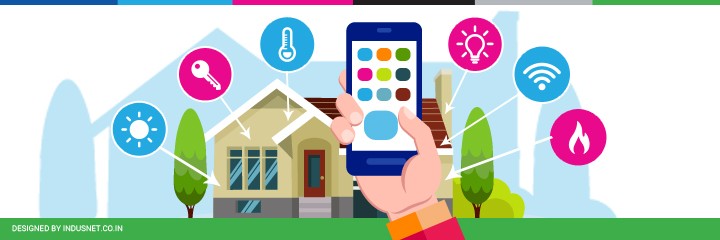
Who doesn’t love a comfortable, easier, secure and convenient lifestyle? The alarm goes off and your perfect cup of hazelnut coffee is ready in no time. Rich and nutty, just the way you like it. And the best part: you can make the coffee without having to leave your bed. Smart homes give you the ultimate power to control and manage your home-sweet-home (office too) through advanced software and networks that are becoming increasingly easier to monitor, grasp and use. Even a few years ago, this would sound straight out of a fairy tale or a sci-fi movie. But today with smart homes, you can make a pot of coffee from anywhere using your smart device. That’s the power of technology and that’s how home automation is changing our lives. From voice-activated smart speaker Amazon Echo, who will be at your beck and call, to smart lighting which would automatically turn on the moment you ring the doorbell, now even the shades of your window can be adjusted via mobile apps without getting up from bed in the morning. Smart home and Internet of Things (IoT) are completely redefining our way of life. Home automation is a booming market with the US having the highest smart home penetration rate, followed by Japan and Germany. According to the global smart home market, the market size would reach a value of more than 40 billion US dollars by 2020. This is extremely encouraging news for both tech giants and venture capitalists who are pouring money for further innovations in the smart home sector. The real estate scenario has also undergone a sea change because of this. Realtors and builders are increasingly adapting to these new innovations and helping to increase awareness about smart homes in the buyers’ market, informing them about how these “intelligent homes” communicate with the residents. It is not surprising that the largest consumer segment is constituted by millennial, a bunch of tech-savvy citizens who have a completely different approach when it comes to investing in properties. Their preferences are now being taken into account to make the homes more modern. According to a report by Coldwell Banker LLC, more prospective home-buyers are looking for their homes to be automated, or at least for those that have the potential to be automated. In India, the concept of smart cities has been gaining ground more than ever. It shouldn’t be long before India starts adapting smart homes in a larger way. Startups in India are already jumping onto the bandwagon on home automation and technology students are also trying to make breakthrough innovations in this domain. According to a report published by RedSeer Consulting in 2015, home automation market in India is expeditiously growing and is expected to reach Rs 8800 crores by 2017! Santanu Mukherjee, head of digital marketing, Indus Net Technologies, admits that India too is welcoming home automation with open arms with several players already ruling the market. However, he also agrees that it will take some time before home automation finally finds its stronghold in India. According to Mukherjee, the primary reason is the lack of awareness in this sector. “Till now, the majority of the buyers in India consider a property with smart IoT devices as too luxurious an investment. The high product cost of home automation is also inhibiting consumers from exploring this space. As of now, smart homes are a super luxury component in a developing nation like India,” he says.     Here are 5 ways to turn your home into a smart home:  1. Let’s get connected The entirety of your home must first and foremost be connected by WiFi  “so powerful and fast” that all the smart home IoT devices in the house are connected. Here are five WiFi systems you might use when implementing smart home technology: Samsung Connect Home Smart Wi-Fi System Google Wi-Fi system Eero Luma Home WiFi System Linksys Velop 2. Safety matters No one wants to compromise when it comes to the security of your most-prized possession, your house. IoT has made it easier to set up smart security systems. Today you can control the security and comfort of your home remotely, via a smart device which monitors feed from the security cameras (indoor and outdoor), window sensors, door locks, motion detector, smoke detectors, water sensors to garage door openers, thus connecting your home to the above-mentioned Wi-Fi network. You can keep a watch on all the activities 24X7 using your smartphone and apps. Alerts in the form of emails and text messages are sent to you on the go. “Security is a big issue, especially for working couples who depend on external help to manage their kids. However, reliability on external help is questionable. To address this issue, a smart home can be a great help. You can monitor what’s happening at home from afar”, says Mukherjee. Here’s a list of five smart home devices, which will keep your home safe: August Smart Lock Nest Cam Outdoor iSmartAlarm Netatmo Presence Samsung Digital Door Lock SHS-P718 3. Look who’s talking “Alexa, switch on the light. Alexa, adjust the thermostat.”- Smart homes today enable you to prepare a hearty meal, book a cab or play your favourite song by just talking to voice-activated smart-home systems such as Amazon’s Echo and Google’s Home. Thanks to advancements in AI (artificial intelligence) and Machine Learning (ML), speech recognition technology has revolutionized home automation. Through Amazon’s voice assistant, Alexa (you can talk to her through Dot, Fire TV, Echo, Fire Tablet and the Tap) you can remotely control many functions of your house. Google Home is also integrated with a number of smart home systems such as thermostats and water leak sensors. Microsoft’s virtual assistant Cortana already works at your command, but now the tech giant is planning to launch Cortana soon in the home automation market. According to reports, it won’t be long before Apple’s Siri smart speaker participates in home automation market. 4. Let there be light How many

Read More »

Handheld POS and IoT are set to revolutionize India’s retail industry. Is your ERP ready?

The world of retail is all about invisible players. In the current economic scenario, whenever a sector shows promising trends, powerful and unseen forces rush towards it and accelerate its growth. Similarly, the exponential boom in the retail sector today would not have been possible without the parallel technological advancement, especially in the field of management technology like ERP systems. For those who are unfamiliar with the role of Enterprise Resource Planning Systems in global and local retail today, ERP is essentially an extremely effective tool that integrates diverse functions of the enterprise and corporate responsibilities by incorporating the most successful practices, to improve research and development, facilitate rapid decision-making, encourage cost reduction, monitor fleet and dispatch management, track revenues, and sustain better customer relationship management (CRM): in short, it provides a greater managerial insight and control on the entire process. ERP Trends to look out for in 2018 IoT is the future and it’s high time we acknowledge how integrally everything else is linked to it. According to Forbes, “The analytics revolution, edge computing, and 5G cell processing—are all driven by the IoT at their core….up to 40% of all compute will happen at the edge in just the next couple of years.”  Trends that are already in place abroad and will eventually make their way into the retail sector in India, all focus on greater automation. ERP is set to bring about an increase in outsourcing and global partnerships by integrating key business operations into one system so that you can conduct your business from anywhere with anyone in the world. According to an article published in Solutions Review, “With improved technology and streamlined global logistics, supply chains have released manufacturing from the limitations of geography. Moving information, data and products from one location to another has never been easier, faster or cheaper than it is today.” With the advent of Cloud computing and SaaS making its foray into the domestic ERP market, further operational and infrastructural costs are likely to reduce, because the mainframe server and company database can now be uploaded and accessed online. This eliminates logistical and administrative factors too, now that the mediator is replaced by a bot. Recently launched Breeze ERP  is also uploadable on the cloud and encapsulates standards that ERP systems around the world will be expected to meet in the coming year. Moving towards a handheld POS system When it comes to purchasing and transaction, ERP’s today offer a handheld POS system which enables automated registration of responses and details from the consumer’s end, and quick secure payments without any third person intervention. Such ERP’s are becoming increasingly common at restaurants, departmental shops, and online delivery transactions. Besides the handheld point of sale functions, this feature also provides an organized and consolidated database for gathering customer information, registers shifting trends, and managerial functions based on these trends.  Recently launched with state-of-the-art upgrades and features, Breeze ERP’s highly functional interface is set to make monitoring and managing sales on the seller’s end simpler. Besides reducing workload and managerial responsibilities by a considerable extent, Breeze ERP is extremely efficient in multitasking and simultaneously overseeing various modules involved in the life of a product from the warehouse to customer’s doorstep: manufacture, distribution, inventory, invoicing, financial accounting, customer relationship and servicing. It is this 360° approach that elevates Breeze ERP to the level of a self-sufficient support system for the modern retailer. The role played by technology in retail is thus indisputable at this point. The fullest extent of its potential needs to be grasped at both ends of the demand and supply spectrum. Only then can we transcend rote modes of trade and manufacture, and transform retail into a space for vision and innovation. With Breeze ERP, this is finally a reality well within your grasp. In case, you want to see it in action, request for a demo. Do you agree that ERP can be the next game changer in the world of retail? Tell us what you think in the comments below.  

Read More »

Which Blockchain Model Should You Choose To Begin With?

Of all the emerging technologies today, it is blockchain that is discussed most often, yet implemented only by niche entities. One of the reasons why blockchain has not caught up as quickly as we might have assumed is, it feels intimidating even to larger enterprises. In reality, blockchain is accessible, easily implementable, and extremely useful for a business to enhance security, do background checks, maintain records, comply with regulations, and meet various governance and business requirements. As a decentralized public ledger of all transactions, blockchain is proving to be a revolutionary way to maintain a record of all transactions and to ensure that every transaction takes place smoothly without ambiguities. However, it may seem overwhelming in the beginning. To achieve operational efficiency through blockchain, it helps to choose the right blockchain model and start incrementally. Understanding and demystifying blockchain A blockchain is a distributed database, which acts as a tamper-proof ledger of all transactions and events that a group of entities (or even a single entity) might want to record. As the information is stored on multiple computers, making changes to recorded data (or events) on a single computer will not result in changes across the network. On the other hand, whoever tries to make those changes to recorded data (or events) can easily be tracked. In other words, blockchain ensures that all digital transactions are stored permanently, and any revisions made to it, whether authorized or unauthorized, is always recorded, along with previous versions of the data. Everything stored in blockchain is protected by advanced cryptography keys, adding an impenetrable layer of security and privacy. Today, such secure and tamper-proof public ledgers of digital transactions can be used to store and maintain assets, validate and manage identities, contracts, policies, and more. Blockchain is revolutionary because : It is transparent and remains in a constant state of consensus Functions as a distributed network via large number of computers, eliminating security threats Data is always tamper-proof and stored permanently. Changes made to data need to be authorized, and unauthorized changes are impossible across a distributed network Identical blocks of information are stored across a network of hundreds to millions of computers, making data stored on blockchain incorruptible Transactions are immutable. Once agreed and implemented across a network, it can’t be undone What kind of blockchains are available for businesses to use? It is natural to wonder if there are different kinds of blockchains for various needs, or if there is a one-size-fits-all model. Blockchain technology can be customized and implemented for every business need, and there are three major kinds of blockchain networks that can be deployed today. Public blockchain In a public blockchain, every authorized person can read, send and validate transactions without explicit prior permission. This is particularly useful when decentralization is needed in peer-to-peer situations. You might want to understand a public blockchain as being similar to Wikipedia, where any editor can make changes to a document, though previous versions are always available, and no change can go unnoticed. Public blockchains are great because : Every authorized user can make transactions on a common platform, and remain anonymous too Circumvent third-party vendors, as intermediaries are not required to facilitate transactions between users Affordable to implement Safe and secure Changes need not be permanent and can be discarded if they are not in the interest of the entire system Application developers do not have overarching powers beyond developing apps However, a public blockchain isn’t without disadvantages. They are : Resource heavy, and in the long-term, prove to be expensive as computational requirements increase with time and frequency of use May not be suitable for fast-paced transactions like trading, as transaction verification process can be delayed by a couple of hours Privacy may not be sufficient for regulatory transactions at enterprise level Decentralization may lead to possibility of collusion, and unintended consequences Private blockchain A private blockchain comes with more privacy and a greater degree of control. Only a certain organization or a group of individuals have write permissions and only they can create new transactions within the network. Authorized individuals and groups may have read permissions. As there are restrictions imposed on read, write and validate permissions, private blockchains are not distributed or decentralized to the level of a public blockchain. Private blockchains are perfect for intra-business usage where only company executives have access to the network. It is also the perfect blockchain solution where outside-interference or activity is not required. Private blockchains have a number of advantages such as : Suitable for traditional business and governance models Transaction costs are low, as computational power required is lower as well Cyber attacks are eliminated because blockchains are immutable, and in a small and closed network, the identity of the attacker can easily be established Transactions go through quickly as only a few devices need to verify them With restricted access comes better privacy A few drawbacks of private blockchains are : Decentralization can’t be compared with public networks Easier for those with write permissions to unilaterally make changes in spite of disagreements, if any Lacks the openness of public blockchains Is there an alternative to public and private blockchains? Well, there is. As both public and private blockchains come with their own drawbacks, there is a hybrid version of the two, also known as permissioned or consortium blockchain. In a permissioned blockchain, write permissions are not assigned to a single organization or a few individuals. Instead, a few pre-determined entities control the process of validating transactions consensually. They also have the permission to assign read permissions. Permissioned blockchains come with the immutability and efficiency of public blockchains, with a degree of privacy seen in private blockchains. A consortium blockchain (permissioned blockchain) is easily scalable, private, and consensual. Transaction costs are low, and you can start implementing it right away. Making a choice It is always difficult to make decisions related to technology, but one must make them when the time is ripe. Every blockchain model comes with its

Read More »

Here is how to get started with AI and ML for your business

Who could possibly blame the IT manager or the CEO of a company, who has watched Spike Jonze’s 2013 film Her and concluded that artificial intelligence and machine learning signal something ominous? While most news headlines either glamorize or sensationalize artificial intelligence, the reality is much more nuanced. Artificial intelligence has already begun to revolutionize businesses all over the world, and it is only a matter of time before everyone else will have to play catch-up. Delaying the adoption of artificial intelligence and machine learning comes at the cost of being left behind, and eventually having to hurriedly implement AI and ML. The time is ripe now to adopt artificial intelligence and machine learning in small and incremental phases, using agile methodology. Let us take a look at why and how every business in any industry vertical should implement AI and ML, without affecting one’s core business. Understanding machine learning and artificial intelligence in simple terms Artificial intelligence, in layman’s terms, is a machine’s (computer’s) ability to mimic human cognition, such as learning and problem-solving. Its applications and scope range from building autonomous cars, advanced medical treatments, Internet of Things (IoT), advanced statistics and computational intelligence, etc. Machine learning is the ability of computers to learn without explicit programming. In other words, machines can be programmed to learn independently, without human supervision or intervention. While machine learning has many applications, the most popular application is in the form of deep learning, which is about building mathematical algorithms that process large amounts of data. These algorithms are often called neural networks, as they mimic human information processing. Artificial intelligence and machine learning will be used by almost every business to detect anomalies, recommend products, improve services, or predict trends in the very near future. More than 90% of the 100 early-stage startups we met in the last six months plan to use machine learning to improve customer experience. Currently, businesses that have already implemented AI and ML can be classified into two groups: those that use AI/ML in their applications and services, and those that build and develop AI and ML middleware for others. Get Started with Artificial Intelligence and Machine Learning Now If you feel intimidated by the quick advent of AI and ML, allow us to put your worries to rest. Instead, make the best use of AI and ML by keeping aside technicalities, and by identifying simple and non-business critical areas. Look at AI and ML as an innovation project that can be started small, and built upon gradually as the technology evolves. It is not necessary to bring dramatic and disruptive changes to your business. Practically, you can enhance every area of your business in small and non-critical ways using AI and ML. Let us look at possible scenarios in each department. Here are some of the areas where you can introduce AI/ML without affecting your core business: Business intelligence Predictive analysis helps you access trends, predict outcomes, and provide better solutions. Use old databases for rich insights, or merge AI with your BI tools to access insights and predict outcomes. Customer service Choose from improving search results, boost sales, retargeting potential customers, personalizing content, engaging visitors with a chatbot that answers queries related to products, etc. The sky is the limit. Enterprise asset management Use AI to manage contracts and assets, predictive behavior analysis and alarms, automated intelligent processing and standardization of data. Etc. Customer Experience Provide AI chatbot assistants to your customers, or use deep insights to enhance customer experience. Use machine learning to improve search results based on user behavior. Human resource Surprise your employees with accurate appraisals, incentives, and payouts. AI does not understand human concepts of prejudice and bias. Sales and marketing Design and implement sales & marketing campaigns based on deep insights derived from machine learning and AI. Predictive analysis can help you develop marketing campaigns that are prophetic in nature. Manage your social media without having to be online 24/7. Product development and production Machine learning is most often used in product development and service enhancements. You can use machine learning in the most innocuous manner to improve your product development and production. Procurement and inventory management Track your raw materials, predict when you might need to replenish, and intelligently procure the best at the lowest rates. Distribution Monitor fleets, track packages, and provide shipping and delivery services that are on the dot. There’s a storm approaching? Predict it before it happens, and have a contingency plan. Strategize AI/ML implementation Now that you know AI and ML can be implemented incrementally in almost all business areas, it is time to strategize the entire implementation process. In 6 easy steps, you can implement and use artificial intelligence and/or machine learning as part of your innovation project, without interfering with your core business. Identify safe targets to innovate Think about the problems you currently have in your business, and which one is the least critical to everyday operations, if changes were brought. Choose from the list above, and identify targets that could be safely innovated with AI or ML. Look around for inspiration If you are unable to decide what might be a safe target, look at what your competitors are doing. If none of your competitors are doing anything related to AI or ML, you might even want to find inspiration in adjacent industries. Assess your budget for innovation It is advisable to start small, as that helps you remain confident throughout your innovation project. Assess how much you are willing to spend on bringing innovation to your chosen area. Choosing open source technologies is another tried and tested method to innovate, as it costs lesser. Look for agile vendors Once you identify the area you wish to innovate, look for vendors with similar agile mindsets who believe in adopting and implementing technology incrementally. Implement AI innovation slowly but steadily As discussed earlier, it is important to adopt artificial intelligence slowly, as it gives you time to adjust to the

Read More »

Hiring In a Post-Weinstein World : Blockchain to the Rescue

In the immediate aftermath of the Harvey Weinstein saga, human resource departments across industry verticals have had to deal with a tsunami of harassment complaints, leading to dismissals, compensations, and expensive lawsuits. Every hiring manager, whether at BBC or at a smaller organization, has asked the same question to themselves: “Why didn’t I learn more about whom I was hiring? How could I have avoided the embarrassment that my hiring decision caused to the company?” They could not have made a better decision anyway. Because they simply didn’t have access to verified and validated information about every candidate that applied. They probably had access to a one-sided, colored, and mostly favorable review of the candidate. If they had access to blockchain, they would have made better hiring decisions and avoided complex and unsavory situations. What is blockchain? Often described as a digital ledger, blockchain securely records every transaction, communication, or event that must be recorded and verified. Consenting parties contribute data to a shared network where a varying number of people record transactions in a ledger that only grow over a period of time. Once recorded in the ledger, information can never be altered or edited. Instead, blocks of transactions get stacked on top of one another in a permanent manner, with each block lending itself to be accessed by those who have the authorization to do so. Every block forms a chain with its preceding and succeeding block, thus validating the entire chain of blocks from the beginning of time to eternity. All these complex and encrypted recording of transactions take place automatically in the backend with the help of blockchain software. In other words, information stored in blockchain is literally indestructible. To tamper with information stored in blocks, a malicious entity will have to edit information on every computer where the block is stored, at the same time, which simply isn’t possible. Digital ledgers can be public, private, or semi-private. They can vary in size and may grant anonymous access or may not. How blockchain revs up the hiring process Blockchain technology has been around for many years now, and people usually associate it with Bitcoin. However, blockchain technology has many other important implications, especially in the hiring process. With every event that could influence a hiring decision recorded in blockchain, forming that perfect team gets so much easier. As a norm, hiring managers have depended on background checks, recommendation letters, references, qualification assessment authorities, etc., to access a wide range of opinions regarding a candidate. On top of these varied sources, a hiring manager also has to qualitatively evaluate a candidate during many rounds of interviews. BBC alone saw more than 25 claims of harassment after the Harvey Weinstein scandal kicked off. Somewhere, every hiring manager knows, if they had access to verifiable insight into a candidate’s character and conduct, all this could have been avoided. Blockchain not only helps you verify a candidate’s credentials and identity, it helps you evaluate his or her character and past conduct. As blockchain isn’t controlled or stored on a single server, data stored cannot be tampered with. Blockchain technology is all about transparence, made possible by decentralization of technology and distribution of digital ledgers across nodes. No block is stored only on a single computer but is rather stored on shared networks, which makes tracking and verifying each event and data so much more credible. In other words, a candidate cannot present only their most favorable reviews, while keeping unfavorable evaluations hidden. To put things in perspective, blockchain encrypts every verified document or event related to a candidate, right from the recommendation letters written by processors to certifications earned, appraisals in previous organizations, any legal issues, defining events in social media activity, and helps build a psychographic profile of the individual over a period of time, all backed by hashes stored in previous blocks. Clear benefits of using blockchain during hiring: Execute hiring contracts when certain conditions are met Conduct audits in a super-efficient manner Store and access verified files Use blockchain in combination with predictive analysis to foresee employee outcomes Use smart contracts to protect all your intellectual property, and prevent employee fraud and theft Track and analyze social media content Use distributed ledgers to develop and access universal digital identities Avoid expensive lawsuits and claims Create a safe working environment for the rest of your team Add value to your organization and team by hiring someone who will fit in Evaluate candidate’s compatibility with your work culture Between you and your candidate, there will be no middlemen Blockchain removes the need for middlemen and intermediaries, ensuring that information sought about the other entity is validated and guaranteed as “true” by blockchain technology. If you plan to hire a new senior-level manager for your organization, you can not only make sure that he actually got that Yale degree he claims to have, but also make sure that he did not bully someone at a job he held 10 years ago. As an employer, you will have access to his education, grades, conduct, and character, joining and exit dates at previous organizations, performance scores, etc. In other words, blockchain acts as an instant background check, especially when it can correlate events and information recorded in social profiles. For example, if you gain access to Blockcerts, you can immediately access verified and validated records of an individual’s qualifications. What makes blockchain truly remarkable is, you do not have to depend on just the quantifiable measures such as scores, certifications, and lack of criminal history. You can access qualitative information about a candidate built up over years, thanks to recommendation letters, appraisals, performance reviews, etc. Combine all this with predictive analysis and social media data, the sky is the limit. Build better teams, and a safer workplace In the end, blockchain helps you foresee whom you are hiring if they are fit for your team, and how you can reduce risks associated with hiring someone you don’t know much about. You

Read More »
Tools-to-manage-outsourcing-team

20 Tools to Help You Manage Your Outsourcing Partners

Businesses reap diverse benefits through outsourcing. However, managing multiple outsourcing teams can become a challenge for many companies.  When working with outsourcing teams, businesses face challenges in communication, collaboration and information sharing. To engage outsourcing teams personally is another challenge that hinders business productivity.   Even if necessary technology and skills are in place, it is important to use the right set of tools to manage teams to keep a hold over project’s progress and track your teams’ tasks. Use the following popular tools to effectively manage your outsourcing teams and virtual workforce to get the best out of them. Basecamp Managing your business with email chains, file attachments and meetings becomes chaotic. Basecamp counters this issue by organizing your projects, teams and company-wide communication. For instance, if there is a marketing project going on, everybody who is involved with the project sees the same thing on screen. It uses a message board to post updates and feedbacks thereby making everything in order in the form of a story so that it’s easy to get back to it.  In to-do section, assign work and see what’s done and what’s not done without reminding team members about status update time and again. Schedule section shows date and time while docs & files is used to upload images, assets and files making it easy for everyone to find files easily. Campfire is an open chat room to post queries.  Similarly, you can use same set of tools for various other projects. 2. Redbooth Redbooth helps to keep a track of projects and day-to-day tasks of your teams. Connect your chat, email and storage apps in one place.  Streamline your team’s workflow by using checklists and templates. Create productivity reports and Gantt charts at a single click.It has a user-friendly design that keeps a tab on to-do lists and check things off when they are done.  Track task owners, status and deadlines. Use a multiple assignment feature when a task is shared by more than one person. Redbooth can be used by management teams, marketing & creative teams, project managers, IT and remote teams. 3. Process Street Process Street is a powerful tool to manage recurring tasks of your teams. Create process templates and run multiple instances of the template as checklists.  Track progress and collaborate with your team.  User activity can be tracked from your dashboard and you are notified when the task is done. Its simple interface allows you to create structured documents. Intuitive keyboard shortcuts make it a user-friendly tool. Process Street offers a Zapier integration that integrates with over 500 applications to automate tasks. Automatic scheduling, workflow assignment, employee on-boarding are just some of the tasks companies are using Process Street for. 4. Asana Asana empowers team mates to work in proper flow and collaboration. It enables you to track your team’s projects and tasks. Track the progress without scheduling a status meeting or sending reminder emails.  A smarter inbox gets only the needed team updates and no flurry of unwanted messages.Have conversations about your work and turn them into actionable tasks to get expected results. It all can be managed in one place. Asana makes work fun for team members and they are empowered to accomplish the most ambitious goals of the project. 5. Teamwork Projects Teamwork is a great tool to streamline your processes; connect with your customers and collaborate with your team simultaneously. Use Teamwork Projects to collaborate with your team and clients. Your team knows what, when and who needs to do it. Your clients and team know exactly where to look for and store their files. Information is easily accessible through the cloud. Teamwork Desk makes it easy for your team to handle any customer support queries that come their way.  Teamwork Chat ensures better communication by allowing users to be in constant contact through real-time messaging. 6. Liquid Planner Liquid Planner is a predictive project management software for modern business. It takes care of project organization and scheduling so that the teams stay focused and drive the business forward. Using one of its kind predictive planning technology, the scheduling engine estimates how long each task will take, arrange them in priority order. And Liquid Planner will predict when the project will be completed. With advanced workload intelligence and analytics, get a crystal clear view of your team’s work. Your stakeholders get accurate project reporting.  Accessible through the web/ mobile, team members have ready access to documents, comments and reports for seamless collaboration and project execution. 7. Azendoo Azendoo makes teamwork easier and frees from glitches of email collaboration. It is available through a web browser/ mobile app. Create subgroups to share and organize your teamwork. Share information and documents with specific group members.  It integrates with Google Drive, Dropbox and Box to make file sharing easy. See your team’s existing tasks, progress and create new tasks.  Azendoo offers a calendar view of tasks and projects. Use analytics to have a view of the team’s reporting on a particular subject. Track, schedule and even send direct messages to your collaborators. 8. Worksection The workstation offers a lot of features. Manage your business through a single interface. Get an overview of activities and task overdue, tasks due soon, event journals and project lists. Get project overviews in an active and informative format including project timelines, progress and expenses. Manage all tasks, subtasks and comments using a convenient tool. Add custom filter to view customized detail on screen. Worksection further allows you to reassign tasks, change priorities and deadlines. View images, create and share documents on the go. It lists key dates for active projects, birthdays and synchronizes with Google Calendar. 9. Proofhub Proofhub is project management software to plan, collaborate, and organize projects of all sizes. It offers a centralized workspace for task lists, workflows, discussions, gantt charts, documents and calendars.  You can approve files and documents. Every manager is enabled to get an eagle’s eye view of the project. Proofhub runs in the

Read More »

What Is The Difference Between Data-Center And Cloud?

Users often get muzzled about technical jargons and have a little idea sometimes what they are referring to. Same is the case for data center and cloud. Though both the terms are related to data storage, there is enough ambiguity for people to misinterpret. The following blog distinguishes how the two terms are more different than same. Differentiating data center and cloud Data center is a storage facility that manages and disseminates data for an organization with its local network. It is designed to meet specific requirements of the organization’s IT operations. Cloud or cloud computing, on the other hand, refers to data storage and accessibility over the internet instead of organization’s privately held data center. All services hosted over the internet like SaaS, PaaS and IaaS fall under the gamut of cloud services. Cloud offers virtual memory facility that can be increased or decreased depending on your storage, computing or infrastructure requirement. Should you get a cloud or a data center? There are many factors to consider before you make a choice. Scalability Data center is suitable for organizations that require a customized and dedicated system to have full control over their data and hardware. When you own a data center, capacity expansion requires you to spend the significant amount of money to match workloads. Cloud facility is highly scalable and quickly adapts to your business needs. Cloud offers unlimited capacity expansion based on vendor’s products and service plans. Reliability The infrastructure in place should be available whenever you need it. Computer hardware and software are susceptible to mishaps like fire suppression and unwanted scenarios like redundant data making the system highly expensive to maintain. You are likely to face significant downtime if anything goes wrong with your data center. On the other hand, cloud servers use multiple data centers in different geographical locations with proper backup. This shields you from unwarranted downtimes. When one data center experiences a glitch, other data centers take up the load to keep your applications running without any disruption. Leading cloud service providers provide all the necessary features to run cloud applications. The cost incurred in maintaining the system is offset by revenue generated through the sheer number of clients accessing the services. Therefore, cloud storage is reliable from that perspective. Security The physical security of a data center is a major cause of concern among data center owners. Virtual security in a data center includes protecting operating system, database, SLL/TLS and other virtual security features from any kind of failure. Because a data center is physically connected to a local network, only company-approved credentials and equipment can access it. Hence, data center security is in your hands. On the other hand, cloud may seem less secure because data security is entrusted to third-party servers that may or may not have proper security certifications. It is a critical concern among most organizations considering the vulnerability of customer data to hackers. There are many entry and exit points across the network due to multiple clients and cloud provider must plug in gaps in data leakage. With that said, leading cloud data centers follow industry standards and encryption to protect virtual security aspects. They use biometric access control of physical assets, servers and buildings to physically protect all the data centers. Value To set up your own data center takes time and money. To add to it, there are significant operational costs associated with it. In contrast, cloud computing enables you to get started without wasting a moment. A wide range of modules and services are provided on a subscription basis by cloud providers to meet your budget. And capital liability is a bare minimum. On the other hand, organizations have to incur huge expenses to keep the data center running incessantly. Therefore, maintaining a private data center is an expensive proposition often not affordable for small enterprises. So when costs are high, a proportionate value generated becomes lower. Cloud with its pay-as-you-go model is becoming a popular choice among small enterprises. Performance Organizations with different types of applications and complex workloads look for installing a data center. Cloud servers, in contrast, handle a lot of network connections due to which performance may get affected. Control A significant disadvantage of a cloud is that you have limited control over it because it is owned and managed by the third party. Moreover, you share resources with other cloud users in your provider’s public cloud. Businesses with highly sensitive data and complex workloads may be wary about it. Storage In a cloud, your data is stored in a third-party data center either owned/ rented by cloud service provider or data center service providers. Therefore, all related updates and ongoing maintenance are carried out by those service providers. On the contrary, company-owned data centers are maintained by in-house IT department. Location The physical location of data center can be within or outside the organization’s premises. On the other hand, cloud data center is located off-premise when you subscribe to public cloud services. However, cloud data center can be on-premise or off-premise in a case of private cloud services where you have a dedicated server allotted to your business. Management The onus of managing a data center is completely on internal IT team. If you are able to manage it well through proper hardware and software upgrades, it is good. Big enterprises often prefer to stay that way. On the other hand, in cloud storage everything is managed and provisioned by cloud service provider. It is a huge relief for business owners because you just have to focus on implementation. Accessibility Users often have a notion that physical proximity to a data center makes them more accessible. It is true when you have an on-premise data center. Alternatively, cloud data centers are virtual machines easily accessible through the web. So irrespective of your location, you can manage and access your data from anywhere. Cloud is data center owned and hosted by third party Data center is storage equipment

Read More »

10 Ways Cloud Computing Revolutionizes Your Business

Cloud computing can be described as the practice of using a network of remote servers which are hosted on the Internet in order to store, manage and process data. Instead of using personal or local servers, one uses computing services delivered online. Software programs can be delivered online, and when that happens, it is known as Software as a Service (SaaS). When a platform to build applications is delivered online to developers and IT companies, it is known as Platform as a Service. Similarly, when storage and other services typically associated with hardware are delivered online, it is known as Infrastructure as a Service (IaaS). Evidently, cloud computing has allowed a number of companies to access technologies that they otherwise couldn’t have. Shared platforms mean, more money saved and technology being more accessible. With this premise, companies have been able to save costs and focus more on the things that they are great at. [php snippet= 1] In this article, let us take a look at ten ways through which cloud computing revolutionizes your business. Enhances collaboration Cloud computing brings a wide array of benefits to an organization – an important one being collaboration. Employees and their supervisors can easily collaborate, while they are on different systems, or in different countries. As unrealistic as that might sound, cloud computing is the only way to enhance collaboration at work. It is also easier to supervise and guide employees when files are shared and discussed together. Gives you access to technologies you can’t afford or find Most companies cannot afford to buy proprietary software programs with single licenses. It also does not make sense to do so. Even small companies can now access technologies that were hitherto unknown or inaccessible to them, thanks to cloud computing. Software as a Service (SaaS) ensures that everyone can have a piece of the cake. This inherent democracy is built into cloud technology, and that can revolutionize the way you conduct business. Reduces clutter Cloud computing helps you to bring in discipline and organization. You will be able to manage data better and get rid of unwanted files and software programs. Most importantly, when everything is run on the cloud, it frees up time and energy to focus on more important things. In other words, cloud de-clutters your organization and helps you to be more efficient and productive. Supports mobility Most people use mobile phones and tablets more than they would ever use a personal computer. Society has vastly changed and even employees prefer their own mobile devices to working on computers. When such is the case, you can actually make this a double edged sword. Cloud computing helps you to access mobile technology and ensure that you are not left behind. Enhances data integrity Whenever files are changed and edited, all the changes take place on the server. This helps everyone to access a single file and also track all the changes. This enhances data integrity, instead of you having to deal with various versions of a single file. In other words, cloud computing enhances data integrity and maintains uniformity of information all across. Is cost effective Cloud computing reduces expenditure like no other form of computing has. You will no longer need to invest in expensive manpower, expensive storage or expensive software. Cloud solves all these problems by bringing the best of technology to you at a faction of the cost. Moreover, the added efficiency and tools will help you to drive growth, which further reduces cost in your company. Makes you environmentally friendly Cloud computing avoids all kinds of paper and helps saves trees. It also helps you to avoid purchasing unnecessary infrastructure, which needs to be discarded after a few years. Imagine having to throw away hundreds of computers that lead to environmental damage? Instead, if you could access cloud, you will not have to invest in unnecessary computers, storage devices and machines. All this is done online and you just need a few computers to access the cloud. Keeps you updated with the latest in technology Cloud technology ensures that you do not have to upgrade your software or your storage systems regularly. You also do not have to worry about software updates as they happen automatically. In other words, you remain updated with all the latest in technology and you will never be redundant or outdated again. Brings in automation to your organization Automation helps companies to save costs, reduce manpower and make things more efficient. Many tasks could be automated, if companies were ready to do so. HR, finance, billing, shipping, etc can all be automated and unnecessary jobs can be cut. Freed up manpower can be trained and used for tasks that cannot be automated. In fact, we are all moving towards a service-oriented society, where most things are done by computers, and people just manage things. Helps you focus on growth With all the time, money and manpower that you save, you can focus on growing your company. You can focus on your core activities without feeling bothered by unimportant things such as upgrading software or how much storage you are left with. Cloud computing makes everything easy and streamlined so that you can spend time on what is really important for your business. Revolutionize your growth with cloud computing As you can see above, cloud computing has a number of advantages and can revolutionize your business in no time. In fact, the changes are so quick and apparent that most companies choose to integrate cloud computing deeper into their architecture. Cloud computing enhances collaboration, gives you access to difficult and expensive technologies, makes you efficient by removing clutter, helps you go mobile and is cost effective. It is also an added bonus that you can claim to environmentally friendly and green, which helps in promotions and branding. Last but not the least; you will be able to automate most of your critical functions and remain abreast with the latest in technology, ultimately helping you with

Read More »

Top Tech News; 21 October 2016

Coming Soon: Facebook at Work  Gone are the days when Facebook was banned at work. Now, the popular social media tool may soon become the next big workplace collaboration platform. Maintaining the same look and feel, Facebook at Work will let users add and share comments, photographs, videos and information about the company and its offices changing the way we work, and collaborate in our organizations. Certainly, your employees have much to look forward to. #social 2. Is Google Experimenting with Pixel Phones?  Google’s Pixel phones had many heads rolling at an event raising the hopes of a lot of people who were looking for an iPhone alternative. Build on cutting edge technology using latest Snapdragon processor, 4GB of RAM and a host of exclusive features, Google hopes to make a real mark in the smartphone segment. However, one also needs to wait and watch to see if this is one of Google’s many expensive experiments. #mobile. 3. Twitter Repackages Website Conversion Tracking  Building upon existing objective-based campaigns, Twitter launched a dedicated service that lets advertisers cost-efficiently track website conversions throughout the marketing campaign. Advertisers can further take advantage of predictive shopping and bidding expertise of TellApart besides leveraging Twitter’s Audience Platform. The company also rebranded its Website Clicks Offering as Website Visits. Let us hope repackaging attempts are more than a face-saver for the sinking ship. #social 4. Google’s Go Rises in Popularity Of all the programming languages that have risen to popularity, the story of Google’s Go has been a remarkable one. Tiobe once again revealed that Google’s Go is now the 16th most popular programming language, with Java, C++ and C# being the most popular on the list. 5. Indian Startups No Longer Need RBI Permission to Receive Foreign Investments Indian start-ups can rejoice, as the RBI just announced that it will allow them to seek investment from Foreign Venture Capital Investors (FVCIs). These investments will no longer require the approval of Indian regulators and is a step in the right direction toward liberalizing the economy, especially when tech start-ups are looking for foreign investments. #startup #finance   

Read More »
MENU
CONTACT US

Let’s connect!

Loading form…

CONTACT US

Let’s connect!

    Privacy Policy.

    Almost there!

    Download the report

      Privacy Policy.