Category: Life Science

AI sphere and network graphic with text Accelerating Drug Discovery with AI and Life Sciences.

Accelerating Drug Discovery with AI and Life Sciences

Accelerating Drug Discovery with AI and Life Sciences Life Sciences: Driving Innovation in Healthcare, Biotech, and Beyond The life sciences industry is undergoing a profound transformation. Faced with rising R&D costs, longer development timelines, and increasing regulatory complexity, organizations are turning to AI-driven drug discovery to unlock faster, more cost-effective innovation. For CTOs, R&D directors, and biotech founders, AI is no longer experimental—it is becoming a strategic necessity across life sciences R&D. By combining artificial intelligence with biological data, computational chemistry, and advanced analytics, life sciences companies are redefining how drugs are discovered, validated, and brought to market. AI drug discovery accelerates target identification, compound screening, and clinical success rates. Life sciences R&D teams use AI to reduce costs, shorten timelines, and improve decision-making. Leading biotech and pharma companies are already deploying AI at scale. Executives who invest early in AI-enabled drug discovery gain a long-term competitive edge. The Growing Role of AI in Life Sciences R&D Drug discovery traditionally takes 10–15 years and costs over $2 billion per drug. Despite these investments, failure rates remain high—especially in clinical trials. This is where AI in life sciences changes the equation. AI enables researchers to process vast biological and chemical datasets, uncover hidden patterns, and predict outcomes with unprecedented speed. In modern life sciences R&D, AI is applied across the entire drug development lifecycle, from early discovery to post-market surveillance. Key drivers behind AI adoption include: Explosion of omics and real-world data Advances in machine learning and deep learning Pressure to reduce R&D inefficiencies Demand for personalized and precision medicine How AI Is Used in Drug Discovery 1. Target Identification and Validation AI models analyze genomic, proteomic, and disease data to identify novel drug targets faster than traditional methods. This reduces early-stage risk and improves biological relevance. 2. Compound Screening and Design Instead of screening millions of compounds in physical labs, AI drug discovery platforms simulate interactions in silico. Machine learning predicts which molecules are most likely to bind to a target. 3. Lead Optimization AI helps optimize molecular structures by predicting: Toxicity Bioavailability Drug-likeness This shortens iterative lab cycles and improves success rates. 4. Clinical Trial Optimization In later stages, AI supports patient stratification, site selection, and predictive analytics—helping life sciences executives reduce trial failures. How is AI used in drug discovery? AI is used to analyze biological data, identify drug targets, design and optimize compounds, predict toxicity, and improve clinical trial outcomes—significantly accelerating the drug discovery process. Business Impact: Why AI Drug Discovery Matters to Executives For biotech founders and innovation leaders, the value of AI extends beyond science—it’s a business accelerator. Commercial and strategic benefits include: Faster time-to-market Lower R&D costs Higher probability of clinical success Stronger IP portfolios Improved investor confidence In competitive therapeutic areas like oncology, rare diseases, and immunology, AI-enabled life sciences R&D can be the difference between being first-to-market or falling behind. Real-World Examples of AI in Drug Discovery Several organizations are already demonstrating the impact of AI-driven drug discovery: Insilico Medicine used AI to identify and advance a fibrosis drug candidate into clinical trials in under 30 months. Exscientia developed AI-designed molecules that entered human trials faster than traditional pipelines. DeepMind’s AlphaFold revolutionized protein structure prediction, accelerating foundational life sciences research According to Nature, AI-driven approaches are increasingly influencing early-stage discovery decisions across pharma R&D. . Which companies are leading in AI-driven drug research? Companies such as Insilico Medicine, Exscientia, BenevolentAI, Recursion Pharmaceuticals, and major pharma firms like Pfizer and Novartis are leaders in AI-driven drug discovery. Key Technologies Powering AI Drug Discovery Machine Learning & Deep Learning Used for pattern recognition, molecular prediction, and outcome forecasting. Natural Language Processing (NLP) Extracts insights from scientific literature, patents, and clinical reports. Generative AI Designs novel molecules and predicts optimal chemical structures. High-Performance Computing Supports large-scale simulations and complex biological modeling. These technologies collectively form the backbone of next-generation life sciences R&D platforms. Organizational Challenges and How to Overcome Them Despite its promise, AI adoption in drug discovery is not without challenges: Common obstacles include: Fragmented and low-quality data Talent shortages in AI and computational biology Integration with legacy R&D systems Regulatory and validation concerns Best practices for success: Invest in data governance and interoperability Build cross-functional teams (biology + AI) Partner with AI-native vendors Pilot high-impact use cases first Can AI really reduce drug discovery timelines? Yes. AI can reduce early discovery timelines by 30–70% by automating target identification, compound screening, and predictive modeling—helping life sciences R&D teams move faster with greater confidence. Looking to modernize your drug discovery pipeline? 👉 Talk to our life sciences AI experts to explore how AI-driven drug discovery can accelerate your R&D strategy. The Future of AI in Life Sciences and Drug Discovery The future of AI drug discovery extends beyond speed. Emerging trends include: AI-driven precision medicine Autonomous labs and self-driving experiments Digital twins for disease modeling Greater regulatory acceptance of AI-generated evidence As regulators like the FDA increasingly engage with AI-based methodologies, life sciences executives who invest now will be best positioned to scale innovation responsibly . Strategic Takeaways for Life Sciences Leaders For CTOs, heads of innovation, and biotech founders, AI is no longer optional. It is becoming core infrastructure for life sciences R&D. To stay competitive: Embed AI into long-term R&D roadmaps Focus on high-value therapeutic areas Measure ROI beyond cost—include speed and quality Build ecosystems, not isolated tools Ready to accelerate drug discovery with AI? Contact us to learn how AI-powered life sciences solutions can transform your R&D pipeline—from discovery to delivery. Frequently Asked Questions 1. What is AI drug discovery? AI drug discovery uses machine learning and data analytics to identify drug targets, design compounds, and optimize development—faster and more accurately than traditional methods. 2. How does AI improve life sciences R&D productivity? AI automates data analysis, reduces trial-and-error experimentation, and enables predictive insights—cutting costs and timelines across life sciences R&D. 3. Is AI replacing scientists in drug discovery? No. AI augments scientists by handling complex data and predictions, allowing researchers

Read More »
Finger touching futuristic interface with biotechnology icons and text.

Top Biotechnology Innovations Shaping Life Sciences in 2026

Biotechnology is undergoing a profound shift. AI-native R&D, programmable therapeutics, RNA platforms, and synbio manufacturing are accelerating innovation across healthcare, pharma, and industrial biology. Executives shaping life sciences in 2026 must understand the biotechnology breakthroughs redefining discovery, development, and delivery. AI for life sciences is accelerating the development of universal biosensors by enabling real-time data analysis, adaptive sensing, and scalable integration across diverse biological systems. This article outlines the top biotechnology innovations transforming the field—what they mean for your strategy, where value is emerging, and how organizations can adapt. Self-amplifying RNA is driving a new wave of biotechnology innovations, enabling faster and more efficient vaccine development. Strand Life Sciences is poised to lead several key biotech trends in 2026, particularly in AI‑driven genomics and precision medicine. Among the top-rated biotech innovations this year, systems biology has emerged as a key driver of breakthroughs in precision medicine and drug discovery. The biotech 2026 landscape is expected to undergo significant transformations, making the biotech outlook 2026 particularly promising for investors and researchers alike. Top Biotechnology Innovations to Watch AI-native platforms and automation are reshaping R&D and accelerating biotechnology innovations. Gene editing 2.0, RNA therapeutics, and programmable cell therapies are entering real-world clinical expansion. Synthetic biology and biomanufacturing are scaling sustainable production systems. Life sciences in 2026 will be defined by multimodal data, digital twins, and enterprise-grade automation. 1. AI-Native Discovery Platforms Are Redefining R&D in Life Sciences 2026 AI is now the nerve center of modern biotech. Unlike legacy systems, AI-native discovery platforms integrate multimodal biological data—genomics, proteomics, imaging, and phenomics—to reduce cycle times and enhance prediction accuracy. These platforms enable: Generative protein, RNA, and antibody design AI-assisted assay planning Predictive ADME-Tox modeling Automated optimization of cell engineering Digital twins for molecular simulations For biotech and pharma leaders, this marks a shift from manual experimentation toward predictive, design-first science. Why This Matters Faster time-to-insight Higher probability of technical success Lower R&D costs Removal of bottlenecks in early discovery How is AI transforming biotechnology R&D in 2026? AI is accelerating discovery by modeling biological systems, predicting outcomes, and enabling automated experimentation cycles—replacing months of wet-lab iteration with days of computational optimization. 2. Gene Editing 2.0: Beyond CRISPR and Into Precision Engineering CRISPR opened the frontier, but the next wave of biotechnology innovations is defined by precision, efficiency, and safety. Breakthrough Technologies in 2026 Base editing—Single-nucleotide corrections without double-strand breaks Prime editing—Highly precise “search-and-replace” genome engineering Epigenome editing—turning genes on/off without altering DNA Novel delivery systems—LNPs, engineered viral vectors, and cell-targeting peptides What This Means for Therapeutics Expanded treatable disease spectrum Safer in vivo interventions Improved manufacturability Broader commercial viability What are the newest developments in gene editing? New modalities—prime editing, base editing, and epigenetic editing—allow more accurate, programmable DNA changes with fewer off-target risks than earlier CRISPR systems. 3. RNA Therapeutics Expand Beyond Vaccines RNA transformed global health through mRNA vaccines, but Life Sciences 2026 pushes the field into oncology, autoimmune disorders, rare diseases, and regenerative medicine. Key RNA Innovation Areas siRNA and ASOs for gene silencing Circular RNA (circRNA) for long-lasting expression Self-amplifying RNA (saRNA) for ultra-low-dose therapies In vivo gene editing using RNA-guided systems Drivers of Growth Scalable RNA manufacturing Improved delivery vehicles High programmability of RNA systems Rapid design-to-clinic timelines How is RNA technology evolving beyond vaccines? RNA therapies now target gene silencing, protein replacement, cancer treatment, metabolic disorders, and regenerative medicine—enabled by advanced LNP delivery and synthetic RNA engineering. 4. Programmable Cell Therapies Enter Their Next Era Cell therapy has matured from early CAR-T innovations into a robust, diversified therapeutic class. What’s Changing in 2026 Allogeneic “off-the-shelf” CAR-T reduces patient-specific manufacturing CAR-NK therapies offer superior safety profiles iPSC platforms enable renewable cell sources Bioprocess automation increases throughput and reproducibility Strategic Implications Lower cost per dose Faster delivery More predictable manufacturing Increased access to advanced therapies What are the latest innovations in cell therapy? Universal donor cells, CAR-NK treatments, iPSC-derived platforms, and automated bioprocessing systems are defining the newest generation of cell therapies. ➤ Build an AI-Enabled R&D Pipeline Modern leaders are redesigning scientific workflows with automation, multimodal modeling, and computational biology. → Request an Innovation Consultation to optimize your R&D for life sciences in 2026. 5. Biofoundries & Automated Cloud Labs Accelerate Biological Engineering The rise of automated labs—sometimes called cloud labs or biofoundries—is one of the highest-leverage biotechnology innovations for operational efficiency. Capabilities Fully automated experiment execution Robotic liquid handling Closed-loop engineering cycles AI-assisted experimental design Digital twin models of lab systems Impact for R&D Reduction of manual workflows Higher reproducibility Parallelizable R&D execution Access to “lab as a service” for early-stage biotech How do automated biofoundries speed up biotech development? They automate experimentation, combine robotics with AI-driven design cycles, and allow remote execution—reducing time, cost, and variability. 6. Precision Medicine 2.0: Multimodal Data Unlocks Patient-Level Insights Precision medicine is advancing from genomics-centric models to multimodal disease signatures integrating: Genomics Epigenetics Proteomics Metabolomics Imaging biomarkers Wearable data Clinical and digital phenotypes This convergence fuels more precise diagnosis, response prediction, and patient stratification. Why It Matters Better clinical trial outcomes Personalized therapies Targeted subgroup identification Improved diagnostic accuracy How is multimodal data transforming precision medicine? Multimodal data provides deeper insights into disease mechanisms, enabling more personalized and effective therapeutic strategies. 7. Synthetic Biology & Biomanufacturing Reshape Industrial and Therapeutic Production Synthetic biology continues to be one of the most versatile biotechnology innovations, enabling programmable cells, novel biomaterials, and sustainable manufacturing. Top Trends in 2026 Engineered microbes for chemical production Automated genetic circuit design Cell-free biomanufacturing systems Custom biosensors Fermentation-based biologics at industrial scale Business Impact Cost-effective manufacturing Supply chain resilience Environmentally sustainable production Faster design cycles for engineered organisms What are the latest innovations in synthetic biology? Advancements include engineered microbes, cell-free systems, automated circuit design, and high-efficiency fermentation technologies. 8. Digital Twins for Biology and Bioprocessing Become Enterprise-Ready Digital twins—virtual replicas of biological systems—are emerging as core infrastructure for life sciences in 2026. Use Cases Predictive control of bioreactors Virtual testing of cell-line modifications Process optimization for

Read More »

Overcoming Barriers to Generative AI in Life Sciences R&D

In the realm of life sciences research and development (R&D), generative AI holds transformative potential, accelerating advancements in drug discovery and optimising clinical trials. Yet, data privacy and regulatory compliance present significant barriers to its widespread adoption. Navigating these complexities is crucial for life sciences organisations to harness AI’s power while safeguarding sensitive data and adhering to stringent regulations. The Importance of Data Privacy in Life Sciences Generative AI models rely on extensive datasets to predict molecular structures, generate drug candidates, and simulate patient responses. Much of this data is inherently sensitive, involving personal health information (PHI), genetic data, and proprietary research findings. Beyond being a legal requirement, ensuring data privacy is a moral obligation, governed by regulations like the General Data Protection Regulation (GDPR) in the European Union. Breaching these laws risks severe penalties, loss of public trust, and possible litigation. Therefore, R&D teams must implement rigorous data anonymisation, encryption, and access control protocols when employing generative AI. Balancing Data Access with Compliance One major challenge in leveraging generative AI is achieving a balance between data accessibility and regulatory compliance. Effective model training often requires data sharing across multiple research teams and jurisdictions, each with its own regulations. To tackle this, life sciences organisations can turn to federated learning, allowing AI models to train across decentralised data sources without relocating the data. This approach maintains data privacy, as only model updates—not raw data—are shared, reducing the risk of breaches. Implementing Advanced Data Security Measures Standard practices like data anonymisation and encryption may fall short under the rigorous demands of compliance frameworks. Life sciences R&D firms should adopt advanced security measures, such as homomorphic encryption and differential privacy. Homomorphic encryption enables computations on encrypted data, keeping it secure during processing, while differential privacy adds mathematical noise to datasets to prevent tracing individual data points back to specific persons. Combining these methods with robust access protocols, blockchain for data traceability, and regular audits helps organisations protect both the organisation and the individuals whose data they use.     Navigating Regulatory Complexities Different countries interpret sensitive data differently, complicating global research efforts. For instance, GDPR emphasises individual rights over personal data, while other regions may focus on varying aspects of data security. To manage this, life sciences companies should establish compliance management systems that adapt to changing laws and standards. A dedicated compliance team can help monitor AI processes to ensure they align with diverse global standards. Building Stakeholder Trust Transparency is vital to gaining the trust of stakeholders, including patients, healthcare providers, and regulators. Life sciences companies can foster this trust by implementing explainable AI (XAI) techniques, which reveal insights into generative models’ decision-making. Regular communication on data management practices and adherence to ethical standards reinforces credibility and promotes collaborative research. Conclusion The life sciences industry is poised for transformation with the integration of generative AI in R&D. However, addressing data privacy and compliance challenges is essential to unlocking its full potential. By adopting advanced security measures, leveraging federated learning, and maintaining regulatory compliance, organisations can drive innovation while protecting sensitive data and sustaining public trust. Implementing generative AI in life sciences requires a balanced approach that respects data privacy without stifling progress, paving the way for groundbreaking advancements. FAQs 1. What impact does generative AI have on life sciences R&D? Generative AI is revolutionising life sciences by accelerating drug discovery, optimising clinical trials, and simulating patient outcomes. This technology helps researchers explore molecular structures, identify potential drug candidates faster, and bring innovative treatments to market more efficiently. 2. Why is data privacy essential in AI-driven life sciences research? Generative AI relies on vast datasets, often including sensitive information like personal health data and proprietary research. Protecting this data is both a legal and ethical responsibility, crucial for complying with regulations like GDPR and maintaining public trust in research institutions. 3. How do life sciences organisations ensure data privacy while using AI? By adopting federated learning, life sciences teams can train AI models on decentralised datasets without moving data across jurisdictions. This method allows for privacy preservation and compliance while enabling cross-border collaboration and innovative research. 4. What advanced security measures are used to protect sensitive data? Life sciences R&D benefits from advanced techniques like homomorphic encryption, allowing computations on encrypted data, and differential privacy, which obscures individual data points. Blockchain for traceability and regular security audits further strengthen data protection and compliance. 5. How can companies build trust with stakeholders while using generative AI? Transparency is key. Life sciences organisations build trust by using explainable AI (XAI) methods that clarify how AI models make decisions. Open communication about data practices and ethical standards reassures stakeholders, supporting collaborative and ethical AI-driven research.


Read More »
Effective performance marketing strategies

Effective Performing Marketing Strategies In Life Sciences Industry

Coming up with the most effective and suitable life sciences marketing strategies is no rocket science, but it is also no child’s play either. Some of the crucial aspects worth noting in this case is the fact that marketing in this domain is mostly in the B2B (business-to-business) segment and also that it should be strategically targeted and extremely well-researched. On that note, let us take a closer look at some effective performance marketing strategies that life sciences players can use.“Life sciences marketing trends increasingly highlight the importance of effective life science digital marketing to reach and engage specialized audiences.” Why Life Sciences Marketing Strategies are Vital Proper life science content marketing and other strategies are essential for several reasons. For starters, there are several unique challenges and higher stakes that define the life sciences industry. There are diverse evolving niches, each of which has unique products which directly affect the wellbeing and health of many stakeholders. Every niche needs its own well-researched, targeted, and highly strategic marketing that conveys the core message to researchers and scientists.”A successful life science marketing strategy increasingly relies on innovative digital marketing for life sciences to reach and engage specialized audiences.” So, how can an effective life sciences marketing strategy come into play? The first thing to do is identify and then understand the unique hurdles and requirements of the ICP (ideal customer profile) in this market. Thereafter, it will be all about creating attractive content and messaging that syncs with their needs. Finally, it will be choosing and leveraging the right marketing channels to reach these targets.“Effective life science content marketing is essential for companies focused on marketing life sciences to clearly communicate complex ideas and reach the right audiences.” Life Sciences Marketing Strategies- Creating Effective Campaigns The need of the hour pertains to data-driven marketing for life sciences, since you’re essentially talking to a highly sophisticated and knowledgeable set of customers. Here are some strategies worth noting in this regard. Omnichannel Marketing for Life Sciences The importance of proper omnichannel marketing for life sciences cannot be emphasized enough. Reports state how life sciences/healthcare companies that made use of connected channels to create unified customer journeys got higher CTRs in comparison to those who used channels separately. At the same time, using multiple communication channels also leads to higher engagement rates, while scaling up ROI (return on investment) considerably in the bargain. It also lowers the cost-per-contact or lead significantly for life sciences companies. The first thing to do is identify these channels that your target audiences are active on. You can then create a unified journey across multiple channels, including offline events and conferences, guest blogging, websites, social media, emails, and even outreach phone calls. Personalized customer journeys that add more context to healthcare and other decisions will boost marketing campaign progress in the long run. For example, when it comes to HCPs, they want to know more about prescription treatments in more detail, covering regimes with multiple drugs and any possible complications for patients. This will help them find the data and context they require to make prescribing decisions. Some other ways include streamlined and connected launches across both in-person activations and digital along with enhanced in-person engagement with specialists. Activations can also be tailored based on prescribing activity while educational activities can be coordinated across channels for major opinion leaders and decision makers. AI in Life Science Marketing When it comes to adding more muscle to life sciences marketing strategies, AI (artificial intelligence) is often a godsend. Here are some key aspects worth knowing in this regard. From precision marketing to regulatory aspects, there are several aspects that life sciences marketing strategies have to account for. Yet, using AI and omnichannel strategies can work wonders in the long run, along with adopting a flexible and data-based approach towards tailoring and personalizing campaigns. FAQs 1. What are the must-have digital transformation strategies to win in life sciences marketing? Some of the important digital transformation strategies in this sphere include omnichannel marketing strategies, data analytics, machine learning, and artificial intelligence (AI). 2. How can digital marketing help you reach doctors and researchers in the life sciences field? You can reach out to more researchers and doctors in the life sciences industry with targeted digital marketing across multiple channels. Through strategic campaigns and compelling content, you can offer value proposition to this target audience and get them interested in your products/services. 3. How can you personalize patient outreach and improve outcomes using data-driven life sciences marketing? Data-driven life sciences marketing helps you personalize patient outreach and also boost outcomes. This is because AI and ML help you analyze vast datasets swiftly and gets insights on customer feedback, pain points, requirements, and so on. It also helps predict future patterns/outcomes. Hence, this information can be used to customize outreach activity and also boost outcomes through preventive/advisory services and tailored recommendations. 4. Which is better for your life sciences company: traditional marketing or digital transformation? A new-age life sciences company should ideally embrace digital transformation, since it will drive marketing strategies in the future and beyond. Using data-based analytical frameworks and insights along with AI and ML tools will be of immense help in this regard. 5. How can life science startups with limited budgets achieve big goals using effective digital marketing strategies? Even if life sciences startups have limited budgets, they can still accomplish bigger marketing goals with highly effective and targeted digital marketing. This will be done based on market research and data-gathering along with invaluable insights and analytics. Technology will help these companies reach the right customers with the right solutions at the right time, thereby generating results with comparatively lower investments.

Read More »
CRAMs

Level Up Your Research: How CRAMS Can Boost Your Life Sciences Game

CRAMS or Contract Research and Manufacturing Services can be a game-changer for the life sciences industry. In fact, if you’re in this sector, then opting for suitable contract research outfits will help you enhance your game to a new level altogether. So what does this market cover? This essentially involves outsourcing multiple R&D (research and development) activities in the life sciences sector to third-party service providers/entities. These may include clinical and preclinical research in addition to drug discovery, regulatory affairs, and related solutions/services. Companies in the life sciences industry may tap outsourcing to streamline overall operations, get access to highly specialized skill-sets and expertise, lower costs, and scale up innovation much faster. This is a segment that is populated by several service providers who can broadly be positioned within the CRAMS category, including CROs or contract research organizations, CMOs or contract manufacturing organizations, and other specialized entities offering diverse services. Some Key Facts on CRAMS and Its Importance CRAMS is steadily gaining traction throughout the global life sciences industry, with clinical-development full-service outsourcing steadily increasing at the CRO (contract research organization) level. This has also led to in-sourcing among biopharmaceutical players, particularly bigger pharma companies and there will be a sustained fluctuation in the segment going forward as per several reports. What are the Key Contract Research Outsourcing Markets? Here are some of the leading contract research outsourcing markets/sectors worth noting. In terms of application, the CRO segment will majorly cater to clinical trial laboratories, academic medical centers, and other contract research organizations. How CRO/CRAMS Solutions Benefit the Life Sciences Industry CRAMS or contract research organizations (CROs) bring numerous benefits to biotech and life sciences companies. Some of them include the following: Wrapping Up Many life sciences companies, both large and small, are already tying up with partner entities. Pfizer has one partnership with BioNTech, while Janssen has a partnership with Genmab. Contract research organizations will find out where life sciences companies are underserved and adapt solutions to fill up these gaps. At the same time, CROs are also enabling technological advancements for their life sciences partners through tools like AI (artificial intelligence). It is helping bypass expensive maintenance through predicting possible flaws, lapses, and production issues. Advanced analytics is also enabling improvements in clinical technologies, thereby delivering AI-based recommendations. This is also revolutionizing clinical trials and data gathering with seamless registration, follow-ups, reminders, and of course, invaluable insights that contribute directly towards product development. Hence, as can be seen, life sciences companies can unlock numerous benefits by working with entities in the CRAMS segment. FAQs 1. What are Contract Research and Manufacturing Services (CRAMS), and how do they apply to the life sciences industry? Contract Research and Manufacturing Services (CRAMS) entities specialize in helping life sciences industry players take care of both production and research. Their service portfolio may encompass everything from preclinical to clinical trials, entire R&D, assessments, post-market surveillance, drug development, and more. 2. Can CRAMS help me achieve faster or more efficient research outcomes? CRAMS may enable you to achieve better or faster research outcomes, with targeted skill-sets and specializations. These entities will leverage their technological and industry expertise to help you conduct research and clinical trials faster with more efficient mechanisms/methods in place. This will reduce the strain on your internal teams and resources for getting the job done. 3. What are the key performance indicators (KPIs) and metrics used to measure the success and effectiveness of CRAMS partnerships in the life sciences industry? There may be several KPIs and other metrics for measuring the effectiveness and success of CRAMS partnerships in the life sciences industry. These include partner engagement and satisfaction, scope of work, quality assurance, budget management, and more. 4. What are some emerging trends and advancements in CRAMS technologies and services that are reshaping the landscape of life sciences research and development? Some of the emerging advancements and trends in CRAMS service and technologies include AI (artificial intelligence) deployment, bioprinting, and data analytics which are transforming the life sciences industry. 5. How do CRAMS boost drug development? CRAMS enables life sciences companies to take care of multiple drug development stages along with every phase of manufacturing, thereby helping them speed up the process while adhering to regulatory requirements across multiple regions. It also helps them allocate resources more effectively while saving time and money simultaneously.

Read More »
The Role of Supply Chain Portals in Life Sciences

Enhancing Visibility and Transparency: The Role of Supply Chain Portals in Life Sciences

How do supply chain portals boost the life sciences sector? Before we get into the benefits of organized supply chain systems for this sector, it is important to note what these portals actually equate to. Let’s call them interactive web platforms that enable online transactions between suppliers, customers, and enterprises. Now imagine that it functions like a platform where suppliers and buyers can link up with each other and participate in information exchange. Especially for entities with multiple suppliers, it will naturally speed up overall production and purchasing, something that is invaluable in the competitive global life sciences industry. At the same time, it will also help in tracking supplier orders, with the same data being visible to all stakeholders in a bid to prevent errors. So what do supply chain portals essentially help with? If you’re a life sciences enterprise, then they give you full visibility and insights into your supply chain. How You Can Make It Work You can opt to create a one-off portal where you suppliers can register and then start providing data that is vital for your production and operational processes. This will also help enhance ultimate client relationships, with easy tracking of the products delivered, how many are to be delivered, their timelines, and so on. Multi-customer and multi-supplier data can be tracked by you via this portal, thereby lowering manual work, errors, and of course, enabling a more organized framework overall. The bigger benefits lie in how much you actually streamline the collaboration procedure between your suppliers and your entity, while also keeping buyers/clients in the loop. Document handling and organization is greatly minimized as a result of these processes, while there is higher transparency across supplier-buyer transactions too. Supply chain portals can usually be organized on the SaaS (software as a service) model and hence additional infrastructure and hardware may not be required. How a Supply Portal Helps Your Life Sciences Company Now, how do you actually benefit from setting up a supply chain portal? Here are some of the most visible and tangible benefits in store for your enterprise. Now here are the underlying and way bigger benefits that you need to know more about. Closing Points So, as can be seen, life sciences companies stand to gain immensely from setting up their portals for supply chains. It will also help them with the following aspects: So, from compliance and tracking to centralizing operations, better visibility, and higher customer satisfaction, supply chain portals have diverse roles to play as far as life sciences enterprises are concerned. These portals can importantly build those collaborative and reliable relationships across all parties, which will considerably lower costs and enhance efficiencies in the near future. This makes it a win-win for life sciences players investing in supply chain infrastructure including portals. FAQs 1. How do portals help mitigate supply chain risks? Portals can enable better risk mitigation with AI-backed forecasting, sensing demand shifts, optimizing inventory and production, and swift communication of changes across all stakeholders. 2. What specific functionalities do supply chain portals offer to improve visibility into the movement of pharmaceuticals, biologics, and medical devices? Supply chain portals come with real-time visibility and tracking of product shipments and warehouse inventory. They also help gain insights into purchase order statuses, delivery dates, and more. 3. What trends are shaping the evolution of supply chain portals in the life sciences industry, and how are companies adapting to these trends? There are some trends which are influencing supply chain portal evolution in the life sciences sector. These include a shift towards cold chain adoption and personalized medicine. Companies are adapting to the same by ramping up their supply chain portals with a view towards enhancing visibility, compliance, and logistics in these categories. 4. How do portals help mitigate supply chain risks? Portals can help mitigate various supply chain risks, including delays, non-compliance, and non-communication between stakeholders. They help enterprises get full visibility of products from factories to clinics, while providing insights on deliveries, statuses, and more. They can also use AI and other technologies to optimize inventory and production as per customer demand. 5. What are the potential benefits of using portals in life sciences? There are several future advantages of using portals in the life sciences sector, including better compliance and more organized and reliable relationships between clients, enterprises, and suppliers. Other benefits include improved efficiencies in terms of cold chain logistics for temperature-sensitive products, better personalized medication delivery, and of course, overall time and cost savings that enable higher profitability.

Read More »
How Equipment Utilisation can improve Manufacturing Analytics & OEE in Biopharma

How Equipment Utilisation can improve Manufacturing Analytics & OEE in Biopharma?

Biopharma enterprises are steadily turning their attention towards manufacturing analytics and OEE best practices in sync with equipment utilisation and enhancing overall productivity. In an ideal scenario, a Biopharma entity will be functioning at 100% in the available time due to overall equipment effectiveness. This will be based on the validated performance of the machines in question along with 100% quality product outputs. How OEE Matters When it comes to ensuring overall equipment effectiveness (OEE), embracing smart manufacturing is the need of the hour for Biopharma players. With OEE in place, manufacturers can examine the effectiveness levels of their manufacturing operations and overall execution. Root causes behind several problems can be swiftly identified while prompt action can also be taken for improving processes. Machine sensors and subsequent manufacturing analytics can enable the collection of OEE information on a real-time basis, thereby offering higher efficiency in tracking process-linked downtime and making instant improvements in terms of machine performance and efficiency levels. OEE is the ratio of the utilisation of the pharmaceutical manufacturing facility in comparison to the total output that it was tailored for. It is a productivity measurement that helps calculate the efficiency of equipment that helps manufacture finished products through taking three fundamental aspects into account. These include the following:  • Availability- It indicates uptime, i.e. the total availability of time for the manufacturing facility. This does not account for sudden downtimes (unscheduled) and maintenance. Hence, this is the planned time of production that may be assigned for production. • Performance- It is the final output of the plant in the time that it is functioning as compared to the maximum possible output that it may have obtained at its validated speed. Losses can be in the form of slow cycles which indicate how equipment functions slower in comparison to the validated speed. Another issue is micro stops or when equipment stops working for a small duration. There are more sub-segments for all these aspects in a bid to zero in on the reasons behind downtimes. It helps in planning on improving these parameters or doing away with issues as much as possible. The calculation of OEE in Biopharma manufacturing is necessary for ensuring overall profitability. Manufacturing analytics and OEE data will help in decision-making across aspects like manufacturing infrastructure and operator training investments, lean manufacturing value, ROI calculation, profit gains from procedural and infrastructural improvements, lowering efforts for production performance follow-ups, investment comparisons via ROI data, digitisation of plants and obtaining OEE data quickly. It also helps in deciding how to scale up and secure production output and enable total control over machine performance and operations. Smart Manufacturing Technologies Worth Embracing When it comes to smart manufacturing for boosting equipment utilisation, along with machine analytics and insights, here are some aspects worth noting carefully. • Automation is indispensable for enabling better control. This also depends on data analytics. Data gathered at each development stage should be examined to keep quality and production controls in check. Suitable analytical frameworks are crucial for better automation and opens up newer productivity gains via AI, IoT and ML. • Purview of Data Analytics- Analytics has a crucial role to play across several Biopharma spheres including biosimilars, platform processes, process intensification, advanced therapies, personalised medicines, CDMOs, and of course, defining the artificial intelligence (AI) strategy. • Relying on Artificial Intelligence- Usage of AI in the Biopharma industry has now become mainstream. More companies are embracing automated AI-backed procedures that thrive on data-based analytics and insights for decision-making and make use of predictive analytics too. AI is being used to make manufacturing highly efficient while scaling up equipment utilisation levels alongside. How It Adds Up For Biopharma Companies Biopharma companies are already facing challenges in terms of staying more competitive in the current scenario. Several pharmaceutical players may not be able to reap the rewards of high-selling patent-safeguarded drugs with higher margins and sales volumes. Generic drugs are already taking up the lion’s share of prescriptions written globally (a whopping 85% in the US alone). As per The Economist, drugs valued up to $170 billion in yearly revenues are not be in the patent-protected category and will face competition from multiple generic versions. To stay competitive in this fast-changing industry landscape, Biopharma enterprises have to utilise equipment more effectively in a bid to scale up production and cut down on wastage and unnecessary costs/overheads alike. Compliance and quality challenges also have to be tackled more effectively in order to mitigate root causes/issues. Manufacturing analytics should be a firm point of focus in this case. ERP systems can gather raw data (material-based), while the MES (manufacturing execution system) will have details of execution of particular batch manufacturing processes. The key operating parameters will also be stored in specific data management tools while the laboratory management system will have product quality-based data. Incident management systems can gather adverse events and other occurrences alongside. All this data can be made silo-free and consolidated with easy viewing for a more holistic picture with proper manufacturing analytics and techniques like multivariate analysis and other tools. This will automatically contribute towards superior equipment utilisation as well. FAQs Are there specific best practices for implementing Equipment Utilisation strategies in Biopharma manufacturing? Some of the best practices that can be ensured include data consolidation for a holistic view and also focusing on manufacturing analytics for data gathering and insights regarding equipment productivity, condition, and other parameters. It will also help in coming up with predictive analytics-based strategies on maximising equipment utilisation. What key performance indicators (KPIs) should Biopharma companies monitor alongside OEE to gauge overall manufacturing efficiency? Some of the KPIs (key performance indicators) that Biopharma companies may track along with OEE to assess manufacturing efficiency include customer rejects, downtimes, lead time to customer, inventory turns, and equipment maintenance. How does a focus on Equipment Utilisation align with sustainability goals in Biopharma manufacturing? Focusing on equipment utilisation aligns perfectly with sustainability goals in Biopharma production. Operating equipment at its maximum capacity with minimal

Read More »
Harnessing CRM to drive innovation, and strong customer experiences in Life Sciences

Harnessing CRM to drive innovation, and strong customer experiences in Life Sciences

CRM has been delineated by Gartner as specific systems or technologies which facilitate wider engagement with customers within the overall business strategy. These usually cover four key segments, namely marketing, sales, customer support/service, and digital commerce. For the life sciences industry, which encompasses the biotechnology, pharmaceutical, diagnostics, and medical device sectors, CRM is mostly helpful for field and sales systems, since they usually depend on on-the-ground engagement models.  These are systems which enable more support for automating sales and engagement activities, account management, monitoring experts and personnel, and also deliver educational content. They are also helpful for nurturing and finalizing HCP (healthcare provider) contracts or agreements with other healthcare organizations. CRM systems are also helpful for maintaining regulatory compliance. Hence, it is quite clear that life sciences entities are leveraging CRM (customer relationship management) software and platforms for various purposes. They are using cloud-based solutions for managing customer relationships better, along with managing their interactions with patients, physicians, and other stakeholders. Companies are steadily widening their customer base while boosting compliance and revenue streams. They are also gaining invaluable insights while foraying into newer markets and products.  How life sciences companies are benefiting from CRM Here are some of the ways in which life sciences companies are driving further innovation and revamping customer experiences with CRM solutions.  In the healthcare space too, CRM solutions enable better patient engagement and EHR (electronic health records) capabilities along with systems for managing claims better. At the same time, they offer more visibility into the entire journey throughout the healthcare system. Here are some more ways in which CRM can be a major boon for life sciences and healthcare companies.   Why and how CRM is a game-changer for life sciences companies CRM solutions play a vital role in streamlining and automating workflows. They can integrate multiple entities and systems while combating redundancies simultaneously. They are also helpful in enabling better customer engagement for life sciences companies, as illustrated above. CRM platforms are not just scalable but also flexible. They can evolve in sync with life sciences companies with changing customer and market needs. Cloud-based architecture also goes a long way towards enabling better integration with systems and applications, along with seamless customisation.  CRM platforms also enable better channels for communication, facilitating collaboration across multiple functions and teams alike. Building a centralized platform leads to better coordination and boosts sales teams while also adhering to compliance requirements. Gaps in communication are removed while CRM solutions also enhance customer relationships and overall satisfaction with quicker response timelines. The full visibility and control gained by life sciences entities help them achieve better outcomes while maintaining their competitive advantage and enabling higher innovation simultaneously. 

Read More »
Healthcare & Life Sciences Sector Drives Rapid Growth in the 3D Mapping and Modeling Market

Healthcare & Life Sciences Sector Drives Rapid Growth in the 3D Mapping and Modeling Market

The 3D mapping and modelling market has taken off in rapid fashion, particularly when it comes to healthcare & life sciences. There are several trends that have been observed in the 3D modelling and mapping segment, including machine learning and artificial intelligence integration for better accuracy of modelling and automation alike. Real-time collaboration is also coming to the forefront along with the integration of virtual reality (VR) and augmented reality (AR). This enables more immersive experiences while there is a higher demand for advanced solutions and simulations in healthcare for better decision-making.  Spatial mapping and geographic information systems (GIS) are also used for varied use cases in the industry. Segmentation in the industry is majorly focused on 3D modelling, 3D rendering, motion graphics, and visual effects (VFX). Along with healthcare & life sciences, other application-based segmentation includes construction and architecture, media and entertainment, manufacturing, academia and education, and more. Let us take a closer look at the key growth trends in the 3D mapping and modelling market.  Major Growth Findings  Here are some key aspects related to 3D mapping and modelling market growth trends that should be noted.  Here are some other aspects that are worth noting in this regard.  Some Other Insights With regard to 3D mapping and modelling, leading companies in the space include Airbus, Adobe, Apple, Civil Maps, Autodesk, Bentley Systems, Dynamic Map Platform, Dassault Systemes, Archilogic, Ansys, CyberCity3D, Google, Golden Software, Hivemapper, Mapbox, Intermap Technologies, Saab, Pointivo, Onionlab, PTC, and many others.  Some additional insights include the following:  As can be seen, the healthcare & life sciences market should witness skyrocketing growth over the next decade, majorly driven by 3D mapping and modelling along with the integration of technologies like AR, VR, and GIS along with spatial mapping.  FAQs Spatial data analysis can boost understanding of various medical conditions and biological systems. It helps in better detection of disease clusters and the underlying variables that may lead to certain medical conditions across these clusters. An early example is the study of the cholera outbreak in London in 1854 by John Snow. This indicated how cholera cases could be traced back to water usage from a particular pump in the city. Spatial data analysis helps in designing preventive healthcare measures while planning interventions at the same time.  There are several advantages of combining VR and AR in medical applications with 3D mapping and modelling. AR-based 3D simulation will help patients get a better understanding of their medical/health conditions. This will also help in interacting with various objects on a real-time basis, with mapping between real-world objects and the virtual world. The superposition of 3D models onto head-mounted displays is possible, along with immersive experiences and information exchange in addition to better decision-making.  3. What are some real-world examples of successful implementations of 3D mapping and modelling in healthcare and life sciences research? There are numerous real-world examples of 3D mapping and modelling being successfully implemented in the healthcare and life sciences research category. 3D projections of the human body may be used for disseminating medical knowledge. It has already been done by the likes of Oulu University, enabling students to interact with human body visualization, learning better about muscle and bone structures and other parts of the body. 3D modelling is already being deployed for surgeries, enabling surgeons to plan their surgeries more effectively in comparison to paper planning or conventional 2D. It is improving surgery success rates, patient outcomes, and saving time along with lowering the rates of readmission.

Read More »
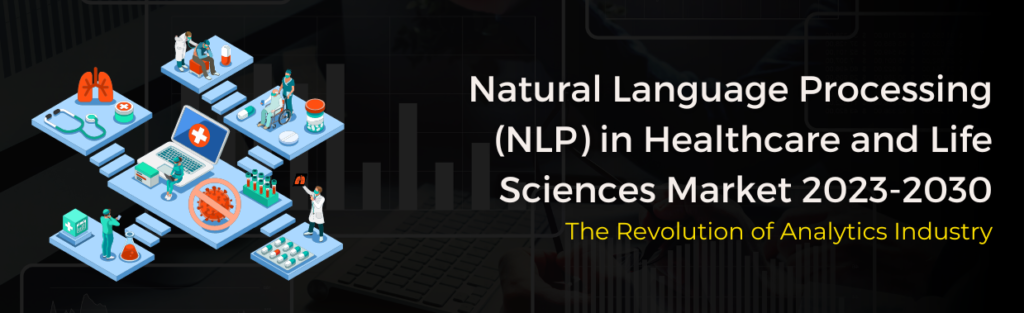
Natural Language Processing (NLP) in Healthcare and Life Sciences Market 2023-2030

Natural Language Processing (NLP) in Healthcare and Life Sciences Market 2023-2030 | The Revolution of Analytics Industry

Natural language processing (NLP) is widely hailed as a future game-changer that will revolutionize various industries, including healthcare and life sciences. There are diverse NLP applications in the space which may foster an industry revolution in the future years. According to research reports, the NLP segment in the healthcare and life sciences category saw sizable revenue growth in 2022 with future forecasts of an increase by 2030. Here are some fascinating trends that industry watchers should keep an eye on.  Biggest NLP Providers in Healthcare and Life Sciences Some of the largest natural language processing (NLP) providers in this category globally include:  Key Trends in Natural Language Processing (NLP) for the Healthcare and Life Sciences Industry Here are some key facets that point towards an industry revolution driven by NLP applications in the healthcare and life sciences sectors.  Following current trends, NLP is poised to witness widespread adoption throughout the healthcare and life sciences industry. Healthy market size growth forecasts for the sector are based on extensive R&D and innovations done by leading players across major global regions. The suite of applications will only increase over the years, with better data extraction and comprehension for enhancing the overall efficiency of the healthcare and life sciences sectors.  FAQs The NLP market is poised to touch a handsome USD $ 9.54 billion by 2030, which indicates a CAGR of 19.1% from the 2022 market size of USD $ 2.35 billion.  Natural language processing (NLP) in healthcare and life sciences offers technology-driven abilities with regard to identifying contexts for the usage of words. This enables a more accurate understanding and interpretation of conversations with patients and other stakeholders while capturing vital nuances of health conditions. This helps manage treatment data and follow-ups. It also helps identify data patterns and automates various tasks in the life sciences and pharmaceuticals sector.  NLP is helpful for processing the electronic health records (EHRs) of patients with an aim to extract valuable information including medication, diagnosis, and other symptoms. This helps enhance overall patient care while ensuring personalized treatments accordingly.  4. What is the future of natural language processing?  Natural language processing (NLP) is expected to expand in the future with diverse applications and other possibilities. There will be more cutting-edge technological innovations in segments like sentiment analysis, speech recognition, Chatbots, and automated machine translation among others. 

Read More »
MENU
CONTACT US

Let’s connect!

Loading form…

CONTACT US

Let’s connect!

    Privacy Policy.

    Almost there!

    Download the report

      Privacy Policy.