Category: AI & MI

Digital Disruption In Insurance: The Rise Of InsurTech

In the last few years, #InsurTech has increasingly proved to be a disruptive influence in the insurance sector, an industry which can be considered as one of the most complex in the world. #InsurTech with the help of technology and innovation has managed to immensely improve the efficiency of the existing operations, offering digital first customer-led services and enhanced customer experience. I had a very deep discussion with Dennis Grönger, InsurTech Professional, Author and Speaker at NextTo InsurTech, on the rise of #InsurTech and Digital-Led Product Innovation in Insurance. The detailed version of the conversation is given below. Every week we publish insights with a Q&A with CIOs, CTOs CMOs, and CXOs. See the link to the previous LinkedIn Q&As by Indus Net Technologies at the bottom of this post. Q1. What are the key trends in product innovation in the Insurance industry? Dennis: I am an InsurTech expert and this sector is full of surprising new ideas and concepts. Every conference I visit is full of exciting start-ups. And it’s the same on the incumbent’s side. Product innovation is a key component of Digital Transformation in the insurance industry. Despite regional characteristics, two general trends can be observed worldwide. First, there has been a shift from one-size-fits-all products to fine-grained components that can be combined individually for the customer. Second, more and more insurance services and products are being developed that add special value and benefits for using customer data. Q2. What are the key enablers and drivers of innovation in the insurance industry? Why NOW? Dennis: Two big changes have been essential for today’s innovative insurance industry to develop: a technological change and a cultural change. I wouldn’t dare to tell you guys at Indus Net Technologies about technological change as you’re much better than me in this area! As for the cultural change, I’m not aware of any insurance company that hasn’t radically changed how it uses the creativity and great ideas of its employees. When I started my career in insurances business, the whole industry was full of patriarchs at the top of companies and employees were just considered numbers on payrolls. Since then, things have fortunately changed, and many successful innovations would be inconceivable without committed employees. Q3. What are some of the interesting digital-led product innovations in the Insurance industry? Dennis: The time of new digital insurance products has just begun, and I am convinced that we are going to see a lot of exciting new and innovative ideas. For example, there is a new class of insurance products that wouldn’t work without full digital capabilities and niche products with low premiums. The combination of ‘niche‘ and ‘low premiums’ was out of the question for incumbents until now; Digital Transformation has changed that. Cyber Insurance is another good example of a different digital-led product trend: products as a combination of services that extend beyond coverage. In case of a cyber-attack, the most important thing is to find the best specialist to stop the attack as quickly as possible. How would this be solved without a digital platform that connects your customers with specialized service providers? It would be impossible! Q4. Why is user experience leading the way in Insurance innovation? What problem are we solving here? Dennis: Relevance and simplification are key terms in the case of user experience in the insurance industry. Customers want more personalized services and products that are individually tailored to their personal needs. Product relevance is also a question of when and how the customer wants to handle this product, before and after buying it. Insurers need to find answers to these customer demands. However, without simplified products that your customers can easily understand, the only user experience that you are going to get is bad user experience. Q5. How much of IoT and Big Data Analytics is being used to create new products? Has the IoT generated data attained statistical significance to be used for underwriting? Dennis: Well, I am a strategy expert and not an underwriter but there is no doubt that IoT and Big Data Analytics are going to disrupt the ways that underwriters analyze and model risks. Connected cars have already reinvented car insurance and, with Smart Home technologies in a bundle with home insurances, for example, insurers have the chance to offer real protection in addition to coverage. Q6. How can blockchain be used for disruption in the Insurance industry? Dennis: That’s the billion-dollar question right now, isn’t it? I think it’s still too early to make any reliable predictions about blockchain. However, for me, the biggest opportunities for insurance companies are in reducing costs, reducing errors, and reducing time by using blockchain-based technologies. Q7. Do you see a future for people-to-people (p2p) Insurance? How far (or near) is this from reality? Dennis: Great examples of P2P insurance, like Lemonade, have proven how far you can get with complete customer focus. But is a P2P business model profitable or even scalable? I don’t think so. The numbers from Lemonade that I’ve seen so far are reporting huge losses and Germany’s P2P pioneer Friendsurance was, due to its numbers, forced to switch their business model and have become more of an online broker with a few P2P-benefits for their customers. Q8. What are the constraints around innovation in the Insurance industry? Dennis: I want to answer this by quoting a friend of mine, Dr. Robin Kierra. “Insurers needs to do everything at once: do their homework, go out and play, and prepare for the exams in 10 years.” Would you like to try that with the 25+ year old legacy systems that most insurers are still using? Better not, but it is a fact that Digital Transformation and innovation are still at their beginnings in the insurance industry. Q9. How can Insurance and InsurTech collaborate to breed innovation at scale? Dennis: As long as insurers have the customers and InsurTechs have the technology, there is no other option than to cooperate with each other.


Read More »

#HealthTech – Has It Emerged Finally?

The emergence of the digital revolution comes at a time when healthcare is in the utmost need to respond to the ever-growing demand for resources. #HealthTech is required not only to come up with solutions but to deliver them as well. Let us see what is happening in the #HealthTech sector around the world. Top 3 technologies that can change the #healthcare industry#AI #healthtech #ehealth #tech #medicaltech #sensors #technology #IoT #Industry40 @rajat_shrimal cc @evankirstel @MikeQuindazzi @debashis_dutta @kuriharan @AnjaHoffmann @chboursin @jblefevre60pic.twitter.com/1Mq62vpXQk — Rajat Shrimal (@rajat_shrimal) May 13, 2018 10 promising #AI applications in #healthcare >> @HarvardBiz HT @psb_dc via @MikeQuindazzi >> #HealthTech #BigData #DataScience #AI #MachineLearning #PredictiveAnalytics #DeepLearning >> https://t.co/JCLs4Pv9iz pic.twitter.com/NsoRtiTLaa — Mike Quindazzi (@MikeQuindazzi) May 14, 2018 https://twitter.com/ai_amelia_/status/996215570931638277 Managing Medical Data on The #Blockchain [Infographic]https://t.co/BN0lJxxbIy [by @gemhq]#BigData #HealthTechCc @pierrepinna @SpirosMargaris @andi_staub @JohnNosta @JimMarous @evankirstel @ahier @IrmaRaste @MarshaCollier pic.twitter.com/r2xhdKs8pO — ipfconline (@ipfconline1) May 14, 2018 #ArtificialIntelligence #Cancer #Healthtech This #pen may let surgeons detect cancer in seconds @CNBC@TamaraMcCleary @SpirosMargaris @psb_dc @FrRonconi @fabiomoioli @DanielDiemers @HealthcareWen @KirkDBorne @JohnSnowai @AntonioSelas @ndwr @NeiraOscipic.twitter.com/uTfIe5ABLW — Andy Müller (@andy_lucerne) May 14, 2018 This 3D printed prosthetic arm is sleek in design and feels intuitive. #3dprinting #prosthetics #engineering #healthtech pic.twitter.com/vlI5cVRgdE — Evan Kirstel #B2B #TechFluencer (@EvanKirstel) May 10, 2018 How #Blockchain Will Transform Healthcare Information Managementhttps://t.co/JDKe6DEBA4 [by @TD_Madison v/ @Datafloq]#HealthTech #IoT #AR #VR #Wearables #SupplyChain Cc @ahier @evankirstel @DeepLearn007 @MarshaCollier @jblefevre60 @Bill_IoT @andi_staub @psb_dc @IrmaRaste pic.twitter.com/bXuNK7aOXk — ipfconline (@ipfconline1) May 12, 2018 Doctors are using #AI to see how diseases change our cells https://t.co/NksYtfJBFx @wef #ML #3D #health #HealthTech@evankirstel @ipfconline1 @SpirosMargaris @JacBurns_Comext @Fisher85M @helene_wpli @ImMBM @chboursin @mallys_ @jerome_joffre @psb_dc @ahier @JohnNosta @HITpol pic.twitter.com/UZD9hAia8i — Jean-Baptiste Lefevre (@jblefevre60) May 11, 2018 This Portable #3DPrinter Could Print Skin Over Wounds https://t.co/2yYckJfVX9 #healthtech pic.twitter.com/Ypr9fFhXJ2 — Evan Kirstel #B2B #TechFluencer (@EvanKirstel) May 10, 2018 This is a young an growing sector. However, the ever-evolving #HealthTech will surely contribute a lot to the welfare of the society.  

Read More »

Google IO – Here Are All The Updates You Need

Do we need to tell you what Google IO is? A developer festival this big and probably the biggest in the world needs no introduction. This year’s Google IO was held 8-10 May at Mountain View, California. Thousands of developers and tech geeks from around the globe got together to learn about latest developments and products from Google. We came across some path-breaking updates which made everyone burst with excitement. If you weren’t able to follow the event, no worries, here are the updates for you. That's a wrap from #GoogleIO! Here's everything Google unveiled at its biggest conference of the year https://t.co/9XXZqM0dwU — Business Insider (@BusinessInsider) May 8, 2018 Google is taking its predictive text features to the next level, this is Smart Compose, which autocomplete was your sentences as you type in Gmail #GoogleIO pic.twitter.com/6YjPsIPew6 — Karissa Bell (@karissabe) May 8, 2018 Google Photos getting new AI actions. Will offer one tap retouch options, convert documents into PDFs and turn old black and white photos into color. #GoogleIO18 pic.twitter.com/ASQwlHSaL6 — Rich DeMuro (@richontech) May 8, 2018 https://twitter.com/thekenyeung/status/993900314154565632 VERY deep dive into the new News app. Which is another way to underscore the theme "You can trust us. We promise that if we're hauled before Congress, it'll be only over antitrust stuff." #googleio18 — Andy Ihnatko (@Ihnatko) May 8, 2018 "UX isn't fonts or shades of blue, it's moments for your users"Awesome talk about making better experiences with @_davideast#io18 #googleio18 #Firebase pic.twitter.com/wq7z6Ug1B8 — Derek Pastor (@DerekJonPastor) May 10, 2018 6 new voices are added to the google assistant with the goal to get the right accents and dialects correct and they are featuring the sexy cool John Legend…oh yeah!!! #GoogleIO #googleio18 — Lynette Anthony Hundermark (@LynetteAnthony) May 8, 2018 Miss Google's #io18 keynote yesterday? We have you covered 💪 And it's all under 5 minutes ⏰ pic.twitter.com/lfdxLxxLlz — CNET (@CNET) May 9, 2018 The web is so much more powerful today, developers need to catch up! #io18 pic.twitter.com/IH49Wlyejp — Ire Aderinokun (@ireaderinokun) May 9, 2018 Watch this brilliant demonstration of @google's AI-powered personal assistant have a "human-like" conversation with a real person, via @sundarpichai #io18 pic.twitter.com/tXykdPccbH — Vala Afshar (@ValaAfshar) May 9, 2018 Updated: What’s New in Android? #io18 #sketchnote pic.twitter.com/CoxiJev2CH — Corey Leigh Latislaw 💄 (@corey_latislaw) May 9, 2018 One of the new features I'm so excited about at #io18 this year – Motion Layout a subclass of ConstraintLayout allowing for easy animations 🤩😍 pic.twitter.com/8LpQiNbIHM — Rebecca Franks (@riggaroo) May 10, 2018 What do you think about the latest developments on ‘Google Assistant’? Is it creepy that it would now be able to make calls for you or is it absolutely fantastic and a whole new level of evolution in the world of technology? Let us know your thoughts.  

Read More »

Next-level Data Analytics and AI to Unlock IoT’s True Potential

To imagine that physical objects could be connected to the Internet and that they could communicate with each other at the same time seemed ludicrous even a decade ago to most people. However, Internet of Things (IoT) is real, and it is here. This system of connected devices connected to the Internet via sensors and churn out a large amount of data. IoT-enabled devices are no longer mysterious. They are used in the health sector, smart homes, vehicles, gadgets, and just about everywhere else. It shouldn’t come to us as a surprise that all these devices result in large volumes of data, adding to what is often called the Big Data. While this data may seem insurmountable, and sometimes even redundant, artificial intelligence and data analytics can empower users, manufacturers, and businesses to venture into unchartered territories. In this article, let us take a look at how artificial intelligence and next-level data analytics are helping to unlock the potential of IoT. What’s the problem with IoT today? While most devices manufactured today have some level of IoT enabled in them, there is a lacuna of sorts, when it comes to the actual utilization of the technology. This is because, at its simplest, IoT connects devices using sensors and Internet, but there is no way to really understand the data that is produced or to enhance features that already exist. While IoT has helped millions of people to communicate with their cars, homes, machines in factories, etc right from the smartphones, a lot of data that is churned out by these IoT-enabled devices is simply ignored. Artificial intelligence and advanced data analytics can help to put IoT data into perspective. Whether it is data from medical devices or from IoT-enabled cars, analyzing this deluge of data is humanely impossible. Next-level data analytics use predictive analysis, advanced statistics, and other methods to provide insights from both structured and unstructured data. Most importantly, ignoring all this valuable data can prove to be disastrous to the society as a whole. Data is too large and complex It is not humanly possible to derive useful insights from so much of data When data isn’t analyzed or understood, valuable opportunities are missed Underutilization of data may also result in disastrous outcomes The answer lies in next-level data analytics and artificial intelligence How can data analytics and artificial intelligence take IoT to the next level? Data Analytics derives meaningful conclusions by examining data sets of various sizes. Conclusions can be used to identify patterns, trends or even predict certain outcomes. These conclusions help businesses to improve their products and services, come up with better business strategies, and make effective decisions. In addition, deriving useful conclusions from datasets will help businesses to drive revenue and profits, and gain a competitive edge. Datasets that can be used from different sensors include: Data from video and audio streams Data from geo-location sensors Data related to product usage. This may or may not be linked to sensors. Data from social media System log files There are different types of data analytics that can be used with IoT-enabled devices. Some of those are: Streaming Analytics: This uses real-time data streams to track traffic, transactions, etc. This is most helpful to understand situations where immediate action is required. Spatial Analytics: As the name might suggest, this kind of analytics uses location-based data to understand trends in usage. Time-based Analytics: Using time-based data is important too, and provides valuable information about health, weather, product usage patterns, etc. Prescriptive Analytics: This uses predictive analysis, and sometimes includes descriptive analytics. This helps companies to improve products and services and has wide-reaching commercial uses. There are a number of ways businesses can take IoT to the next level by using Data Analytics. Data insights can be used for the purpose of marketing and product usage analysis. The insights can help not only consumers but also businesses. Video and audio analytics, social analytics, etc. are opening doors to analyzing emotions and behaviors of people. This can be particularly useful to avert emergencies in crowded places or to improve products. Turbo-charging IoT with Artificial Intelligence A Gartner study predicts that more than 80% of IoT projects will involve an AI element, and that is a whopping 70% increase from today’s situation. Most organizations are looking at machine learning and deep learning to unlock the potential of IoT. Machine learning identifies trends and patterns within data sets, and also pinpoints anomalies if any. Machine learning makes identification of patterns more accurate as it does not depend only on numbers, but also on other aspects. Speech and facial recognition, emotion and behavior analysis, and predictive maintenance are all aspects of AI that will help take IoT to the next level. Imagine being able to predict the time for servicing a gadget based on an individual’s frowning patterns? This can happen. Artificial Intelligence is also being used in risk management, and avert disasters and emergencies from occurring. Machine learning enables a software “agent” to identify patterns in a dataset and use those patterns to learn how to adjust the way it further analyses data. The best example would be movie recommendations on Netflix or playlists on Spotify and Apple Music. Machine Learning can identify usage patterns in IoT and help manufacturers to improve customer experience. On the other hand, businesses can benefit from the competitive edge, improved products and services, and enhanced revenue-making potential. Need for implementing AI and Data Analytics quickly As you can see, you cannot remove artificial intelligence or data analytics from IoT. IoT without these two important technologies will simply enable devices to communicate with other and there is no room for improvement of products and services or opportunities to identifies usage patterns and trends. Both Artificial intelligence and Machine Learning take IoT to the next level and help customers and businesses to unlock experiences and opportunities they never knew existed. The future of IoT certainly vested in the implementation of Artificial Intelligence and Data Analytics. Sooner

Read More »

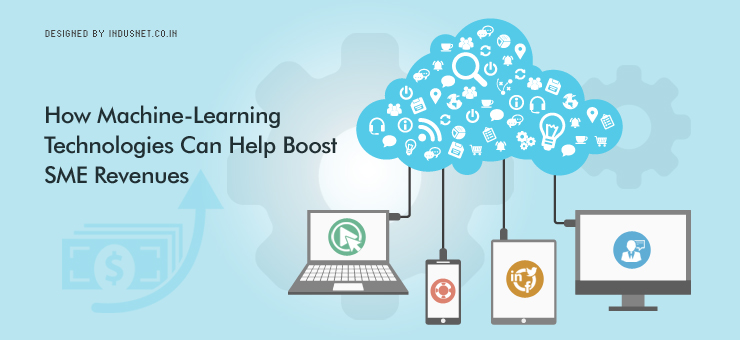
How Machine-Learning Technologies Can Help Boost SME Revenues

The term machine learning was first coined in 1959 by Arthur Samuel, as a field of study that gives computers the ability to learn without being explicitly programmed. Machine learning focuses on the development of computer programs that evolve when exposed to new data. This enables computers to screen and sort data through self-learning and prediction techniques. Computers employ artificial intelligence techniques to learn by itself through repetition and experience. With big data in picture, machine learning today has grown into potentially a highly significant field of study.  Businesses can gain tremendously from machine learning solutions. Machine learning solutions require highly skilled engineers who can build and maintain these solutions. However, small scale businesses usually do not have enough resources to construct their own solution; so, enrolling for machine learning as a service on a cloud is the best way forward to experience its multifold advantages and boost revenues. Machine learning solutions are enabled to extract quality data from big data. For a business website, blog or social media page that generates a tremendous amount of data on a daily basis, it is practically impossible to sort data manually.  And if the data is left unprocessed or unutilized, a business can lose out on many opportunities and market sentiment due to its failure to discern the data. The following article will briefly explore how machine learning solution can help SMEs in many ways: Generate valuable content A lot of user-generated content is produced on company websites in the form of feedback, comments, and reviews.  Content produced by users does not guarantee any authenticity.  It can be vulgar, false, abusive, or completely negative.  Machine learning solutions filter out objectionable content without human interference or manual tagging.  The result is that users can view only quality, relevant, and unbiased content. Email service providers having been using this technology for a long time to filter out spam emails, which we often find in the junk folder.  Machine learning solutions enabled mailing software to identify spam and bots on its own based on artificial intelligence.  And the ability to filter spam keeps increasing every day based on experience. Similarly, user-generated content can be filtered by implementing machine-learning solutions for websites, blogs and social media handles of a company. Recognize visual content Content generated on the internet is not limited to text but also images and videos. Usually, users need to manually describe and tag visual content for analysis. However, machine learning services are enabled to automatically annotate images. Such solutions use semantic classifiers to recognize objects based on color, texture, shape and edges. Filter objectionable visual content Businesses can tremendously benefit by automatically filtering objectionable visual content on social media platforms like Facebook, Pinterest, Twitter, Instagram or their blog. This can save a lot of time which otherwise is consumed in manually scanning every image or video uploaded on social media handles. This is important considering the amount of visual content generated every day. Moreover, visual content can be more sensitive or offensive. Identify images relevant to a specific product On the other hand, it empowers businesses to identify images that are relevant to their brand across their network or probably across the web. If any person uploads an image that relates to a specific product and is relevant to a business, machine-learning solutions would be capable of identifying such content. Businesses can measure the impact of their campaigns, product’s fondness among users, and conduct other analysis. This is aptly applicable to online retailers who significantly rely on visual content. Help users find better products Machine learning is suitable for users who search for better products on the web. Google Image Search, Pinterest, TinEye are popular services that use content-based image retrieval system and greatly rely on the machine-learning algorithm to help find users better products, locate the source of image and web pages, find higher resolution versions, get more information about an image. There are many e-commerce services that utilize machine-learning technology to help its customers quickly browse and find a better and highly relevant product depending upon their likings and preferences. It can suggest new products to customers by deploying machine-learning strategies. Provide efficient customer support Machine-learning solutions have found great acceptance among customer service areas. Customers generate different types of queries on company’s website through the contact us forms. For e-retailers, the load of customer queries is even higher. It is extremely difficult to manually go through the content of each query, tag and then re-route the query to a specific department. The cost of handling queries can be hefty for a small business owner. Moreover, this delays customer query resolution and businesses can lose out on customers. On the contrary, if customers are asked to fill complicated forms to generate a query, the possibility is that customers will feel frustrated to do that and will never go ahead. Machine-learning solutions are capable of identifying content in the query form and directing it to the specific department for query resolution. Understand customer behavior It is necessary to understand the market sentiment to drive critical business decisions. For instance, if a business does a test launch and wants to track consumer opinion across the web, it can monitor so by deploying machine learning techniques. Marketers can deploy machine-learning solutions that can specifically track consumer review forum apart from their social media handles like Twitter, Facebook. Social media listening has gained a lot of traction over the last few years. Consumer opinion spreads like fire on social media and some controversial posts can instantly become viral. Keeping a tab on market sentiment will help marketers to understand customer behavior and design better solutions for them. Invest in machine-learning services to grow Machine-learning as a service has remarkable potential in future and is still at a nascent stage. It is clearly understood that machine-learning techniques are an absolute necessity for modern marketers. Higher the capability of an algorithm, the more useful it is to the user and the business. Customers are central to

Read More »
MENU
CONTACT US

Let’s connect!

Loading form…

CONTACT US

Let’s connect!

    Privacy Policy.

    Almost there!

    Download the report

      Privacy Policy.