Most organizations today can point to a long list of data projects they have executed. New dashboards, upgraded BI tools, analytics pilots, and even AI experiments. On paper, the activity is impressive.
Yet when CXOs step back and ask a simple question—“Are we making better decisions than we were three years ago?”—the answer is often uncomfortable.
The problem is not lack of effort or investment. It is a fundamental confusion between data strategy and data projects. Until that distinction is clearly understood at the leadership level, organizations will continue to deliver outputs without compounding value.
Why This Confusion Persists at the CXO Level
From an executive standpoint, it is reasonable to assume that a portfolio of successful data initiatives should add up to progress. After all, projects get approved, budgets are spent, and teams deliver.
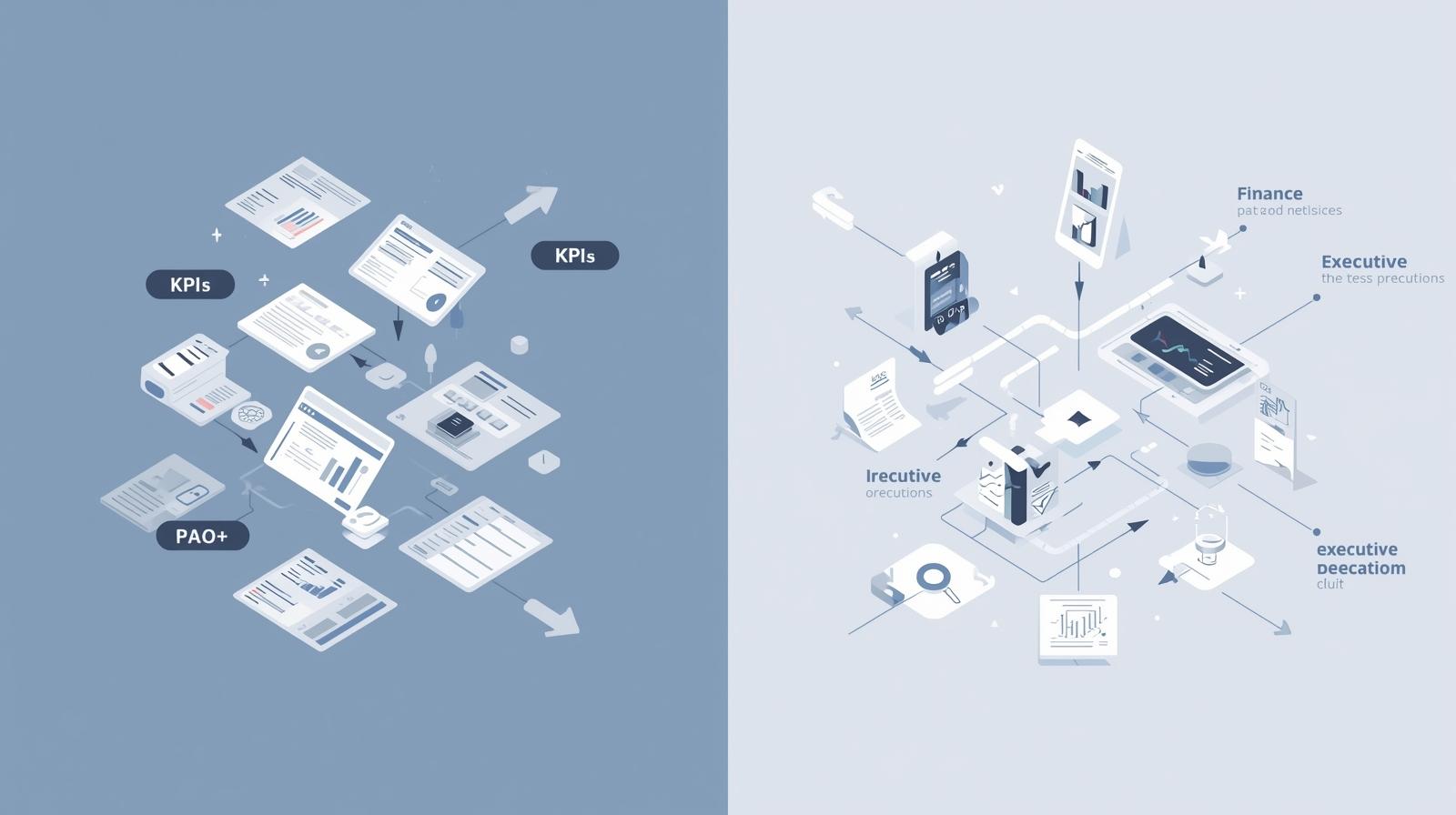
However, projects optimize locally, while strategy aligns globally. Most data initiatives are initiated to solve immediate problems: a reporting gap, a compliance requirement, or a performance concern in one function. Each project makes sense in isolation. Collectively, they often pull the organization in different directions.
This is why many CXOs feel they are constantly “investing in data” without seeing proportional returns.
Read our 5 Levels of Data Maturity: Where Most Companies Actually Stand
What a Data Project Actually Is
A data project is, by nature, tactical. It has a defined scope, timeline, and delivery objective. It is often tool-centric, and success is measured by completion: a dashboard goes live, a model is built, a system is
integrated.
Projects are necessary. No organization advances without them. But projects are not designed to answer bigger questions such as
-
Which decisions matter most to the enterprise?
-
Which metrics should never be debated?
-
Which data capabilities must be reusable across functions?
As a result, projects tend to solve symptoms rather than causes.

What a Data Strategy Actually Is
A data strategy operates at a very different altitude.
It is not a document that lists tools, platforms, or future aspirations. At its core, it answers three executive questions:
- Which business decisions must data consistently support?
- What capabilities must exist to support those decisions repeatedly?
- How will ownership, governance, and accountability be enforced across
functions?
A true data strategy is decision-centric, not technology-centric. It aligns finance, operations, and business leaders around a shared analytical backbone.
Most importantly, it creates coherence. It ensures that individual data projects reinforce one another instead of fragmenting effort.
The Most Common Symptoms of Low Data Maturity
How the Confusion Shows Up in Practice
In organizations without a clear enterprise data strategy, certain patterns repeat themselves.
Dashboards proliferate, but KPIs differ by function. Analytics teams spend time rebuilding similar logic for different stakeholders. New tools are added to “fix” adoption issues that are actually caused by misalignment.
From a CFO’s perspective, this manifests as repeated reconciliation effort. From the COO’s standpoint, operational metrics improve without improving outcomes. CIOs deliver platforms, only to face low business adoption. CEOs see activity, but not momentum.
These are not execution failures. They are symptoms of strategy absence.
Why More Projects Do Not Create Maturity
One of the most common executive misconceptions is that data maturity increases linearly with the number of initiatives completed.
In reality, maturity increases only when:
-
Metrics are standardized and owned
-
Data logic is reused rather than recreated
-
Analytics consistently influences decisions across functions
Without strategy, each project starts from scratch. Knowledge remains trapped within teams. Value does not compound.
This is why many organizations feel stuck between reporting maturity and decision maturity, despite years of investment.
If this sounds familiar, your organization may not have a data execution problem—it may have a strategy gap.
👉 Talk to our data strategy advisors to assess whether your current initiatives are compounding value or simply adding activity.
How Strategy Should Govern Projects
A data strategy does not eliminate projects. It disciplines them.
When strategy is clear, projects are evaluated not just on delivery but on contribution.
Leaders ask:
-
Does this project strengthen a shared metric?
-
Does it enable a recurring decision?
-
Does it reduce future dependency on manual effort?
Over time, this creates a reinforcing cycle. Each project leaves the organization slightly more aligned than before. Analytics capability becomes cumulative instead of episodic.
This is the inflection point where organizations move from being busy to being effective.
The Cross-Functional Imperative
One of the reasons data strategy fails is that it is often delegated—either to IT or to analytics teams.
In reality, strategy only works when it is jointly owned. Finance brings rigor to definitions and economic logic. Operations grounds analytics in process reality. Business leaders ensure relevance to outcomes. Technology enables scale and reliability.
When any one function dominates, the strategy becomes skewed. When all are involved, it becomes durable.
A Practical Test for CXOs
A simple way for leadership teams to assess whether they have a data strategy or just data projects is to ask:
-
Can we clearly articulate the top 5–7 decisions data must support?
-
Do multiple teams rely on the same metric definitions without debate?
-
Are analytics assets reused across functions?
-
Do new projects feel easier to execute than older ones?
If the answer to most of these is no, the organization likely has projects without strategy.
What Senior Leaders Should Take Away
For CXOs, the distinction is critical:
-
Data projects deliver outputs.
-
Data strategy delivers coherence.
-
Projects solve problems.
-
Strategy prevents them from recurring.
Organizations do not suffer from a lack of data initiatives. They suffer from lack of directional clarity.
Once leadership aligns on what data is meant to do—not just what it should produce—technology investments begin to pay off, analytics teams gain credibility, and decisions start to accelerate rather than stall.
That is when data stops being an overhead function and starts becoming a true enterprise capability.
🚀 If you want to move from fragmented data projects to a coherent enterprise data strategy, let’s start with the decisions that matter most.
Schedule a leadership data strategy conversation today.
Get in touch with Dipak Singh: LinkedIn | Email
Frequently Asked Question
1. Can an organization have strong data projects without a data strategy?
Yes. Many organizations execute technically sound projects but still fail to see enterprise-level impact because those projects are not aligned around shared decisions, metrics, or capabilities.
2. Is a data strategy the same as a data roadmap?
No. A roadmap focuses on sequencing initiatives. A data strategy defines why those initiatives exist, which decisions they support, and how value compounds across projects.
3. Who should own data strategy in an organization?
Data strategy should be jointly owned by business, finance, operations, and technology leaders. Delegating it to a single function typically leads to misalignment.
4. How long does it take to see value from a data strategy?
Organizations often see early benefits within months, especially as projects become easier to execute, metrics stabilize, and analytics reuse increases.
5. Do we need to pause existing data projects to define strategy?
No. A strong data strategy governs and refines ongoing projects—it does not replace them. The goal is to ensure every project contributes to long-term coherence and decision impact.