It’s been a while now, the revolution of connectivity has been growing around us.
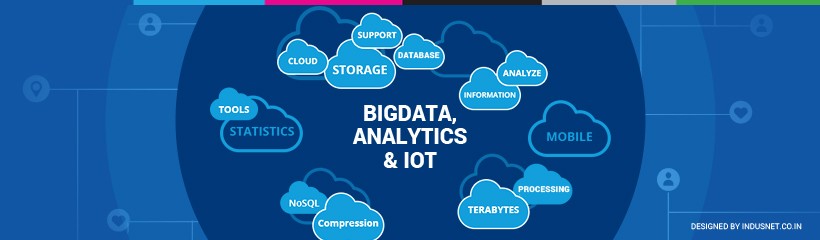
By 2020, it is expected that the revenue generated from IoT connected devices will be more than $300 billion according to a report by Gartner. This, in turn, will generate a humongous amount of data.
The impact of this will be felt all over the world of Big Data and Analytics.
We have started to feel the tremendous flow of data, it is everywhere. So what is going on around the world, what are industry stalwarts talking about BigData, Analytics & IoT? Let’s take a look:
The Big Data Exploration: Identify Your #Data to Make Better Decisions [Infographic]#BigData #Analytics #DataViz #SocialMedia #Sensors #IoT pic.twitter.com/zIVJFwUShu
— ipfconline (@ipfconline1) May 3, 2018
How do we implement #IoT?#sensors #BigData #Analytics #mobile #AI #Cloud #innovation @fisher85m #startup #BI #UX #DigitalTransformation @Deloitte pic.twitter.com/M3tetSu6oy
— Michael Fisher (@Fisher85M) May 4, 2018
Internet of Things – 25 billion #IoT devices globally in 2025 ! #smarthomes #wearables #smartcities #retail #innovation #tech #digitaltransformation pic.twitter.com/vGt1EueoLO
— Evan Kirstel #B2B #TechFluencer (@EvanKirstel) May 4, 2018
The world's population grows fast. How can we produce enough food for so many people? Our #researchers @SiemensUSA work on autonomous #robot farms – controlled via the #IIoT. I met Sinan Bank to find out more about his latest project. #IoT #agriculture #AI #AutonomousFarming pic.twitter.com/1ecTF5B16w
— Roland Busch (@BuschRo) May 4, 2018
The Future of #Insurance – A Survey of Insurance Professionals. @piktochart @ipfconline1 via @antgrasso #IoT #Wearables #BigData #AI #Analytics #Mobile #business #technology #innovation #DigitalTransformation #Insurtech #fintech pic.twitter.com/aHfNSMEe36
— Antonio Grasso (@antgrasso) May 4, 2018
10 Practicle Big Data Benefits [Infographic] #BigData #Analytics #GrowthHacking #CX #UX #SEO #Healthcare pic.twitter.com/KAV3buV9HL
— ipfconline (@ipfconline1) May 3, 2018
Top 5 #BigData Trends to Look for in 2018 [Infographic]https://t.co/VJI8iZGBie @SSI_TeamUS#Analytics #AI #DataScience #DigitalTransformation #CyberSecurity
Cc @evankirstel @DeepLearn007 @MarshaCollier @Shirastweet @JimMarous @SpirosMargaris @guzmand @psb_dc @ahier @andi_staub pic.twitter.com/ZA7w7yTdLn
— Pinna Pierre (@pierrepinna) May 3, 2018
#BigData and #DataAnalytics for Insurance >> #PwC via @MikeQuindazzi >> #Fintech #AI #DeepLearning #DataScience #Insurtech #IoT >> https://t.co/kok3FOM3Wx pic.twitter.com/0Hw7jBMzfG
— Mike Quindazzi (@MikeQuindazzi) May 4, 2018
#Fraud detection in retail with graph #analysis
by @Analyticbridge @irregularbi @jvilledieu |Learn full article here: https://t.co/yGTWdZOlAP#BigData #BI #BusinessIntelligence #Analytics #GraphAnalysis #FraudDetection #CyberSecurity #Security #RT
cc: @fredwilson pic.twitter.com/KqJFmoLaGt
— Ronald van Loon (@Ronald_vanLoon) May 2, 2018
15 Mind-Blowing Stats about #IoT #BigData #innovation #fintech #sensors #AutonomousVehicles #Wearables #Analytics #HealthIT #CyberSecurity pic.twitter.com/Q1sZqFF1SM
— Evan Kirstel #B2B #TechFluencer (@EvanKirstel) May 1, 2018
Keep watching this space to keep yourself updated on the latest happenings in the world of technology and digital.