Biotechnology is undergoing a profound shift. AI-native R&D, programmable therapeutics, RNA platforms, and synbio manufacturing are accelerating innovation across healthcare, pharma, and industrial biology. Executives shaping life sciences in 2026 must understand the biotechnology breakthroughs redefining discovery, development, and delivery. Global trends such as precision medicine, scalable cell therapies, and rapid vaccine development are driving innovation in biotech RNA solutions, particularly enabling advanced modalities like CAR-NK therapies to become more effective, customizable, and accessible worldwide.
Self amplifying RNA is driving major biotechnology innovations by enabling more efficient vaccines and therapies with lower doses and longer-lasting effects.
AI for life sciences is accelerating the development of universal biosensors by enabling real-time data analysis, adaptive sensing, and scalable integration across diverse biological systems.
This article outlines the top biotechnology innovations transforming the field—what they mean for your strategy, where value is emerging, and how organizations can adapt. Self-amplifying RNA is driving a new wave of biotechnology innovations, enabling faster and more efficient vaccine development.
Strand Life Sciences is poised to lead several key biotech trends in 2026, particularly in AI‑driven genomics and precision medicine. Among the top-rated biotech innovations this year, systems biology has emerged as a key driver of breakthroughs in precision medicine and drug discovery.
The biotech 2026 landscape is expected to undergo significant transformations, making the biotech outlook 2026 particularly promising for investors and researchers alike.
Top Biotechnology Innovations to Watch
- AI-native platforms and automation are reshaping R&D and accelerating biotechnology innovations.
- Gene editing 2.0, RNA therapeutics, and programmable cell therapies are entering real-world clinical expansion.
- Synthetic biology and biomanufacturing are scaling sustainable production systems.
- Life sciences in 2026 will be defined by multimodal data, digital twins, and enterprise-grade automation.
1. AI-Native Discovery Platforms Are Redefining R&D in Life Sciences 2026
AI is now the nerve center of modern biotech. Unlike legacy systems, AI-native discovery platforms integrate multimodal biological data—genomics, proteomics, imaging, and phenomics—to reduce cycle times and enhance prediction accuracy.
The Biotechnology & Life Sciences Awards 2026 highlighted the most influential innovations shaping the biotech trends 2026, from AI-driven drug discovery to next-generation gene therapies.
These platforms enable:
- Generative protein, RNA, and antibody design
- AI-assisted assay planning
- Predictive ADME-Tox modeling
- Automated optimization of cell engineering
- Digital twins for molecular simulations
For biotech and pharma leaders, this marks a shift from manual experimentation toward predictive, design-first science.
Why This Matters
- Faster time-to-insight
- Higher probability of technical success
- Lower R&D costs
- Removal of bottlenecks in early discovery
How is AI transforming biotechnology R&D in 2026?
AI is accelerating discovery by modeling biological systems, predicting outcomes, and enabling automated experimentation cycles—replacing months of wet-lab iteration with days of computational optimization.
2. Gene Editing 2.0: Beyond CRISPR and Into Precision Engineering
CRISPR opened the frontier, but the next wave of biotechnology innovations is defined by precision, efficiency, and safety.
Breakthrough Technologies in 2026
- Base editing—Single-nucleotide corrections without double-strand breaks
- Prime editing—Highly precise “search-and-replace” genome engineering
- Epigenome editing—turning genes on/off without altering DNA
- Novel delivery systems—LNPs, engineered viral vectors, and cell-targeting peptides
What This Means for Therapeutics
- Expanded treatable disease spectrum
- Safer in vivo interventions
- Improved manufacturability
- Broader commercial viability
What are the newest developments in gene editing?
New modalities—prime editing, base editing, and epigenetic editing—allow more accurate, programmable DNA changes with fewer off-target risks than earlier CRISPR systems.
3. RNA Therapeutics Expand Beyond Vaccines
RNA transformed global health through mRNA vaccines, but Life Sciences 2026 pushes the field into oncology, autoimmune disorders, rare diseases, and regenerative medicine.
Key RNA Innovation Areas
- siRNA and ASOs for gene silencing
- Circular RNA (circRNA) for long-lasting expression
- Self-amplifying RNA (saRNA) for ultra-low-dose therapies
- In vivo gene editing using RNA-guided systems
Drivers of Growth
- Scalable RNA manufacturing
- Improved delivery vehicles
- High programmability of RNA systems
- Rapid design-to-clinic timelines
How is RNA technology evolving beyond vaccines?
RNA therapies now target gene silencing, protein replacement, cancer treatment, metabolic disorders, and regenerative medicine—enabled by advanced LNP delivery and synthetic RNA engineering.
4. Programmable Cell Therapies Enter Their Next Era
Cell therapy has matured from early CAR-T innovations into a robust, diversified therapeutic class.
What’s Changing in 2026
- Allogeneic “off-the-shelf” CAR-T reduces patient-specific manufacturing
- CAR-NK therapies offer superior safety profiles
- iPSC platforms enable renewable cell sources
- Bioprocess automation increases throughput and reproducibility
Strategic Implications
- Lower cost per dose
- Faster delivery
- More predictable manufacturing
- Increased access to advanced therapies
What are the latest innovations in cell therapy?
Universal donor cells, CAR-NK treatments, iPSC-derived platforms, and automated bioprocessing systems are defining the newest generation of cell therapies.
➤ Build an AI-Enabled R&D Pipeline
Modern leaders are redesigning scientific workflows with automation, multimodal modeling, and computational biology.
→ Request an Innovation Consultation to optimize your R&D for life sciences in 2026.
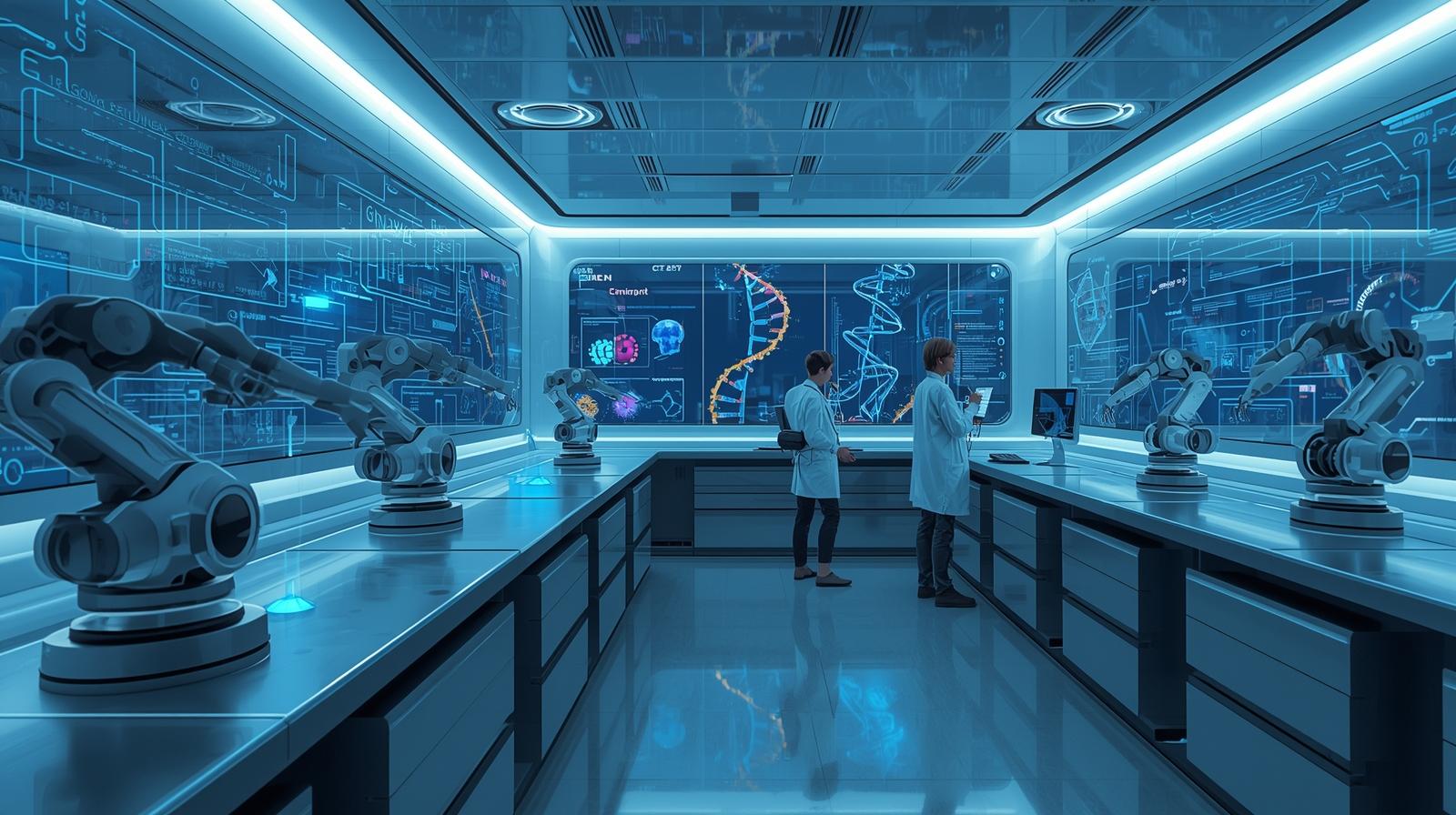
5. Biofoundries & Automated Cloud Labs Accelerate Biological Engineering
The rise of automated labs—sometimes called cloud labs or biofoundries—is one of the highest-leverage biotechnology innovations for operational efficiency.
Capabilities
- Fully automated experiment execution
- Robotic liquid handling
- Closed-loop engineering cycles
- AI-assisted experimental design
- Digital twin models of lab systems
Impact for R&D
- Reduction of manual workflows
- Higher reproducibility
- Parallelizable R&D execution
- Access to “lab as a service” for early-stage biotech
How do automated biofoundries speed up biotech development?
They automate experimentation, combine robotics with AI-driven design cycles, and allow remote execution—reducing time, cost, and variability.
6. Precision Medicine 2.0: Multimodal Data Unlocks Patient-Level Insights
Precision medicine is advancing from genomics-centric models to multimodal disease signatures integrating:
- Genomics
- Epigenetics
- Proteomics
- Metabolomics
- Imaging biomarkers
- Wearable data
- Clinical and digital phenotypes
This convergence fuels more precise diagnosis, response prediction, and patient stratification.
Why It Matters
- Better clinical trial outcomes
- Personalized therapies
- Targeted subgroup identification
- Improved diagnostic accuracy
How is multimodal data transforming precision medicine?
Multimodal data provides deeper insights into disease mechanisms, enabling more personalized and effective therapeutic strategies.
7. Synthetic Biology & Biomanufacturing Reshape Industrial and Therapeutic Production
Synthetic biology continues to be one of the most versatile biotechnology innovations, enabling programmable cells, novel biomaterials, and sustainable manufacturing.
Top Trends in 2026
- Engineered microbes for chemical production
- Automated genetic circuit design
- Cell-free biomanufacturing systems
- Custom biosensors
- Fermentation-based biologics at industrial scale
Business Impact
- Cost-effective manufacturing
- Supply chain resilience
- Environmentally sustainable production
- Faster design cycles for engineered organisms
What are the latest innovations in synthetic biology?
Advancements include engineered microbes, cell-free systems, automated circuit design, and high-efficiency fermentation technologies.
8. Digital Twins for Biology and Bioprocessing Become Enterprise-Ready
Digital twins—virtual replicas of biological systems—are emerging as core infrastructure for life sciences in 2026.
Use Cases
- Predictive control of bioreactors
- Virtual testing of cell-line modifications
- Process optimization for fermentation
- In-silico toxicity simulation
- Proactive quality control in GMP manufacturing
How do digital twins support bioprocessing innovation?
They model biological processes virtually, enabling accurate optimization, risk-free testing, and data-driven manufacturing improvement.
The Future of Biotechnology Innovations in Life Sciences 2026
The convergence of AI, automation, gene engineering, RNA platforms, and synthetic biology is reshaping the entire ecosystem of biopharma, biotech, and healthcare. Leaders who adapt early will gain a competitive advantage in discovery speed, operational efficiency, and therapeutic impact.
Biotechnology innovations are not just tools—they are the engines powering the next decade of breakthroughs.
Ready to Modernize Your Life Sciences Strategy?
From AI-powered R&D to next-gen therapeutic platforms, we help organizations adopt technology that accelerates scientific and commercial outcomes.
→ Contact us for a custom innovation roadmap for life sciences 2026.
Frequently Asked Questions
1. What are the top biotechnology innovations in 2025?
AI-native discovery platforms, precision gene editing, RNA therapeutics, programmable cell therapies, synthetic biology, and automated cloud labs are the leading innovations.
2. How is biotechnology changing life sciences?
Biotechnology is making R&D faster, more predictable, and more data-driven—improving drug discovery, diagnostics, manufacturing, and therapeutic engineering.
3. What role does AI play in biotechnology innovations?
AI improves prediction, automates experimentation, integrates multimodal datasets, and accelerates discovery cycles across pharma and biotech.
4. Which innovation areas will grow most in life sciences in 2026?
Gene editing, RNA medicines, AI-driven platforms, synthetic biology, and precision medicine will see the largest expansion.
5. How should executives prepare for the next wave of biotech innovation?
Upgrade data infrastructure, adopt AI-native tools, invest in automation, and build cross-functional teams combining biology, data science, and engineering.