Strategies to Address Employee Burnout and Retention Issues in a Post-Pandemic Era
While the world recovers from its pandemic, organizations are struggling with a quiet epidemic—employee burnout. Economic downturns, digital exhaustion, and flexible work patterns have diluted the boundary between work and personal life. Employee well-being strategies are now no longer amenities but must-haves to maintain productivity and hold onto the best talent for 2025 and beyond.
In this article, we examine the post-pandemic reality of burnout and employee disengagement and suggest data-driven strategies to fuel hybrid wellness, employee monitoring (in an ethical manner), and tech-enabled solutions that get the job done.
The Post-Pandemic Shift: What’s Changed?
Hybrid and remote work scenarios had promised flexibility, yet brought in:
-
Extended work hours
-
Reduced work-life compartmentalization
-
Loneliness and mental health pressure
-
No organized wellness initiatives
-
More resignations and job-hopping
More than 40% of workers, according to McKinsey, are thinking of leaving their roles because they are burnt out and lacking in purpose. As we head towards retention issues in 2025, there has to be proactive leadership that combines technology, empathy, and framework.
Strategy 1: Create Hybrid-Ready Wellness Initiatives
Those days of office yoga and sporadic wellness webinars are behind us. Contemporary wellness strategies need to scale geographically and temporally.
Tactics to Consider:
-
24/7 access digital wellness platforms
-
Weekly video or chat mental health check-ins
-
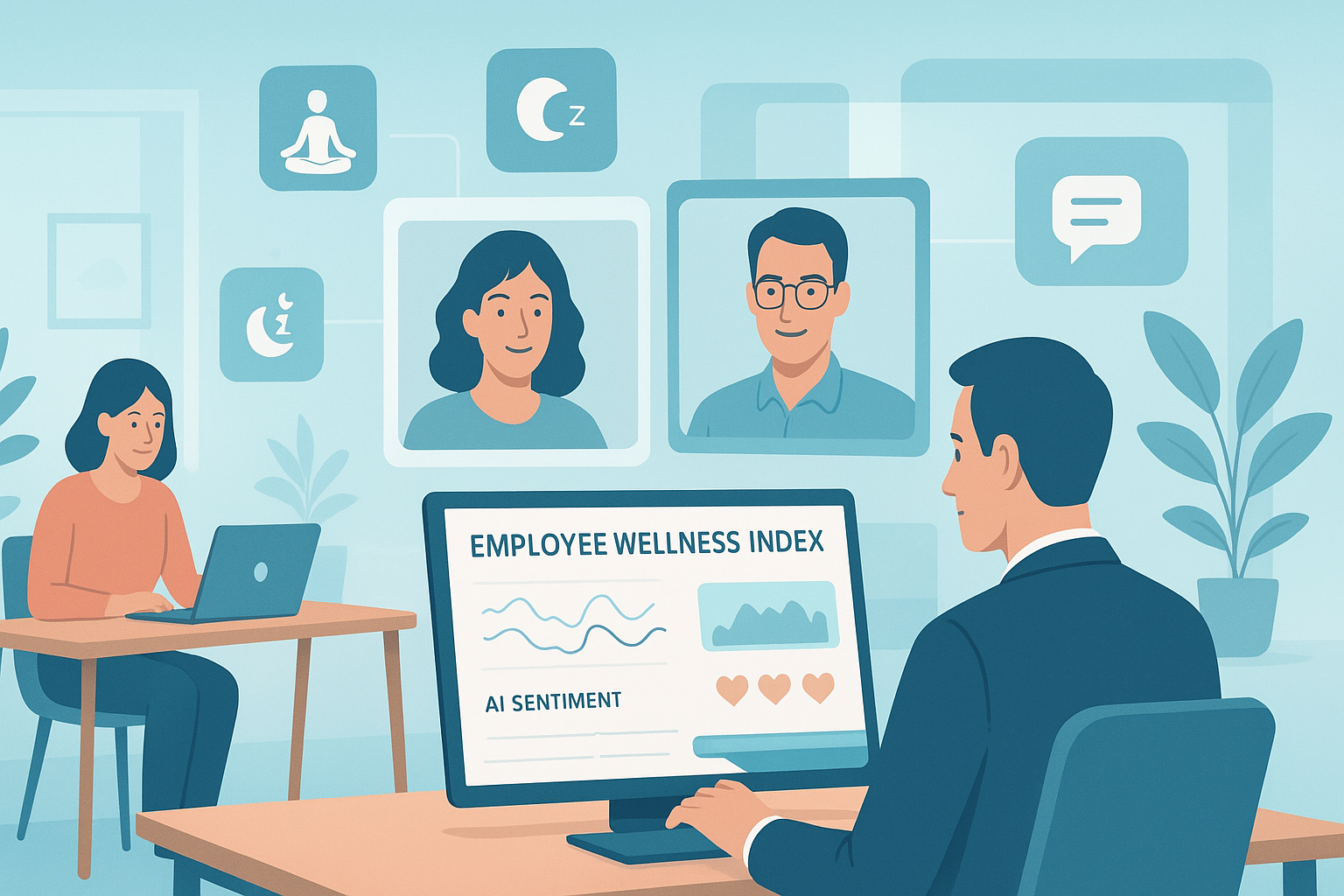
Sleep, meditation, and stress management apps
-
Personalized wellness budgets that employees can spend their way
Future-proof your hybrid team? Discover how tech-enabled wellness solutions can cut burnout by 30%.
Book a free strategy session with our HR Tech experts
Strategy 2: Implement Ethical Employee Monitoring and Sentiment Analysis
Productivity tools are not new—but now they need to be combined with well-being insights. Monitoring is no longer about surveillance but support.
Ideas to Implement:
-
Leverage AI platforms to identify stress signals in written communication
-
Monitor work rhythms, not hours—measure effort, output, and burnout signals
-
Pulse surveys (anonymous) on a regular basis to measure mood and job satisfaction
-
Role-based dashboards for managers to intervene early
-
Ethical clarity and consent need to be at the center when rolling out these solutions.
Strategy 3: Leverage Technology to Restore Belonging and Connection
Burnout is not about workload; it’s about disconnection.
Tech Solutions to Create Belonging:
-
Virtual watercoolers and casual catch-ups through Slack or Teams
-
AI-powered buddy matching for peer support
-
Interactive onboarding experiences through virtual tours and gamified culture training
-
Recognition platforms to celebrate successes and milestones
Today’s employees yearn for community and contribution, particularly in remote arrangements.
Strategy 4: Educate Managers as Wellbeing Catalysts
Your frontline managers are the first line of defense against burnout. Arm them with:
-
Burnout detection frameworks
-
Conversation templates for sensitive conversations
-
Access to internal mental health resources
-
Feedback loops from HR dashboards
By 2025, leadership EQ will be as critical as KPIs.
Frequently Asked Questions
Q1. What are early signs of employee burnout in hybrid teams?
Fatigue, lowered performance, disengagement in virtual meetings, and excessive sick days are telltale indicators.
Q2. In what ways can technology support employee retention?
By predictive analytics, AI-powered engagement platforms, virtual assistance systems, and real-time feedback that enrich workplace experience.
Q3. Is it right to track employee activity online?
Yes—if conducted in a transparent, consented, and well-being-focused manner rather than surveillance.
Q4. What are affordable wellness strategies for SMBs?
Provide mental health days, affiliate with wellness apps, offer flexible schedules, and construct peer support initiatives.
Q5. What do leaders need to change to avoid attrition in 2025?
Prioritize personalized engagement, tech-facilitated wellness, purposeful work, and regular feedback.
Final Thoughts
Burnout is not an individual failure; it’s a systemic issue—and it requires a strategic, technology-driven solution. With employee wellbeing strategies designed for the hybrid age, organizations can drive not only retention in 2025 but also sustained organizational resilience. This is the path to a thriving, resilient workforce.
Prevent burnout from quietly degrading your employees. Co-create your future-proof employee well-being roadmap with us today.