Tag: Strategy

How the SME Sector Can Benefit from the IOT Revolution

Billions of devices are expected to connect to the Internet in the next few years. These connected devices are part of what is known as the Internet of Things (IoT). It is not only going to change the way we live but also the way we look at our own lives. The cellphone may become an antique, just like the typewriter did, some experts believe, thanks to the Internet of Things. Instead, people may use various surfaces and devices with sensors to access the Internet. What is the buzz Internet of Things all about? With this kind of a fundamental change to the way we work, play and live, Internet of Things is not just another buzzword. It is a new reality which we must be prepared for and also plunges well in advance. Consulting firm Gartner predicts that more than 21 billion devices will be connected to the Internet by 2020. With increasing the availability of broadband and lower costs of accessing it, Internet of Things could reach even the poorest and most isolated societies of the world. Moreover, sensors are easily built into devices these days, making things easy for manufacturers and companies to connect devices and objects to the Internet. How is Internet of Things going to change people’s lives? The Internet of Things is a concept that involves an object’s ability to connect to the Internet, as long as it has an on and off switch. It could be something as simple as a bread toaster to something as complex as a ship. This could mean, the refrigerator can send you a text message if the ice cream is ready or if the milk is getting spoiled. Your computer service guy could warn you when your hard disk is about to crash. Your clothes could tell you if you are about to get a skin allergy. Your glasses could monitor infections in your eye. Your car could warn you if someone you don’t want to meet is also on their way downtown when you decide to go out in the town on a weekend. The possibilities are really endless. The Internet of Things is likely to change everything that we ever knew. It is almost going to be like how we were not prepared for the Internet and it took us by surprise. Even as we are talking about the Internet of Things, it is already happening. Companies will be able to make use of this in a number of ways. Internet of Things could make products more productive, long lasting and companies more profitable. These sensors could give them valuable behavioral insights and enhance customer support. Companies can also use the Internet of Things to ensure that customers will keep coming back, even after many years. The possibilities are endless for both the consumer and the manufacturer. SMEs stand to gain a lot from the IoT revolution Even the smallest of companies can make use of the Internet of Things and there really is no denying this fact. With the advent of wearable devices, there will be a new layer of connectivity with consumers. With the Internet of Things and omni-channel business models, the chasm between consumers and companies will no longer exist. It will all be a seamless and integrated process where both the business and its customers will learn about each other, making the world a more efficient and easier place to live in. With all these factors in mind, it is important to understand how the SME sector will benefit from the IOT revolution. How can the Internet of Things help small and medium enterprises? What we really need to remember is that the Internet of Things is not just for the larger businesses. Smaller businesses can benefit from IoT in a number of ways which we will discuss later on. The IoT is expected to help you in your product design and marketing strategies, based on consumer behavior. Whether you have a small or a complex product, maintenance of the same should become really easy, and with this, your reputation will build. Thus, your product sales should enhance as well. Most importantly, Internet of Things will help smaller companies to offer better devices that are engineered in a more advanced manner. Stores can use sensors to improve their logistics as well while also monitoring how products are handled and what their conditions are. If this is connected to the ERP, E-commerce stores can benefit from the Internet of Things too. Another interesting way a small business can benefit from the Internet of Things is by changing the manufacturing process altogether. Internet of things can help you go green and meet regulation requirements In fact, people have already realized that sensors can ensure that there will be lesser greenhouse gasses released or that less energy is consumed. Sensors can communicate when energy is consumed more than what is recommended. This brings us to the subject of regulations. There is nothing better than sensors which will inform small and medium manufacturers if their products are working as suggested by regulators. Meeting regulations and guidelines is just the tip of the iceberg when it comes to the Internet of Things. Internet of Things can help small companies with their fleet maintenance and transportation too. While this is the same as the benefit arising from logistics, IoT will help smaller businesses to understand how their products are being delivered and which target demographics is using the products more. It also has wider ramifications in the fields of medicine and agriculture. With wearable devices on the rise, smaller companies can fix sensors that can provide intelligent data about health and wellness. Even an everyday wearable item such as a pair of socks can provide information about body heat and warn the user if he or she is going to fall sick. Without a doubt, IoT will have to go hand in hand with Enterprise Resource Planning (ERP), Customer Relationship Management (CRM), and HRMS. One can say, the
Read More »

Opportunities and Challenges of Omni-channel Business Model for the SME Sector

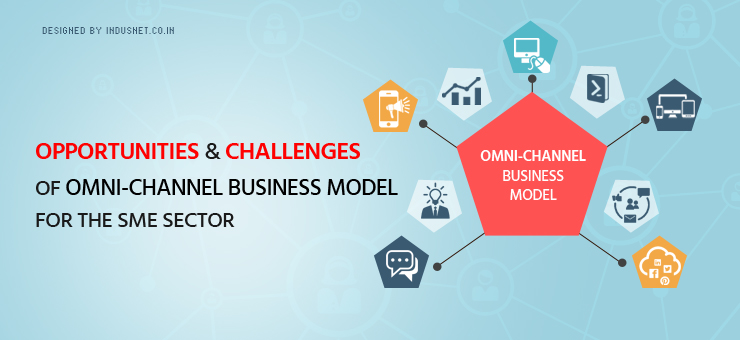
It is a well-known strategy among web designers to provide a seamless experience across devices. They call it the responsive design. When one speaks about responsive design, one can open a website on a desktop, tablet, and a cellphone simultaneously, and the website adjusts to the screen size without losing, distorting the intended user experience. Responsive design is all about making browsing and accessing information across devices seamless. Now, if we use the same philosophy in marketing, we would imagine that there has to be a similar marketing strategy across devices and channels, both online and offline. Some people call this omni-channel experience. What is the omni-channel business model? Omni-channel model (sometimes spelled omnichannel or omni channel) is not just about providing a seamless experience across devices. The responsive design already does that. It takes responsive philosophy a step further and uses seamlessness across the enterprise. This naturally means whether one is working for a company, a customer who is shopping or a person who is interested in information, all experience seamlessness in its true sense, across different channels. Omni-channel business model is not just about doing multi-channel model in a seamless and better way. It is about running a business as if all channels, spaces and business processes were one and the same, regardless of who is doing what in which situation. This seamlessness brings in more accountability, efficiency, productivity and of course, enhances user experience. Most big companies already follow omni-channel business models. Amazon, for instance, has a seamless way of conducting business across mobile and desktop devices, while also coordinating with logistics, inventories, and CRM. We can say, omni-channel business model is enterprise processes and responsive design on steroids. Indeed, omni-channel business model is being used by smaller businesses too. This brings us to the topic of SMEs making use of omni-channel models in order to make it big. There are both opportunities and challenges with this strategy. In this article, let us take a look at both. Understanding omni-channel model at a deeper level Omni-channel business model is all about how you enable your clients and customers to engage with various channels and help you remain in sync with the business processes all along so that you can ensure as much as possible that there is a checkout in the end. It is bringing both online and offline channels together while remaining true to your core business philosophy. It is about taking multi-channel model to a completely new level where integration and seamlessness make it a different business model altogether. A good omni-channel model makes use of multiple channels and uses consumer data to integrate business objectives, design, goals and communication across channels and devices. For instance, your new customer may have asked you a question on Twitter. However, when they land up at your brick and mortar store, they shouldn’t have to explain everything they need from the beginning. It is about being aware of the context and providing a business process management that is in sync with agile personalization. It is about bringing the cloud and on-premise solutions together. It is about creating a unitary experience across social media, mobile devices, agencies, stores and the web. All this involves a knowledge infused process consisting of Experience analytics Live chatting and co-browsing Web self-service Guided scripting Marketing campaigns Social media campaigns Online and offline communication Responsive technology Knowledge management With many SMEs adopting omni-channel business model as a primary strategy, it is important to understand both the challenges and opportunities it provides. There are a number of both pros and cons. In this section let us take a look at some of the most important challenges and opportunities. These are the challenges: Associating Omni-channel model with inventory As previously said, going omni-channel is all about ensuring that there is seamlessness and integration across channels and media. This also means the inventory must be available or not available, depending on whatever the case, in a seamless manner. This takes a considerable effort as people who purchase in a brick and mortar store may find that what they need is no longer available, even if they had cross-checked before leaving home. It becomes slightly difficult to ensure that omni-channel is really seamless in certain situations like this unless there is someone to monitor all the time and also to communicate to the customers. It is not always perfect. Staying relevant in a changing market While omni-channel model is as relevant as it could get today, remaining relevant in all spheres of your business may be a challenge. This means, remaining omni-channel throughout your business career remains a challenge for a number of reasons. Marketing techniques, customer preferences, technology etc change very quickly. To be omni-channel truly, one needs to also remain in sync with the changes and make all those changes seamless across business processes. Remaining technically up-to-date One of the main reasons why omni-channel business model is preferred is because it lets customers and staff to have a seamless experience no matter where they access different business processes, which of course includes buying or selling. However, for this seamlessness to remain consistent, one needs to continuously seek the help of developers and responsive designers who ensure that deeper levels of integration are made possible. There is nothing more undesirable than being irrelevant in a world that is constantly changing. Staff training Being omni-channel also requires the help and assistance of the staff. Staff will need to be trained about its challenges and also the custom process of handling an omni-channel strategy. While this may not sound like a lot, training the staff requires additional expenditure and probable investment made to customize existing HRMS, through which training models can be delivered. While there are many challenges to using omni-channel models, there are many advantages and opportunities too, for the SME sector. Let us take a look at some of the important ones: Redefine your digital brand Going omni-channel helps you to redefine yourself in a digital space.

Read More »

How Big Data Analytics Help SMEs to Tap New Markets

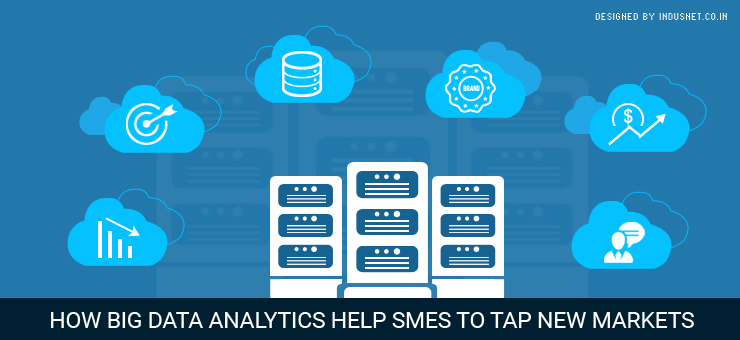
In the recent years, we have seen a shift from using fixed, structured data to big data, which tends to be dynamic and really complex. It is also called big for a reason. The amount of data generated today is almost unbelievable. While it may seem like a lot of this data is trivial, it is not so. Big data analytics are regularly used by large companies to understand the world they work in, predict business outcomes and engage in expert business analytics. Small and medium enterprises (SMEs) also can make use of the big data in a similar manner. Both small and medium companies are beginning to understand the importance of Big Data analytics A research shows that medium-sized companies have more Big Data deployments than larger companies. Smaller companies are actively involved in using Big Data too, according to a research published by Dell. This leaves us with, what companies are doing with big data to achieve competitive results and reach markets that they didn’t know existed. No company can easily say that they know what they want to the market and what is expected from the market and leave it at that. Even smaller companies cannot afford to do this anymore. Big data helps companies to get the larger picture and often analytics help to predict in which direction the business might go well in advance. This kind of useful information and analytics can help a fledgling small company grow larger in size and stature. The common knowledge now is, if a company is using machine-generated data, customer attitudes and market behavior for their business, they should be using Big Data, according to an article published by Enterprise Apps Today. How is the data used? There are many difficulties in understanding how big data can be used. Most CEOs often wonder who is going to use the big Data, how much of it is useful for their companies and who in the company will actually be able to make sense of the analytics that the software programs will churn out. All the data that a company generates, even the ones in QuickBooks can be used to predict business trends. According to an important study published by the Stanford University, the cloud is making Big Data even more accessible to smaller companies. In fact, cloud-based Big Data analytics will be the future of smaller and medium-sized companies, according to the report. This democratization will help companies to access market data that weren’t easily available. Thankfully, to cut a long story short, big data analytics can be purchased through consultants, without smaller companies having to invest in either the software or the cloud infrastructure, thanks to Software as a Service, Infrastructure as a Service and Platform as a Service (SaaS, Iaas and PaaS). Most importantly, Big Data Analytics can help companies to tap into new markets that they didn’t know existed. In this article, let us take a look at how this happens: 1. Helps you to break down the market Small and medium-sized enterprises often do not have access to data that helps them to break down markets according to demographics and psychographics. Demographics provide details about socioeconomic status, ethnics, age and other such markers. Psychographics provide information about a target audience’s behavior. This kind of data helps marketing professionals to understand what makes people buy and what can make them motivated enough to make a purchase. SMEs desperately need this kind of data so that they can create branding campaigns that are better suited for the newer market. Analytics provide that data which is required by these marketing professionals. 2. Big Data helps in understanding future trends A new market poses not only opportunities but also challenges and threats. A sensible marketing department will try to predict possible threats and risks in a new market before coming up with a marketing strategy. This is quite understandable as once we know what to expect, it is easier to face the threat. Big Data analytics help SMEs with the kind of information they need to predict future trends. This is one of the reasons why more companies are investing in big data analysis software. This helps them to not only predict future but also understand various quirks of a new market. 3. Big Data helps you to understand the data which you create Big data is not all about the large amounts of data which is churned out by companies all over the world. Data analytics software programs help you to number crunch your own data. Most companies create large amounts of data every day and all this data can be processed to understand various scenarios. The more data that is created is analyzed, the clearer will be the picture you probably will have. For this, it is necessary to start using big data analytics. Interestingly, smaller companies are more aware of the data they create than larger ones, according to one research paper. 4. Big Data helps you choose an enterprise strategy One of the biggest troubles with traditional market research is assessing who is going to market which product or service on which platform. While platforms are many, one still needs to understand the core audience and the kind of platforms they use. For this, analytics will provide valuable insight which you probably would not have found otherwise. Moreover, this kind of data analytics was previously only available to larger companies who could invest in their own servers. However, with the explosion of cloud-based services, data analytics are coming the way of SMEs too. In other words, it helps you to choose an enterprise strategy with respect to marketing in new waters. 5. Localize branding strategies One of the biggest problems that smaller players encounter is, they do not understand the local market. The same marketing strategies that worked in a previous market will not work in a new one. They will need to re-brand and re-work their entire strategy. This requires expensive analytics and data-crunching.

Read More »

Why Every Company Must Sell Something, Even If There Are No Products

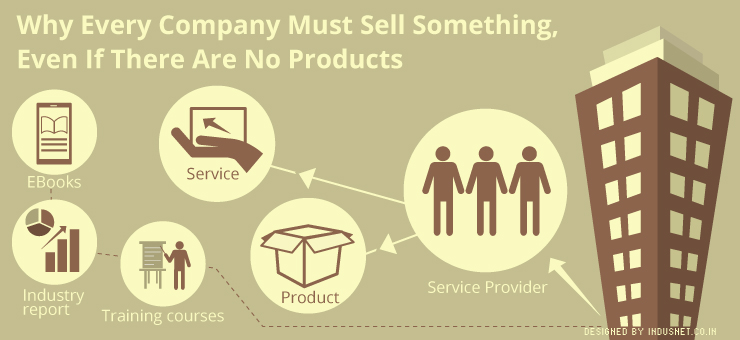
Every business exists for the purpose of generating profits. A business either sells a product or a service. In both cases, money is generated when the product/service is delivered to the customer. Thus, it is important to understand that selling is crucial for the success of business. Buying and selling in business increasingly involves white label digital products that companies can rebrand and offer as their own. When developing content creation examples, it’s important to clearly show what the company sells so the audience understands the value it offers. Looking at it from a different perspective, most businesses don’t want to associate with the word “selling,” as it portrays an image of a self-centered business entity whose only interest is to sell and not customer welfare. For the same reason, most businesses have a strong affinity towards the word “marketing.” It is obvious that marketing and selling are entirely different concepts. In selling, you are earning money, while in marketing, you are spending money and resources to reach the selling stage. “What white label digital products does the company sell?” Now, as we know, that service is not a tangible industry, unlike products.  The service experience can vary from customer to customer, while it is easier to find homogenous experiences across product users. What should a service business do? The following article will discuss the importance of selling a product even if you are only a service provider. Importance of selling a product for a service provider From customers’ point of view, it is easier to associate with a brand if there is some symbolism attached to it. There is no doubt that providing a good service contributes towards building a brand for your company. But with growing competition in the market, marketers are trying to woo their customers in unique ways. There are a number of ways in which service companies can sell a product, not with the core agenda of making money, but by doing something extra to build personal relationships with the customers. “The company sells white-label digital products to help other brands expand their online offerings.” It is used to attract new customers to the company. Even if a customer is not utilizing your services currently, he is still associated with your brand mascots. The money thus generated by selling these products or merchandise can be utilized to fund a cause or an awareness program. Buying and selling in business involves a company purchasing goods or services and then selling them to customers; the company sells products or services to earn profit. The guide provides content creation examples to help beginners understand how to craft engaging digital material. Product companies offer service too If we look the other way round, product companies are already engaged in providing one or the other kind of service. It is just that customers don’t realize it. For instance, pharmaceutical giant Merck in its French subsidiary has been including delivery in its product price for customers. Since specialty chemicals are high in value and low in volume, Merck always made sure that they assume transportation and insurance costs. While there were no shipping costs included in the bill, customers were unaware of the extra value provided by Merck. Content creation examples often help businesses explain how buying and selling work in their industry. Those services are provided to win over the customers, and retain customers. Though services provided by product sellers are not intended to earn money directly but indirectly they are increasing their probability by fetching a bigger order from the customer. Thus, such services do help in earning more money and adding value to product sellers. Similarly, following an unusual way will definitely help your company to grow further and establish your image as a welfare-oriented and customer-friendly organization. It will add scores to your corporate social responsibility initiatives. Options, choices and deliberations Creating a product does not happen randomly. The key to selecting and providing the right product for the customers starts with understanding how to create an excellent customer experience. In order to conquer that, you can move backwards to deliver great experience and also earn money. This is not just about making the product available to them but involves knowledge and expertise application to useful purposes that addresses needs of your customers. For instance, a software development company often approaches their client highlighting about their previous software development projects and how they helped their previous clients. Even if your first meeting with the client is just the beginning of conversation, care to leave a product or two with them. Such products in case of software companies can be small, creative and utility software that can be given for free. You can also gift them company merchandise on your first meeting. Such encounters go a long way. The client may not be using your services till now but he will certainly remember you in future as you have given them a reason to remind them of you. Gifting company merchandise is a good way of starting this practice. Thus, providing company merchandise like a pen, key ring, wall clock, cap, calendar, diary, writing pad or any other branded souvenir or customer outfit is a common way utilized by most service/product companies for a number of years. Such products though are a good reminder of your company name; they do not somehow add value to the customer and obviously you are not earning any money out of it. Today, customers look for valuable products that enable them to learn something new. They are ready to pay for it if they are served valuable, high-quality, and relevant content. It is interesting to note that service-oriented companies have a very good chance of utilizing content marketing to their benefit. Taking the example of the software company forward, the company can provide its customers with paid eBooks, paid training courses, research papers, industry reports and any other downloadable content suitable to your customers. If your customers feel enlightened by your

Read More »

ROI of SEO

When we are talking about ROI from SEO, We assume you are a website owner, running a business through your website. You have hired a SEO agency or an internal team for your online business promotion. This article will help you to understand how good is your SEO with respect to the money you are investing on them, The truth about website traffic from SEO (you should know and can’t blame on the team) There is no magic formula to improve the traffic. Don’t expect it in the 1st month itself. The conversion rate from organic traffic can’t be compare with any other medium. Website content and design change suggestion will come from the agency but your involvement is highly necessary. 1st Step- For calculation of any type of ROI the base month’s statistics are highly needed. You need a benchmark to start with. So, keep every possible data from you analytics from the 1st month itself. Keep track of visits from non paid search. Keep track of no. of keywords except brand name that brings traffic to the site. Keep track of traffic from branded keywords from organic result from the 1st month. Keep track of goal completion in the 1st month (most important). 2nd Step- Calculate the average prices of your products/services, if direct payment option is not available on the site then calculate the conversion rate from your leads based on the previous history. 3rd Step- Create a filter for organic search, check if the conversion tracking is working accurately or not. CALCULATION 1 This method works best, where revenue from each sale can be quantified, generally in B2C scenario and where you have strong sales channel attribution process. Example: If the average product/service price is – $150 The conversion rate from organic leads is 2% (based on the previous history) It means out of 100 prospective/ form fill up you are getting 2 customers => $150*2=$300 To get 1 perspective /form fill up/ = $3 In this case if from the organic search you are getting 50 leads then it is worth of $150. So the Formula => Total Gain (Average price* leads*Conversion Rate) – Total Spend There are lots of factors, which may add inaccuracy in the calculation. As you take them into consideration, the simple looking calculation may become quite a complex formula. Some of these factors are (for example): A) How does SEO impact the decision of an existing client to buy the product from you via-a-vis your competitor? B) The rankings may have fallen, but the search volume has increased giving you the benefit of increased demand. The reverse, however, is also true! C) The rankings for the keyword for which Optimisation was done may not have contributed to the client acquisition. Therefore, this base calculation need to be refined and tweaked to fit the given requirement, sometimes with added complexity to track the improvement in organic traffic due to the campaign and keeping out the normal variances. In absence of the above scenario, the following method can be used: CALCULATION 2 Savings potential (Savings, when compared to SEM or Media buying for the same traffic) This is much more straightforward, and talks more in terms of savings in terms of cost of acquisition of traffic and not in terms of profit gained due to the campaign. So, let’s say the website gets an increase in organic traffic to the tune of t. Now, the keywords for which the traffic has been generated must be noted. Let’s say the keywords were k1, k2, k3, etc and the average market price of CPC of those keywords are p1, p2, p3, etc respectively. Further let’s assume that t= t1+t2+t3… each of them aligning to their respective keywords and prices. This translated to the total saving due to the campaign and the profit from the campaign can be calculated as: (p1.t1+.p2.t2+ p3.t3+ …) – C (campaign cost) Example: Google adwords charges $2 per click for key phrases 1 and $1.5 for key phrase 2 at your targeted locations. For those particular keywords you got 50 visits each from organic search. If you spend $100 for the SEO team then ($2*50 + 1.5*50) – $100 = $75 is your profit from the SEO campaign. ROI from SEO= number of organic visitors from targeted keywords * adwords bid of those keywords – cost of SEO campaign It is always complex to calculate ROI of SEO, and more so in a multi channel marketing environment. It is made further complex by the fact that different methods of Internet marketing support each other and therefore silently steps into each other’s territory. As a result, the calculation can never be precise. But, you can get an approximation from the above suggested methods.

Read More »

Facebook Ads: Do Investors Gain More or the Advertisers?

Recently people have begun to argue if Facebook is acting too fast and hastily in offering ad services to businesses. People have begun to wonder if this is to entice investors or truly help advertisers. Before we discuss that, let’s understand how Facebook ads work. Why and How to Begin with Facebook Ad Campaigns? Most companies will soon need to utilize advertising services offered by Facebook, as social media has thrust unforeseen ramifications on traditional marketing methods. It is no longer enough to rest one’s marketing case by targeting PPC campaigns on search engines and assume that all is going just perfect. It is important to understand the significance of social signals and why it is necessary to adopt Facebook ad campaigns as part of a larger marketing plan. If you wanted to know how to set up regular Facebook ads, it is rather easy. Key elements that make up Facebook Ads are the Ads themselves and whatever ‘Ad Creative’ is required to publish that. You would also need to know who you must target and set the bids and budgets right. There are tools that help you to engage in analytics and optimization of your marketing campaign on Facebook as well. Where Can Facebook Ads Be Placed? Facebook ads can be placed on Facebook Pages, Facebook Applications, Facebook Connect and Facebook Events. Facebook offers two kinds of advertisements that are particularly popular, regardless of the various test features they have introduced lately (including Sponsored Stories). Types of Facebook Ads Facebook Ads are traditional branded ads that lead the users to an external site or a Facebook app or Page. A Social Ad is a fully branded ad but appears in sync with social interactions performed by users’ contacts. Social Ads are displayed in the Mini Feeds. Ideally, you should first use Social Ads and move on to Facebook Ads in order to reach a wider target audience. The key is to encourage people to like your Facebook business page so that social actions take place in a coordinated fashion. When your fan base on Facebook builds, Social Actions (user actions that result in required marketing results) increase and your marketing campaign may even go viral. What Are Facebook’s ‘Sponsored Stories’? Last year, Facebook announced the Open Graph and savvy marketing professionals immediately knew that it was going to change the way we advertised. Just a few months, Facebook also announced a novel kind of Sponsored Story which is based on the premise of Open Graph. When a Facebook user reads and article or listens to a song, advertisers would be able to target that user even if they do not own the app that the user is accessing the content through. However, the ads appear only if one of the users friends on Facebook have viewed, listened or watched a particular piece of content. This helps to target the user in a very accurate manner, with the logic being if friends like something, a particular user must like that product or service too. However, it comes with the disadvantage of severe restrictions over the exposure of the Ad. Facebook Unveils Offsite Ad Sharing Facebook also recently started testing shareable ad units which would allow users to share offsite ads on Facebook. Until now, marketing professionals have had to purchase their ad units or Sponsored Stories. The new proposal will allow marketers to share ads through Facebook’s Open Graph even when these ads are not located on Facebook. In the likely scenario, a company would be able to place Facebook share buttons on external ads, and when a user clicks on these share/like buttons on an external ad, he/she would be able to share that such offsite ads on Facebook. This can have enormous ramifications on the way we currently ad social advertising and online marketing. If offsite ads can be shared on Facebook, they may become bigger than Sponsored Stories. Is Facebook Trying to Win Over Investors or Helping Advertisers? The enthusiasm at Facebook to introduce advertising features has made people skeptical and caused them to wonder if these services are meant for advertisers or investors. We must remember that Facebook recently went public and did not have a smooth start at Wall Street. In fact, Facebook has been criticized for a number of reasons and its stock fell considerable within days of announcement that it went public. Facebook IPO was a failure, most investors and analysts admit. This makes many analysts think that the new advertising features may simply be a ploy to attract investors and keep them in good humor. It may partly be true, but we must remember that at the end of the day, Facebook needs advertisers to keep itself and its investors happy. With that in mind, if its advertising services did not appeal to businesses and if they didn’t work as planned, Facebook would lose its investors as well. It is probably a win-win-win situation for all the 3 entities involved. Not only will Facebook become established as a major revenue generator for companies, it will also appease investors and make profits for itself. Thus, it is quite possible that Facebook Ads were designed for both advertisers and investors and that is not a bad thing.

Read More »

5 Killer Tips to Achieve Success with Niche Blogging

Every company needs to have a blog and perhaps if every individual had a blog of their own, things would be much better. A blog allows visitors to gain insight into a corporation’s or an individual’s mind and help visitors in accessing material that may otherwise be lost in time and space. However, both individuals and companies should avoid generic blogs that do not have a direction. Instead, by identifying niche categories and topics that are relevant to a corporation’s services and products, or an individual’s profession and business interests, one can set up niche blogs that help companies and individuals towards becoming thought leaders in their identified areas. To maintain a niche blog is not an easy task, and it requires an incredible amount of discipline, effort and expertise. Here are some tips that help businesses and individuals to achieve success with their niche blogs. Identify and Justify your Niche It is very important for companies and individuals to identify particular niche areas that interest them. These topics are subjects should always be related to one’s profession or products & services that they may offer. By choosing particular areas of interest, one can make sure that blog posts do not digress from the original niche. This helps readers to identify your blog with a particular niche area and visit umpteen times for information, updates and in-depth opinion. Niche blogs are driven by expert opinions and thus it is very important to choose topics in which you have considerable expertise. Once niche areas are identified, it is necessary to justify the choice of these topics with valid and reliable facts. These may come in the form of level of expertise, marketing plans, future professional development and business goals. Observational Learning, Modeling and Applying Bloggers need to observe other people’s writing and blog posts as well. In fact, psychological theories of observational learning are extremely important in the field of blogging. Only when a blogger observes other blogs will he know how to choose topics, work with the flow of a blog post and ultimately provide expert opinion to his readers. It is advisable to make a list of blogs and authors who write about the niche areas that you have chosen. Once you make a list, you could choose to actively observe them, by trying to communicate them with the help of social media or commenting on your model’s posts. Modeling must not be understood as copying. Modeling is again a psychological term that denotes the process of learning from those who we identify as worthy enough. Niche blogs and subject matter experts may be studied, observed, modeled and their qualities may be modified to suit the needs of your niche blog. Layout, content, style of writing, presentation of topics and frequency of posts may all be observed and modeled. By observing and modeling one may also break from existing norms and do something more radical. The more radical and controversial your niche blog will be, the more traffic it will attract. Research, Learn and Contribute In order to become a thought leader in the identified niche, you would need to read white papers, research documents, blogs, books or just about anything that would help you to know your topic well. Only when you know your niche topics well enough will you be able to write about it expertly. Only when you write with an expert’s knowledge will you be able to hold the interest of knowledgeable readers, who will help you sustain your blog in the long run. Moreover, if you do not have a keen interest in your chosen topic, you probably would not be able to blog in a sustained and long-term manner. Planning and Setting Attainable Goals A niche blog requires a lot of discipline, tenacity, perseverance and effort from your side. You would need to become clear about every nook and corner of your niche area and chart a plan for writing content accordingly. You must identify your target audience and stay tuned to the latest happenings in the area. Do not expect to write unrealistic number of blog posts. It is simply not possible. Instead, have a realistic goal of a few posts per week, depending on how much time you can devote. Surprise yourself and Your Readers Niche blogs have the capacity to go viral, solely because no one else is writing about those topics. It is in your interest to be unpredictable but relevant, random but structured, shocking yet informative, controversial but never offensive. Surprise yourself with occasional posts that may stir up a controversy. Controversial topics lead to comments, discussions and footfalls. Readers love to visit blogs that have an alternative view to existing beliefs and ideas. Finally, after following these 5 topics, you must never lose interest in your original goals and must continue to carve a niche for yourself in the identified niche topic. Originality, unconventional ideas and opinions, discipline and hard work will take you a long way in your quest to becoming a thought leader.

Read More »

Using Social Media for SEO and Top 10 Strategies for Social Media Optimization

While no SEO professional would deny the importance of social signals when it comes to optimizing websites for search engines, there is still certain confusion about the strategies that need to be followed. Social signals, or the metrics that help in assessing web user behaviour on social networking sites such as Facebook, Twitter, LinkedIn, Pinterest, Tumblr and a host of others are inextricably linked to traffic and link building. Let us understand how social media optimization is inextricably linked to search engine optimization. The second part of the article shall provide you with the top 10 strategies that you should use to optimize search engine ranking. How Search Engines Assess Link Credibility Search engines such as Google, Bing and Yahoo try their best to provide users with the most relevant and credible search results based on the search keywords. Search engines just do not trust any website that may seem relevant, and they follow their own algorithms to assess the importance of a certain webpage. The more inbound links that point towards a web page, the more credible and trustworthy it seems to search engines. Link Building and Sharing on Social Networks Link building is increasingly dependent on social networks, as people tend to share what they link. These links that are shared on social networking sites not only drive traffic but end up becoming “references” themselves, as they are thence used on blogs, or even other news websites as sources. The importance of social media is such that, instead of robots and algorithms deciding what is credible and what is not, search engines have begun to realize that what is shared most often must be more important than what is not shared on social networks. An interesting article or a good piece of content always gets shared on Facebook, Twitter and other platforms in real time. Social Signals and Search Engine Optimization Google and other search engines have realized the importance of sharing of social media, and that when something goes viral on social networks, that link has to be important and credible. The data from social signals decide the importance of a website or webpage and understanding social influence and community impact is more relevant to search engines than mechanical link building and activities that may actually work against the credibility of a website. Thus, one can say that search engine optimization (SEO) and social signals are mutually inclusive, and shall remain so in the future. The Basics of Utilizing Social Signals If you plan to optimize a website, the first step is to explore social media and gain ground. The next step is to assess social metrics and social signals to learn where your inbound links are coming from, and who is sharing and talking about you the most. The third step is to engage the identified audience, and try to use the social platforms to get other people interested in your website as well. Engagement involves actively participating with your target audience and building social relationships online. Engagement of your audience is a continuous process, and building trust is equally important. Once trust is built and you are actively participating on social networking sites, you can begin to see more inbound links from several places, most of which would be referred by people on social media. Social promotion helps you to generate natural links, which are very important in search engine optimization. A large percentage of tweets contain a URL and the more number of times a YRL is retweeted, the better it seems to search engines. Similarly, on Facebook, the more number of ‘likes’ a link generates, the more important it seems to search engines. Thus, social promotion generates natural and organic links, which are very important in SEO. Driving traffic to a blog or any published content depends on how viral a link has gone in Twitter or Facebook. Sharing links and a little part of the text ultimately leaves your followers on Facebook and LinkedIn to click on the link and visit your website or blog. The most important goal of SEO is to generate targeted traffic, and it is only possible to do so on social networking sites. Such sharing leads to a steady stream of traffic that is well targeted. If you searched for your favourite company or product on Google, it is quite possible that along with their business website, their Facebook page, Twitter profile and LinkedIn page appear too. Curiously, these appear on the first page. Thus, social networking sites rank very high in search engines and increase a company’s online brad presence. Links shared by the company on their Facebook page or on Twitter appear in search results too, in a higher degree of preference. Key Strategies in Integrating Social Media with SEO Efforts Mashable writes that there are 5 key strategies in integrating social media with your SEO plans. Identify Audience: Like we mentioned earlier, the first step is to identify the audience and understand their quirks, behaviours, what they like and dislike and how they share content and who they share it with. There are software programs available to monitor social media, and help you to identify keywords, conversations and influencers. Define Objective: Once the audience is identified, it is important to define your objective. Social media can’t be about direct marketing. While sales and marketing are very important in SEO, in social media it takes a covert role. Presence on social media must be utilized for defining and achieving objectives. They may include marketing and sales, but has to be covert. Establishing a Gameplan: The author continues to state that a combined social media and SEO effort must focus on content building and interaction. Active promotion of objective content and sharing them on social networks is very important. Tactical Mix: Lee Odden defined this as doing homework to find where your desired audience spends time interacting and sharing content. You would need to invest time and build relationships in social networks where your target

Read More »

How to Write Clickable Ad-text in Google Adwords

The most difficult task in Search Engine Marketing is “writing an ad copy ” that works. This is because the Google ads have limited space and it is not easy to fit everything you want to convey about your business in just few words. Moreover the website visitors will just glance at the ads, so the ads should catch their attention at the very moment. The ad itself does not sell, it just grabs the attention of prospective customers, so they click on it and in turn are taken to the website where actual sales happen. So writing an effective ad copy that generates high CTR is the key to the success of the Search Engine Marketing campaign. Writing an ad copy involves thoughtful approach and careful observations. While Writing an Ad Copy, Consider the Following Questions: How to make a strong call to action that will impact ad performance Why to include the keyword in the title Does price inclusion in the ad text reduce unwanted click? The following tips will help you in writing an effective ad copy that stands out and generate result. Highlight the USP of Your Product/Service The USP differentiate you from others. So highlight what makes you different from others. Why customers should go for your product or services. Your proposition should be something which your competitor cannot and should not offer. You may be providing free shipping, For example the USP of FedEx is “When your packages absolutely, positively have to get there overnight.” Use Question to Arouse Curiosity or Interest If your ad can arise curiosity among the visitors they will definitely click on it. But make sure your landing page is equally effective else the conversion will be less. For example you can say “Want to make money working from home?” Include Price and Promotions If you are running any promotion for customers, make sure the message reaches to customers. So include any promotion or any special price in your ad text. For example you can add “Get 50% off when you buy now.” Tell About Benefits Before Features If you can show what will be the benefit of your product/service, then someone looking for it will be enticed to click on your ad. For example a person with obesity is more likely to click on ad that says “Loose 30lbs in 30 days.” Include Keyword in Your Ad Text The ad text must contain atleast one of your keyword. This is because the adwords ads are contextual and when people are searching for a keyword, they are more likely to notice your ad if it contains the keyword. Capitalize Every Keywords It has been seen that Capitalizing keywords have boost CTR by 80%. So make it a practice to capitalize every keyword, but do not capitalize words like in, an, of etc. Match Your ad to Landing Page Whatever products you are advertising on the ad should be present on the landing page else it will create confusion among customers and this will reduce the conversion rate. Create Trust Through Endorsement When you associate a testimonial of a celebrity or a renowned person to your product or get the review from a trusted brand, it will build trust among users. For example you can include phrase like “ranked #1 virus cleaner by PC World” Tell a story If you include a personal experience in your ad text that is more likely to bring attention. For example “How I made $6000 in a day” will surely make customers enthusiastic and they will want to know more. Use Dots in Description Text Using dots in the description creates an impression that there is more that can be seen upon clicking on the ad. Mindvalley Labs published a report that compares the CTR and Conversion rate of similar ads, but one with dots at the end and other without dots. Think Yourself as a Google Searcher There is nothing better than putting yourself in customers shoes. So if you can think like a visitor who is searching for the exact keyword you are advertising. If you are advertising “Stain remover”, you are willing to find, “how to remove stains”. So users might be interested in if he sees ad that says “How to remove stains quickly” or something similar. Try Using the Keyword Free “Free” is a magical keyword when it comes to online advertising. But this may not fit in all and every products and services being advertised. However if you have a product or website that has something free for every users, you must include it. Remove Common Words Common words like a, an, the, and, on etc. consumes word. So avoid them as much as possible because ad text has limitation in characters. Use Call to Action Phrases If it is an image ad, it is easy to add a call to action button and make it standout. But we can use the same approach in ad text by utilizing call to action phrases. Some of the phrases that can be used for this purpose are “Try Free”, “Download Now”, “Save 40%” etc. Components of Google Text Ads The Text Ads of Google Have Three Components as Mentioned Below: Headline: This is the first line of Google text ad. This is the main text of the ad that is noticed by customers. The main goal of any ad is to grab customer’s attention. So you need to make this as attention grabbing as possible. Also include keyword in the headline too. People are more likely to click on the ad if they find something similar to what they are looking for. The headline is limited to 25 characters only. Description: The ad description contains information about the products or services you are offering and how it meets the need of the users who is looking for something related. The description has a limit of 70 characters and it is spread into 2 lines. Each line can have a maximum

Read More »

10 Step Guide to Forum Link Building

Forums are a great way to make sure that you are getting the links that you need the most. High quality links can actually come from forums both directly and indirectly. It is possible that forum members link your post and link back to your from a higher authority website they work for, or own. It is also possible that the high PR forum itself will link back to you. Though it sounds very attractive, it may actually be a bit difficult for novices. Here are 10 steps for successful forum link building. Step 1: Search for Relevant Forums It is important to make a list of forums that are related to your chosen or identified niche. It goes unsaid that you must not engage yourself in link building activities on forums that are not relevant. The easiest way to look for forums within your identified niche is to run a Google search. All that you would need to do is type in your identified niche + forums. For example: logo design forums, if your niche is logo design. Several forums will appear in the search results and it makes sense to visit each one of them and assess their relevance and also make sure that these forums are active. Step 2: Short-listing Forums to Target Once you have a list of forums derived from your search results, it is important to eliminate forums that may not be relevant, active or useful. This requires a little time and you will have to individually visit each forum and check for consistencies and relevance. You must make sure that the links are all from do-follow forums. You must remove any forum that may contain pornographic material. Also, if you suspect a forum is spamming, take it off your list as well. Forums with hateful, provocative and racist comments need to be avoided as well. Step 3: Register and Introduce Yourself Register on every forum that you have shortlisted and introduce yourself honestly. Tell the members who you are, what you do for a profession and why their forum interests you. Be as subtle and classy as possible, but try to be intelligent in your remarks. Initially, instead of typing in lengthy self-important forum posts, it makes sense to acknowledge other members’ posts and appreciate their posts with compliments and thanks yous. Step 4: Begin Slowly but Participate Effectively Do not start posting on the forums with a bang and do not leave links all over the place. It might get you banned or people might just ignore you. Instead, start slowly and engage fellow-members in conversations that are genuine. Actively and effectively participate in existing forum discussions and share your opinions and tips. Step 5: Be Resourceful and Helpful The next step is to actually provide members with tips, suggestions and valuable lessons in the niche area. You might want to share links that direct to neutral and third party websites before sharing your own links. Do not promote your website or blog hastily but take a slow and prudent approach. Step 6: Forum Signature Links Every forum allows its member to have a unique signature. This signature space can be used for promotional purposes but in a subtle way. Always have a link to your website or blog as a signature and that helps in building SERP. It is a well known fat that forum backlinks increase SERP. Moreover, it also helps in getting referral traffic. Step 7: Build Brand Awareness Once you have established yourself as an authoritative, genuine and knowledgeable member, begin to build your brand pretty much the same way as you would amongst a group of people in a real-life social situation. Share information, resource and also why your products or services need to be given attention to. Step 8: Targeting Anchor Text On forums, you may target any target text and engage in deep linking. The links would be ready with the post almost immediately. Sometimes, the links may need to be approved by a moderator but usually they don’t have to be. These links can be used to drive referral traffic. Step 9: Foot in the Door Theory Always give something for free, and present your promotional offer soon after. This psychological method of getting people to do what you want them to do derives from the belief that when you ask for something little and they oblige, they will also be obliged to do something bigger than those who weren’t asked to do the smaller favor. Thus, offer valuable resources, information or services for no cost at all. Once you build your subscriber list, present your promotional plans and offers. Step 10: Clarity and Relevance of Keywords Use your keywords and keyword phrases in as many posts as possible. However, do not overload your forum posts with keywords and keep them clear and relevant. Use them only when required but do build your personality on the forum around your niche keywords.

Read More »
MENU
CONTACT US

Let’s connect!

Loading form…

CONTACT US

Let’s connect!

    Privacy Policy.

    Almost there!

    Download the report

      Privacy Policy.