
Tag: search engine optimization

How to Optimize Landing Pages for SEO

How to Optimize Landing Pages for SEO

Landing pages are very important tools in marketing your products or services or calling your prospects to take action. In fact, most landing pages ask a visitor to take some kind of action. It could be subscribing to a newsletter, reading a message, sharing a link or even going ahead and making a purchase. Landing pages gained popularity simply because they are akin to main websites but have a specific function – call to action. Thus, the importance of landing pages is only growing across the world. With their increasing importance, there also comes the need to design them in a better and more accessible manner. This involves building landing pages according to the changing needs of SEO. As we all know, SEO is something that continuously changes over a period of time. In this article, let us take a look at how you can optimize your landing pages for better SEO and ultimately, get more people to respond to your call to action. 1. Focus on your URL When it comes to landing pages, we often think it is not important to focus on the URL. The idea is, the URL of a landing page is unimportant because one just has to link it from an external website where no one will actually see the actual URL. They would either click on a banner, an image or some sort of textual matter. However, it is very important to have a unique URL for your landing page. It is important to have a custom tail end, which is not only descriptive but also specific. Of course, you need not be stuffing your landing page’s URL with keywords though it helps to keep it descriptive. If it is a Twitter campaign, you could have a /twitter-campaign as your custom tail end. If you have a number of such landing pages, it makes sense to organize all your landing pages with custom URLs so that you can identify your landing pages in a clearer way. It is important to install Google Analytics script on every landing page so that you can measure and track your progress as it happens. A number of people overlook the importance of custom URLs in landing pages but now it is quite clear that they are important. 2. Maintain brand uniformity There are a number of companies, which fail to realize the importance of brand uniformity. They have landing pages designed by someone else in a completely different manner because they fancied a new design. They are making a fatal error. A landing page is a subsidiary of the main page, even if it is able to stand on its own. Thus, you need to ensure that your landing page has the same design, color scheme, font and format as your main page or any other online property. In fact, you can use your landing page to get people to visit your main website. When your website looks completely different from your landing page, the visitor might find it jarring. Even psychologically, it creates a sense of disconnect, which you don’t want to let happen. A landing page needs to, thus, have your core message and core branding factors inscribed into it. Always ensure that you keep your landing page’s design in sync with your regular branding. This helps to keep your landing pages, your website, your blogs and just about anything else in a cohesive fashion, tying everything to the company you are eventually trying to promote. 3. Focus on your content Your copy need not be verbose and professorial. Nobody has the time to read through a lot of statistics and figures when they visit your landing page. Your landing page’s copy is either persuasive or it is not. If it is not, people will simply not spend more time on your landing page, leave alone responding to your call to action. The trick is to write copy that is simple, minimalist and effective. It need not be concise and you need to hire experienced copywriters in order to achieve the intended result. You need not ever stuff your content with keywords and you need not use complex jargons. In fact, we can say that your landing page copy need to be similar to your web copy, albeit much more minimalist and simpler. Do not copy and paste all your landing page content from some other page of yours. This will affect not only your visitor’s perception but also a search engine’s idea of how unique your website is. Write copy in a persuasive way, which answers the questions you probably had asked when a prospect had clicked on the link. Ensure that your landing page answers the questions for which the prospects arrived on the page to begin with. 4. Keep the design minimalist While it is true that your landing page needs to look similar to your main website, it need not also have the same amount of images, texts and other content, which might distract the visitor from the main purpose – call to action. It is very important to keep the landing page plain and simple. This helps to keep the attention of visitors focused. Your landing page need not end up becoming a platform for you to brag, boast or promote aspects of your company that is not related with the actual purpose of the landing page. The design needs to be similar to the main website but it needs to be a stripped down version of it. Also, make sure that you do not ask too many questions to the prospect. Just asking them to fill out their first name, last name and email address would be sufficient. If you ask for too many pieces of information, they will simply close the page and move on to the next website. It is very important to not distract the visitor and ensure that they respond to your call to action. For this, you will need to keep the design as minimalistic and simplistic

Read More »

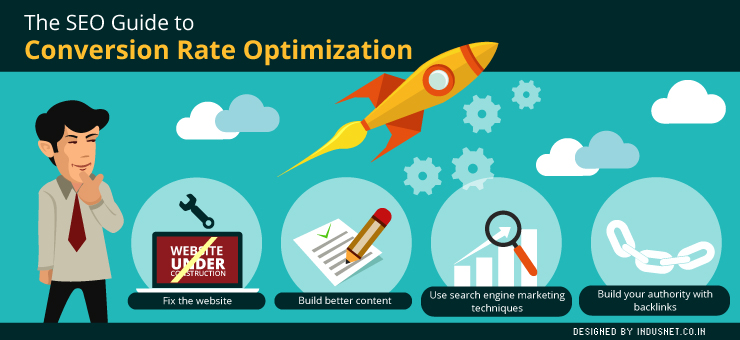
The SEO Guide to Conversion Rate Optimization

Companies which previously invested a lot of money in Search Engine Optimization have come to realize the importance of content marketing as an additional tool. This is because of the recent updates made to Google’s algorithms and the fact that content has become important not only for SEO but also for increasing conversion rates. With that in mind, a number of SEO professionals have begun to feel that if one is to desire increasing conversion rates, they would also have to focus on content marketing. Other than content marketing, there are a number of other ways with which one can increase conversion rates. This starts with fixing the website, making it load faster and also ensuring there are no error pages or confusing content that could leave your visitors distracted. In this article, we need to take a look at some of the ways in which SEO can be used to optimize conversion rates. Fix the website One of the most important functions of Search Engine Optimization is to fix websites. While you might believe this is the job of a web developer, SEO works in a different way. It helps a website to be found by search engine bots and convey information about the website to them. This helps search engines to index the websites correctly and help people to find your website when they enter search queries in Google, Yahoo! and Bing. If you wish to increase conversions, ensure that there are no broken links, 404 error pages, missing tags, missing meta data and other issues, which websites, usually, experience. When all these problems are fixed, a website naturally starts to get indexed more often and this results in more footfalls. That is very important to optimize conversion rates. Build better content Search engine optimization is all about building better content. Google made it clear that websites that have better content will be given priority over those with inferior level of content. This means, websites need to pay attention to grammar, semantics, meaning, context and profoundness of content. Writing great content is not just a matter of marketing but also search engine optimization. Invariably, great content impresses prospects and leads when they visit your website. This helps directly in boosting conversion rates. Well-written content not only helps improve your SEO but it will also fetch targeted traffic, which has a higher chance of converting. Use search engine marketing techniques SEO is not just about fixing broken links or concentrating on which keyword we need to focus on. It also involves marketing techniques that utilize PPC ads, CPC, CPL and other forms of online advertisements. These advertisements are crucial in bringing back important traffic. This traffic has the potential to convert and help you achieve sales. It is important to focus on online marketing from an SEO perspective because a lot of people still find websites with the help of banner ads and text ads that are powered by Google, Yahoo! and other search engines. This tendency is not going to change very soon. Investing money in Search Engine Marketing is a very good idea as that will help to convert more leads. Build your authority with backlinks Search engine optimization is not complete without mentioning backlinks. Backlinks help you to prove not only to search engines that you are important but also to regular visitors. If people find that an authoritative website has linked to you and if they come from that source, they are more likely to believe in your products and services because you were listed on that website. Backlinks need to be generated organically and using unethical means will never help you in any way. This brings the focus back to good content, PR skills, marketing and having a reliable product inventory. This will help you to achieve the kind of authority you deserve and the kind of authority that will help you to increase your conversion rates. Final thoughts It is important to integrate SEO with conversion increment plans because ultimately, both are inter-connected and they aid one another with SEO, usually, helping to increase conversions than the other way around. SEO is a great tool that will not only help you to have a good online presence and be found by search engines but is also an important tool in increasing conversions.

Read More »
What You Need to Know Before Hiring an SEO Professional

What You Need to Know Before Hiring an SEO Professional

Search Engine Optimization, or SEO as we all know it, is not the same anymore. It is continuously evolving and is becoming more entwined with content marketing, design and public relations. With that in mind, do you really want to hire just about anyone who calls himself or herself an SEO professional? You will need to give this issue a thought before jumping into making decisions. If an SEO professional does not understand the way mobile and content systems have taken over the Internet, you probably need not be dealing with that person anyway. There are several parameters you need to consider before hiring an SEO agency or professional. With so many of them around, making the right choice can become somewhat difficult. In this article, let us take a look at what is required of an SEO agency or professional and we shall also take a look at which kinds of SEO agencies you need to avoid & which questions you need to ask before hiring them. After all, if you know and understand the murky waters you are wading through, you will be able to reach the other side of the shore much more easily. 1. Do they follow outdated SEO practices? There are many outdated SEO practices, which simply do not have a place in today’s world. Two of them are purchasing backlinks and talking a lot about SEO copywriting. Backlinks, as a matter of fact, need not be purchased. You need to get those links from various websites because of your amazing content, services and products. Unless your SEO agency helps you to understand this, they probably do not know it themselves. A few years ago, it was perfectly OK to purchase backlinks in order to deceive search engines into thinking that a particular website is probably more worthy than it is supposed to be. Thankfully, Google has put an end to all that and has continued to launch new updates in order to weed out such malpractices. Another question you need to ask yourself is whether the SEO agency or professional is speaking a lot about SEO copywriting. What this basically means is they are discussing keyword stuffing, writing content specifically for search engines and trying to play hide & seek with search engine algorithms. You really need not be experimenting with SEO agencies and professionals who discuss these things. Instead, look for an agency that helps you to achieve your goals with the help of organically driven campaigns that will take you back to the basics of marketing and advertising. 2. Are they promising too much? A number of SEO agencies and professionals are known to use their bravado to attract clients. A lot of clients fall for this kind of charm and end up in situations they wish they were not in. One of such situations is falling for promises and fast results. SEO is not something that can turn your low traffic website into a multi-million visitor drawing website overnight. It takes a lot of time and effort to see improvements & expectations need to be realistic. If the SEO agency promises you something that makes you feel really good, stop for a minute and think. Just the fact that you are feeling really good shows that it might be something unrealistic that is being sold to you. Carefully analyze your own situation and how much success you expect from an SEO contract. Chances are, you already know what you can expect and have realistic goals. Any SEO agency worth its salt will tell you that you need to be realistic in order to actually achieve success. SEO would certainly help you to make your mark online and it is important to change the way you market yourself online as the Internet evolves. However, falling for big promises and bravado will only land you into trouble. 3. Do they have references or are they very new? Another question you need to ask yourself is how long they have been around in the business. There are some SEO professionals who are still looking for their first client. You probably wouldn’t want to be their first client and endure all the experiments they will subject you to in the name of building your SEO ranking. Try and choose an agency that has been around for a while and that which has a list of clients. When you see that list, make sure that you seek permission to speak to those clients or references. References are a great source of information not because of what they say about your SEO agency or professional but also because who they really are. A lot of time, we can use the quality of the references themselves in order to judge the vendor. This requires a little expertise in the form of assessing business needs, why the references say what they really say and also to assess if the references provided are legitimate enough. When you are armed with this kind of information, you will find it easier to choose an SEO agency that will help you to achieve success. 4. Do they speak as if things are very easy? When you interview an SEO agency or professional, you might feel that they offer very easy solutions. They might behave as if success is very easy and it is guaranteed. They might also provide you with packages, which actually is doublespeak for “one size fits all”. You need to be wary of these professionals. They might lack the enthusiasm and creativity to take on complex challenges & might offer packages that will eventually land in trouble. Each client is unique and comes with a different set of requirements. We need to remember that SEO is no longer just about fixing metatags and working around keywords but it is a completely different ball game. We need to remember that SEO entails content marketing, PR and advertising in order to achieve its goals. An SEO professional who is not aware

Read More »

Understanding Blekko: The Phenomenal Search Engine You Didn’t Know

Most web users feel Google search results are not all that perfect, but that there is no choice other than the world’s most famous search engine. Google’s search results are based on algorithms that are not transparent but many results that end up at the top are somehow pushed by certain unethical SEO professionals who disregard web standards. As a solution to this terminal problem, Blekko is fast gaining accolades among web users. What is Blekko? Blekko is a web search engine that relies on social recommendations, human curation and transparency of SEO. Its stated goal is to provide better search results than Google does and makes use of 3 billion trusted sites that are handpicked by editors and professionals. Glekko summarily excludes material from content farms and uses ‘slashtags’ that provide enhanced search results. Co-founded by Rich Skrenta in 2007, Blekko has raised millions of dollars in venture capital from the biggest names among technocrats. How Does Blekko Work? Blekko works on a paradigm that is completely different from Google or its competitors. Blekko makes use of human curators, editors and professionals who pick and choose websites from the billions that exist in the cyberspace. These websites are chosen for their accuracy of content, originality and quality of information present. Blekko editors exclude many high ranking websites on Google that are obviously search engine optimized regardless of the quality of content. Slashtags are similar to Twitter hashtags and help in refining search queries. Thousands of slashtags are already present within Blekko and users are free to create their own slashtags in order to curate results that they deem important. By allowing Blekko users to see the IP address of a website that is running, registered users can label a site for hosting spam content. Thus, by eliminating spam and content farms from search results Blekko aims to compete with Google. Luckily for Blekko, there is a lot of support from various organizations including Yandex, that Russian search engine which tries to compete with Google. Web Search Bill of Rights Blekko claims to have created the web search bill of rights which rightfully explains what their outlook really is. The idea is to keep search open and that search results would involve people. Moreover, the bill states that ranking data would not be kept secret from people and that web data would be available when required. As there is no one-size-fits-all even in search engine optimization, they make sure that advanced search features are available. The tools would be open to all and searching goes hand in hand with community. The most important statement in the bill is that spam would not be included in search results and that the privacy of users would not be violated. Slashtags and How They Change the Search Experience Central to the experience of Blekko are slashtags. For instance, when you search for depression/health, you would receive search results from sites that are respected and trusted such as nih.gov, cdc.gov and webmd.com. Content farms and spam websites are completely erased from search results. One will never have to accidentally waste time reading an article on the inner mechanisms of depression, only to realize that it is marketing copy trying to sell spurious antidepressants. As one can create their own slashtags, the Internet becomes more personal, social and reliable. In fact, this is probably as reliable as a search engine could get. Blekko has 3 kinds of slashtags: Topical slashtags: These are slashtags that are created by Blekko and often curated by experts in that area. These slashtags are also built into the website and available for everyone to click and explore. Specific topics like recipes, health, media, technology are included in this list. User slashtags: These are the slashtags that users can create after registering with Blekko. After personalizing slashtags, one can go ahead and mark authoritative websites that one trusts under them. Built-in slashtags: These slashtags are built-in by Blekko team and perform specific functions such as /date, /news or /blogs. Thanks to the social atmosphere that Blekko has built into the search engine, Editors-in-chief of slashtags can collaborate with co-editors who have limited control over what they do to your slashtag. It is being noticed that using slashtags on Blekko can significantly improve your SEO effort as well. Keywords that are important to you can be used to boost slashtags. On the other hand, Blekko uses a function called Slashtag Boosting, in which search quality is enhanced and improved. Creating Your Own Slashtags With all this talk about slashtags, it can get a little confusing for the novice. It must be noted that creating one’s own slashtags are not difficult and even beginners can learn how to do it within no time. Though Blekko has hundreds of slashtags on all the major topics, you may sometimes feel there is a need to create a slashtag in your niche area. These slashtags can then be paired with websites that you trust. All that you would need to do is register for an account and click on ‘Create a New Tag’. The first step would be to name your slashtag and this has to be something that relates to your niche area or expertise. Once you name your slashtag, it is possible that someone else has already begun to add links under that slashtag. If that is so, you have the option of adding your links and collection of websites to that slashtag, or go ahead and create a slashtag that is even more specific and targeted. The next step is to add keywords about your slashtag. Not only can you add your own list of websites, but you may also search for websites to add to your slashtag. Another option is to upload an existing .txt or .opml file. One must remember that Blekko is deeply social in nature and survives with the help of the slashtag community. Your next step in making your slashtag sustainable is to invite co-editors who can

Read More »
How Google Plus May Influence SEO Strategies

How Google Plus May Influence SEO Strategies

Executive Summary Although Google+ was eventually discontinued, its impact on SEO, content visibility, and digital marketing strategies significantly influenced the evolution of modern search ecosystems. Google+ introduced deeper integration between social engagement, personalized search, and content discoverability, encouraging businesses to focus more on content quality, user engagement, and authority-building strategies. Many modern SEO practices such as entity-based search optimization, content relevance, and engagement-driven visibility evolved from concepts popularized during the Google+ era. In 2026, enterprises continue benefiting from these foundational SEO principles in modern digital marketing strategies. Introduction Search engine optimization has evolved dramatically over the last decade. Traditional keyword stuffing and link-building strategies have gradually shifted toward content quality, authority, user engagement, and personalized experiences. During this transformation, Google+ played an important role in shaping how businesses approached social engagement and SEO integration. While the platform itself no longer exists, many of its underlying concepts influenced the evolution of modern search algorithms and digital marketing strategies. Understanding the impact of Google+ helps enterprises recognize how social signals, engagement, and authority continue influencing SEO and content visibility today. What Was Google+? Google+ was Google’s social networking platform designed to integrate social engagement with search, content sharing, and personalized user experiences. The platform aimed to: Although the platform was discontinued, its integration with Google’s search ecosystem had a lasting impact on SEO practices. How Google+ Influenced SEO Strategies Focus on Content Quality Google+ emphasized meaningful content creation and engagement rather than purely technical SEO tactics. This encouraged businesses to: Modern SEO still heavily prioritizes content quality and relevance. Rise of Author Authority and Brand Credibility Google+ introduced stronger emphasis on author identity and content credibility. This influenced modern SEO concepts such as: Search engines today increasingly prioritize trusted and authoritative content sources. Social Signals and Content Engagement Google+ demonstrated how social engagement could influence content visibility and digital reach. Engagement metrics such as: helped shape modern digital marketing and SEO strategies focused on audience engagement and content value. Personalized Search Experiences Google+ contributed to the evolution of personalized search by integrating user interests, social interactions, and behavior into search experiences. This influenced: Modern search algorithms increasingly focus on personalization and intent-driven experiences. Influence on Local SEO and Business Visibility Google+ was closely connected with Google Business listings and local search visibility. This strengthened the importance of: Local SEO strategies today continue relying heavily on these foundational concepts. Evolution Toward Entity-Based SEO Google+ helped accelerate the shift from keyword-focused optimization toward entity-based search ecosystems. Modern SEO now emphasizes: Search engines increasingly evaluate meaning and intent instead of isolated keywords alone. Lessons Modern Enterprises Can Learn Build High-Quality Content Ecosystems Content should provide real value, expertise, and engagement opportunities for users. Prioritize Audience Engagement Meaningful interactions improve brand trust, customer relationships, and digital visibility. Optimize for Search Intent Modern SEO requires understanding user behavior and delivering personalized experiences. Strengthen Brand Authority Enterprises should focus on building credibility, trust, and industry expertise across digital platforms. Integrate SEO with Digital Experience Strategies SEO today is closely connected with UX, content strategy, analytics, and customer engagement. Challenges in Modern SEO Environments Constant Algorithm Changes Search engines continuously evolve ranking systems and content evaluation methods. Increasing Competition Enterprises compete heavily for visibility across digital platforms and search ecosystems. Balancing SEO and User Experience Businesses must optimize for both search engines and customer engagement simultaneously. Content Saturation Organizations need differentiated and authoritative content strategies to stand out effectively. Strategic and user-focused SEO frameworks are essential for long-term digital visibility. Future of SEO and Digital Engagement The future of SEO will increasingly focus on: Enterprises investing in intelligent content and engagement strategies will be better positioned for long-term digital growth. Conclusion Although Google+ no longer exists, its influence on SEO and digital marketing strategies remains significant. The platform helped accelerate the evolution of content-driven engagement, personalized search experiences, and authority-focused optimization strategies that continue shaping modern search ecosystems. As SEO continues evolving in 2026, enterprises focusing on high-quality content, user engagement, and intelligent digital experiences will gain stronger visibility, trust, and long-term competitive advantage. FAQs 1. What was Google+?Google+ was Google’s social networking platform designed to integrate social engagement, content sharing, and personalized search experiences across digital ecosystems. 2. How did Google+ influence SEO strategies?Google+ influenced SEO through content engagement, personalized search, author authority, entity-based optimization, and stronger focus on content quality and relevance. 3. Why is content engagement important for SEO?Content engagement improves visibility, user trust, audience interaction, and search relevance while strengthening overall digital marketing and brand authority strategies effectively. 4. What is entity-based SEO?Entity-based SEO focuses on contextual meaning, topic relevance, and relationships between concepts instead of relying solely on individual keywords for rankings. 5. What lessons can enterprises learn from Google+?Enterprises can learn the importance of engagement-driven content, brand authority, personalized experiences, and integrating SEO with broader digital customer experience strategies.

Read More »

Hiring Your Next SEO Company

Gone are the days when only the bigger companies were investing for the online marketing to strengthen their position in World Wide Web. But now the scenario has changed, as Internet is reaching to more and more people, the traditional offline business is rapidly migrating to online business. Hence, small business like restaurants to individuals like doctors and lawyers are embracing Internet to reach to more and more people and spread their business. The primary essence of being successful in online business is driving traffic to your website and converting visitors to customers. The best and the cheapest way to drive traffic to your website is through Search Engines. The Science and Technology involved in this process is called Search Engine Optimization. The power of Search Engine Optimization in online business cannot be underestimated. Hence choosing an efficient SEO agency is a daunting task when every other person in Internet claims as an SEO guru. Choosing the wrong SEO agency for your business can be disastrous and can ruin your business. So proper evaluation as well as thoughtful planning while hiring an SEO agency is required. In your search for the right SEO agency, you need to shortlist a few and then study the shortlisted candidates in and out before finalizing the one who will be working for you. In first phase try to collect as much information about the shortlisted SEO companies/agencies as possible. Go through their website and read about them. Find out for how long they are in business and for how long their domain name exist. You can use web tools like who.is to find domain details. Check their clientele. All these details you can collect on your own without actually talking to them. In this phase you can again reject a few. While you are in the finalizing step you need to check the following things with the SEO company/agency to get a clearer picture about them: Reference: Ask them for reference sites on which they have worked. If possible try to contact the webmaster of that site to collect their feedback on the SEO agency. Also request for case studies on earlier project they have worked on. Proposal: Ask them for a pre-evaluation of your site and a customized proposal. Ask them to find out the issues related to your site. Most of the SEO agencies provide a readymade proposal which they send to all prospective customers. This kind of proposal might not be suited to your business type. Hence insists on a tailor-made proposal. When you go through their proposal, check if they are focusing more on keyword oriented tasks or the proposal is more ROI driven & takes into account resolving various on page & off page issues Work Experience: Verify if they have working experience in SEO related to your business/niche. Every business and niche needs little tweaking in the general SEO practices. So an agency having prior experience in SEO related to your business or niche will be able to do better. Time Frame: Ask for a time frame by when you will be able to see noticeable result. SEO is neither a week or month old project nor it is do once and forget kind of project. It usually takes 3-6 months to see any noticeable result. Business Practice: Ask them the business practices they follow. Some of the SEO service providers use unethical means (black hat methods) to rank your site high and they can boast f the achievement. But the black hat methods are sure to cause greater harm to your site in long run. So stay away from such things. Reporting: What kind of report they provide and what is their reporting frequency. The regular report with comparison on week to week or month to month basis will give you a clear picture of how the SEO campaign is performing. Keyword Analysis: Do they provide keyword suggestion and how many keywords they target? Make sure the keyword election is proper and does not look vague. If the keyword selection is not done wisely then whole SEO campaign will fail. Staffing: Check whether they have adequate staff. Lot of SEO activities like link building, article writing etc require manual work for better result. So the SEO agency should have adequate staffs to full fill the service quality. Also check for the knowledge level of the staffs and ask to interact with them if possible. Tools: Though lot of manual work is involved in SEO, some things like keyword analysis, back link checking requires usage of sophisticated tools. So the SEO agency should be well verged with those tools. SEO is such an Art that if implemented correctly by a knowledgeable consultant it can yield result beyond imagination. But a wrong step in implementation can cost you to lose your rankings and potential leads. The newer players in this field though charges less but most of the time they do not yield result. So hiring them will be of no use. That also does not mean that an older SEO company charging higher may be good. A good and reputed SEO agency will never guarantee and they always under promise and over deliver. So proper evaluation before you zeroed in on the SEO Company is essential.

Read More »
MENU
CONTACT US

Let’s connect!

Loading form…

Almost there!

Download the report

    Privacy Policy.