Tag: SaaS

What Is The Difference Between Data-Center And Cloud?

Users often get muzzled about technical jargons and have a little idea sometimes what they are referring to. Same is the case for data center and cloud. Though both the terms are related to data storage, there is enough ambiguity for people to misinterpret. The following blog distinguishes how the two terms are more different than same. Differentiating data center and cloud Data center is a storage facility that manages and disseminates data for an organization with its local network. It is designed to meet specific requirements of the organization’s IT operations. Cloud or cloud computing, on the other hand, refers to data storage and accessibility over the internet instead of organization’s privately held data center. All services hosted over the internet like SaaS, PaaS and IaaS fall under the gamut of cloud services. Cloud offers virtual memory facility that can be increased or decreased depending on your storage, computing or infrastructure requirement. Should you get a cloud or a data center? There are many factors to consider before you make a choice. Scalability Data center is suitable for organizations that require a customized and dedicated system to have full control over their data and hardware. When you own a data center, capacity expansion requires you to spend the significant amount of money to match workloads. Cloud facility is highly scalable and quickly adapts to your business needs. Cloud offers unlimited capacity expansion based on vendor’s products and service plans. Reliability The infrastructure in place should be available whenever you need it. Computer hardware and software are susceptible to mishaps like fire suppression and unwanted scenarios like redundant data making the system highly expensive to maintain. You are likely to face significant downtime if anything goes wrong with your data center. On the other hand, cloud servers use multiple data centers in different geographical locations with proper backup. This shields you from unwarranted downtimes. When one data center experiences a glitch, other data centers take up the load to keep your applications running without any disruption. Leading cloud service providers provide all the necessary features to run cloud applications. The cost incurred in maintaining the system is offset by revenue generated through the sheer number of clients accessing the services. Therefore, cloud storage is reliable from that perspective. Security The physical security of a data center is a major cause of concern among data center owners. Virtual security in a data center includes protecting operating system, database, SLL/TLS and other virtual security features from any kind of failure. Because a data center is physically connected to a local network, only company-approved credentials and equipment can access it. Hence, data center security is in your hands. On the other hand, cloud may seem less secure because data security is entrusted to third-party servers that may or may not have proper security certifications. It is a critical concern among most organizations considering the vulnerability of customer data to hackers. There are many entry and exit points across the network due to multiple clients and cloud provider must plug in gaps in data leakage. With that said, leading cloud data centers follow industry standards and encryption to protect virtual security aspects. They use biometric access control of physical assets, servers and buildings to physically protect all the data centers. Value To set up your own data center takes time and money. To add to it, there are significant operational costs associated with it. In contrast, cloud computing enables you to get started without wasting a moment. A wide range of modules and services are provided on a subscription basis by cloud providers to meet your budget. And capital liability is a bare minimum. On the other hand, organizations have to incur huge expenses to keep the data center running incessantly. Therefore, maintaining a private data center is an expensive proposition often not affordable for small enterprises. So when costs are high, a proportionate value generated becomes lower. Cloud with its pay-as-you-go model is becoming a popular choice among small enterprises. Performance Organizations with different types of applications and complex workloads look for installing a data center. Cloud servers, in contrast, handle a lot of network connections due to which performance may get affected. Control A significant disadvantage of a cloud is that you have limited control over it because it is owned and managed by the third party. Moreover, you share resources with other cloud users in your provider’s public cloud. Businesses with highly sensitive data and complex workloads may be wary about it. Storage In a cloud, your data is stored in a third-party data center either owned/ rented by cloud service provider or data center service providers. Therefore, all related updates and ongoing maintenance are carried out by those service providers. On the contrary, company-owned data centers are maintained by in-house IT department. Location The physical location of data center can be within or outside the organization’s premises. On the other hand, cloud data center is located off-premise when you subscribe to public cloud services. However, cloud data center can be on-premise or off-premise in a case of private cloud services where you have a dedicated server allotted to your business. Management The onus of managing a data center is completely on internal IT team. If you are able to manage it well through proper hardware and software upgrades, it is good. Big enterprises often prefer to stay that way. On the other hand, in cloud storage everything is managed and provisioned by cloud service provider. It is a huge relief for business owners because you just have to focus on implementation. Accessibility Users often have a notion that physical proximity to a data center makes them more accessible. It is true when you have an on-premise data center. Alternatively, cloud data centers are virtual machines easily accessible through the web. So irrespective of your location, you can manage and access your data from anywhere. Cloud is data center owned and hosted by third party Data center is storage equipment

Read More »

PaaS to Build Your Next SaaS Product

Developers with experience in application development know that platform-specific applications outperform others and are fairly easy to manage. Similarly, cloud application development for public or private cloud is best carried out in cloud environment.  The most efficient way to build a SaaS (Software-as-a-Service) application is using PaaS (Platform-as-a-Service).   PaaS allows you to develop and manage SaaS application within the cloud. It promises faster development by quickly putting applications into production without having to set up the corresponding hardware and software.  Not surprisingly, PaaS is registering a phenomenal growth and is expected to hit $34 billion by 2018. Here is why you should draw on PaaS to build your next SaaS application.   What is PaaS? Platform as a Service is a cloud service that provides computing platform for creation of web applications. As a result, users don’t need to invest in underlying software and hardware to build a new application. PaaS is in contrast with SaaS where instead of computing platform on-demand software is delivered over the web. How does PaaS help to build a SaaS application? PaaS offers you the ability to self-provision development and testing environments that enables you to start application development instantly. It makes it easier for developers to collaborate with other developers and architects.  It simplifies the deployment and management of web applications besides making the applications more resilient. Salient features offered by PaaS   Centralized hosting   A number of web servers happen to sit idle in your data center when you are running only a few applications. As a result, resource utilization is poor coupled with low software security and wasted energy.  You end up using multiple servers to host various individual sites.   PaaS optimizes server space utilized by various applications by offering a centralized host that can be optimized for loads of internal or external web applications. You can exploit centralized hardware for various needs like application development, staging, QA and production. Consequently, PaaS helps in the reduction of server sprawl.   Scalability   PaaS allows you to add computing resources as and when you require them. Leading PaaS providers offer automatic scaling or user-driven resizing to adapt to fluctuating demands. Therefore, memory allocation to deploy a web application can be instantly increased or decreased.   Previously, organizations had to resize their computing infrastructure to meet peak demands that was left underutilized for prolonged durations. Thus, PaaS helps you to save significant amount of money.  Moreover, the entire computing environment is under your control.   Fabric allocation   PaaS offers you an excellent opportunity to focus solely on your application. Instead of deploying to a server, applications are deployed to a PaaS fabric. This means as a developer you just have to push applications to the existing PaaS environment and all other steps are taken care of.  PaaS infrastructure is designed to deliver automatic patching, scaling and monitoring.   Multi-tenancy   PaaS products are designed in such a manner that they can host multiple applications or tenants simultaneously. Apart from providing significant computing capacity, PaaS platform offers built-in load balancing services and failover in the event of server failure. Multi-tenancy ensures that code updates are deployed across the board thereby boosting reliability and performance of each application hosted in the cloud.   Services beyond hosting   PaaS is not limited to hosting web applications. It offers many add-on services like database, storage, identity management, caching etc. API management and service catalogs are some other complimentary services offered.  All these services can be used along with hosting without provisioning for additional hardware thus saving you from a lot of hassle.   Programmable User Interface   PaaS offers drag and drop method that allows you to create and configure UI components.  Pre-defined standard UI elements can be used in building applications. Reusable UI components like grids, tree-like hierarchies can be used with the help of simple html code with minimal coding requirements. This PaaS offering gives UI designers control over application interface and allows them to add new designing layers faster.   Database customizations   A key aspect of PaaS offering is database customization. Objects are fundamentally used to store data in cloud applications. A declarative web interface provides visual control at meta-data level. Declarative web-based interface facilitates developers to define objects and specify relationship between objects.   Flexible services-enabled integration   PaaS leverages Service Oriented Architecture to enable seamless integration of cloud app data and functionalities to amalgamate with other applications. Therefore, SaaS integration is an important feature offered by many PaaS products. Integration between cloud-applications and on-premise systems is enabled through a range of pre-built connectors.   Robust workflow   PaaS platform offers a business-logic engine that supports the definition of workflow processes. Workflow process defines status of business object flow during its lifecycle. With a combination of workflow processes, developer can model different business processes within the web browser. PaaS also includes the ability to programmatically define powerful trigger conditions using scripting language like JavaScript. Leading PaaS providers   Amazon EC2   The core components include computing power, storage and database services. Key features: Supports multiple operating systems Control access to instances in AWC environment Enables users to scale across servers and procure compute resources to design fault-tolerant applications Easy to move existing applications into EC2 Allows you to define scale-up or scale-down conditions

Read More »

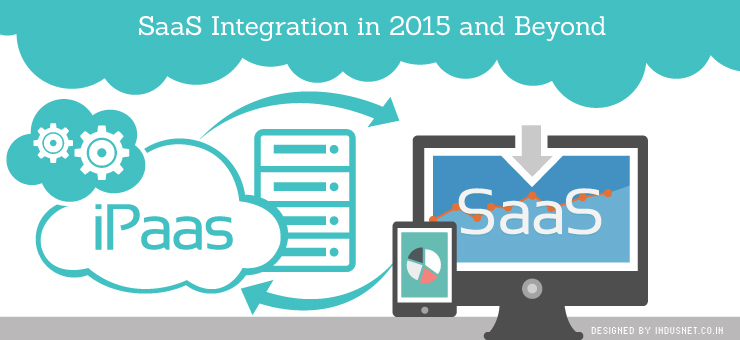
SaaS Integration in 2015 and Beyond

Cloud computing has entered mainstream and is an integral part of functioning for many businesses today. It is deployed in different formats i.e. SaaS, PaaS and IaaS depending upon the need of the organization. Nonetheless, traditional on-premise solutions continue to play pivotal role for running critical applications and processes. The widespread use of technology in organization like multiple internet-connected devices, multi-cloud environment and virtual services are continuously generating a lot of data. When such is the case, it is common to find data scattered across different applications, cloud storage and on-premise applications. Data becomes useful only if it can be used for gaining insights. To achieve that, data should be available in a structured format and collected from all sources where data is present. This issue can be resolved by deploying an integrated SaaS solution. It can be built, bought or subscribed to. Integration is necessary to keep ever expanding data under control. An integrated SaaS solution not only integrates data but helps in overcoming organizational inefficiencies, improves productivity and plug in gaps in performance. The other important roles played by SaaS integration include data transformation, data migration, application synchronization, data cleansing besides maintaining data security. Customized SaaS integration solutions have gone ahead to integrate data across social sources. SaaS integration is in the stage of infancy and 2015 will witness coherent integration practices propagated by out-of-the-box solutions by integration service providers. Let us take a look at how SaaS integration is evolving in 2015 and what more can be expected out of it. Becoming a priority among IT executives A majority of senior executives have realized that integration is critical to business solution. They further realize that cloud-to-cloud integration and better mobile access has to be a priority. According to a research by Mulesoft, it is estimated that 1/6th of the money spent on software will be spent on SaaS solutions. It also found that by 2016, 35% or more of all large and mid-size organizations will be using at least one Integration Platform as a Service offering. A majority of executives believe that SaaS integration helps in winning new customers. Integration support strategies are evolving Integration strategies have evolved over a period of time and providers have understood the importance of big data. Cloud service brokerages and hubs need to be developed, offering IT services and APIs. Whether it is data from Internet of Things, on-premise solutions, cloud applications, social media or mobile endpoints; it is crucial to follow an inclusive approach. Internet of Things specifically demands a new level of high volume, external facing APIs that operate in real time. Since business processes have to start to rely heavily on connected applications and data, integration solutions will become more and more accessible to an average business user. Business environment is rapidly turning dynamic with a lot of applications and data turnovers. Self-service integration modules by solution providers will empower a line-of-business user to selectively choose the solution that fits into their organization. This will curtail time and money spent on hiring IT specialists to accomplish the same task. It will also give them flexibility to realign their solution with the changing application and cloud mix. To cater to the user demand for growing control over technology, integration service providers are opening up APIs to facilitate users across the business to easily connect new technologies with legacy systems. Cloud endpoints typically consist of tools and capabilities that allow the user to generate APIs from an App Engine application which simplifies clients’ access to data from other applications. SaaS integration can seamlessly manage the impact of endpoints and enables you to adopt platforms designed for running hybrid structures and ecommerce APIs. Modern SaaS integration solutions can be subdivided into three categories: Virtual integration Virtual integration enables the cloud applications to access information from external systems without physical transfer of data from one application to another. It helps in delivering instant insight across the business. It also minimizes data storage requirements and annuls the need to synchronize unutilized data. Virtual integration gives your cloud-based applications access to resources running in virtual networking environment. For instance, a cloud application can have an access to database or other web services running on virtual machines by implementing an integration solution. Cloud-based integration or iPaaS (Integration Platform as a Service) solution This is the modern way of integration and is going to sustain for long. This hybrid integration is carefully designed and managed on a single cloud platform to run securely within the firewall. iPaaS solution can seamlessly connect to SaaS and other cloud services besides securely accessing legacy applications and on-premise systems. Cloud silos (information silos formed in cloud applications resulting in loads of fragmented data across the organization) are increasingly becoming a problem for organizations operating under the umbrella of cloud applications. iPaaS ensures that these cloud silos are dissolved through integration of information. An ideal iPaaS solution must have a robust set of connectors to be able to add new services in the rapidly changing cloud environment. Developers should be able to build applications that are integration-friendly using familiar tools and processes. Apart from that, strong management tools with the solution will help the client to understand and monitor the performance of applications. A future-ready iPaaS solution will be the one which is highly scalable, flexible and API-ready to adapt to the changing business needs. Managed APIs As we know, APIs are becoming intrinsic to the success of a cloud-based organization; it is important to develop a powerful mechanism to control API access and manage multiple versions of an API. API management services help you to build a secure framework whereby you can track and monitor the performance metrics, analytics, and initiate a centralized lifecycle management. Managed APIs serves as an excellent method to control access to your valuable resources. Role of integration service providers SaaS integration helps you to integrate with your customers, partners, suppliers, cloud platform, SaaS applications, social media, and devices. Service providers make sure that IT

Read More »

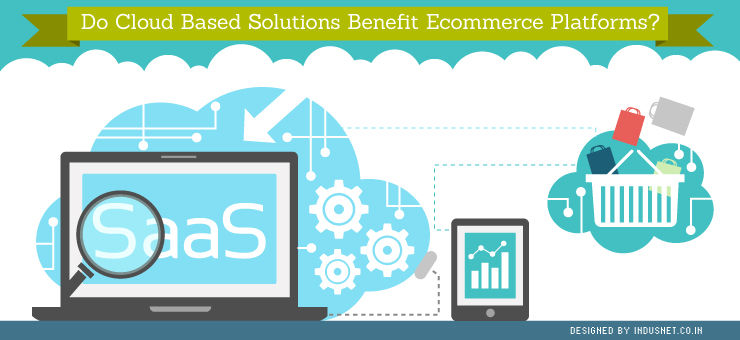
Do Cloud Based Solutions Benefit Ecommerce Platforms?

As the internet continues to democratize information, it has also not failed to revolutionize the eCommerce industry. With the advent of Software-as-a-Service (SaaS), eCommerce sector adopted the cloud technology to access big data, analytics and other applications online, from anywhere across the world. The industry implementing the Cloud Technology does not have to depend on physical server as they’re hosted in the Cloud. Why SaaS? SaaS is affordable and easily scalable to drive more traffic. It also enhances the overall product sophistication and customer support experience. They are more technically advanced and capable of hosting global infrastructures. The majority of the SaaS platforms have come a long way in terms of feature richness and customizability. However, to start your store on SaaS, you have to sign up for the service, pay subscription fees in order to launch your website. At the most, taking everything into consideration, it takes approximately 30 days to start your store, as payment gateway integration might take some time. Who does it benefit? Companies Looking for Easy Automation and Assimilation SaaS platform contains API, therefore, customer data, order data and products can be easily manipulated both through inbound and outbound automatically. Such a feature benefits the companies and enables them to develop customization in their ERP infrastructure and allowing them to keep the shopping cart lean and flexible. Companies looking for Ecommerce as a Spoke and not as a Hub If SaaS platform can be used in a broader scale making it connect to the back-office systems and turning it into a simple shopping cart, nothing could be better than this platform as it offers great economy and utility. Companies Looking for Rich Features Any SMB that wish to set up an online store quickly can highly benefit from SaaS platform. SaaS is ideal for organizations wanting to offload the hosting and management tasks of their eCommerce platforms with minimum expenditures. Companies Looking for Great Customer Experience and Contemporary Design When the entire platform is treated as a spoke in an ERP back-office project, SaaS can be redesign and reset in a short period of time. All large SMBs or mid-market companies should update their interface and think of redesigning their store every quarter. How does it benefit your Company? SaaS – Not only Flexible but also Scalable SaaS flexibility allows companies to have complete access to not only the front-end features that are visible to the customers, but also to the complex back-end system integration.  A company needs technology and direction to improve its infrastructure. An improved infrastructure always ensures to convert customers and increase revenue year-over-year. In this respect, SaaS solution takes care of the technology aspect and put experts on their toes, allowing them to redistribute their money to the different sections of their department in order to amplify the brand name and customer service. The Solution is Time-Effective Besides allowing for inexpensive maintenance, cloud-based solution is also time-effective. The majority of the self-hosted solutions, especially in the holiday seasons become unresponsive as they’re unable to cope up with the consumer traffic demands. However, quality SaaS providers offer a whole digital suite to optimize your eCommerce performance. The service provides proper redirects and site hierarchies that make sense to Google’s crawling bot and also ensures that their networks are capable enough to handle peak traffics. Easy Access to Order and Customer Data When an organization can access source code and database directly, they automatically get access to many other internal and external information in several ways, typically for back-up automation and integration purposes. This is undoubtedly, a huge benefit for larger organizations that believe in real-time data mining and want to have access to their own data whenever in need. Proficient Security with Excellent Uptime A SaaS platform always ensures that your store is up and running at top speed. The experienced professionals work hard to maintain a consistent and quality user experience for their clients. The larger SaaS eCommerce platforms enjoy a 99.99% uptime and which stay over many years. Also when it comes to security of a site, software updates and patches to address new vulnerabilities are the common elements required by an eCommerce technology. However, with SaaS solutions, these updates and patches occur automatically, allowing retailers to focus on their business. Managed PCI Compliance Credit card data management is a sensitive and time-consuming subject. Most importantly, managing PCI Compliance, which is a process of ensuring that an eCommerce platform is securely dealing with credit card information, is completely managed by SaaS providers. This complicated task should not be handled by any online retailer in order to prevent errors and confusions. A Streamlined Overall Experience When it is a matter of smooth checkout experience, SaaS platforms provide rigid workflows. They produce a frictionless checkout process, both on mobile and desktop platforms while performing professional A/B test. Also, the flexibility of easily modifying graphics, colors, layouts and updating themes on a SaaS platform allows the online merchants to stay up-to-date with the changing technology. How to go about Creating Ecommerce Site on SaaS? SaaS allows the required ease of getting a site up and running in less than 30 minutes. The basic steps involve  Sign up for the service and create an account  Connect the domain  Enter company information  Add shipping information  Choose the design template  Choose a payment gateway  Select a template  Add your business logo  Add your site content  Add a product It is time to utilize the democratizing capabilities of the internet technologies to increase ROI and grow your business. You’re ready to go with your eCommerce store on Cloud solution now. However, do not forget to include social media accounts, plan for email list, add additional products and promote your site.  

Read More »
MENU
CONTACT US

Let’s connect!

Loading form…

CONTACT US

Let’s connect!

    Privacy Policy.

    Almost there!

    Download the report

      Privacy Policy.