
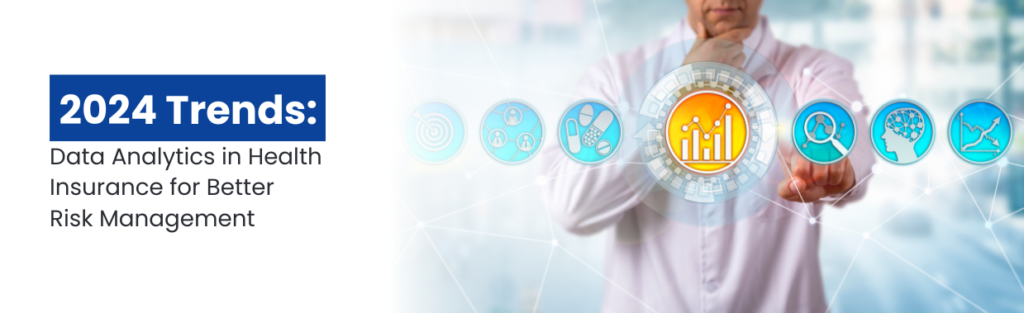
2026 Trends: Data Analytics in Health Insurance for Better Risk Management
The health insurance industry has witnessed a rapid evolution in terms of digitization, which has also swiftly transformed several other sectors worldwide. One of the biggest contemporary trends in health insurance(and poised to last for the foreseeable future) is the harnessing of data analytics to ensure superlative risk management, among other benefits. Health insurance predictive analytics enables insurers to anticipate risks, while analytics in health insurance improves decision-making across underwriting, pricing, and claims management. “Health insurance data analysis plays a key role in improving decision-making and driving effective health insurance analytics.” Predictive analytics in health insurance enables insurers to derive actionable insights from data, helping them design more profitable and customer-focused insurance products. “Data analytics in health insurance is transforming the industry by enabling insurers to make smarter decisions through advanced data analytics insurance practices.” Analytics in health insurance are rapidly evolving as new insurance analytics trends enable more accurate risk assessment, personalized pricing, and improved patient outcomes. Predictive analytics in health insurance leverages big data and health insurance systems to analyze large volumes of patient, claims, and behavioral data in order to predict risks, reduce costs, and improve decision-making. Pharmacy managers, insurance companies, healthcare providers, and other industry stakeholders are already leveraging analytics to tackle issues of fast-growing healthcare costs. Insurance companies are already using them to identify high-risk patients and operate accordingly. Health insurance predictive analytics is becoming increasingly important as insurance industry data analytics evolves to improve risk assessment and customer outcomes. Health insurance data analysis plays a crucial role in health insurance analytics by transforming raw claims and member data into actionable insights that improve cost management, risk assessment, and patient outcomes. Why Data Analytics is Indispensable From an operational standpoint, data analytics is indispensable for health insurance companies. They keep generating huge data volumes internally through sales and engagement but also get sizable chunks from varied external sources. When this data spreads out through multiple systems, it becomes an uphill task for insurers to effectively use and track the same. Big data in health insurance is transforming the industry by enabling advanced data analytics in health insurance to improve risk prediction, fraud detection, and personalized member care. This is why analytics-based solutions that can fuse and consolidate data from multiple touchpoints and sources have gained relevance in recent times. A centralized data-gathering system with consistent analytics and actionable insights is thus one of the key trends in health insurance currently. Data analytics in health insurance is rapidly evolving as organizations increasingly rely on data science in health insurance to improve risk assessment, pricing accuracy, and patient outcomes. Health insurance data analytics plays a crucial role in improving patient outcomes and reducing costs, as data analytics in health insurance enables insurers to identify trends, assess risks, and optimize coverage plans effectively. How Data Analytics Enables Better Risk Management Data analytics is undoubtedly contributing towards enabling insurers to manage their risks better. Here are some aspects that should be highlighted in this regard. By leveraging big data in health insurance, companies can enhance customer analytics in health insurance to deliver more personalized and cost-effective care solutions. Data analytics in health insurance is becoming increasingly powerful, especially as predictive analytics helps insurers identify risk patterns and improve patient outcomes. These benefits have gained even more traction in recent years if one considers how insurers lose a whopping $40 billion per annum on account of fraudulent claims as per Gartner reports. Many insurance companies also estimate 10-20% of claims to be fraudulent while identifying less than 20% of the same. Suspicious and fraudulent behaviour and patterns can be identified with data analytics, with insurers creating diverse models to enable swift detection based on historical data and activities. For instance, analytics has reportedly helped the Czech Republic’s Allianz Insurance to save a whopping US$4.5 million annually by lowering fraudulent claims paid by it. This is just one of the instances that testify to the need for insurance companies to rapidly adopt data analytics into their operational frameworks. Analytics can be used to conduct risk evaluation in real-time which will help organisations respond swiftly in volatile scenarios. For example, in the case of auto insurance, an accurate assessment of risks posed by specific drivers will help insurers create more competitive premiums. Cars connected to the internet will help them gather large volumes of data accordingly. Insurance firms can now predict the chances of drivers being involved in accidents by analysing driving habits and behavioural data. Some other advantages of data analytics include easier customer lifetime value (CLV) prediction and prospective claim forecasting. FAQs How can data analytics contribute to more precise risk assessment in the health insurance industry? Data analytics can enable more accurate risk assessments in the health insurance sector. It can help identify fraudulent behavioural patterns and flag the same for review before the actual payout. What impact do 2024 trends in health insurance data analytics have on customer experiences and personalised offerings? 2024 trends in health insurance data analytics will have a positive impact on customer experiences. Insurers will be able to personalise their offerings for customers based on their behavioural data and also offer custom premiums with incentives for recommended and healthier actions.
