Tag: retail

Frictionless future

Frictionless Future: How Open Banking is Transforming Retail Payments and What to Focus on in 2024

Retail payments and the overall retail banking space may witness a major transformation in 2024 from a global perspective. Open banking facilitates banks and financial institutions to share data seamlessly with third-party financial entities via open banking APIs. These third parties may include several lending firms, expense-tracking entities, and more, which use this information for creating a broader range of products and services. The ultimate beneficiary may the customer, since this open exchange of data will enable contemporary financial services entities ensure more client-centric and personalized solutions. Open banking is growing rapidly and steadily into a mainstream framework for banking and financial institutions. There have been several reports of how open banking payments have doubled in 2023 across the UK as compared to earlier periods and also how 1 out of 9 consumers are already making use of open banking currently. Account-to-account payments have also garnered aa major chunk of online payments while future projections indicate future growth. By 2024, open banking may become a key component of retail payments and the whole retail banking spectrum. Here’s getting a closer glimpse into the same. A Little More About Open Banking Open banking is a system where banks open their APIs or application programming interfaces, enabling third parties to conveniently get access to financial data required for the development of new programs and services  while enabling more transparency choices for account-holders. Some instances include BBVA launching Open Platform, its own BaaS platform in the US in 2018. This helps third parties offer financial solutions to customers without requiring a full banking service suite. HSBC also launched Connected Money as an app in 2018. Customers can easily view their bank accounts, mortgages/loans, and credit cards at a single place. Barclays also enabled account aggregation within its app for mobile banking. Customers here can view their accounts with other banks on the Barclays mobile banking app. What are the Advantages of Open Banking? What are the benefits of open banking for the retail banking system as a whole? Here’s looking at the same. 2024 Predictions for Open Banking Here are some of the key trends that can be anticipated in the open banking sphere in 2024 and beyond. Hence, as can be seen, open banking will enable numerous advantages and transformations worth looking forward to in 2024 and beyond, not just in the sphere of retail payments, but also retail banking as a whole. It will create a more connected ecosystem where consumer experiences are also swift and more personalized. The whole process will bring about lower costs and higher efficiency for financial services players and banks alike. FAQs Are there security concerns associated with open banking in retail payments? There are some security concerns that are linked to open banking for retail payments, keeping data privacy requirements at the forefront. These are majorly maintaining privacy with encryption and other measures and Cybersecurity measures in general. This is because customer data will be shared in this case with third party providers. Does open banking just cover payments? Open banking does not only cover retail payments and makes them simpler and more convenient. It also has various use cases pertaining to credit checks, personal finance, verifying identity, personalized services for consumers and more. How does open banking foster innovation in the retail payments sector? Open banking enables greater innovation in retail payments through enabling third party providers to readily access bank information/data. It can thus spur innovation which leads to more efficient and personalized consumer experiences. How does open banking impact the user experience in retail payments? Open banking has a major impact on user experiences in the retail payments space. It will make payments easier and smoother without multiple security steps and processes. It will also ensure secure and quicker payment choices for users. How does open banking contribute to making retail payments more frictionless? Open banking contributes greatly towards making retail payments frictionless and free from any hassles. It enables direct bank payments and these can be accepted from customers by merchants on their channels in a swift and secure manner. There are several steps and processes that customers or merchants do not have to go through in this case.
Read More »
The Rise of Smart Stores: How Retail Tech is Transforming the In-Store Experience

From Traditional to Smart: The Evolution of Retail Stores

Smart stores are poised to usher in a mega revolution for the global retail industry. There will be a complete transformation of in-store experiences for shoppers shortly with smart retail solutions. Let us take stores like Amazon Go as examples to decode the biggest ways in which retail tech is already revamping the future of retail stores.  How Amazon Go is a Glimpse of Things to Come  Amazon Go already offers shopping experiences without cashiers. These smart stores come with several advantages for customers and retailers alike, enabling time and monetary savings along with lower errors and more contactless shopping experiences. “In-store technology is transforming the smart retail market by enabling personalized, data-driven customer experiences.” These stores deploy cutting-edge retail tech, including artificial intelligence, computer vision, and sensors, for enabling smoother shopping experiences. The aim here is to do away with time-consuming physical checkouts and lines at stores along with the tedious procedure of scanning items. A network of sensors and cameras are deployed throughout the store which track items picked up by customers from shelves and those put back by them. When customers complete shopping, they can walk out of the premises without going in for traditional checkout.  At Amazon, for instance, customers have to download the Amazon Go app and link the same with their Amazon account to get this option. Once they enter, there is full tracking of items chosen and movements. Shoppers can easily add items to virtual carts which are updated instantly. When they exit, the account is charged for the items bought, with receipts dispatched to their accounts. Technologies like door trackers also detect departure automatically. Each item picked up is recorded more accurately and linked to customer accounts. They can also review receipts on the mobile app before leaving. This helps verify the charges and items. Amazon Go is a glimpse into the future of retail stores throughout the world. This will boost customer convenience and overall efficiencies greatly. Here are some of the advanced technologies that will soon play a vital part in the creation and running of smart stores. Smart Store Technologies for the Future When it comes to enhancing the in-store experience for customers with smart retail solutions, here are some technologies that will soon gain ground throughout the sector.  The future of retail stores appears to be in embracing more advanced technologies that will boost in-store experiences and enable greater personalisation and convenience for customers. Smart stores will steadily be in vogue with the popularity of Amazon Go being an indicator of things to come.  FAQs What specific technologies are driving the evolution of smart stores and enhancing the in-store shopping journey?  Several technologies are enabling the evolution of smart stores and boosting in-store shopping experiences. These include easy mobile app-based and contactless payments, automated tracking and verification of customer items, and of course, technologies like AR, VR, AI, ML, robotics, and more.  In what ways do smart stores improve customer engagement and satisfaction through retail technology? Smart stores have a crucial role to play in enhancing customer engagement and satisfaction levels. Customers can easily walk in and walk out of stores and pick up items without waiting in lines or needing any cashier. They can simply pay online with receipts delivered to their accounts. Automated support and service will also help them find their chosen items with ease. These are some of the innovations that will help them save time and energy while contributing greatly towards the overall experience. 

Read More »
E-commerce Evolution: How Retail Tech is Shaping the Future of Online Shopping

E-commerce Evolution: How Retail Tech is Shaping the Future of Online Shopping

There has been a rapid e-commerce evolution in recent years, completely transforming the industry as we know it. Retail tech solutions are going mainstream and are already revolutionising experiences for customers. From AI and machine learning to IoT devices and more personalised experiences with recommendations and one-click checkouts, several new trends are reshaping the future of online shopping.  The future of the retail industry is also set to be defined by not just technological advancements, but also influencer marketing and social media in a bigger way than before. Retail tech encompasses innovative digital tools that are used by online and brick-and-mortar retailers to enhance the overall shopping experience. This covers the whole spectrum from simpler POS (point-of-sale) systems to more complex automation and AI tools. Mobile technologies, RFID and QR codes, AR, automation, generative AI, and ML are all future retail tech trends that should be taken into account in this regard.  Some reports estimate how the transformative future potential of AI (artificial intelligence) can ensure an annual value of a staggering USD 400-800 billion for the industry. In today’s times, mobile commerce and other trends are finding favour as more customers prioritise flexibility and personalisation along with higher efficiency overall. Retailers now have to adopt newer technologies not just flourishing, but also surpassing their rivals. Here are some trends that should be noted carefully in this regard.  Top Retail Tech Trends that May Transform Online Shopping  Here are some of the leading retail tech trends that may spur e-commerce evolution shortly.  Machine learning will help analyse various variable sets to offer suggestions based on individual consumer preferences, interests, and habits. This will help the algorithms build more sophisticated and relevant shopping profiles that enable improved offers over some time. This will also encompass more intelligent assistants and Chatbots for ensuring enhanced customer support and service throughout websites and e-commerce platforms.  AR can help brands offer customers more immersive and realistic ways of viewing and evaluating products. Apps will help customers view products in their environments. The entire retail environment will be synced both offline and online and visitors can easily complete transactions at almost every touch point. Customer profiling will improve due to a combination of online and offline channel-based data along with better inventory tracking throughout the entire system. This integration will ensure superior advantages for both retailers and customers. Cashier-less stores will soon become a reality as done already by Amazon Go. People can pick up their items and leave without interacting anywhere. The store has deep learning algorithms and sensors to scan each product that is picked up and to add them to virtual carts linked to Amazon accounts. Upon the customer leaving the store, the list is closed with the total charged to these accounts.  Customers in physical stores will thus have enhanced comfort levels since they do not have to carry any cards or cash with them. They do not have to wait in line for the cash register as well. Apps that read QR codes or barcodes can be further integrated into this system which means that people do not even have to pick up products to learn more about their features and other details. More people are embracing Alexa, Siri, Google Home, and other virtual assistants for various purposes including listening to music, checking weather conditions, and so on. Voice shopping will enable customers to communicate with virtual assistants and search for products to be added to virtual carts later. Once this is completed, customers have to place their orders and wait for retailers to deliver the items in question. This is another method in which technology can contribute greatly towards enhanced customer comfort and convenience.  Hence, as can be seen, retail tech will play a huge role in completely transforming the future of the retail industry.  FAQs How is retail technology driving the evolution of e-commerce and shaping the future of online shopping?  Retail technology has a vital role to play in driving e-commerce evolution and in shaping the future of online shopping. It will offer customers more personalised recommendations and shopping experiences along with cashless payments, better omnichannel integration, immersive AR-based journeys, and a lot more.  What specific technologies are contributing to the evolution of e-commerce platforms and enhancing the online shopping process?  Several advanced technologies are contributing immensely towards the evolution of online shopping platforms these days. These include augmented and virtual reality (AR and VR), artificial intelligence, machine learning, data analytics, IoT (Internet of Things), and more.  How are emerging technologies like augmented reality and virtual try-ons changing the way consumers interact with online shopping platforms?  These technologies will undoubtedly change the way that customers interact with e-commerce platforms. The lines will increasingly be blurred between virtual and physical environments. Customers can easily try on products or view them up close and that too in their environments. This will help them make better purchase decisions while enhancing their immersive experiences greatly as a result.  What role do data analytics and customer insights play in shaping the strategies of e-commerce businesses for the future? Customer insights and data analytics have a crucial role to play in shaping e-commerce business strategies for the future. They enable access to customer data in terms of shopping habits, preferences, and seasonal requirements. At the same time, they help forecast demand with an evaluation of market patterns and trends. 

Read More »
Understanding and Tackling Cart Abandonment in the Retail Industry

Understanding and Tackling Cart Abandonment in the Retail Industry

Cart abandonment is a common issue plaguing retail brands today. To get more customers to convert online, you will naturally require a better interface and site design along with more effective marketing. However, a whopping 70% of customers, on average, leave after they add items to their carts as per Baymard reports. This phenomenon, known as cart abandonment is one of the biggest problems for the retail industry today. Before delving deeper into strategies for reducing cart abandonment, it is important to calculate the rate of abandonment first. This is possible by dividing the total completed purchase count by the number of carts created and subtracting the same from 1. This will help you work out the ways and means to lower your cart abandonment rates and bolster revenues accordingly. Here are some reasons for cart abandonment, which is different from e-commerce checkouts where customers abandon the purchase while checking out.  Reasons for Cart Abandonment and Solutions for the Same Here are some of the major reasons behind abandoned shopping carts and ways in which you can fix them.  These are some strategies that will help you reduce cart abandonment, along with ensuring a better mobile-friendly platform while also ensuring that discount codes are integrated with the checkout process. The idea will be not to deter customers without codes from finishing purchase, while making it easier for customers with promo codes to checkout seamlessly.  FAQs What causes cart abandonment in the retail industry, and how can businesses identify the underlying reasons? Cart abandonment takes place due to several reasons including lengthy checkout processes, inadequate shipping and payment options, lack of a mobile-friendly website, higher additional costs, and so on. Businesses can identify these major reasons by using analytics and calculating their cart abandonment rates.  What strategies can retailers implement to reduce cart abandonment rates and improve online conversion rates? Retailers can implement several strategies for lowering cart abandonment rates and enhancing their rates of online conversions. These include providing cost-related information upfront, offering guest checkouts without forcing them to create accounts, enabling a mobile-friendly and responsive platform, offering multiple payment and shipping choices, and so on.  How can personalised marketing and retargeting campaigns help re-engage potential customers who abandoned their carts? Personalised retargeting and marketing campaigns can work excellently for re-engaging potential customers who abandoned their carts earlier. This helps in reaching out to them with tailored solutions at the right time along with building a higher value proposition for them which will encourage them to start buying again.  What role do user experience and website optimisation play in preventing cart abandonment and enhancing the online shopping journey? An optimised and easy-to-navigate website plays a huge role in combating cart abandonment and boosts the online shopping journey. At the same time, better user experience and mobile-friendly platforms also encourage people to spend more time on the e-commerce or retail portal. This makes them more comfortable in terms of online purchases and conversions. 

Read More »
Winning the Inventory Game: Strategies for B&M and E-commerce Fashion Retail

Winning the Inventory Game: Strategies for B&M and E-commerce Fashion Retail

Both e-commerce fashion retail and brick-and-mortar players require advanced and efficient inventory management. This not only ensures that they have suitable items in the right volumes when the customer needs them, but also makes sure that they can lower costs, scale sales figures, and boost customer satisfaction levels simultaneously. The inventory management game becomes even more challenging and critical if you consider the fashion sector which is characterized by rapidly changing trends and consumer preferences, along with seasonal movements.  How it Stacks Up for Both Fashion Segments If you take a closer look at the inventory management game for both the brick-and-mortar and e-commerce sectors, these are the insights that emerge.  There are numerous technology solutions today that enable better and smoother inventory management for companies in both these segments. Let us take a look at some of them below.  Tech Solutions for B&M and E-Commerce Players Here are some of the most effective technological solutions that cater to both these categories in the fashion retail space.  Along with these systems, there are several retail technology solutions that are enabling dedicated improvements for fashion retailers across multiple categories. Let us take a closer look at them below.  Retail Technology Solutions for Better Outcomes Here are some of the ways in which cutting-edge retail technology solutions will completely transform the segment in the future.  Predicting future customer preferences will become more viable with advanced AI and ML algorithms along with data analytics. This will enable brands to offer products that customers will appreciate, while balancing sustainability and diversity alike. AI-based pricing strategies will also help scale up sales figures in relation to demand and supply levels. Gauging or sensing market demand with advanced tools will enable companies to take better strategic decisions as well.  Several companies are already working on demand sensing engines and newer demand forecasting methods for retail players. Some companies are also looking at omnichannel solutions for various brands in order to streamline inventory management. RFID should be another major game-changer in the near future, enabling companies to enhance their rates of conversion and boost consumer experiences simultaneously. RFID may enhance the rate of adoption while enabling higher brand security and inventory accuracy alike. These technologies are already being used by leading fashion brands like Zara, H&M, Tommy Hilfiger, Ralph Lauren, and Levi Strauss & Co. They are managing inventory better and tracking stocks in real-time while finding products swiftly at the same time. As a pre-requisite for better inventory management, companies are also looking at technological solutions that can streamline their supply chain processes and leverage opportunities through omnichannel businesses. Emerging consumer delivery models like online purchase and store pick-up, shipping from store, curbside order pickup, and same-day delivery are also gaining traction. This will further put the spotlight on efficient and accurate inventory management solutions in future years.  Add to that touch-less POS checkouts (boosting visibility into losses), interactive aspects like NFC tags and QR codes (for enabling special experiences and interactions with consumers), and other emerging trends and you get the picture. Better inventory management is the need of the hour, driven by advanced technological solutions for smoother sales, customer satisfaction, and business growth. Both brick and mortar and e-commerce fashion retailers have embraced these new-age needs with elan and this particular trend should continue for quite some time now. 

Read More »
Retail News Wrap Int.

Retail News Wrap | Weekly Snippets | August

✅ Hyundai Home Shopping’s latest breakthrough promises customers real-time 3D images of outfits which will range up to 20 styles in a minute.  https://www.kedglobal.com/retail/newsView/ked202308290011 ✅ Kanine announces its collaboration with Myntra, where it introduced 2,500 distinct products to the Indian market, bringing the world’s trendiest pet fashion brands right to pet owner’s doorstep.  https://www.indianretailer.com/news/retail-india-news-kanine-hand-myntra-unveils-global-pet-fashion-brands-india ✅ SenSen’s futuristic technology is taking the fight against retail fuel theft to a whole new level by using AI to analyse data from cameras and sensors. https://kalkinemedia.com/news/world-news/sensens-new-ai-breakthrough-fights-retail-fuel-theft ✅ Shopify – The Canadian retail tech platform is revamping the online shopping game with AI technology. https://wwd.com/business-news/technology/shopify-ai-magic-sidekick-giants-1235763521/

Read More »
The Power of Retail Analytics in Elevating Customer Experience

The power of retail analytics in elevating customer experience

Behavioral analysis, retail trends and customer experience could well seem quasi-scientific terms that are increasingly used throughout the industry. But what will pleasantly surprise you is the fact that they are commonplace for retailers today.  What is powering things like conversion rate optimisation and insights driven by customer feedback? AI-powered analytics of course! Retail analytics is no longer restricted to only a subset of use cases for these technologies, but has come into the mainstream. It has spawned an entire universe of its own, redefining the operations and strategies of both digital and brick-and-motor retailers in recent years. It is not just instincts alone that shape successful retail operations today, but also data-driven insights and decision-making. Let us know more about the power of retail analytics especially in terms of boosting customer experiences. What is the power of retail analytics? To understand the power of retail analytics and how it has become a catalyst for change in the industry, here are some core points that deserve to be noted: How does analytics improve customer experience?  What are the future trends in retail analytics? Retail analytics will thus power not only future innovations in terms of better experiences and personalisation for customers, but also optimisation at scale. This will include inventory, logistics, supply chain, deliveries, operations, marketing, and advertising. Brands will depend more on analytic and other technological tools to revamp their core propositions in the coming years. It can safely be said that exciting times are afoot in space. FAQs 1.What are some advanced analytics techniques used in retail analytics? There are many advanced techniques of analytics that can be used within the spectrum of retail analytics. These include descriptive analytics, predictive analytics, and prescriptive analytics. Diagnostic analytics may also be used in some cases. 2. Provide us some of the best practices for using retail analytics. Some of the best practices include ensuring the quality of data across points along with suitable data gathering in compliance with regulatory guidelines. At the same time, customer data and forecasting should be done on a real-time basis with complete visibility and tracking. 3. How does retail analytics enable retailers to deliver personalised experiences to customers? Retailers can use retail analytics to unearth valuable insights on what customers desire at specific times of the year, what they browse for, and their previous purchase history. They will also know about the products selling well in particular locations and at particular times of the year. Individual customer engagement can also be tracked for a specific duration. All this data can be analysed to help improve customer experiences with personalisation recommendations, offers, and promotions. 4.What are some of the challenges of using retail analytics? Technological expertise and integration of legacy systems aside, the need to have proper data gathering and analysis infrastructure is another challenge. At the same time, data quality and compliance with privacy regulations are other challenges in this space.

Read More »

‘Beacon’ of hope for the Retail Sector

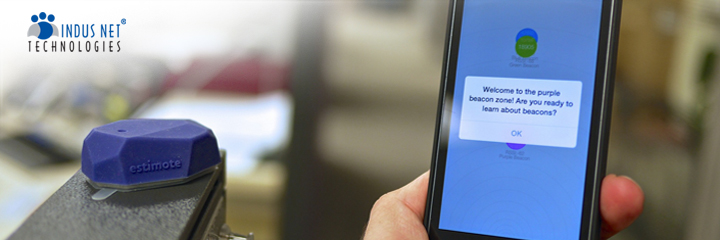
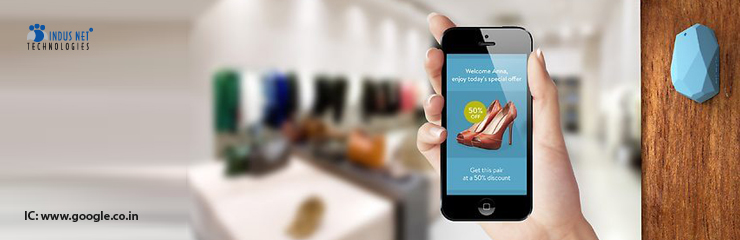
Did you know that the rise of smartphone shoppers boosted online retail spending to a record number of £133bn in the UK last year? Also, nearly 56% users of smartphones want to receive location-based offers on their devices once they are near a store. Mobile phones have completely revolutionized the way we shop. Yes, we know it’s an obvious today. The digital world has completely reshaped and redefined the retail industry, with online sales hitting the roof.  The raging popularity of e-commerce platforms, especially Amazon, hasn’t gone down well with the brick-and-mortar retailers. They are literally feeling the heat. Big players such as JC Penny announced that it will close down nearly 140 stores and two distribution centers in the coming months. This isn’t good news for the retail sector.   So, does this mean that brick-and-mortar retail stores will finally cease to exist? What should retailers do to entice the audience so that they feel compelled to step into their stores? There’s a popular saying that every cloud has a silver lining. Many of the brick-and-mortar stores today have made a smart move by adopting beacon technology to win back customers. This technology has also helped them gain their lost ground to a certain extent. Since most of the urban shoppers today are hooked onto smart devices to browse and research online for anything and everything, retailers are increasingly adopting this latest technology to tap the potential customers, win loyalty and drive sales. Fact is: retail is the most popular sector where beacon technology is being used now. What is beacon technology? In simple words, beacons are small devices (approximately 3cm x 5cm x 2cm), which use Bluetooth Low Energy (BLE) to transmit signals to smartphones within a short-range. Bluetooth LE is a proximity technology and the main purpose of beacons is “proximity marketing”. All you need to do is install this device or devices anywhere inside a retail store. It sends out signals to the app users whenever there are in the vicinity of the store. Beacons communicate with smartphone apps over Bluetooth, thus authorizing the retailers to send alerts to the devices of the customers. This way the brands can gather information on the shoppers’ movement inside the stores. Also, it enhances the shopping experience and makes shopping easier and quicker for the customers once they are inside a store. Types of beacon protocols Though the technology, “Bluetooth” was initiated by Nils Rydbeck, CTO at Ericsson Mobile in Sweden, and by Johan Ullman in 1989, it was in the year 2013, when Apple introduced iBeacon that the world stood up and took notice of beacon technology. In mid- 2013, Apple introduced iBeacon, the first beacon protocol in the market. In July 2015, Google announced Eddystone. Google’s beacon platform can transmit URLs to mobile devices, which can then be opened in a mobile browser. Beacons vs iBeacon Beacons are the hardware devices that send out and receive BLE signals. iBeacon, on the other hand, is a technology built into Apple devices that allows iPads and iPhones to scan for Bluetooth devices within a range. List of 10 beacon hardware manufacturers in the world: Estimote Gimbal Radius Networks BlueSense Gelo Sensorberg Glimworm Now, according to a report in BI Intelligence, these minute devices are the rapidly-growing in-store technology since mobile credit card readers. So, why are the retail giants taking resort to beacons, also called proximity beacons, to smarten up a store? Here are the top 4 reasons why beacons are winning the hearts of the brick-and-mortar retailers: More customer engagement by offering contextual information, targeted messages and notifications   Building customer loyalty by sending personalized discounts and coupons in real-time   Providing insights on customer purchase behaviour to enhance the shopping experience   Providing contactless payment Beacons increase customer engagement Imagine, you are outside a shopping mall and the phone starts buzzing. You receive a notification reminding you to buy some clothing items. Beacons can encourage you (read a shopper) to come inside the store and complete the shopping. Now, once you enter the store, you start receiving messages explaining how to select the clothes. Retailers are leveraging the power of beacons to engage customers in the following ways: By sending welcome messages, promotional deals, reward points and pop-up alerts to a customer’s smartphone based on their shopping activities. By assigning sales assistant to a customer who spends considerable time near a particular product/section By pushing real-time offers to customers inside the store. It enriches the shopping experience and also helps in customer acquisition and retention. By flashing the descriptions of a product on the smartphone’s screen once a customer approaches a particular product inside the store. Did you know the Swan Centre in the UK became the first shopping mall to use beacons, which allowed them to organise in-store campaigns for its visitors? Using beacons to strengthen customer loyalty In today’s cut-throat competition, customers have countless options and can easily switch from one retail brand to another if they are not satisfied with the product or the service. Here the customer loyalty programs come into play. They are highly crucial for retailers to strengthen their relationship with the customers and also accelerate sales. According to a survey, 76% of customers believe that loyalty program strengthens their relationship with brands. Here’s how retailers can win the trust of the shopper and also convert visitors into buyers through beacon technology:   The moment a loyal customer walks into a store, beacons allow retailers to send style tips and personalized content based on the location and purchase history. Retailers can use beacons to thank the customer for a purchase and also reward shoppers who have been loyal to the store.      Did you know over 40% of shoppers look for offers on their smartphones while they are inside a store? Collecting customer data through beacons If a retail chain wants to present a supreme shopping experience to its customers, it should be aware of its customers’ buying patterns.

Read More »

How Beacons and Proximity Marketing Can Enhance Sales at Stores?

Location-based marketing has been around for a while now. Using the latest in technology, stores can send marketing messages to shoppers’ smartphones when they are in the vicinity of stores. This is made possible by the use of beacons, or iBeacons, which were introduced by Apple in 2013. These Bluetooth low energy (BLE) devices broadcast messages one-way, and can be used to provide information about deals products, make billing easier, etc. Most importantly, beacons have begun to revolutionize the way stores market their products and services. In this article, let us take a look at how proximity marketing makes use of beacons. Quick facts According to an article published on the Forbes:   53% of users are willing to share their location with stores. 57% of users are open to the idea of receiving location-based ads. 63% feel coupons on mobile phones are great. 62% share deals they find interesting with their friends. Certainly, these facts point toward a trend that is likely going to normalise location-based marketing that makes use of beacons. What do beacons do to help drive sales? Beacons help in providing several payment options to customers. Loyalty programs can be shared via beacons when customers are in store. Recommend products based on individual user attributes Broadcast coupon details to customers who are likely to make purchases. Help customers navigate stores and find products they want easily. Here is how marketers can use beacons and proximity marketing to drive sales:  Gain customer insights Beacons help you to understand how your customers are spending money, how long they spend time at your store on average and what they are doing while they are at your store. This information can be further processed to design personalized campaigns that help to drive sales. Boost customer loyalty You can use beacons to reward customers who may arrive at your store repeatedly. The moment they walk in, you can send coupons and if they are regulars, you can ask them to ‘click and shop’ for goods previously purchased. While this a utility for the customer, it drives sales for you.   Kick-start proximity marketing Beacons help you to gain a variety of information based the customer. One of these is their location data. Location-based information can be used to kick start proximity marketing, suggesting information, products and services which may be available close to where your customer is around at that particular moment. Offer discounts and coupons Nothing entices customers more than a good discount or a coupon. If you want to turn walk-ins to sales, you can use beacons to send coupons to users’ smartphones, so that they purchase something, instead of walking away. Geo-targeted messages are known to drive sales, especially if you have a store in a place where footfalls are high. Even if they are in the vicinity to buy something else, a coupon or a discount that flashes on their screen may tempt them to walk into your store. Help customers Beacons are all about the location. If your customer is looking for something, beacons can be used to help them find the right aisle, or the right product. If it is a man that walks into your store, you would probably direct him to the men’s section of your clothing store, instead of him having to look or them himself. The possibilities are endless. Beacons can help you maximize sales by customizing location-targeted messages. Enable cross-channel experience With so many options to make sales happen these days, many stores are opting for online sales. While this takes place mostly on desktops or smartphones, brick and mortar stores are still around. By offering a custom sales experience across all these channels, beacons help you to offer a cross-channel experience. This is important when your competitors are already engaging in multi-channel delivery.   Thwart shoplifting While this is not part of traditional marketing, beacons do help you to thwart shoplifting when they happen. Though it may not directly boost sales, preventing shoplifting helps you to save valuable products which will add up to your bottom-line. Many supermarkets and departmental stores have begun to use beacons to monitor and track customers when they are in the store. Data and analytics Analysis if data that is collected by beacons provides valuable information about the kind of people who purchase your products. This is the target demographic that you should be targeting in order to boost sales. There are several analytic tools available to help retailers drive sales with the help of beacon-based analytics. Business intelligence tools can be customized to integrate beacon data and help you come up with useful insights.   3 Examples of companies using beacons to enhance sales:   Woolworths, a British supermarket chain has successfully used beacons across its 254 stores. Push notifications are sent too consumers when they arrive within a certain radius of the store so that they can ‘click and collect’. Venerable Macy’s installed more than 4,000 beacons to provide an omni-channel retail experience. The store also brought a beacon-triggered mobile game which allowed users to win Macy’s coupons and prizes. McDonald’s used beacons to engage in proximity marketing across its Istanbul outlets. A loyalty app was used to target customers near McDonald outlets and then offer them coupons and try new drinks for free.        Highlights More marketing agencies believe location based data can help them design better campaigns. Proximity marketing campaigns can be weaved along with social media campaigns for a more nuanced approach. Data collected by beacons can be used to improve products. The same data can be used to manage shelves and product locations within a store. Use beacons to push discounts and coupons, which in turn help drive sales. Use analytics for a deeper insight about customers, their behaviour and their needs. Monitor and track individuals to avoid unwanted activities such as shoplifting. Provide an enhanced shopping experience to your store visitors, by combining in-store, social media, online and mobile experiences.

Read More »
MENU
CONTACT US

Let’s connect!

Loading form…

Almost there!

Download the report

    Privacy Policy.