Tag: machine learning

How Machine Learning Enhances Business Intelligence Systems

How Machine Learning Enhances Business Intelligence Systems

Executive Summary Machine learning is transforming how enterprises use data by enhancing business intelligence capabilities with predictive insights and automation. Traditional analytics methods rely on historical data, limiting their ability to forecast outcomes or identify hidden patterns. By integrating machine learning into BI frameworks, organizations can improve decision-making, optimize operations, and uncover new growth opportunities. This shift enables businesses to move from reactive reporting to proactive strategies. Enterprises adopting advanced analytics can gain a competitive edge by leveraging real-time insights and making faster, more informed decisions. Introduction In today’s data-driven environment, organizations generate vast amounts of information that must be analyzed effectively to drive business outcomes. Traditional analytics tools often struggle to keep up with the complexity and volume of modern data. Machine learning is revolutionizing how organizations leverage business intelligence by enabling systems to learn from data, identify patterns, and generate actionable insights. This advancement is reshaping enterprise decision-making processes. What is Machine Learning in Business Intelligence? Machine learning refers to the use of algorithms that allow systems to learn from data and improve performance over time without explicit programming. When applied to BI, Machine learning enables: This integration allows organizations to move beyond static reports and gain deeper, more meaningful insights. Build smarter BI systems that drive faster, more confident enterprise decisions. Talk to our expert. Enhancing Business Intelligence with Machine Learning Predictive Analytics Machine learning models analyze historical data to forecast future trends, helping organizations make proactive decisions. Real-Time Insights AI-powered systems process data in real time, enabling faster responses to changing business conditions. Data Automation Machine learning reduces manual effort by automating data collection, cleaning, and analysis processes. Pattern Recognition Advanced algorithms identify hidden patterns and correlations that traditional BI tools may overlook. Role of Machine Learning in Modern BI Systems Modern business intelligence systems are evolving to incorporate machine learning capabilities that enhance their functionality and performance. These systems can: By integrating machine learning, enterprises can significantly improve the value derived from their data. Business Impact of Machine Learning in BI Improved Decision-Making Organizations can make faster and more informed decisions based on predictive insights. Increased Efficiency Automation reduces manual effort, allowing teams to focus on strategic tasks. Competitive Advantage Businesses gain deeper insights into market trends and customer behavior. Scalability Machine learning enables BI systems to handle large volumes of data efficiently. Leveraging Business Intelligence Services To fully harness the potential of machine learning, enterprises must adopt advanced business intelligence service offerings that integrate analytics, automation, and data management. These services help organizations: A strategic approach ensures that businesses can maximize the value of their BI investments. Challenges in Implementation Despite its benefits, integrating machine learning into BI systems presents challenges: Addressing these challenges is essential for successful implementation. How Enterprises Can Successfully Adopt Machine Learning in BI To implement machine learning effectively, organizations should: A structured approach ensures long-term success and measurable outcomes. Conclusion Machine learning is redefining business intelligence by enabling organizations to move from descriptive analytics to predictive and prescriptive insights. This transformation allows enterprises to make smarter, faster, and more informed decisions. By integrating machine learning into BI systems, businesses can unlock the full potential of their data, improve efficiency, and gain a competitive edge. Organizations that adopt this approach will be better positioned to thrive in an increasingly data-driven world. Turn your data into predictive business intelligence with machine learning-powered insights. Let’s Connect FAQs

Read More »
AI vs ML vs Analytics- What Business Leaders Actually Need to Know

AI vs ML vs Analytics- What Business Leaders Actually Need to Know

Executive Summary Artificial intelligence, machine learning, and analytics are transforming how enterprises operate, compete, and make decisions. However, many business leaders use these terms interchangeably, leading to confusion around their capabilities and business value. While analytics focuses on interpreting data, machine learning enables systems to learn from data, and AI goes further by simulating intelligent decision-making. Understanding the differences between these technologies helps enterprises choose the right strategies, optimize investments, and drive measurable business outcomes. Organizations that effectively combine AI, ML, and analytics can improve efficiency, innovation, and competitive advantage. Introduction Enterprises today are under pressure to make faster decisions, improve operational efficiency, and deliver personalized customer experiences. Technologies such as AI, machine learning, and analytics are becoming essential for achieving these goals. However, many organizations struggle to differentiate between these concepts and understand where each fits into their business strategy. Business leaders need clarity to make informed technology investments and align innovation with measurable outcomes. Understanding the differences between AI, ML, and analytics is the first step toward building effective data-driven and intelligent enterprise systems. Looking to build smarter, data-driven enterprise systems? Talk with our experts to create future-ready AI and analytics strategies tailored to your business goals. What is Analytics? Analytics refers to the process of collecting, processing, and analyzing data to uncover patterns, trends, and actionable insights. Analytics helps organizations: Traditional analytics primarily focuses on descriptive and diagnostic insights based on historical data. What is Machine Learning? Machine learning is a branch of AI that enables systems to learn from data and improve performance without explicit programming. Machine learning systems can: ML powers predictive analytics, recommendation systems, fraud detection, and many enterprise automation solutions. What is Artificial Intelligence? Artificial intelligence is a broader technology framework that enables systems to simulate human intelligence and decision-making. AI systems can: AI combines machine learning, automation, analytics, and other advanced technologies to create intelligent enterprise systems. AI vs ML vs Analytics: Key Differences Purpose Analytics focuses on understanding data, machine learning focuses on learning from data, and AI focuses on intelligent decision-making and automation. Functionality Analytics generates insights, ML predicts outcomes, while AI enables autonomous actions and intelligent responses. Complexity Analytics is generally rule-based, ML adapts through training, and AI integrates multiple technologies for advanced capabilities. Business Impact Analytics improves visibility, ML enhances prediction accuracy, and AI drives automation and enterprise transformation. How Enterprises Use These Technologies Analytics for Business Visibility Organizations use analytics dashboards and reporting tools to monitor KPIs and improve strategic planning. Machine Learning for Predictions ML helps enterprises forecast trends, optimize operations, and identify risks before they occur. AI for Intelligent Automation AI powers chatbots, automation systems, recommendation engines, and real-time decision-making platforms. Together, these technologies create intelligent ecosystems that improve agility, efficiency, and innovation. Choosing the Right Strategy for Your Business Business leaders should evaluate: A strategic approach ensures organizations maximize the value of AI, ML, and analytics investments. Future of Intelligent Enterprises The future of enterprise technology lies in integrating analytics, machine learning, and AI into unified platforms capable of: Organizations that adopt these technologies strategically will gain stronger competitive advantage and operational resilience. The Executive Takeaway For CXOs, the essential clarity is this: They are not interchangeable. They are cumulative. Organizations that respect this progression invest more wisely, disappoint themselves less, and build capabilities that compound over time. AI does not replace analytics. It stands on it. Let’s connect.

Read More »

Is Machine Learning Overrated or Overhyped?

Not a day passes without us hearing or reading something about machine learning or artificial intelligence. It is almost certainly a buzzword, vigorously lapped by journalists, analysts and even CEOs. Of course, a C-level executive of a company has to drop in these buzzwords in front of investors and others in order to seem relevant. However, it does not take us long to realize that there is a staggering increase in the number of times we hear the words ‘machine learning’ or ‘artificial intelligence’. We need to acknowledge the fact that machine learning has been around since the World War 2, and that it continued to evolve over time. It was only limited because of the limitations of hardware. The algorithms, the concepts and the idea were all there of course. Scott Aaronson, a theoretical computer scientist at MIT opines that the way machine learning is being discussed today is very similar to how people discussed computers in the 1950s. People discussed computers and humanoids in the same breath but they did not foresee the Internet coming. Yet, military officials and others did have inkling about Internet and how it might change the world. Similarly, machine learning is certainly big, and it does deserve the hype it is receiving. Yet, it is overhyped because machine learning isn’t new. It is just computer algorithms that have been branded as something futuristic, while it has been there all along. In this article, let us take a look at why machine learning is overhyped and yet, it probably deserves that extra attention. It’s been around The history of machine learning dates back to 1959 when Arthur Samuel defined it as something that gives computers the ability to learn without being programmed explicitly. From then, it was closely associated with artificial intelligence, which is more theoretical in nature and is concerned with giving computer systems the ability to perform tasks for which human intelligence is required. Machine learning later came to be defined as something that is practical, more than theoretical. This happened during the 1980s and 1990s when computers were developed to operate autonomously. However, machine learning is more realistic and objective in nature, and is concerned with what can actually be achieved in realistic terms as of today. Artificial intelligence on the other hand focuses more on research and changing times. With Internet of Things becoming more common today, machine learning is not as farfetched as it once seemed. However, the way the phrase is being dropped at conventions, seminars and networking events, especially by those in the software or computer science industry makes some people a little skeptical. This is because, machine learning isn’t new, and all computers are machines and they do learn to work autonomously. That is exactly what programming is all about. It’s got future It doesn’t need to be repeated that programming, artificial intelligence, Internet and everything that we know related to computer science and information will continue to grow. When someone repeatedly discusses machine learning as if it were something new and special, it gives a sense of trying too hard to prove something. While machine learning is an established scientific field, the over usage of the term has led some to believe it is a new science that is going to change things quite dramatically. On the contrary, machine learning has always been around in the last few decades, and its application will be quite widespread. The reason for machine learning’s wider growth and application will probably because of IoT growing in nature and stature. As more objects will become ‘smart’, more machines can be ‘taught’ to interact with humans and computers in a more advanced manner. This is probably a more realistic approach to understanding machine learning than discuss it as if it were a fad. Machine learning isn’t a fad but it is an established field of computer science. Be wary of over usage Machine learning, like all other tech buzzwords, seems very appealing. Once you begin to read the many articles that are churned glorifying it, you might end up using the word too, all too often. It is neither impressive nor necessary to use buzz words in order to sound informed. In fact, using the word all too often may actually harm those who are really working at machine learning. Machine learning in reality is quite a tedious and difficult science that involves lot of programming and coding. It is not half as glamorous as a journalist might make it seem to be. Yet, it is an extremely important part of computer science and it is certainly changing the world as we know it. It is important to remember that all fields of science change the world as we know it. Even something as basic as neuroscience is responsible for a better understanding about how humans work and think, leading to improved treatments. Yet, nobody discusses neuroscience as they would discuss machine learning, though it is advancing at probably the same rate. Certainly, one might want to be wary of hype over machine learning. However, the field itself is very promising and will continue to evolve, just as another field of science. Avoid the hype, embrace the facts There is a lot of hype around different technologies today. It s important to remember that no particular technology is superior to another and that every field has its role to play in the development of society. Similarly, machine learning has been around for decades and it is only now that it is receiving a lot of attention. This neither means that it doesn’t deserve the attention that it is getting nor does it mean that the hype is right. The hype can be translated to mean that machine learning is very relevant today than it was yesterday. And most certainly, it is going to remain as important as it seems today. On that note, it probably deserves the hype that it is receiving.

Read More »
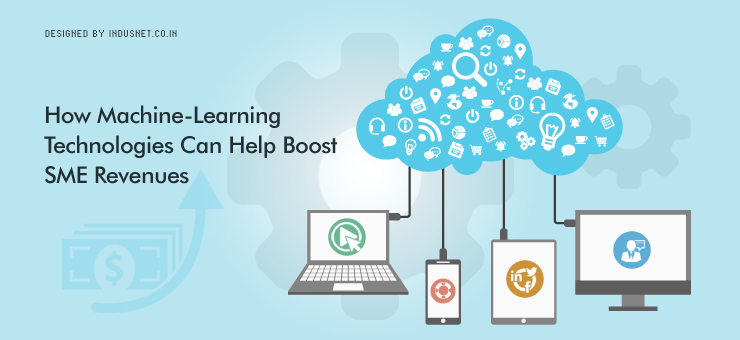
How Machine-Learning Technologies Can Help Boost SME Revenues

How Machine-Learning Technologies Can Help Boost SME Revenues

The term machine learning was first coined in 1959 by Arthur Samuel, as a field of study that gives computers the ability to learn without being explicitly programmed. Machine learning focuses on the development of computer programs that evolve when exposed to new data. This enables computers to screen and sort data through self-learning and prediction techniques. Computers employ artificial intelligence techniques to learn by itself through repetition and experience. With big data in picture, machine learning today has grown into potentially a highly significant field of study.  Businesses can gain tremendously from machine learning solutions. Machine learning solutions require highly skilled engineers who can build and maintain these solutions. However, small scale businesses usually do not have enough resources to construct their own solution; so, enrolling for machine learning as a service on a cloud is the best way forward to experience its multifold advantages and boost revenues. Machine learning solutions are enabled to extract quality data from big data. For a business website, blog or social media page that generates a tremendous amount of data on a daily basis, it is practically impossible to sort data manually.  And if the data is left unprocessed or unutilized, a business can lose out on many opportunities and market sentiment due to its failure to discern the data. The following article will briefly explore how machine learning solution can help SMEs in many ways: Generate valuable content A lot of user-generated content is produced on company websites in the form of feedback, comments, and reviews.  Content produced by users does not guarantee any authenticity.  It can be vulgar, false, abusive, or completely negative.  Machine learning solutions filter out objectionable content without human interference or manual tagging.  The result is that users can view only quality, relevant, and unbiased content. Email service providers having been using this technology for a long time to filter out spam emails, which we often find in the junk folder.  Machine learning solutions enabled mailing software to identify spam and bots on its own based on artificial intelligence.  And the ability to filter spam keeps increasing every day based on experience. Similarly, user-generated content can be filtered by implementing machine-learning solutions for websites, blogs and social media handles of a company. Recognize visual content Content generated on the internet is not limited to text but also images and videos. Usually, users need to manually describe and tag visual content for analysis. However, machine learning services are enabled to automatically annotate images. Such solutions use semantic classifiers to recognize objects based on color, texture, shape and edges. Filter objectionable visual content Businesses can tremendously benefit by automatically filtering objectionable visual content on social media platforms like Facebook, Pinterest, Twitter, Instagram or their blog. This can save a lot of time which otherwise is consumed in manually scanning every image or video uploaded on social media handles. This is important considering the amount of visual content generated every day. Moreover, visual content can be more sensitive or offensive. Identify images relevant to a specific product On the other hand, it empowers businesses to identify images that are relevant to their brand across their network or probably across the web. If any person uploads an image that relates to a specific product and is relevant to a business, machine-learning solutions would be capable of identifying such content. Businesses can measure the impact of their campaigns, product’s fondness among users, and conduct other analysis. This is aptly applicable to online retailers who significantly rely on visual content. Help users find better products Machine learning is suitable for users who search for better products on the web. Google Image Search, Pinterest, TinEye are popular services that use content-based image retrieval system and greatly rely on the machine-learning algorithm to help find users better products, locate the source of image and web pages, find higher resolution versions, get more information about an image. There are many e-commerce services that utilize machine-learning technology to help its customers quickly browse and find a better and highly relevant product depending upon their likings and preferences. It can suggest new products to customers by deploying machine-learning strategies. Provide efficient customer support Machine-learning solutions have found great acceptance among customer service areas. Customers generate different types of queries on company’s website through the contact us forms. For e-retailers, the load of customer queries is even higher. It is extremely difficult to manually go through the content of each query, tag and then re-route the query to a specific department. The cost of handling queries can be hefty for a small business owner. Moreover, this delays customer query resolution and businesses can lose out on customers. On the contrary, if customers are asked to fill complicated forms to generate a query, the possibility is that customers will feel frustrated to do that and will never go ahead. Machine-learning solutions are capable of identifying content in the query form and directing it to the specific department for query resolution. Understand customer behavior It is necessary to understand the market sentiment to drive critical business decisions. For instance, if a business does a test launch and wants to track consumer opinion across the web, it can monitor so by deploying machine learning techniques. Marketers can deploy machine-learning solutions that can specifically track consumer review forum apart from their social media handles like Twitter, Facebook. Social media listening has gained a lot of traction over the last few years. Consumer opinion spreads like fire on social media and some controversial posts can instantly become viral. Keeping a tab on market sentiment will help marketers to understand customer behavior and design better solutions for them. Invest in machine-learning services to grow Machine-learning as a service has remarkable potential in future and is still at a nascent stage. It is clearly understood that machine-learning techniques are an absolute necessity for modern marketers. Higher the capability of an algorithm, the more useful it is to the user and the business. Customers are central to

Read More »
MENU
CONTACT US

Let’s connect!

Loading form…

Almost there!

Download the report

    Privacy Policy.