Tag: healthcare

Top Digital Health Platforms Transforming Patient Care

Top Digital Health Platforms Transforming Patient Care Healthcare is undergoing a profound shift. Driven by technology, data, and rising patient expectations, digital health platforms are redefining how care is delivered, managed, and experienced. For healthcare executives, hospital administrators, HealthTech founders, and investors, understanding which platforms are truly transforming patient care is now a strategic imperative—not a future consideration. From virtual care and remote patient monitoring to AI-powered clinical decision support, today’s digital health platforms are enabling scalable, patient-centered, and value-based healthcare models. This article reviews the best digital health platforms shaping modern healthcare, explains why they matter, and outlines how leaders can evaluate and adopt them effectively. Digital health platforms integrate care delivery, data, and patient engagement into unified ecosystems. The best digital health platforms improve outcomes, reduce costs, and enhance patient-centered care. Healthcare leaders should evaluate platforms based on interoperability, security, scalability, and ROI. Why Digital Health Platforms Matter in Modern Healthcare Digital health platforms sit at the intersection of technology, clinical workflows, and patient experience. Unlike standalone tools, platforms provide end-to-end digital infrastructure that connects patients, providers, payers, and data systems. Core Benefits of Digital Health Platforms Improved care coordination and continuity Enhanced patient engagement and experience Data-driven clinical and operational decisions Scalable telehealth and remote care delivery Support for value-based and population health models According to the World Health Organization, digital health is essential for strengthening health systems and achieving universal health coverage. What Are the Best Digital Health Platforms Today? Below is a curated listicle-style review of top digital health platforms transforming patient care, based on adoption, innovation, and impact. 1. Epic Systems – Integrated EHR & Patient Engagement Platform Category: Enterprise Digital Health Platform Best For: Large health systems and hospitals Epic remains one of the most widely adopted digital health platforms globally, offering an integrated ecosystem that spans clinical documentation, patient portals, analytics, and interoperability. Key Capabilities Unified electronic health records (EHR) MyChart patient engagement platform Interoperability via Epic’s Care Everywhere Advanced analytics and population health tools Why It Matters: Epic enables patient-centered care by giving patients real-time access to their health data while empowering clinicians with comprehensive insights. This integration streamlines workflows, enhances communication, and ultimately leads to better patient outcomes. What makes a digital health platform effective for hospitals? An effective digital health platform integrates clinical workflows, supports interoperability, ensures data security, and enhances patient engagement without adding clinician burden. 2. Teladoc Health – Virtual Care at Scale Category: Telehealth & Virtual Care Platform Best For: Health systems, employers, and payers Teladoc Health is a leader in virtual care, offering one of the most comprehensive telehealth-focused digital health platforms. Key Capabilities On-demand and scheduled virtual visits Chronic care management Mental health and behavioral care Remote patient monitoring integration Why It Matters: Teladoc expands access to care, especially in underserved or rural populations, while reducing unnecessary hospital utilization. According to McKinsey, telehealth adoption has stabilized at levels 38x higher than pre-pandemic benchmarks. 3. Amwell – Enterprise Telehealth & Digital Care Enablement Category: Digital Care Delivery Platform Best For: Hospitals and health plans Amwell provides a flexible, white-labeled digital health platform designed to integrate seamlessly with existing health system infrastructure. Key Capabilities Virtual urgent and specialty care Hospital-at-home enablement Hybrid care model support Deep EHR integration Why It Matters: Amwell supports patient-centered digital health platforms that adapt to organizational workflows rather than forcing change. 4. Salesforce Health Cloud – Data-Driven Patient Engagement Category: CRM-Based Digital Health Platform Best For: Care coordination, life sciences, and payers Salesforce Health Cloud applies CRM principles to healthcare, transforming how organizations manage relationships with patients and members. Key Capabilities Unified patient profiles Care plan management Automated outreach and engagement Integration with clinical and claims data Why It Matters: For executives focused on experience and retention, Salesforce enables personalized, patient-centered care at scale. Are digital health platforms secure and compliant? Yes, leading digital health platforms are designed to meet HIPAA, GDPR, and other regulatory requirements, with advanced encryption and access controls. 5. Cerner (Oracle Health)—Data-Driven Care & Analytics Category: Clinical & Population Health Platform Best For: Data-driven healthcare organizations Now part of Oracle Health, Cerner combines EHR capabilities with robust analytics and population health tools. Key Capabilities Real-time clinical decision support Population health management Predictive analytics Cloud-based scalability Why It Matters: Cerner helps healthcare organizations transition from reactive care to proactive, outcomes-driven models. 6. Philips HealthSuite – Remote Monitoring & Connected Care Category: Connected Care & IoT Platform Best For: Chronic disease management and RPM Philips HealthSuite focuses on connected devices and remote patient monitoring, making it a standout among digital health platforms. Key Capabilities Device integration and IoT connectivity Remote patient monitoring (RPM) AI-powered insights Cloud-based interoperability Why It Matters: HealthSuite supports hospital-at-home and chronic care programs, reducing readmissions and improving patient outcomes. How to Evaluate the Right Digital Health Platform Selecting from the best digital health platforms requires strategic alignment, not just feature comparison. Evaluation Criteria Checklist Interoperability: Does it integrate with existing EHRs and systems? Patient Experience: Is the platform intuitive and accessible? Security & Compliance: HIPAA, SOC 2, and data governance readiness Scalability: Can it grow with your organization? ROI & Outcomes: Measurable clinical and financial impact Looking to assess or implement a digital health platform? 👉 Download our Digital Health Platform Evaluation Framework to guide your decision-making. The Future of Digital Health Platforms The next generation of digital health platforms will be defined by: AI-driven clinical decision support Interoperable health data ecosystems Consumer-grade patient experiences Value-based care enablement Predictive and preventive health models Healthcare leaders who invest early in adaptable, patient-centered digital health platforms will be best positioned to thrive. What trends are shaping digital health platforms in 2025? Key trends include AI integration, remote patient monitoring, interoperability mandates, and increased focus on patient-centered digital experiences. Digital Health Platforms as Strategic Assets Digital health platforms are no longer optional IT tools—they are strategic enablers of modern healthcare transformation. From improving patient outcomes to driving operational efficiency, the right platform can redefine how care is


Read More »
Hands holding a paper cutout of kidneys with text about reducing chronic disease risks.

Reducing Chronic Disease Risks Through Lifestyle

How Healthcare Innovation and Patient-Centered Care Are Transforming Prevention Chronic diseases remain the leading cause of mortality, disability, and healthcare expenditure worldwide. Conditions such as cardiovascular disease, diabetes, obesity, respiratory illness, and cancer account for over 70% of global deaths and nearly 90% of healthcare spending in many developed markets. For healthcare executives, hospital administrators, policymakers, and HealthTech leaders, chronic disease prevention is no longer a public health aspiration—it is a strategic imperative. As healthcare systems transition toward value-based care, population health management, and digital health innovation, lifestyle-focused chronic disease prevention has emerged as one of the highest-impact levers for improving outcomes while controlling long-term costs. This article answers a fundamental question driving executive and policy conversations today: How can chronic diseases be prevented through lifestyle interventions at scale? Chronic disease prevention is most effective when lifestyle interventions are embedded into care delivery models Evidence-based lifestyle changes can reduce chronic disease risk by up to 80% Digital health, remote monitoring, and patient engagement tools are accelerating prevention outcomes Healthcare leaders who invest in lifestyle-driven prevention see measurable ROI, improved outcomes, and lower utilization How Can Chronic Diseases Be Prevented? Chronic diseases can be prevented—or significantly delayed—by addressing modifiable lifestyle risk factors early and consistently. According to global health data, more than 60% of chronic disease risk is directly linked to daily behaviors. Core Lifestyle Factors That Drive Chronic Disease Prevention Poor nutrition Physical inactivity Tobacco and alcohol use Chronic stress and sleep disruption Environmental and social determinants of health When healthcare organizations proactively address these factors, they shift from reactive treatment to preventive, patient-centered care. The Growing Burden of Chronic Disease on Healthcare Systems From an operational and financial perspective, chronic diseases are the single greatest strain on healthcare infrastructure. Impact on Healthcare Organizations Increased inpatient admissions Higher readmission rates Long-term medication dependency Escalating payer costs Reduced workforce productivity According to the Centers for Disease Control and Prevention (CDC), six in ten adults live with at least one chronic disease, and four in ten have two or more. This reality underscores why chronic disease prevention is no longer optional—it is foundational to sustainable healthcare delivery. Lifestyle Interventions: The Foundation of Chronic Disease Prevention 1. Nutrition as Preventive Medicine Dietary patterns are one of the most powerful predictors of chronic disease risk. Evidence-based nutrition strategies include: Increasing whole foods, fruits, and vegetables Reducing ultra-processed foods and added sugars Managing sodium intake to reduce cardiovascular risk Promoting culturally relevant dietary guidance Healthcare systems integrating nutrition counseling and digital food tracking tools report significant improvements in metabolic health markers. Can diet alone prevent chronic diseases? While diet alone cannot eliminate all risk, it dramatically reduces the likelihood of developing conditions such as type 2 diabetes, hypertension, and heart disease. 2. Physical Activity and Movement-Based Care Models Physical inactivity is now recognized as a global health crisis. Effective chronic disease prevention strategies include: Prescribed exercise programs Remote activity monitoring via wearables Community-based movement initiatives Physical therapy-led preventive care Health systems leveraging wearable technology and AI-driven insights are identifying risk patterns earlier and intervening proactively. 3. Behavioral Health, Stress, and Sleep Optimization Mental health is inseparable from physical health in chronic disease prevention. Lifestyle-driven prevention models now address: Chronic stress management Sleep quality improvement Burnout prevention Mindfulness-based interventions Integrated behavioral health programs reduce chronic inflammation, improve adherence, and lower long-term utilization. How does stress contribute to chronic disease risk? Chronic stress elevates cortisol levels, disrupts sleep, and increases inflammation—key contributors to cardiovascular disease, diabetes, and autoimmune disorders. Technology’s Role in Scaling Chronic Disease Prevention Healthcare innovation is transforming lifestyle intervention from manual and episodic to continuous and data-driven. Digital Health Tools Supporting Prevention Remote patient monitoring (RPM) AI-powered risk stratification Personalized health nudges Mobile health (mHealth) apps Predictive analytics for early intervention HealthTech founders and investors increasingly recognize prevention platforms as high-growth opportunities aligned with payer incentives. Case Example: Lifestyle-Driven Prevention at Scale A large integrated health system implemented a lifestyle-focused chronic disease prevention program using: Wearables for activity tracking Nutrition coaching via telehealth AI risk scoring for early intervention Results after 18 months: 32% reduction in prediabetes progression 21% decrease in avoidable hospitalizations Improved patient engagement scores Measurable ROI within 12 months This case illustrates how patient-centered care models drive both clinical and financial outcomes. Are you exploring scalable chronic disease prevention strategies? 👉 Speak with our healthcare strategy experts to design lifestyle-driven prevention programs aligned with value-based care. Policy, Leadership, and Investment Implications For policy makers and healthcare executives, chronic disease prevention through lifestyle requires: Reimbursement models that reward prevention Cross-sector collaboration (healthcare, employers, communities) Investment in digital infrastructure Data interoperability across care settings The World Health Organization (WHO) emphasizes lifestyle modification as the most cost-effective approach to reducing chronic disease burden globally . Integrating Lifestyle Prevention Into Patient-Centered Care Patient-centered care means meeting individuals where they are—culturally, socially, and digitally. Best Practices for Implementation Personalized care pathways Shared decision-making Longitudinal patient engagement Health literacy initiatives Measuring Success in Chronic Disease Prevention Programs Healthcare leaders should track: Reduction in disease incidence Patient adherence rates Cost savings and utilization trends Quality-of-life outcomes Data-driven measurement ensures prevention strategies remain aligned with organizational goals. The Future of Chronic Disease Prevention The next decade will see prevention evolve through: AI-powered lifestyle personalization Precision nutrition Continuous biometric monitoring Preventive genomics Organizations investing now will lead the transition from sick care to true healthcare. Ready to reduce chronic disease risk across your population? Partner with us to design lifestyle-driven, technology-enabled prevention strategies that improve outcomes and deliver measurable ROI. Frequently Asked Questions How can chronic diseases be prevented? Chronic diseases can be prevented through lifestyle interventions such as healthy nutrition, regular physical activity, stress management, sleep optimization, and reduced tobacco and lifestyle risk behaviors. What are the most common preventable chronic diseases? Heart disease, type 2 diabetes, obesity, hypertension, and certain cancers are among the most preventable chronic conditions. Why is lifestyle important in chronic disease prevention? Lifestyle behaviors directly influence inflammation, metabolism, cardiovascular health, and immune function—key

Read More »
Gene therapy transforming healthcare with digital medical icons and touch interface.

Gene Therapy: How It’s Transforming Healthcare

Gene Therapy: How It’s Transforming Healthcare Life Sciences: Driving Innovation in Healthcare, Biotech, and Beyond Gene therapy has shifted from a bold scientific idea to an actionable, rapidly scaling pillar of healthcare innovation. For CTOs, R&D directors, heads of innovation, and biotech founders navigating the future of life sciences, understanding what gene therapy is—and how it works—is now strategically essential. Whether you’re evaluating partnerships, designing a pipeline, or exploring new platforms, gene therapy represents one of the most powerful levers for innovation across biotech, pharmaceuticals, and regenerative medicine. Gene therapy modifies or replaces genes to treat or cure diseases at the molecular source. Techniques include viral vectors, CRISPR gene editing, and non-viral delivery systems. It is accelerating healthcare innovation across oncology, rare diseases, and personalized medicine. Adoption barriers remain: manufacturing scale, regulatory compliance, and real-world evidence needs. What Is Gene Therapy? Understanding the Fundamentals Gene therapy is a therapeutic approach that involves modifying genetic material within a patient’s cells to treat or prevent disease. Instead of treating symptoms, gene therapy addresses the root cause—the underlying dysfunctional or missing gene. Core mechanisms include: Gene addition: Inserting a new, functional gene. Gene editing: Modifying existing DNA using tools like CRISPR. Gene silencing: Turning off harmful gene expression (e.g., via RNA interference). Gene replacement: Substituting a faulty gene with a healthy version. This makes gene therapy one of the most disruptive areas of life sciences and biotech innovation today. Is gene therapy considered a permanent cure? In many cases, yes, gene therapy offers long-lasting or potentially curative effects, depending on cell type, vector design, and whether the therapy integrates into the genome. How Does Gene Therapy Work? A Breakdown for Life Sciences Leaders To deliver genetic material into cells, gene therapy uses carefully engineered delivery systems called vectors. Types of Vectors Used in Gene Therapy 1. Viral Vectors Viruses naturally transport genetic material—making them ideal for therapeutic delivery. Common examples include: AAV (Adeno-Associated Virus): Preferred for its safety and low immunogenicity. Lentivirus: Effective for stable, long-term gene expression. Adenovirus: High payload capacity for larger genes. 2. Non-Viral Delivery Systems A rapidly growing part of healthcare innovation, driven by improved safety and scalability: Lipid nanoparticles (LNPs) Electroporation Polymer-based systems Nanocarriers Why it matters: Non-viral delivery is emerging as a key strategic solution to cost, scalability, and regulatory challenges. What diseases can gene therapy treat today? FDA-approved gene therapies address conditions including spinal muscular atrophy (SMA), inherited retinal diseases, B-cell cancers (via CAR-T), and beta-thalassemia, with hundreds more in development. Gene Therapy Use Cases Driving Healthcare Innovation 1. Rare Genetic Disorders Monogenic diseases—caused by a single gene mutation—are the fastest-growing segment of the gene therapy pipeline. 2. Oncology and Cell Therapy CAR-T therapies represent one of the most successful deployments of gene modification.Results include remission rates above 80% in certain relapsed leukemias and lymphomas. 3. Regenerative and Personalized Medicine Gene-edited stem cells, autologous therapies, and personalized vectors are ushering in a new era of precision treatment. 4. Infectious Disease Applications Gene therapy platforms are now being explored for HIV, hepatitis, and vaccine delivery (e.g., AAV-based vaccine vectors). Looking to explore how gene therapy platforms can accelerate your R&D or innovation strategy? ➡️ Book a strategy session with our Life Sciences Innovation Team. Why Gene Therapy Matters for CTOs, R&D Directors, and Biotech Innovators 1. Pipeline Acceleration & Platform Engineering The shift toward modular vector platforms allows teams to reuse components across therapeutic indications—reducing R&D time and improving regulatory predictability. 2. Manufacturing and Operational Scale Manufacturing is the most significant cost driver in commercial gene therapy. CTOs increasingly evaluate: AAV vector yields Stable producer cell lines Continuous manufacturing Quality by design (QbD) systems 3. Competitive Differentiation in Biotech Companies leveraging gene therapy platforms create durable competitive moats due to: Intellectual property (vectors, payloads, delivery platforms) Stronger clinical differentiation High barriers to entry for competitors Gene therapy isn’t simply a science—it’s a long-term healthcare innovation strategy. Is gene therapy safe? Modern gene therapy is considered safe when manufactured and administered according to regulatory guidelines. AAV vectors and CRISPR-based therapies undergo extensive safety profiling, including off-target analysis and long-term follow-up. Challenges Slowing Down Gene Therapy Adoption Even with its transformative potential, gene therapy adoption is hindered by structural challenges that biotech leaders must navigate. 1. High Cost of Manufacturing Vector production is complex and expensive. Non-viral approaches may ease this burden, but they require more study. 2. Regulatory Uncertainty Regulators continue to refine guidelines around long-term safety monitoring, genotoxicity, and gene-editing risks. 3. Scalability and Supply Chain Limitations Cold-chain logistics, vector production, and QC processes remain bottlenecks for global deployment. 4. Reimbursement Models Given the curative potential and high upfront cost, payers are exploring outcomes-based payment models. The Future of Gene Therapy: What Life Sciences Leaders Should Prepare For 1. CRISPR-Based Precision Editing More efficient, precise, and targeted edits will transform treatment for polygenic diseases. 2. In Vivo Gene Editing Moving from ex vivo to in vivo editing will reduce time and cost while expanding patient eligibility. 3. AI and Computational Design AI-engineered vectors and predictive modeling are improving safety, efficiency, and delivery specificity. 4. Next-Generation Delivery Technologies LNPs, capsid-engineered AAVs, and programmable nanoparticles will drive future healthcare innovation. Frequently Asked Questions Q1. What is gene therapy, and how does it work? Gene therapy modifies or replaces defective genes using viral or non-viral vectors. It treats the root cause of disease rather than symptoms. Q2. What diseases can gene therapy cure? Gene therapy treats a variety of conditions, including rare genetic disorders, certain cancers (via CAR-T), and inherited retinal diseases. Q3. Is gene therapy safe for long-term use? Yes—major regulatory bodies require extensive safety testing and long-term follow-up, making gene therapy safer and more predictable than early generations. Q4. How is gene therapy different from gene editing? Gene therapy introduces or replaces genes, while gene editing modifies existing DNA using tools like CRISPR. Q5. What’s next for gene therapy in healthcare innovation? Expect advancements in AI-designed vectors, in vivo editing, scalable manufacturing, and more personalized therapies. Want

Read More »
Doctor holding a piggy bank, representing preventive healthcare strategies for a healthier life.

Preventive Healthcare Strategies for a Healthier Life

Preventive healthcare helps individuals avoid disease before it occurs through lifestyle optimization, screenings, and early interventions. Technology—AI, wearables, predictive analytics—is accelerating early detection. Healthcare executives can reduce system-wide costs by investing in scalable preventive healthcare programs. Patient-centered wellness strategies drive long-term health outcomes and community well-being. Why Preventive Healthcare Is Now a Strategic Priority Preventive healthcare is no longer a “nice-to-have”—it is a strategic pillar for health systems, insurers, and digital health innovators aiming to reduce long-term costs and improve patient outcomes. As chronic diseases continue to rise globally, leaders across the healthcare ecosystem are shifting toward value-based care, population health management, and proactive wellness strategies that address risk before it becomes disease. For healthcare executives, preventive healthcare offers a pathway to operational efficiency, better patient engagement, and long-term sustainability. For hospital administrators and healthtech founders, it’s an essential area for innovation—from predictive analytics to AI-powered screening tools. What Are Preventive Healthcare Measures? Preventive healthcare measures include interventions designed to prevent illness, detect health risks early, and promote long-term wellness. These measures span multiple categories: Primary prevention: Vaccinations, lifestyle coaching, nutrition and physical activity programs Secondary prevention: Screenings, diagnostic tests, AI-enabled early detection Tertiary prevention: Disease management programs, rehabilitation, chronic care optimization Preventive healthcare and preventive healthcare strategies are reshaping how health systems operate, emphasizing risk reduction, cost savings, and patient-centered wellness strategies. What is the main goal of preventive healthcare? To reduce the likelihood, severity, and long-term impact of disease by intervening early through screenings, healthy behavior adoption, and technology-enabled monitoring. Key Preventive Healthcare Strategies for a Healthier Life Below are the most impactful, evidence-backed preventive healthcare strategies that healthcare leaders can implement across systems and populations. 1. Lifestyle & Wellness Strategies Lifestyle modifications remain the structural backbone of preventive healthcare. Organizations implementing wellness strategies see substantial improvements in population health indicators. Core lifestyle interventions include: Physical activity programs Personalized nutrition planning Smoking cessation support Stress and sleep management Health literacy and coaching programs Healthcare executives and policymakers are prioritizing behavioral and environmental health models proven to reduce long-term disease burden by up to 70%. Preventive healthcare enables individuals and communities to proactively build resilience before conditions develop. What are examples of preventive healthcare programs? Corporate wellness programs, vaccination campaigns, routine screenings, health coaching, telehealth monitoring, workplace ergonomics assessments, and chronic disease prevention initiatives. 2. Preventive Screenings & Diagnostics Routine screenings are the most measurable and impactful components of preventive healthcare. When paired with AI-based diagnostic models, early detection becomes significantly more accurate and cost-effective. Essential preventive screenings include: Blood pressure and lipid tests Cancer screenings (breast, colorectal, cervical, prostate) Diabetes and metabolic disorder tests Mental health assessments Genetic screenings for high-risk populations Healthcare executives are increasingly investing in digitally enabled screening pathways that integrate EHR data, risk prediction algorithms, and automated patient reminders. 3. Technology-Driven Preventive Healthcare Innovations Digital health technologies are making preventive healthcare more accessible, scalable, and personalized. Many health systems now rely on technology to manage population health at scale. Key innovations include: AI and predictive analytics for identifying at-risk patients Wearables and IoT devices for continuous monitoring Telehealth and remote patient monitoring platforms Digital therapeutics (DTx) for behavioral interventions Mobile health apps for wellness strategies and medication adherence How does technology improve preventive healthcare? Technology enhances early detection, improves monitoring, reduces administrative burden, and enables personalized wellness strategies tailored to patient risk profiles. Benefits of Investing in Preventive Healthcare Preventive healthcare delivers significant value at the individual, organizational, and societal levels. Key Benefits Reduced healthcare costs from fewer hospital admissions and complications Improved population health through early interventions Higher patient satisfaction due to proactive, personalized care Enhanced workforce productivity in employer health programs Better resource allocation across health systems Preventive healthcare strategies support long-term economic sustainability while enhancing patient-centered care—making them essential for forward-thinking healthcare leaders. Ready to build scalable preventive healthcare programs? Explore our Population Health Innovation Hub How Healthcare Leaders Can Implement Preventive Healthcare at Scale Preventive healthcare adoption requires both clinical and operational redesign. Executive leadership plays a critical role in enabling transformation. 1. Build Integrated Preventive Care Pathways These pathways align lifestyle programs, screenings, digital tools, and care teams into a unified preventive care experience. Best practices: Map patient journeys from risk identification to follow-up Integrate EHR and analytics tools for risk scoring Use automated reminders and telehealth follow-ups Track KPI improvements: engagement, screenings completed, readmission rates 2. Strengthen Patient Engagement & Education Patient education drives preventive healthcare adoption. Effective engagement strategies include: Personalized health content Mobile push notifications and reminders Community health workshops AI-based virtual assistants for FAQs Cultural and linguistic tailoring of materials These wellness strategies support higher adherence and better long-term outcomes. What is the difference between preventive care and wellness? Preventive care refers to screenings, tests, and clinical interventions, while wellness emphasizes lifestyle habits, behavior change, and ongoing health optimization. Preventive Healthcare Is the Future of Patient-Centered Care Preventive healthcare is fundamentally transforming the healthcare industry. Through technology, data analytics, and proactive wellness strategies, health systems can reduce disease burden, improve outcomes, and deliver patient-centered care at scale. Healthcare executives, policymakers, and innovators who prioritize preventive healthcare today will build more sustainable, resilient, and effective care ecosystems for tomorrow. Want to implement preventive healthcare solutions that drive measurable ROI? Connect with our Healthcare Innovation Advisory Team Frequently Asked Questions Q1: What are the key components of preventive healthcare? Preventive healthcare includes lifestyle wellness strategies, routine screenings, early diagnostics, vaccinations, and technology-enabled monitoring. Q2: Why is preventive healthcare important for hospitals and executives? It reduces long-term costs, improves care quality, enhances population health, and supports value-based care models. Q3: What role does technology play in preventive healthcare? AI, wearables, telehealth, and predictive analytics enable early detection, continuous monitoring, and personalized wellness strategies. Q4: How can organizations increase preventive healthcare engagement? Through patient education, digital platforms, automated reminders, virtual care, and culturally relevant communication strategies. Q5: What preventive healthcare measures should adults prioritize? Routine screenings, vaccinations, blood pressure checks, mental health assessments, and lifestyle interventions such as

Read More »
wear your health

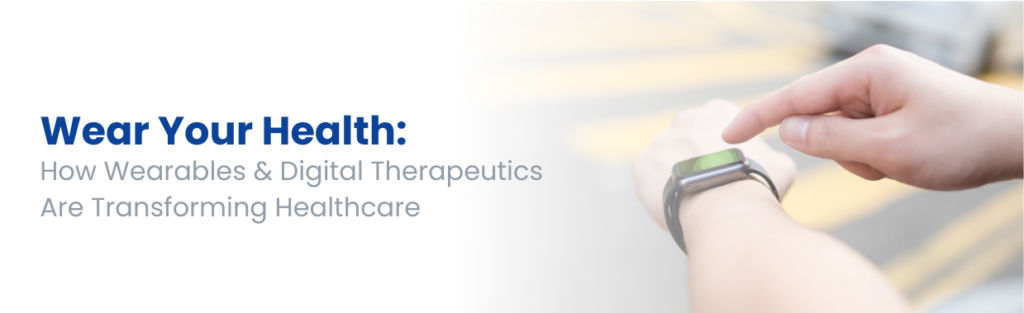
Wear Your Health: How Wearables & Digital Therapeutics Are Transforming Healthcare

With a growing shift towards personalised healthcare, technological adoption has simultaneously grown by leaps and bounds. This technology-driven framework has extended not just towards mainstream healthcare, but also the pharma biotech sector. Have you heard of therapeutics? It refers to how a medical treatment/therapy is administered. The digital revolution has enabled the advent of devices that can easily track physical aspects, such as wearables, while therapeutic products are now being increasingly developed to leverage the same. The initial DTX (digital therapeutics) instances worldwide are already contributing towards better outcomes for patients. Of course, the FDA (Food and Drug Administration) had already issued its approval for 35 DTX-based applications last year and the number may go up exponentially in the near future. Remember pedometers (if you were born in the 1960s or 1970s or simply have parents or others who have used these devices)? These humble devices were the first of many steps towards tracking physical fitness and health. Electronic trackers made it to the market sometime late in the 2000s and early 2010s. The initial brief was measuring steps, followed by blood oxygenation and heart rates and eventually sleep quality, stress levels, hydration and what not. Wearables started absorbing many of these functions of trackers, including smart watches and now smart rings. The data gathered by these devices can now be easily monitored and viewed on dedicated apps that run on computers, tablets, smartphones and other devices. How Therapeutics Are Stacking Up There is a compelling proposition offered by therapeutics and wearables in terms of bringing about a complete transformation of the healthcare industry worldwide. They have made it possible for the sector to track the health statuses of patients, diagnose problems, take preventive action, enhance epidemiology, manage operations, and of course, ensure that treatment or rehabilitation procedures are followed. Some of the top choices in this context include the following: Some other categories of therapeutic devices include insulin pumps and rehabilitation devices along with pain relief and respiratory therapy devices. Activity trackers can also help measure properties in relation to particular diseases or ailments as well. They usually sync the data that they gather with applications and then dispatch the same to cloud platforms for further evaluation and analysis. The Road Ahead The global market for therapeutics may have touched $4.5 billion in 2022 in terms of revenues, as per forecasts by Markets and Markets. It has also predicted growth in revenues by 2027 to a whopping $17.7 billion. There will be growing emphasis on lowering the costs of healthcare and this will propel the segment towards greater heights, particularly when it comes to better outcomes and care delivery, higher efficiency, and reduced costs. Digital therapeutics will benefit patients across the board, saving them time and enabling access to continual tracking, guidance and education. They can flexibly access treatment/therapy along with anywhere-anytime support while not having to go through physical appointments and scheduling issues. While saving time and money, DTXs will transform healthcare in underserved and un-served regions and communities considerably. Patients will have total empowerment in terms of monitoring and managing their health. They can also set objectives for progress based on feedback in real-time and also take better decisions regarding their treatments. It will greatly enhance patient satisfaction levels, especially for those managing chronic ailments or conditions. Recommendations and higher involvement are the two key aspects worth noting here. Patients benefit from support networks and forums in many cases, while the burden on the healthcare system will also go down significantly. Wearables integrate themselves easily into this context, enabling all-round advantages throughout the spectrum, as mentioned above. Caregivers will also benefit from better decision-making and access to vital data and real-time monitoring. It will help them automate routine and repetitive tasks including reminders for medication and tracking vital signs. How this will expand is clear from the Deloitte Global Survey which states how 80%+ individuals now have an interest in these devices and technologies. Statista has also projected the ear-worn wearable market alone to grow to $44.16 billion and more by 2023 itself. Wearable technology will ultimately enable personalised healthcare since they will gather data in huge amounts on sleep patterns, activity, vital indicators, and more. It will help in the creation of customised treatment strategies while helping manage chronic diseases with regular monitoring and early identification of symptoms. Remote monitoring will be easy for healthcare professionals, while predictive analytics and machine learning can help identify potential medical problems prior to them getting out of hand. Wearables will also recommend steps and offer guidance on following healthy habits or behaviours that will eventually help with disease prevention. FAQs Can wearables and digital therapeutics support personalised lifestyle interventions, beyond medication management? Digital therapeutics and wearables can be used to support personalised lifestyle interventions. These go beyond medication management, including recommendations on healthy habits and behavioural changes through proper motivation and data-based outcomes. Can wearables and digital therapeutics be used to create personalised treatment plans for rare diseases? For those suffering from rare ailments, digital therapeutics and wearables may be useful in enabling the creation of more personalised plans for treatment. This will be based on real-time tracking and analysis of health indicators and other data. How do pharmaceutical companies ensure the compatibility of their medications with digital therapeutics and wearable technologies? Pharmaceutical companies can ensure that their medication is compliant with wearable technologies and digital therapeutics through proper data integration and management. They can make sure that recommendations and reminders pertain to specific medication for particular use cases and treatment plans, while also gathering patient data to evaluate the efficacy of their products. Are there examples of specific digital therapeutics designed for personalised mental health care? There are a few examples in this segment worldwide, including EndeavorRX to help kids who have ADHD and Freespira for those with panic and anxiety-related disorders. Several other applications are being created to enable the personalisation of mental health treatments and care strategies. What does the future hold for DTX and wearables

Read More »
Data Analytics in Health Insurance for Better Risk Management

2024 Trends: Data Analytics in Health Insurance for Better Risk Management

The health insurance industry has witnessed a rapid evolution in terms of digitisation, which has also swiftly transformed several other sectors worldwide. One of the biggest contemporary trends in health insurance (and poised to last for the foreseeable future) is the harnessing of data analytics to ensure superlative risk management among other benefits. Pharmacy managers, insurance companies, healthcare providers, and other industry stakeholders are already leveraging analytics to tackle issues of fast-growing healthcare costs. Insurance companies are already using them to identify high-risk patients and operate accordingly. Why Data Analytics is Indispensable From an operational standpoint, data analytics is indispensable for health insurance companies. They keep generating huge data volumes internally through sales and engagement but also get sizable chunks from varied external sources. When this data spreads out through multiple systems, it becomes an uphill task for insurers to effectively use and track the same. This is why analytics-based solutions that can fuse and consolidate data from multiple touch points and sources have gained relevance in recent times. A centralised data gathering system with consistent analytics and actionable insights is thus one of the key trends in health insurance currently. How Data Analytics Enables Better Risk Management Data analytics is undoubtedly contributing towards enabling insurers to manage their risks better. Here are some aspects that should be highlighted in this regard. These benefits have gained even more traction in recent years if one considers how insurers lose a whopping $40 billion per annum on account of fraudulent claims as per Gartner reports. Many insurance companies also estimate 10-20% of claims to be fraudulent while identifying less than 20% of the same. Suspicious and fraudulent behaviour and patterns can be identified with data analytics, with insurers creating diverse models to enable swift detection based on historical data and activities. For instance, analytics has reportedly helped the Czech Republic’s Allianz Insurance to save a whopping US$4.5 million annually by lowering fraudulent claims paid by it. This is just one of the instances that testify to the need for insurance companies to rapidly adopt data analytics into their operational frameworks. Analytics can be used to conduct risk evaluation in real-time which will help organisations respond swiftly in volatile scenarios. For example, in the case of auto insurance, an accurate assessment of risks posed by specific drivers will help insurers create more competitive premiums. Cars connected to the internet will help them gather large volumes of data accordingly. Insurance firms can now predict the chances of drivers being involved in accidents by analysing driving habits and behavioural data. Some other advantages of data analytics include easier customer lifetime value (CLV) prediction and prospective claim forecasting. FAQs How can data analytics contribute to more precise risk assessment in the health insurance industry? Data analytics can enable more accurate risk assessments in the health insurance sector. It can help identify fraudulent behavioural patterns and flag the same for review before the actual payout. What impact do 2024 trends in health insurance data analytics have on customer experiences and personalised offerings? 2024 trends in health insurance data analytics will have a positive impact on customer experiences. Insurers will be able to personalise their offerings for customers based on their behavioural data and also offer custom premiums with incentives for recommended and healthier actions.

Read More »
Life Sciences & Healthcare News Wrap

Healthcare & Life Sciences News Wrap | Weekly Snippet | December

✅Fem-tech, AI in Mental Health on Investor Radar Next Year The fem-tech sector focuses on meeting women’s healthcare needs and is projected to reach $60 billion in the next four years. And, artificial intelligence is being integrated into digital mental health services to address the shortage of mental health professionals. https://www.financialexpress.com/business/industry-fem-tech-ai-in-mental-health-on-investor-radar-next-year-3318500/ ✅Rising Chronic Disease Rates Boost Global Digital Health Market The market size of digital health is expected to reach USD 651,924 Million. It can be seen to grow at a CAGR of 17.92% by 2030. https://finance.yahoo.com/news/digital-health-market-size-expected-174000895.html ✅Automation, Burnout Drive Healthcare Tech Integrations Healthcare facing disruption with virtual visits, demand for rapid access to patient data, and the rise of AI. Managing this data influx requires extensive collaboration, often involving external entities like labs and physicians, handling a multifaceted challenge for the industry. https://www.businesswireindia.com/healthcare-leaders-cite-automation-worker-burnout-as-top-drivers-of-technology-integrations-mgma-and-laserfiche-study-finds-87662.html ✅Pharma’s path to Net Zero: Targeting Scope 3 emissions With a target of net zero for 2050, pharmaceutical companies need to tackle Scope 3 emissions that generate the majority of their carbon footprint. Scope 3 emissions encompass raw material production, distribution, product use, and end-of-life disposal, making them a complex part of the industry’s carbon footprint. https://www.pharmaceutical-technology.com/features/pharmas-path-to-net-zero-targeting-scope-3-emissions/?cf-view #DigitalSuccess #newswrap #lifescience

Read More »
Protecting Patient Data in the Digital Age

Protecting Patient Data in the Digital Age

Patient data protection is the need of the hour for the healthcare industry, particularly when it comes to a more digital way of doing things. In fact, data privacy in healthcare is even more important, considering the growing costs of cyber-attacks in the sector. As per IBM’s Cost of a Data Breach 2022 report, $10.1 million is the average cost of a data breach in healthcare. This indicates 10% growth as compared to 2021 and a whopping 42% increase in comparison to 2020. The financial effect of data breaches covers costs related to responding to incidents, legal charges, remediation, and regulatory fines, if applicable.  At the same time, the sheer cost of a data breach goes well beyond regular financial implications for healthcare players. Digital age patient data protection is a must and if information is compromised, then it leads to lower confidence in the system and loss of business as patients go to other competitors. The long-term impact of data breaches can be immensely negative for healthcare players. In the current landscape, where protecting medical data goes hand in hand with digital innovation, there is a pressing need to ensure best practices at all operational levels.  Steps for Patient Data Protection  When it comes to ensuring healthcare data security, healthcare players should first evaluate the possible risks and then take measures to safeguard valuable data accordingly. The healthcare industry has become a major target for cyber-criminals owing to the sensitive nature of the data that it holds. Outdated systems and multiple entry points further scale up the risk levels in this case. A major attack point is through web applications with a view towards compromising patient data. These are applications and tools that healthcare professionals depend on these days. Cyber-criminals are always on the lookout for gaining unauthorised entry into patient data platforms.  Hackers have also come up with novel methods such as BOLA (broken object-level authorisation). This equates to the manipulation of the rules of the system along with ensuring unauthorised access to restricted information. They can thus go through confidential data and even erase the private records of patients. There is also the Internet of Medical Things (IoMT), which is a network of multiple devices transmitting data in real time for better patient care. While it offers innumerable advantages, the vast amount of sensitive information available makes it an easy target for cyber-criminals as well. Here are some steps that the industry can consider for protecting medical data.  Some Other Patient Data Protection Strategies  As can be seen, regular risk assessments should be conducted while implementing a defensive strategy that has multiple layers. Healthcare institutions should also be informed about emerging cyber-security threats and other vulnerabilities along with engaging experts to augment internal resources along with providing extensive management and tracking. Through the adoption of best practices in this space, healthcare players can minimise the risks of data breaches to a large extent.  FAQs What are the most pressing security challenges in protecting patient data in today’s digital healthcare landscape? Some of the biggest security challenges in safeguarding patient data include continual vulnerabilities related to unauthorised access, hacking threats, system compromises, multiple entry points, and the lack of proper awareness and education among employees.  How can healthcare organisations ensure compliance with data protection regulations while managing and storing patient information? Healthcare organisations can ensure adherence to data protection regulations while storing and managing patient information. They can do this by complying with requisite information handling and data privacy guidelines issued by the authorities in their respective regions, while also having proper data security protocols and audits in place.  What cyber-security measures and best practices should be adopted to safeguard patient data from cyber threats? Some of the best cyber-security measures and best practices for protecting patient data include vendor security measures, encryption, data minimisation, regular tracking and audits, access control, de-identification, and more.  What role do emerging technologies like blockchain and encryption play in enhancing the security of patient data in the digital age? Emerging technologies like encryption help make medical data unreadable to unauthorised individuals. At the same time, blockchain also enhances data security through smart contracts and inherent principles of cryptography, consensus, and decentralisation. It offers greater control over sensitive data and is near-impossible to tamper with. 

Read More »
Healthcare & Life Sciences Sector Drives Rapid Growth in the 3D Mapping and Modeling Market

Healthcare & Life Sciences Sector Drives Rapid Growth in the 3D Mapping and Modeling Market

The 3D mapping and modelling market has taken off in rapid fashion, particularly when it comes to healthcare & life sciences. There are several trends that have been observed in the 3D modelling and mapping segment, including machine learning and artificial intelligence integration for better accuracy of modelling and automation alike. Real-time collaboration is also coming to the forefront along with the integration of virtual reality (VR) and augmented reality (AR). This enables more immersive experiences while there is a higher demand for advanced solutions and simulations in healthcare for better decision-making.  Spatial mapping and geographic information systems (GIS) are also used for varied use cases in the industry. Segmentation in the industry is majorly focused on 3D modelling, 3D rendering, motion graphics, and visual effects (VFX). Along with healthcare & life sciences, other application-based segmentation includes construction and architecture, media and entertainment, manufacturing, academia and education, and more. Let us take a closer look at the key growth trends in the 3D mapping and modelling market.  Major Growth Findings  Here are some key aspects related to 3D mapping and modelling market growth trends that should be noted.  Here are some other aspects that are worth noting in this regard.  Some Other Insights With regard to 3D mapping and modelling, leading companies in the space include Airbus, Adobe, Apple, Civil Maps, Autodesk, Bentley Systems, Dynamic Map Platform, Dassault Systemes, Archilogic, Ansys, CyberCity3D, Google, Golden Software, Hivemapper, Mapbox, Intermap Technologies, Saab, Pointivo, Onionlab, PTC, and many others.  Some additional insights include the following:  As can be seen, the healthcare & life sciences market should witness skyrocketing growth over the next decade, majorly driven by 3D mapping and modelling along with the integration of technologies like AR, VR, and GIS along with spatial mapping.  FAQs Spatial data analysis can boost understanding of various medical conditions and biological systems. It helps in better detection of disease clusters and the underlying variables that may lead to certain medical conditions across these clusters. An early example is the study of the cholera outbreak in London in 1854 by John Snow. This indicated how cholera cases could be traced back to water usage from a particular pump in the city. Spatial data analysis helps in designing preventive healthcare measures while planning interventions at the same time.  There are several advantages of combining VR and AR in medical applications with 3D mapping and modelling. AR-based 3D simulation will help patients get a better understanding of their medical/health conditions. This will also help in interacting with various objects on a real-time basis, with mapping between real-world objects and the virtual world. The superposition of 3D models onto head-mounted displays is possible, along with immersive experiences and information exchange in addition to better decision-making.  3. What are some real-world examples of successful implementations of 3D mapping and modelling in healthcare and life sciences research? There are numerous real-world examples of 3D mapping and modelling being successfully implemented in the healthcare and life sciences research category. 3D projections of the human body may be used for disseminating medical knowledge. It has already been done by the likes of Oulu University, enabling students to interact with human body visualization, learning better about muscle and bone structures and other parts of the body. 3D modelling is already being deployed for surgeries, enabling surgeons to plan their surgeries more effectively in comparison to paper planning or conventional 2D. It is improving surgery success rates, patient outcomes, and saving time along with lowering the rates of readmission.

Read More »
Natural Language Processing (NLP) in Healthcare and Life Sciences Market 2023-2030

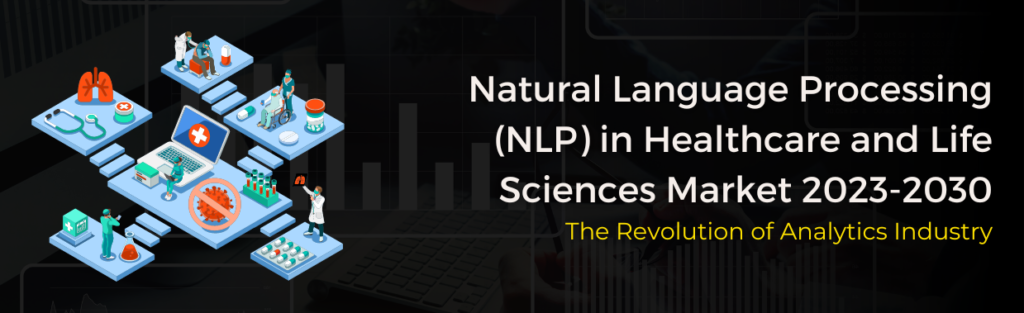
Natural Language Processing (NLP) in Healthcare and Life Sciences Market 2023-2030 | The Revolution of Analytics Industry

Natural language processing (NLP) is widely hailed as a future game-changer that will revolutionize various industries, including healthcare and life sciences. There are diverse NLP applications in the space which may foster an industry revolution in the future years. According to research reports, the NLP segment in the healthcare and life sciences category saw sizable revenue growth in 2022 with future forecasts of an increase by 2030. Here are some fascinating trends that industry watchers should keep an eye on.  Biggest NLP Providers in Healthcare and Life Sciences Some of the largest natural language processing (NLP) providers in this category globally include:  Key Trends in Natural Language Processing (NLP) for the Healthcare and Life Sciences Industry Here are some key facets that point towards an industry revolution driven by NLP applications in the healthcare and life sciences sectors.  Following current trends, NLP is poised to witness widespread adoption throughout the healthcare and life sciences industry. Healthy market size growth forecasts for the sector are based on extensive R&D and innovations done by leading players across major global regions. The suite of applications will only increase over the years, with better data extraction and comprehension for enhancing the overall efficiency of the healthcare and life sciences sectors.  FAQs The NLP market is poised to touch a handsome USD $ 9.54 billion by 2030, which indicates a CAGR of 19.1% from the 2022 market size of USD $ 2.35 billion.  Natural language processing (NLP) in healthcare and life sciences offers technology-driven abilities with regard to identifying contexts for the usage of words. This enables a more accurate understanding and interpretation of conversations with patients and other stakeholders while capturing vital nuances of health conditions. This helps manage treatment data and follow-ups. It also helps identify data patterns and automates various tasks in the life sciences and pharmaceuticals sector.  NLP is helpful for processing the electronic health records (EHRs) of patients with an aim to extract valuable information including medication, diagnosis, and other symptoms. This helps enhance overall patient care while ensuring personalized treatments accordingly.  4. What is the future of natural language processing?  Natural language processing (NLP) is expected to expand in the future with diverse applications and other possibilities. There will be more cutting-edge technological innovations in segments like sentiment analysis, speech recognition, Chatbots, and automated machine translation among others. 

Read More »
MENU
CONTACT US

Let’s connect!

Loading form…

Almost there!

Download the report

    Privacy Policy.