Tag: emerging technology

Latest Technologies and Future Trends by Top Key Players Forecast to 2030

Latest Technologies and Future Trends by Top Key Players Forecast to 2030

Several emerging technologies are poised to bring about a massive industry transformation as per reports. What is the forecast for future trends and the top key players till 2030? Here’s finding out.  Major Findings Here are some interesting findings related to technological advancements and technological disruptions throughout industries. It also offers insights into the future trends regarding emerging technologies.  Some Other Crucial Insights Here are a few other innovation forecast moot points for the period till 2030:  As can be seen, widespread transformation is at the core of business operations and efficiencies in the period till 2030. What the world is currently witnessing is a transitional phase with several emerging technologies being adopted by leading players in the Asia-Pacific and even worldwide. What is evident is that 2030 will push the bar well higher in terms of disruptions and eventual progress.  FAQs Some of the technologies that are already shaping the business landscape include automation and artificial intelligence, along with machine learning and IoT (Internet of Things). Other examples include data analytics and cloud computing along with blockchain technology. Organizations are steadily embracing these technologies to boost efficiency and offer more personalization to customers while also streamlining their internal operations or business processes. By 2030, the physical and digital worlds will also merge with technologies like AR, VR and 3D being used for creating digital twins in sectors like healthcare, manufacturing, real estate and more. There will also be a shift towards data native from cloud-native along with generative AI usage for closing up gaps between insights and data.  2. Who are the key players in these emerging technologies, and what are their roles in driving innovation? There are several key players for these emerging technologies from multiple standpoints. Countries like Japan, India, South Korea, and China are at the cusp of greater breakthroughs in terms of technological integration into the public and corporate spheres for greater efficiency, mitigation of risks, and many other purposes. At the same time, leading tech giants have a big role to play in terms of innovation and experimentation in order to drive future progress. The biggest players in these segments are chief technology officers or CTOs of companies. They have a vital role in terms of encouraging more innovation and building future technology blueprints for organizations.  There are a few challenges linked to the adoption of new technologies. These include legacy systems and perspectives, lack of training or skill sets, costs of new technologies and tools, and the speed of technological advancements, along with privacy concerns. The latter can be addressed through encryption measures, audits, and compliance with better regulations. Steady investments in up-skilling, training, and future-ready digital infrastructure are also the way forward with regard to tackling these challenges.  Several emerging technologies are poised to have a disruptive effect on various global sectors. Retail will witness a complete revamping of business strategies and models, becoming more personalized and data-driven with technological disruption. Industries like healthcare, manufacturing, insurance and finance should also witness major disruptions in the near future. 
Read More »

The Big Debate : Are Big Data, Predictive Analytics & Social Media at odds with Basic Marketing?

The way people have come to use various smart devices, and the rate in which smart devices are getting even smarter thanks to cloud computing, AI and IoT, Big Data is getting bigger than it used to be. As each device continues to contribute to the data pool, valuable consumer behavior patterns lie hidden in this unending sea of data. To be frank, Big Data is quite unmanageable, and difficult to use, without the right tools and techniques. Big Data has given companies access to market patterns that were previously undiscovered and inaccessible, thanks to Predictive Analysis tools. Social media usage too continues to add to this ocean of data, which can prove to be a double edged sword. One has the option of using Big Data to understand and predict market outcomes, or one can choose to ignore it and continue engaging in outdated marketing techniques. Marketing techniques are not static; they’ve always been dynamic As any marketer worth his salt knows, promoting, selling, and distributing products and services follow a certain pattern. Yet, marketing has always adopted technology as science has evolved, though the basic premise has always been to promote, sell, and distribute. In the olden days, marketing involved the town crier screaming out new products for a certain price. When printing technology became more accessible, businesses started to hand out leaflets and put up posters and banners in easily accessible places. With time, computers began to be used, and analytics and measuring slowly entered mainstream marketing processes, which helped to understand market trends. Just a few decades ago, companies were busy analyzing trends using Microsoft Excel sheets, and sometimes using basic statistical tools to translate basic demographic data into something that would help in creating marketing and sales campaigns. There were naysayers back then too, claiming there wasn’t much to understand or use, with the results that analytical tools fetched. With the advent of social media marketing, there were naysayers again, who claimed social media is a fad, and that it was pointless to include social media marketing in traditional marketing processes. Today, even the most conservative marketing department is scrambling to communicate with its audiences on social media, and use that data to come up with better ad, marketing, and sales campaigns. In short, you can clearly see how marketing structure hasn’t changed at all, even after hundreds of years. It has always been about understanding and communicating with an audience with the purpose of promoting, selling, and distributing products and services. This basic marketing premise has never been static though. It has always been dynamic, and has employed innovative techniques, strategies and technologies to address a market creatively, and understand it better. How Client X sold travel insurance certificates in an unfamiliar market The problem : One of our clients, let us call them X, wand to enter an unfamiliar market to promote and sell their travel insurance product. As the client did not possess any prior experience or knowledge about the market, it was difficult for them to develop a culturally-appropriate marketing campaign to promote, sell, and distribute travel insurance certificates. The solution and the process: Our development team helped the client to understand various cultural factors, buying behaviors, market and industry trends, and social conversations with respect to insurance purchase, in the specified market. Social conversations were meta-analyzed to match with existing Big Data, using predictive analysis tools, to translate disparate data into understandable statistics, which were interpreted finally. Statistical insights provided by predictive analysis tools helped the client to get an all-round picture about the market. This customer intelligence, drawn from various data sources, including social conversations and Big Data, helped the client to hotlist prospective customers who could be contacted. High quality prospects and leads were profiled based on their psychographic and demographic variables, and marketing campaigns were tested before going live. Again, predictive analysis helped to predict the outcome of tentative marketing campaigns that were tested. Prospects that seemed to drop-out eventually were shortlisted too, and the campaign focused on bringing travel insurance certificates to only those who were most likely to purchase it. What Predictive Analysis found: The said market had a tendency to travel in a certain pattern centered on specific holidays, specific weather patterns, and specific political events that took place. For example, the target audience traveled more often during periods when there were political arguments, probably to escape the negative atmosphere. Similarly, Predictive Analysis helped to predict when extreme weather condition like intense heat waves, and heavy rains occurred, periods during which the target market saw an increased number of flight tickets being booked. Results: Predictive Analysis helped to automate marketing campaigns during many such situations, when people would be more likely to travel, and in turn purchase travel insurance certificates. A concerted effort to bring social media conversations, Big Data and predictive Analysis tools helped the client to enter an unfamiliar market, and consolidate its basic marketing strategy.      Social media is already part of basic marketing Most CMOs are hesitant to even discuss Predictive Analysis and big Data, because these terms still seem like buzzwords to them. There is also a misconception that traditional marketing techniques are at odds with newer tools and techniques such as Big Data and Predictive Analysis. Yet, the truth is in plain sight: we already know that social media has helped us to reach out to our audiences and study markets, better than we ever did before. We also know that consumer behavior has changed in the last few years, with even the poorest of people using mobile devices to access information and to shop. We also use social media alongside traditional marketing practices in such a way that they now complement each other. No C-level executive would now argue that social media is at odds with basic marketing strategies. Social media is now an integral part of any marketing practice Yet, there is a resistance toward Predictive Analysis and the way Big Data is being used in marketing.

Read More »

How Businesses are using Chatbots today?

Exactly a year ago, Mark Zuckerberg had said that people will be able to talk to Messenger bots just like they talk to friends. Since then, there has been a lot of chatter about the evolution of chatbots and how these automated computer software programmes will make our job easier. Presently in the world, messaging apps have become the easiest and most effective form of communication. In this age, chatbots, powered by Artificial Intelligence (AI), has become the key method customers interact with business.   Chatbot is the newest kid in the world of tech. Chatbot is just like your personal customer service assistant. And, everybody (read: big, small and medium-sized companies) is obsessed with it. From booking dinner reservations, ordering flowers to renewing insurance policies, chatbots have certainly made our life manageable, easier and productive. What is a chatbot? According to ChatbotsMagazine.com, “A chatbot is a service, powered by rules and sometimes artificial intelligence that you interact with via a chat interface.” You can explain your needs via text messages and chatbots, powered with AI, will help you to organize your life in a better way. And the best part is: the user does not have to download and install an app. All he/she needs to do is type some text and they will get answers instantaneously. From WeChat, Slack, Kik, Telegram to Facebook Messenger and Amazon Alexa, bots are becoming the main interface between humans and machines. Chatbots have surely become the biggest thing in the world of technology. 2016 saw the evolution of chatbots in the business world, especially companies dealing with a huge database. Though chatbots are still in the early stages of adoption among the masses, however, the way chatbots are influencing the tech world; it’s only a matter of time that the masses and businesses become increasingly dependent on this computer software programme. According to a report (Humanity in the Machine) from media and marketing services company Mindshare, 63 % of people would consider messaging an online chatbot to get in touch with a brand or business. Yes, that’s the enormous power of chatbots today.   Biggest players such as Facebook, Google, Amazon, Apple, and Microsoft are already in the race of chatbots. Microsoft tested its new AI chatbot, “Zo”, in December 2016. Understanding the disruptive potential of these chatbots, several companies across the globe are jumping onto this bandwagon of ‘chatbots’ and provide interesting services to customers. Today, intelligent AI chatbots use machine learning so that the chatbots can understand the reference and perform much more intricate tasks than what a bot does.  AI-powered chatbots are not only helping consumers save time at work. They have given a huge thrust to the digital ecosystem, especially when it comes to e-commerce advice, automated customer support, and conversational experiences.   Phil Libin, managing director at General Catalyst is all praise for bots. “Within a few years bots will be in the fabric of everything,” he had reportedly said.   Evolution of Chatbots Chatbots aren’t new. They have been in existence since 1966, when an MIT professor, Joseph Weizenbaum, developed an AI agent named ELIZA. In the early 2000s, Chatbot Smarterchild became popular when it was made available on AOL Instant Messenger and Windows Live Messenger (previously MSN Messenger). As mentioned, 2016 was the year when the world started taking chatbots seriously. Today, chatbots are giving tough competition to mobile applications. According to an article in engadget, chatbots are new-age mobile apps. Businesses all across the globe are investing heavily in the chat economy. And with the exponential rise in AI, tech companies are hell bent to develop functional and interactive bots to engage with consumers in a superior and effective way. Chatbots can be found on platforms: WeChat Facebook Messenger Kik Telegram Apple iMessage Slack SMS In a recent survey by Oracle, 80% of business owners stated they want to implement chatbots by 2020. So, what are the main factors favouring chatbots? Chatbots are always available unlike customer care executives, which work on hourly basis. This results in better customer interaction and increases the brand’s engagement with the customers.   Businesses can use chatbots to engage in one-on-one conversation with countless customers via messenger Unlike a mobile app, you don’t need to download a chatbot. Just search for a chatbot from within a messaging app and start chatting. Hence, it reduces the number of apps on your phone. Developing a chatbot is less expensive and hassle-free in comparison to developing an app for a business The simple and easy interface makes chatbot easy to use Depending on the relevant data collected by the chatbots from the customer, the business owners can customize messages for the potential consumers, thus achieving higher conversion rates Chatbots can help you streamline the operations of your business, analyze customer data and improve marketing and sales. Chatbots can be useful to promote new products by notifying the customers. Though this hottest young technology is still finding its ground, it goes without saying that today large brands and also small businesses are rolling out chatbots to streamline their working operations. Here are the 5 key sectors where chatbots are creating maximum hullabaloo: Banking and finance Travel and hospitality Restaurants Healthcare Ecommerce Chatbots in banking and finance   The banking and financial sector is one of the earliest adopters of chatbots. From handling everyday payments, balance enquiry and updates, history of transactions to the renewal of insurance policies, fraud redemption, and money transfers, AI-powered chatbots have moved out of the labs and is redefining the financial and banking operations. With chatbots, the banking and insurance officials can have a more effective customer engagement. Also, the work force replaced by chatbots can be employed for other crucial activities in the banking sector. In March 2017, Next Insurance launched their first chatbot for Facebook Messenger. This definitely benefitted the small businesses to buy insurance via chatbot. Next Co-Founder and CEO Guy Goldstein, was quoted saying, “70% of our customers are buying insurance on their phones. Enabling

Read More »

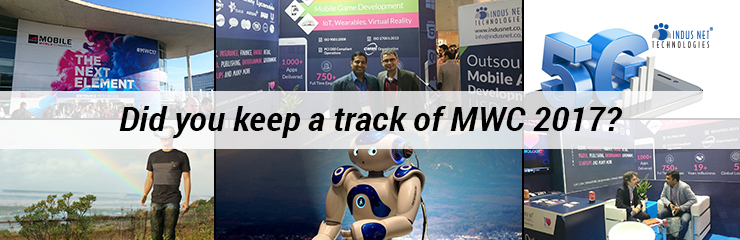
Let us walk you through the MWC 2017

Let us walk you through the MWC 2017 (in less than 4 minutes – it’s worth every second) Mobile World Congress (MWC) has evolved as a major go-to-event for the mobile industry. It is much more than an expo. It is a meeting point of business leaders from mobile industry, tech-geeks, enthusiasts, startups and other eco system players. It has amazing product launches that make waves around the world. It has thought-provoking keynote and panel sessions, and last but not the least – a peek into the future through 4YFN (4-years-from-now) expo and innovative exhibits. In recent years, we have seen an exponential increase in business executives from totally unrelated business domains, which is a clear indication on the impact of digital on every business, and mobile’s leading role in the same. As a premium mobile technology company, MWC finds a permanent place in our annual calendar. This year we saw four major trends that are worth thinking through:  VR/AR is for real and has application Artificial Intelligence (AI) is here to stay  Innovation Multiplier through SDKs 5G is round the corner And, not to forget the media stunt pulled by Nokia, by bringing back a new colorful avatar of Nokia 3310, which was its iconic phone in early 2000. It was great fun, generated a lot of interest on social media, got Nokia a brand boost – but that was the end of its impact, to be honest. VR/AR is for real, and has application. Virtual Reality (VR) and Augmented Reality (AR) seems to be coming of age.We now see widespread adoption,piped up due to the major sale of VR headsets last Christmas. Every gadget manufacturer – Samsung Electronics, Qualcomm, Nokia, etc. have their own headset to cash in the demand of this new gadget. We strongly believe that VR and AR will continue to gain traction with more applications and commercially feasible use cases emerging at every corner. Bharat Berlia, CIO of Indus Net Technologies states – “Certain industries like training and education, real estate and complex engineering have gained massively from using VR and AR. VR can provide a real world interface, and AR can set the context.” He further cites the example of a major engineering company which uses VR to conduct training on airline engine maintenance across their workshops around the world, without getting into logistics nightmare. VR and AR are also finding major application in advertising and communication. Did you know a 360-degree immersive video advertisement of Hong Kong Airlines was 35x more effective than the same advertisement in 2D format? The increasing importance of immersive VR videos was one of the most-discussed topics at MWC. Brands and advertisers will soon be rushing to create VR content driven by emotional storytelling, to engage better with their target audience.Indus Net  Technologies also develops VR and AR content and applications, including mobile games; for its global clientele. Artificial Intelligence (AI) is here to stay Artificial Intelligence (AI) finally seems to be stepping out of the academia and making its impact felt in the hyper-competitive commercial world of digital. And, it has moved at a faster speed than we imagined even few years back. We have near perfect voice-to-text conversion, which might eventually change the way we interact with computer or computer driven systems. Our image recognition is improving beyond believe, and it is visible in form of the autonomous car madness, that we see and hear everyday. Robocar, a self-driving electric racing car using Artificial Intelligence (AI), manufactured by Roborace, drew a lot of attention when it was launched at MWC this year. LINE also announced that it is developing an AI digital assistant, called Clova. Olay also unveiled an AI-powered selfie skincare app, which will help women with skin problems. Yes, it goes without saying that AI has taken the global tech community by storm. According to Global Market Insights, the global AI market is likely to grow nearly 81% compound annual growth rate (CAGR) from 2016 to 2024. Interestingly, Abhishek Rungta, CEO, who juggles multiple responsibilities has been using bots, powered by AI to streamline his daily plans. He is enamoured by Eva bot, which helps him in sending gifts to his business clients. Abhishek also uses Amy Ingram, a bot, to schedule his meetings. “This saves time and helps me to organize my day better.”- admits Abhishek. Innovation Multiplier through SDKs We also met several startups and businesses who are doing innovative stuff, and are letting you build those innovations within your business app through their SDKs and APIs, which are licensed on pay-per-use or pay-per-build. The range of innovation is mind boggling, starting from: Consumer behavior tracking App analytics VR/AR capabilities Bot engines AI engines / Image recognition and processing App testing App performance improvement. The list is endless. This area will become extremely busy in years to come and innovation from the smallest companies will find it way to the largest corporation through such an ecosystem. 5G is round the corner Though still in discovery mode, and mostly in labs, 5G is being talked about a lot. 5G is expected to change the way mobile works and how it is used. The impact is far beyond speeds,higher throughput or greater energy efficiency. The applications that will evolve with connected societies will be far more critical – be it sending senses across the network, app as a service, friction-less shopping experience, or driverless vehicles, or banking for the unbanked. Technology leaders from across the value chain have been hard at work to develop 5G concepts and prototype use-cases, many of which will serve as the backbone of modern 5G networks. It was a great experience to watch some of the research demos and learn about the use cases. And, last but not the least, we saw and experienced those phones which we will see in commonplace in next few months and years. There were lots of interesting product launches, but we were so overwhelmed by the above areas, that we did not

Read More »
MENU
CONTACT US

Let’s connect!

Loading form…

CONTACT US

Let’s connect!

    Privacy Policy.

    Almost there!

    Download the report

      Privacy Policy.