Tag: big data

Blockchain's Impact on Data Interoperability in the Healthcare Industry

Blockchain’s Impact on Data Interoperability in the Healthcare Industry

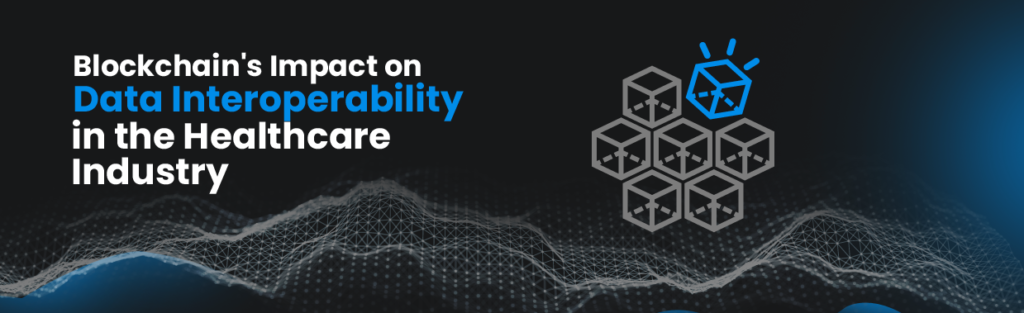
Data interoperability is a buzzword that has gained traction throughout the healthcare industry. This usually comes with multiple levels, including semantics, foundational, and structural. At the same time, data standardisation and privacy are key concerns, since the system should enable interoperability of data with full consent, trust, and permission support.  Blockchain can thus add a whole new dimension to healthcare data management while solving several interoperability challenges simultaneously. It ensures a proper framework for anonymised information while making sure that the data cannot be modified, forged, or tampered with. Blockchain can thus add a whole new dimension to healthcare data management while solving several interoperability challenges simultaneously. It ensures a proper framework for anonymised information while making sure that the data cannot be modified, forged, or tampered with. Authenticity and data security are major worries that are solved with this technology and the owner of data through smart contracts can make it more accessible across treatment sites and providers in a selective way. Here are some of the vital aspects related to the impact of Blockchain on healthcare data interoperability.  Blockchain for clinical trials: Along with data interoperability, Blockchain has enabled better clinical trial management. Here are some core points worth noting in this regard:  Hence, Blockchain technologies can boost the quality and volumes of patients who are recruited for clinical trials. Distributed ledger technologies will help patients store medical information through anonymous mechanisms and it can be visible to recruiters who may reach out if the data is eligible for the trial. Blockchain for patient consent: Patient consent is another vital facet of healthcare data management and this is also enhanced by Blockchain. Here are some factors worth noting in this regard:  These are some of the ways in which Blockchain technologies contribute immensely towards enabling patient consent and putting data management in their hands.  Blockchain for drug supply chain management: Blockchain technology also helps immensely in terms of drug supply chain management. Here are some aspects that can be highlighted in this regard:  Hence, Blockchain technology is a game-changer in terms of ensuring seamless data interoperability in the healthcare industry and also ensuring better consent management, clinical trials, and drug supply chain management. The possibilities are endless in terms of reshaping and refining these systems to ensure the best possible outcomes for the sector.  FAQs 1.How does blockchain improve the accuracy and integrity of healthcare data during interoperability? Blockchain greatly improves the integrity and accuracy of healthcare information during interoperability. This is possible with the immutable nature of data that is securely stored on its networks. Blockchain enables one version of the truth that cannot be tampered with.  2.What are the potential cost savings and efficiency gains from implementing blockchain for data interoperability in healthcare? There are several benefits of using Blockchain for healthcare data interoperability. The first one is the higher efficiency involved in secure storage of immutable records with full authenticity and the second one is the lower cost involved in the process. Along with data security and authenticity, financial losses due to data breaches and losses are also prevented.  3.Are there any real-world examples or success stories of blockchain’s impact on data interoperability in the healthcare industry? There are numerous real-world success stories and examples of how Blockchain has positively affected data interoperability in the healthcare sector. For example, several healthcare stakeholders are already using this technology to ensure authentic data for clinical trials. At the same time, smart contracts are being used for securely storing patient data.  4.What are the main challenges in achieving data interoperability in healthcare, and how can blockchain help overcome them? Some challenges exist in terms of data interoperability in the healthcare sector and Blockchain solves them with ease. These include the absence of data standardisation, security, privacy, consent, and technological expertise. Blockchain ensures a secure and standardised way of storing verifiable records with full consent and privacy. 
Read More »
Sentiment Analysis

How Sentiment Analysis Can Drive Insurance Industry

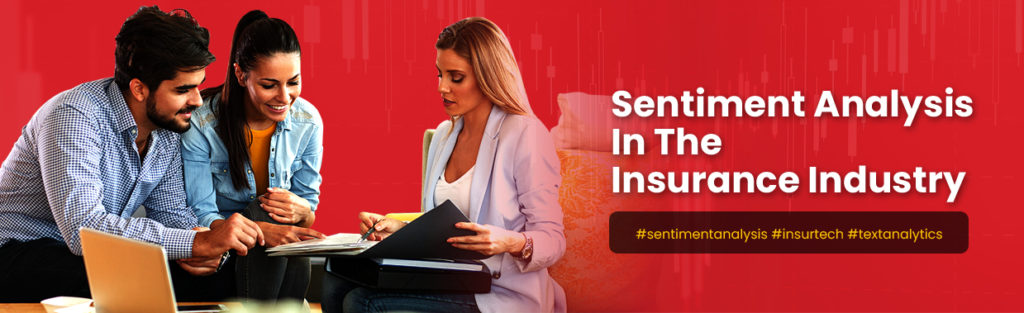
Sentiment analysis in insurance is emerging as a potent tool for companies in multifarious ways. Insurance companies have tons of unstructured information that they have at hand.  Following a suitable sentiment analytics process may help insurers enhance retention of policyholders and also in the identification of opportunities pertaining to up-selling and cross-selling. Sentiment analytics have already turned into a vital aspect of strategies pertaining to customer feedback for companies of diverse sizes. Sentiment analytics in insurance fuse Machine Learning (ML) and Natural Language Processing (NLP) along with deep-text analytics for illuminating intrinsic nuances of texts.  Sentiments can be translated more easily and analyzed seamlessly than expressions. The sentiment analytics process is also known as opinion mining.  Customer data is unstructured and comes in several forms including claim data, voice messages, surveys, emails, social media posts. The entire system is tailored not only to analyze feedback and its nature, but also to put it against the right context. Benefits of Sentiment Analytics Insurers can reap multiple benefits from suitable sentiment analysis procedures. Here’s looking at some of them: 1. Detecting Fraud Reports indicate how insurers lose millions annually on account of fraud. These are estimated at anywhere around 5-10% of total compensation payouts by insurers in a year at least.  These are claims that flew under the radar. However, predictive analytics and other tools can help detect the same. A sentimental analysis dataset will help insurance companies track and assess insurance settlement and claim patterns.  It will help in quicker decision-making on the basis of crucial parameters or key performance indicators. This will help in arresting fraudulent claims and enhance the insurer’s earnings.  Text analytics also enables better decision-making through dashboards and access to other necessary data. 2. Customer Understanding  Social media sentiment analysis will help in the classification and identification of customer interactions on the basis of parameters like the services/products being provided, the marketing platforms or channels that are used, the operations in place and so on.  What sentiment analysis does is help insurers understand the voices of their customers.  It fosters superior customer understanding above everything else. Social media datasets will help in the identification of specific aspects concerning any product, process, or service.  Whenever this analysis is implemented for social media comments, it helps in clearly delineating trends in the industry and perceptions of companies along with enabling timely alerts on any reputation related issues as well. 3. Managing Claims The analysis of complaints and claims is another natural segment for using such datasets. Complaints may be automatically identified and classified on the basis of the service, product and other parameters.  This enables passing them onto suitable agents/departments in order to ensure swift action on the same. Relating those to real world Sentiment analysis in insurance reduces costs, combats fraudulent claims, helps insurance companies understand patterns, trends and customer preferences, and also lowers overall workload and the time taken to respond to customer issues.  Simultaneously, social media sentiment analysis helps in enhancing satisfaction levels of both employees and clients, while enhancing client retention, brand-building, recommendations.  It also goes a long way towards lowering indirect expenditure. Sentiment analytics can help insurance companies keep leveraging unstructured information for identification of revenue-enhancing opportunities and industry/customer trends.  Although analytics is not perfect as of yet, it is continually evolving towards the same. In this case, the sustained focus on a specific domain (insurance) can help in enhancing the overall accuracy levels as well. Indus Net Technologies offers an array of solutions tailored towards the needs of insurance companies and the industry at large, right from cutting-edge analytics and other technological tools to back-end automation, risk profiling, customizable analytics, and modernization of legacy applications.  Having worked on diverse task requirements for insurers over the years, INT has the ability to tailor industry and company-specific solutions that harness the power of data, free up company resources, and ultimately boost company revenues and growth alike. About the author: Dipak Singh is a thought leader and data cruncher, currently, he heads the Analytics Wings at INT. To know more do check out his LinkedIn profile here.

Read More »

The Big Debate : Are Big Data, Predictive Analytics & Social Media at odds with Basic Marketing?

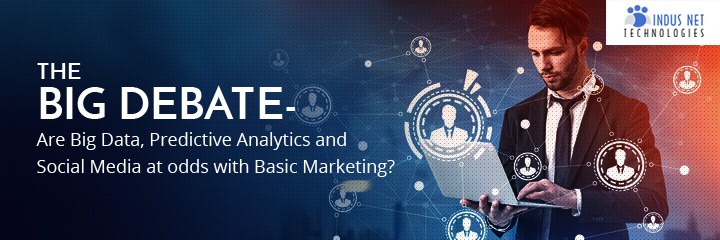
The way people have come to use various smart devices, and the rate in which smart devices are getting even smarter thanks to cloud computing, AI and IoT, Big Data is getting bigger than it used to be. As each device continues to contribute to the data pool, valuable consumer behavior patterns lie hidden in this unending sea of data. To be frank, Big Data is quite unmanageable, and difficult to use, without the right tools and techniques. Big Data has given companies access to market patterns that were previously undiscovered and inaccessible, thanks to Predictive Analysis tools. Social media usage too continues to add to this ocean of data, which can prove to be a double edged sword. One has the option of using Big Data to understand and predict market outcomes, or one can choose to ignore it and continue engaging in outdated marketing techniques. Marketing techniques are not static; they’ve always been dynamic As any marketer worth his salt knows, promoting, selling, and distributing products and services follow a certain pattern. Yet, marketing has always adopted technology as science has evolved, though the basic premise has always been to promote, sell, and distribute. In the olden days, marketing involved the town crier screaming out new products for a certain price. When printing technology became more accessible, businesses started to hand out leaflets and put up posters and banners in easily accessible places. With time, computers began to be used, and analytics and measuring slowly entered mainstream marketing processes, which helped to understand market trends. Just a few decades ago, companies were busy analyzing trends using Microsoft Excel sheets, and sometimes using basic statistical tools to translate basic demographic data into something that would help in creating marketing and sales campaigns. There were naysayers back then too, claiming there wasn’t much to understand or use, with the results that analytical tools fetched. With the advent of social media marketing, there were naysayers again, who claimed social media is a fad, and that it was pointless to include social media marketing in traditional marketing processes. Today, even the most conservative marketing department is scrambling to communicate with its audiences on social media, and use that data to come up with better ad, marketing, and sales campaigns. In short, you can clearly see how marketing structure hasn’t changed at all, even after hundreds of years. It has always been about understanding and communicating with an audience with the purpose of promoting, selling, and distributing products and services. This basic marketing premise has never been static though. It has always been dynamic, and has employed innovative techniques, strategies and technologies to address a market creatively, and understand it better. How Client X sold travel insurance certificates in an unfamiliar market The problem : One of our clients, let us call them X, wand to enter an unfamiliar market to promote and sell their travel insurance product. As the client did not possess any prior experience or knowledge about the market, it was difficult for them to develop a culturally-appropriate marketing campaign to promote, sell, and distribute travel insurance certificates. The solution and the process: Our development team helped the client to understand various cultural factors, buying behaviors, market and industry trends, and social conversations with respect to insurance purchase, in the specified market. Social conversations were meta-analyzed to match with existing Big Data, using predictive analysis tools, to translate disparate data into understandable statistics, which were interpreted finally. Statistical insights provided by predictive analysis tools helped the client to get an all-round picture about the market. This customer intelligence, drawn from various data sources, including social conversations and Big Data, helped the client to hotlist prospective customers who could be contacted. High quality prospects and leads were profiled based on their psychographic and demographic variables, and marketing campaigns were tested before going live. Again, predictive analysis helped to predict the outcome of tentative marketing campaigns that were tested. Prospects that seemed to drop-out eventually were shortlisted too, and the campaign focused on bringing travel insurance certificates to only those who were most likely to purchase it. What Predictive Analysis found: The said market had a tendency to travel in a certain pattern centered on specific holidays, specific weather patterns, and specific political events that took place. For example, the target audience traveled more often during periods when there were political arguments, probably to escape the negative atmosphere. Similarly, Predictive Analysis helped to predict when extreme weather condition like intense heat waves, and heavy rains occurred, periods during which the target market saw an increased number of flight tickets being booked. Results: Predictive Analysis helped to automate marketing campaigns during many such situations, when people would be more likely to travel, and in turn purchase travel insurance certificates. A concerted effort to bring social media conversations, Big Data and predictive Analysis tools helped the client to enter an unfamiliar market, and consolidate its basic marketing strategy.      Social media is already part of basic marketing Most CMOs are hesitant to even discuss Predictive Analysis and big Data, because these terms still seem like buzzwords to them. There is also a misconception that traditional marketing techniques are at odds with newer tools and techniques such as Big Data and Predictive Analysis. Yet, the truth is in plain sight: we already know that social media has helped us to reach out to our audiences and study markets, better than we ever did before. We also know that consumer behavior has changed in the last few years, with even the poorest of people using mobile devices to access information and to shop. We also use social media alongside traditional marketing practices in such a way that they now complement each other. No C-level executive would now argue that social media is at odds with basic marketing strategies. Social media is now an integral part of any marketing practice Yet, there is a resistance toward Predictive Analysis and the way Big Data is being used in marketing.

Read More »

ClickCLickClick Tells You How You Are Being Watched By Websites

If you were worried about how much websites really know about you, you should probably begin to use ClickClickClick. This website annotates all your moves and helps you to remind that you are being watched and observed by various websites. ClickClickClick is a website that is designed to invoke introspection about big data and privacy. #bigdata #security

Read More »
MENU
CONTACT US

Let’s connect!

Loading form…

Almost there!

Download the report

    Privacy Policy.