Tag: artificial intelligence

Are Millennials hooked onto Robo-Advisors?

  Risk and youth go hand in hand. If you are thinking we are talking about thrill-seeking and adventurous youngsters, then here’s the clarification. We are talking about youth and their ability to take the risk in investment. Yes, you read that right. It’s this risk taking and digitally active generation, which is gradually re-shaping the FinTech sector.  As indicated by Wealthfront, millennials will control $7 trillion in liquid assets by 2019. That is surely quite an achievement. The financial institutions are adopting technological innovations such as machine learning, big data and artificial intelligence (AI) to engage and retain digitally-savvy young investors. The robo-advisors, the latest FinTech innovations, are finding followers in millennials. Studies and research suggest that young investors are willing to rely on robo-advisors more than human financial advisors. The use of robo-advisors, thanks to the advancement in AI in FinTech is set to explore more in the coming days. These algorithm-based advisors cater to the needs of digitally motivated customers, thus helping companies and also investors make cheaper, faster and better decisions. Did you know Wealthfront, one of the leading robo-advisors, has resulted in the growth of AUM from $100 million to over $3.7 billion by September 2016, placing it in the top 100 independent registered investment advisors in the United States? The advent of robo-advisors has definitely given a much-needed boost to the existing business models in the FinTech world especially when it comes to portfolio management, asset management, wealth management and financial planning. So, let’s take a quick look at how robo-advisors can help the millennials and also the retirees. Robo-advisors and millennials Let’s admit it. Young guns have changed the way we bank and invest. They don’t prefer to visit the bank physically. Face-to-face business meetings, endless waiting at banks, and filling out numerous yet similar forms are passé. Millennials want everything fast and want to control all their finances and investments at their fingertips via smart devices or computers. This is where robo-advisors are scoring over financial advisors. Millennials prefer handling banking and investing services online. Working with robo-advisors is less time-consuming and require less of paperwork too. These automated investment services offer an easy interface, which is comfortable to use. Millennials like that. Robo-advisors are a great choice for young investors who require portfolio management for a specific savings goal. In that case, the young investor need not worry about other aspects of wealth management such as retirement planning. Also, according to the financial climatic condition, the algorithms reshape the portfolio of the investors. Credit: Sachs Insights According to Meir Statman, professor of behavioural finance at Santa Clara University, automation is important to attract youngsters to invest and adopt good savings habits early on. An individual financial advisor or advisory firm charge 1 % or higher. Here’s the catch. Robo-advisors are economical. For small investors, finding a good financial advisor might come at a cost. And taking help of agents for important financial service and investment decisions are not always a worthy advice. In such initial cases, robo-advisors can come handy and build a portfolio at a lesser cost than a human advisor, who comes at a higher cost. According to Wealthfront, financial advisors charge 1.31% average fee. However, a robo-advisor charges an annual fee of 0.25% and 0.50%. Betterment, one of the pioneer robo-advisers, charges 0.15%-0.35%. According to a report by Business Insider, a robo-adviser SigFig charges $10 every month. Robo-advisers are good for people who are interested in Exchange-Traded Fund (ETFs) and they are a low-cost solution. Robo-advisors make the process of investing faster and easier. Both Betterment and Wealthfront charge management fee of 0.15% per year for ETFs. Millennials are a very profitable section of the market, comprising 25% of the US population and 21% of consumer discretionary purchases. Knowing how to reach them is vital for survival in today’s market, especially if you’re a company or product that is tied to the technology field. Also, let’s not forget how millennials love their freedom, be it in life or money matters. This is where robo-advisors score again. These automated investment platforms encourage the investors to manage the portfolio on their own (read DIY) by asking them about risk tolerance and investment model they want to choose. Accordingly, the computer algorithms will decide a portfolio for you. According to an article in CNBC, Wealthfront also looks after millennials and their early focus was on young “techies” in the Silicon Valley. Take a quick glance at some of the reasons why millennial find robo-advisors interesting: Robo-advisors are economical You can invest a small amount of money No need for face-to-face business meetings and filling out of numerous forms In case of market fluctuation, robo-advisers automatically rebalance portfolios Robo-advisors make the process of investing faster and easier These automated investment platforms have a user-friendly interface, which makes it comfortable for internet savvy millennials  Robo-advisors and baby boomers Can a retiree who has considerable assets to invest and wealth to preserve rely on a computer for investment planning? Well, even a few years ago, most of the answers to this question would have been an absolute ‘no’. But technology has changed a lot in our lives. And it has also changed our mindset. Today, retirees or baby boomers or the silent generation are no longer hesitant towards adopting technological innovations. Agreed, though most retirees prefer having a human advisor who will manage investment portfolio and provide tailor-made financial advice as and when the market moves, with each passing day, baby boomers are also trying out these computer algorithms for their financial planning. Take this: According to an article published in January 2017 in Business Insider, nearly half of Schwab’s Intelligent Portfolio consumers are above the age of 50. Also, approximately two-thirds of Vanguard’s Personal Advisor Service customers are approaching the age of retirement age or have already retired. We are all aware that baby boomers, pre, and post retirees have more wealth than the young investors. This means people above the age

Read More »

Your handy guide to turn your house into a smart home

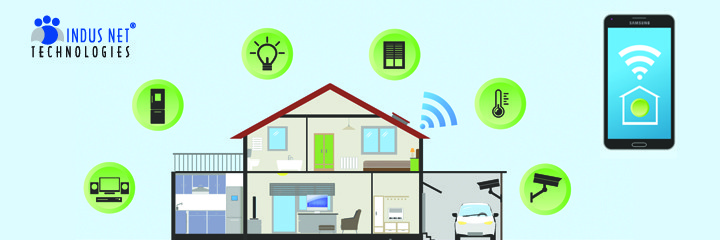
The alarm goes off and your perfect cup of hazelnut coffee is ready. Rich and nutty, just the way you like it. And the best part: you can make the coffee without having to leave your bed. Even a few years ago, this would seem to be a scene straight out of a fairytale or a sci-fi movie. But not today. You can make a pot of coffee from anywhere using your smart device. That’s the power of technology and that’s how home automation is changing our lives. Who doesn’t love a comfortable, easier, secure and convenient lifestyle? Smart home and Internet of Things (IoT) are completely redefining our way of life. From voice-activated smart speaker Amazon Echo, who will be at your beck and call, smart lighting which would automatically turn on the moment doorbell is heard, shades of the room which can be adjusted from the mobile app to remotely monitoring the snoopy activities around the house, you can do everything by a single click on your smart device today. Smart homes give you the ultimate power to control, monitor and manage your home sweet home and also your office through some digitally connected products, anytime anywhere in the world. Home automation is a ragingly growing market with the US having the highest smart home penetration rate, followed by Japan and Germany. According to the global smart home market, the market size would reach a value of more than 40 billion US dollars by 2020. Now, that’s encouraging for the tech giants and venture capitalists who are pouring money for the growth and advancements of these technological innovations. The real estate scenario has also undergone a sea change, courtesy smart home technology. Realtors and builders are increasingly adapting to these new innovations and also making the buyers aware of smart homes and how these “intelligent homes” can communicate with them too. Interestingly, millennials form the largest consumer segment in the US. They are a bunch of technological savvy citizens and have a completely different approach when it comes to investing in properties. The real estate giants are taking their preference into the count to make the homes modern. According to August 2016 report released by Coldwell Banker LLC, home-buyers are increasingly looking for their homes to be automated, or at least which have the potential to be automated. In India, the concept of smart cities has been finding more common ground. So, it wouldn’t be long that India too will start adapting this budding technology. Startups in India are jumping onto the bandwagon on home automation and technology students are also trying to make breakthrough innovations in this domain. According to a report published by RedSeer Consulting in 2015, home automation market in India is expeditiously growing and is expected to reach Rs 8800 crores by 2017. That’s good news. Santanu Mukherjee, head of digital marketing, Indus Net Technologies, admits that India too is welcoming home automation with open arms with several players already ruling the market. However, he also agrees that it will take some time before home automation finally finds its stronghold in India. According to Mukherjee, the primary reason is the lack of awareness in this sector. “Till now, maximum buyers in India consider the property with smart home IoT devices as too luxurious investment. The high product cost of home automation is also barring consumers from exploring this space. As of now, smart homes are a super luxury component in India,” he says.      Let’s take a quick look at the 5 ways how you can turn your home into a smart home. Let’s get connected Just imagine you have a large home and you want to switch off your AC from your smart device in the room upstairs. Alas! your WiFi can’t reach there. You can convert any home into a smart home, provided you have a strong WiFi connection and by strong, we mean “so powerful and fast” that all the smart home IoT devices in the house are connected. In simple words: your home should be WiFi friendly and should have a connection even in the remotest corner of the house. Now, the first rule before you think of smartening up your home, you should get a stable internet connection. And there are a number of wireless routers and Wi-Fi system using mesh technology in the market, which promise strong network coverage. Here are five WiFi systems you might use when implementing smart home technology: Samsung Connect Home Smart Wi-Fi System Google Wi-Fi system  Eero  Luma Home WiFi System  Linksys Velop Samsung Connect Home Smart Wi-Fi System. IC: Engadget Safety matters Did anyone break in when I was not at home? Who’s that person sneaking around my house at midnight? Keeping the house secured is one of the most important thoughts that continuously hover in our minds. When it comes to smart home technology, security is the first thing that most real estate or customers prefer. And mind it no one wants to compromise when it comes to the security of your most-prized possession, your house.   IoT has made it easier to set up a smart home through its smart security systems. Today you can control the security and comfort of your home from smart device. These smart devices can be installed at your home or office and you can monitor every step sitting at the remotest corner. So, from security cameras (indoor and outdoor), window sensors, door locks, motion detector, smoke detectors, water sensors to garage door openers, smart home security system connects to your abode to Wi-Fi network. You can keep a watch on all the activities 24X7 using your smartphone and apps. Alerts in the form of emails and text messages are sent to you on the go. “Security is a big issue, especially for working couples who depend on external help to manage their kids. However, reliability on external help is questionable. To address this issue, smart home can be a great help. You can

Read More »

Is Machine Learning Overrated or Overhyped?

Not a day passes without us hearing or reading something about machine learning or artificial intelligence. It is almost certainly a buzzword, vigorously lapped by journalists, analysts and even CEOs. Of course, a C-level executive of a company has to drop in these buzzwords in front of investors and others in order to seem relevant. However, it does not take us long to realize that there is a staggering increase in the number of times we hear the words ‘machine learning’ or ‘artificial intelligence’. We need to acknowledge the fact that machine learning has been around since the World War 2, and that it continued to evolve over time. It was only limited because of the limitations of hardware. The algorithms, the concepts and the idea were all there of course. Scott Aaronson, a theoretical computer scientist at MIT opines that the way machine learning is being discussed today is very similar to how people discussed computers in the 1950s. People discussed computers and humanoids in the same breath but they did not foresee the Internet coming. Yet, military officials and others did have inkling about Internet and how it might change the world. Similarly, machine learning is certainly big, and it does deserve the hype it is receiving. Yet, it is overhyped because machine learning isn’t new. It is just computer algorithms that have been branded as something futuristic, while it has been there all along. In this article, let us take a look at why machine learning is overhyped and yet, it probably deserves that extra attention. It’s been around The history of machine learning dates back to 1959 when Arthur Samuel defined it as something that gives computers the ability to learn without being programmed explicitly. From then, it was closely associated with artificial intelligence, which is more theoretical in nature and is concerned with giving computer systems the ability to perform tasks for which human intelligence is required. Machine learning later came to be defined as something that is practical, more than theoretical. This happened during the 1980s and 1990s when computers were developed to operate autonomously. However, machine learning is more realistic and objective in nature, and is concerned with what can actually be achieved in realistic terms as of today. Artificial intelligence on the other hand focuses more on research and changing times. With Internet of Things becoming more common today, machine learning is not as farfetched as it once seemed. However, the way the phrase is being dropped at conventions, seminars and networking events, especially by those in the software or computer science industry makes some people a little skeptical. This is because, machine learning isn’t new, and all computers are machines and they do learn to work autonomously. That is exactly what programming is all about. It’s got future It doesn’t need to be repeated that programming, artificial intelligence, Internet and everything that we know related to computer science and information will continue to grow. When someone repeatedly discusses machine learning as if it were something new and special, it gives a sense of trying too hard to prove something. While machine learning is an established scientific field, the over usage of the term has led some to believe it is a new science that is going to change things quite dramatically. On the contrary, machine learning has always been around in the last few decades, and its application will be quite widespread. The reason for machine learning’s wider growth and application will probably because of IoT growing in nature and stature. As more objects will become ‘smart’, more machines can be ‘taught’ to interact with humans and computers in a more advanced manner. This is probably a more realistic approach to understanding machine learning than discuss it as if it were a fad. Machine learning isn’t a fad but it is an established field of computer science. Be wary of over usage Machine learning, like all other tech buzzwords, seems very appealing. Once you begin to read the many articles that are churned glorifying it, you might end up using the word too, all too often. It is neither impressive nor necessary to use buzz words in order to sound informed. In fact, using the word all too often may actually harm those who are really working at machine learning. Machine learning in reality is quite a tedious and difficult science that involves lot of programming and coding. It is not half as glamorous as a journalist might make it seem to be. Yet, it is an extremely important part of computer science and it is certainly changing the world as we know it. It is important to remember that all fields of science change the world as we know it. Even something as basic as neuroscience is responsible for a better understanding about how humans work and think, leading to improved treatments. Yet, nobody discusses neuroscience as they would discuss machine learning, though it is advancing at probably the same rate. Certainly, one might want to be wary of hype over machine learning. However, the field itself is very promising and will continue to evolve, just as another field of science. Avoid the hype, embrace the facts There is a lot of hype around different technologies today. It s important to remember that no particular technology is superior to another and that every field has its role to play in the development of society. Similarly, machine learning has been around for decades and it is only now that it is receiving a lot of attention. This neither means that it doesn’t deserve the attention that it is getting nor does it mean that the hype is right. The hype can be translated to mean that machine learning is very relevant today than it was yesterday. And most certainly, it is going to remain as important as it seems today. On that note, it probably deserves the hype that it is receiving.

Read More »

Microsoft Ties Up with OpenAI

If you thought AI is going to be all dark and scary, Elon Musk’s OpenAI has been working towards making it more human-friendly. Now, Microsoft has announced that its AI research division and OpenAI will work together, and exchange knowledge. OpenAI focuses on long term positive impacts on AI on society, so this is going to be good. #ai

Read More »

YouTube Announces VR App

Google unveiled its new Daydream View VR headset recently and to coincide with that, YouTube announced its VR app. This VR app will be available on Daydream first and will likely make 360 degree videos more realistic than ever. #vr #ai

Read More »

How Far Could Wearable Tech Go?

There was a time when we thought exoskeletons would be the last of what we would hear, when it came to wearable technology. Now, there are underclothes to detect how you feel, and even a skin that you can wear. How far can we possibly go, and is it really the right thing we are doing? Wearable technology is a great way to solve many problems. Most importantly, it has the ability to enable the disabled, and monitor and treat the unwell. It also has the ability to help you stay healthy. With all these benefits, there is also a dark side to it. How far can we take technology and is it really wise to put up so much of information about ourselves, and our bodies up there in the cloud? The answer to this question, like for many others are, is it depends. We need to consider the strides made in wearable technology, partly due to artificial intelligence. A day may come when our bodies will no longer be just flesh and bones. It would consist of flesh, bones and chips. Chips and circuits that are flexible and bendable may become part of the first skin that can be worn. Another application is, apparently, to turning your skin into a touch screen. The more we read into wearable tech, the more mind-boggling and surreal it gets. Yet, it is not stopping anywhere and is only likely to grow. So no matter how we feel about this new reality, it is a reality that we must come to terms with. It is not easy to predict how far wearable technology will go, but there are a few things that we can consider, to keep ourselves safe. Choose only products you trust There are a lot of products out there, that make use of wearable technology. It is not possible to verify the credibility of each of these products. While security issues lurk, there is also the issue of allergies. Many people seem to develop allergies to materials from which wearable tech products are made. It is important to choose companies that take this matter very seriously. Apple Watch is one such example, which of course, is not allergic when you wear. A good idea is to choose products from companies that are well-known and reliable. Ask yourself if it is necessary Most of the times, we purchase products that we do not need. Like the aforementioned underclothes that read your emotions, there are many products which may not be very urgent to many people. Consider what your needs are and invest in wearable tech products that actually bring a positive change in your life. You need to understand that most wearable tech may not be needed for you at a given time. Speak with your healthcare providers if a product is necessary. Purchase only those. Otherwise, you might simply wear gadgets that collect information about your body, and may not really be useful to you in anyway. Practice safe storage There are times when people share their wearable gadgets with others. This isn’t a very good practice. Secondly, it is important to set the privacy controls for your gadget (if that is possible). Third, you need to know that all technology comes with a security risk, wearable tech including. For this reason alone, there needs to be extra caution while using these devices. You do not want everyone to know what your health issues are. Accept the changes in the world A lot of changes are taking place in the world. One of them includes wearable tech. We have come a long way from thinking future wearable tech would look only like exoskeletons. While exoskeletons continue to help the disabled, there are many other ways of using wearable technology. Some can be inserted into tissues, while others can be worn on the body, like clothes. These changes are inevitable and it will probably determine how we will live in the future. We need to accept the inevitable. After all, it is only when we become adaptable do we survive. If it requires us to use wearable tech, we just have to. Look forward to an exciting new future We need not look at wearable tech as something scary from George Orwell’s novel 1984. To most of us, wearable tech seems to be an exciting way to embrace all the goodness that technology has to offer. It only creates possibilities. While one can retain the option of not wearing them, if it helps in certain health conditions, there is no reason why you shouldn’t. Moreover, it might soon become your doctor’s prescription to wear technology. That day isn’t too far. As long as we embrace new technologies, we will be in an easier position to adapt to future situations. Summing up Certainly, wearable technology is one of the hotly-discussed topics of today. There does not seem to be any sign of the movement growing slower. With an ever increasing need for alternative treatments, and to push forward towards a more healthy body, wearable technology could be the next big thing. Combined with artificial intelligence, wearable tech is already revolutionizing the world. We can take a few steps to accept this new reality, whether we like it or not. First of all, we need to ask ourselves if we want to wear whatever wearable tech we are planning to wear. The second question we need to ask is, if we really want it. Next, we need to learn to protect data security. There are many ways to do this, when it comes to wearable tech. Next, we need to accept that the tectonic shift toward wearable tech has already taken place. The only thing we are yet to do is embrace it wholeheartedly. By embracing it, we will open ourselves to new opportunities, and that is certainly a good way to build our future. Have you considered using wearable tech? What are your opinions on this matter?

Read More »
MENU
CONTACT US

Let’s connect!

Loading form…

CONTACT US

Let’s connect!

    Privacy Policy.

    Almost there!

    Download the report

      Privacy Policy.