Tag: analytics

INT. Pulse

 Close shave – Thank your asteroids.

Dear Colleague, we woke up today with a bit of a ‘dinosaur feeling’. 🦖 How Come? The Jurassic emotion was a direct result of finding out that a house-sized asteroid is making a very close pass of our planet today.  Fyi, when faced with the wrath of such a rogue rock, the dinosaurs were not so lucky, and that’s evident because these days you are filling up their remains in your car’s fuel tank.  🦖 + ☄️ = ⛽ What’s On The Rocks? As you read this, Asteroid 2018 BG5, a space rock from the Apollo group of near-Earth asteroids, will fly by earth (July 27,2023) at a speed of 30,094 kays an hour, per NASA’s Center for Near-Earth Object Studies (CNEOS).  The asteroid will come as close as 4.1 million kilometers to us – a distance which may seem large, but it is relatively small in astronomical terms, considering the vastness of space and the size of the asteroid. Should You Withdraw All Your Savings? No. No. NASA’s best have assured that there is no risk of impact with Earth today or in the foreseeable future. ⚠️ However, even a small asteroid can cause significant damage if it enters the Earth’s atmosphere, as shown by the Chelyabinsk meteor event in 2013, when a 59 feet asteroid exploded over Russia, injuring over 1000 people and damaging nearly 8000 buildings. STATS: Sorry, The Doctor Isn’t Available Life sciences leaders, heads up. Are your sales reps getting the cold shoulder/elbow nudge from doctors more often these days? Turns out, they are not trying to hoodwink your system while catching up on Oppenheimer during office hours. Yeah? How Is That? A new CMI Media Group survey of physicians across countries is providing fresh evidence that face to face meetings with doctors is becoming a rare commodity since COVID-19. When asked, 25% of the doctors reported reducing face-to-face interactions. With another 10% of doctors permanently closing their doors for reps, the survey suggests pharmaceutical companies will find it increasingly tough to put their drugs in front of ~35% of physicians via the traditional in-person route. Aha. What Could Work Then? To start, how doctors utilise their time roughly maps onto the value they place on each touchpoint. Print and online journals are on top, with 79% finding them very or extremely useful. Pharma reps on the other hand, are pretty much down on the attention radar. Only 33% doctors find reps very or extremely useful, placing them below resources like medical websites and unbranded disease education from biopharma. Bonus Data Points 🍎 99% doctors engage with print/online journals or medical websites at least once a month. 🍎 75% also engage with search engines and email, online drug references, direct mailers, medical apps, professional online communities, brand emails, medical videos on YouTube, and medical podcasts. The doctors’ world is clearly leaning towards an omnichannel approach. If you need to explore such a strategy, chat up with Anindya, our resident Life Sciences man. Psst, he curates the most amazing conversations over ☕️. Ai & ANALYTICS: The Chatbot Will See You Now Unlike physicians who are reducing their face time with med reps, did you know chatbots have no pressing personal issues (yet) and are doing mankind some sterling service?  I Do  This blurb refers to securing consent from humans for stuff like clinical trials and other life sciences related studies, where, hold our battery pack, chatbots are doing very well.  Seriously? Yo! Results from a study of the use of a chatbot in the consent process show that it encourages inclusivity, and leads to faster completion of the process with high levels of understanding.  On the flip side, the traditional method of securing consent lacks a mechanism to verify understanding objectively, just like all the web forms we give consent to without understanding zilch of the fine print.  Comparatively, the chat-based method can test comprehension, disqualifying users who do not show understanding to give consent; rather, it puts them in touch with a genetic counsellor to figure out why knowledge transmission did not occur.  Pretty dang smart for a piece of software, talking of which, we have a whole bunch of AI-powered chat bots held in a big steel vault behind Dipak’s office desk. Get in touch with him to deploy one for your business.  BFSI: A Single Source of Truth We’ve been swamped with news, stories, videos, and you-name-it, all revolving around artificial intelligence, once prompting OpenAI’s CEO to say, people are ‘begging to be disappointed’ about GPT4, meaning let’s water down the hype, please.  But amid all the speculation and noise, what are the most achievable, real world uses of AI?  The BFSI Space Is A Great Start, We Say The BFSI sector is flourishing with AI tech integrating with many functions, from the digital KYC verification process to evaluating credit scores.  However, to quench the thirst of the customer base accustomed to the convenience of digital tools, the industry needs to deploy more AI tech, the first among them could be;  Customised Experience: Because of the very nature of the trade, BFSI players have always had a finger on consumer pulse. Time to take that to the er, bank. Their spending patterns and investment portfolios can assist BFSI businesses to build relevant, personalised messages, enabling them to better present their products and services across various platforms, improving acquisition and loyalty.  This is where AI and data analytics shine, delivering value by creating a single source of truth from an ocean of data from within and outside the business.  Fraud Detection: While the original BFSI fraud detection model is focused on detecting fraudulent transactions – an area where generative AI has added a powerful weapon to the fraud detection arms depot – a gap remains.  You guessed right, detecting fraudulent human behaviour. Fraud does not happen in vacuum or underwater. People commit fraud.  AI can also be deployed to comb through the field of behavioural indicators. It’s time to task AI with sifting through the subtleties of human communications — written
Read More »
Improving Supply Chain Management Using analytics, ML, AI

Improving Supply Chain Management Using analytics, ML, AI

Supply chain management is fast being transformed with technologies like supply chain analytics, AI, and machine learning in supply chain. A study by McKinsey has found how implementing artificial intelligence in supply chain management has enable major improvements. Those adopting such technologies have already seen logistics costs going down by 15%, along with a reduction of 35% in their inventory levels, in tandem with service levels going up by 65%. Hence, the future potential of AI, ML, and analytics driven supply chain management is massive, to say the least. How AI and analytics helps with better supply chain management Here are some ways in which analytics enhances supply chain management greatly. These include the following: This covers the implementation of ERP and CRM systems along with SRM software and business intelligence solutions. Performance can be analysed at a broader level while analytics also helps predict and minimize future risks and any negative effects on the channels for distribution. ML is also used for identifying key factors in supply chain and other logistic data with constraint-based modelling and algorithms. This helps employees take better decision on stocking, while offering insights to enhance inventory management. AI does make a difference in tandem with ML and analytics, helping companies save costs and enhance revenues through identifying better procurement and shipping rates, pinpointing supply chain profit procedure changes, and managing transportation contracts. A centralized database will offer visibility into every aspect of the entire supply chain for enabling better decision-making. These technologies are also enabling the identification of vital partners and suppliers, enabling companies to standardize options at lower costs while predicting all performance indicators based on compliance factors. Most big enterprises will switch to smart robots for warehouse operations in the next few years, as per industry expectations. There will also be a need for more specialized and integrated SCM-oriented AI and other tools. Analytics will drive decision-making throughout every stage of the supply chain management process, while non-implementation of the same will only lead to companies missing the bus in terms of revenue growth, cost reductions, better tracking, and higher efficiency across the board. FAQs AI is enabling easier tracking and real-time insights for companies, along with enabling better inventory management, demand forecasts, stocking, sourcing, and several other benefits. Some of the main considerations include features like real-time visibility into every aspect of the supply chain management process, integration with existing systems, easy accessibility, user-friendly interface, powerful analytics and forecasting features, and more. Some of the key challenges include poor data quality or an unorganized data gathering process, along with issues relating to technological integration and employee understanding. Companies can easily leverage data analytics for identifying future risks and combating them accordingly. They can do this by predicting/forecasting future demand, user needs, patterns, and market fluctuations.

Read More »

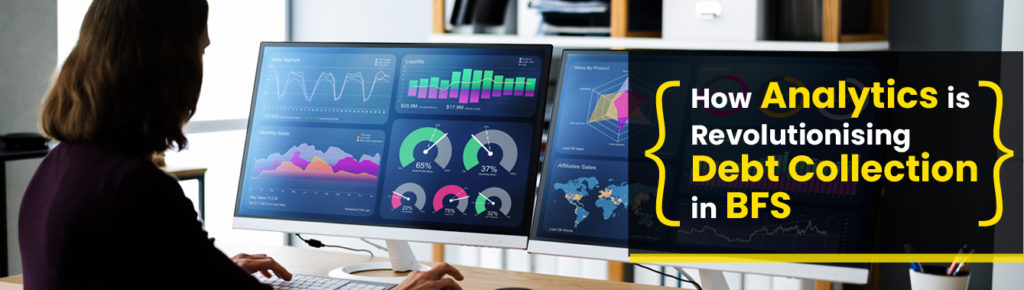
The Power of Data: How Analytics is Revolutionising Debt Collection in BFS

Data, as always, is proving to be the real game-changer for BFS (banking and financial sector) companies. Analytics is driving higher efficiencies and benefits for BFS players, including debt collection. What is the role of analytics in BFSI debt collection? Here’s finding out. With regard to better engagement with consumers for debt collection, BFS players have always depended on conventional models including phone calls and emails/letters. The aim here is application in bulk, which has often led to several experiences that are not as pleasant for both parties (borrowers and lenders). Customers now expect increasing personalisation with diverse requirements and preferences. By tapping machine learning, AI, and predictive analytics, companies are now acting on data-based insights while resolving several problems across sectors, including debt collections. It has led to simpler, faster, and easier systems and procedures for consumers and banks alike, with advanced data science abilities providing teams cutting-edge tools that they require for higher transparency and standardising operational processes.  How is data analytics transforming debt collections for BFS entities? Here are some of the ways in which analytics is gradually revolutionising debt collections for banks and financial service providers. A. Building custom outreach strategies- Debt collection is not only about physically reaching out to borrowers. The blueprint has to be wider today, in sync with fast-changing banking ecosystems. Personalising the outreach to borrowers across types and personas, with stage-based plans across channels (deriving from anticipated consumer responses at each stage) is highly necessary for BFS entities today. Data and analytics is now spurring decision-making throughout the entire value chain of collections, along with saving time, energy, and costs for companies simultaneously.  B. Debt resolution strategies- Analytics has enabled better debt resolution blueprints on the basis of insights. These include the following aspects: Risk Classification of Borrowers- ML-based algorithms can accurately forecast the chances of delinquency of borrowers, deploying innumerable parameters as inputs. Due to resource limitations, calling every defaulter is next to impossible, not to mention the need to engage debtors, to avoid future non-payment risks and delinquencies. Hence, analytics is what enables hyper-personalisation in this case, enabling agents to communicate the right message in specific scenarios to particular groups of customers.  Channel Forecasts- On the basis of insights on earlier communication and behaviour of customers, BFS companies can predict the suitable template, channel, frequency, language, and time to contact borrowers. Several borrowers also prefer digital communication and their preferences may be better identified by algorithms. Optimising Blueprints- Tracking real-time borrower behaviour throughout multiple channels enables the creation of a personalised blueprint and mechanism for debt collection. Predicting Intent-to-Pay– It encompasses forecasting the willingness of borrowers to repay the money, based on outreach measures and historical measures for working out the priorities for the coming day in terms of tele-calling or other outreach initiatives.  Internal transaction information, when fused with other factors and behavioural triggers can predict delinquencies, while enabling BFS companies to accurately build pro-active strategies for customer outreach. For instance, lenders may swiftly gain a perspective of customers’ aggrieved/negative reactions or reducing account balance and their inter-relationships. Better Borrower Understanding- Using analytics for debt collections will enable an examination of transactional, demographic, and behavioural information.  This will help BFS players gain a better understanding of consumers, while identifying specific patterns and getting insights that help them develop strategic blueprints for collections.  Monitoring borrower responses to several types of messages is also helpful in determining ideal frequencies for interaction and suitable timelines. Risk-driven segmentation may also be useful for better targeting. Insight-Driven Debt Collection Decisions- Debt collection decisions can be taken in a better way, driven by analytics-based insights. Segmentation, predictive systems, deep behavioural analysis, and other blueprints are all possible for BFS companies. Insights are helpful for warning banking entities early regarding delinquencies and defaults in the future. It will help banks work out when people are likely to default and come up with custom strategies for mitigating these situations. These insights also help build suitable responses for interactions with borrowers. Issues with continual follow-up communication will be resolved with data-based intelligence. Banking entities will have suitable knowledge for catering to customers with suitable details at the right times.  Building Personalised Relationships- Customer relationships and experiences are crucial aspects for all BFS entities. Data-driven insights and analytics may help greatly in both these departments. Lenders can have language/region-based responses for customers. As can be seen, data analytics can completely transform debt collections for banks and financial services players. Data errors, incorrect entry, issues with detecting frauds have been identified and resolved with smart and new-age AI-based tools. At the same time, debt collection can be enhanced greatly through better insights and real-time visibility into the process. From reaching out to customers at the right time and with personalised offerings, to improving engagement and scaling up predictive/forecasting abilities, it enables BFS players to resolve long-standing problems and convert debt collection into a seamless and standardised process. FAQs 1. What is debt collection in BFS? Debt collection refers to the mechanism for collecting and recovering unpaid/due debt from borrowers.  2. What kind of data is collected and analysed for debt collection? The types of data collected and analysed for debt collection include historical customer data on engagement and interactions, behavioural data, preferences, demographic data, socio-economic and macro-economic data, past financial transaction history of customers, and more.  3. What are the benefits of using data analytics in debt collection? There are several benefits of using data analytics for debt collection, including customising communication and outreach with borrowers, predicting/forecasting future chances of defaults and non-payment, working out better debt collection strategies, and standardising the process.  4. Can data analytics help in predicting future defaulters? Data analytics can be immensely helpful in the prediction of future customer defaults, through generating insights on past purchasing behaviour, financial history, transaction history, and many other parameters. This helps banking and financial services companies forecast the likelihood of defaults and take pro-active steps accordingly.

Read More »
Data analytics plays a crucial role in clinical trial design and analysis by providing valuable insights into the effectiveness of new treatments and therapies.

The role of data analytics in clinical trial design and analysis

What is the role of data analysis in clinical trials? Can there be better clinical trial data analysis using R and other technologies? Is there a case for using big data analysis in clinical trials? Experts would certainly say Yes to all these questions. Clinical trials themselves have gone through sweeping changes over the last decade, with several new developments in immunotherapy, stem cell research, genomics, and cancer therapy among numerous segments. At the same time, there has been a transformation in the implementation of clinical trials and the process of identifying and developing necessary drugs.  To cite a few examples of the growing need for clinical trial data analysis, researchers gain quicker insights through the evaluation of databases of real-world patient information and the generation of synthetic control arms, while identifying drug targets alongside. They can also evaluate drug performance post-regulatory approvals in this case. This has lowered the cost and time linked to trials while lowering the overall burden on patients and enabling faster go-to-market timelines for drugs too.  What is driving data analysis in clinical trials?  Clinical trial data analysis is being majorly driven by AI (artificial intelligence) along with ML (machine learning), enabling the capabilities of collection, analysis, and production of insights from massive amounts of real-time data at scale, which is way faster than manual methods. The analysis and processing of medical imaging data for clinical trials, along with tapping data from other sources is enabling innovation of the entire process while being suitable for supporting the discovery procedure in terms of quickening the trials, go-to-market approaches, and launches.  The data volumes have greatly increased over the last few years, with more wearable usage, genomic and genetic understanding of individuals, proteomic and metabolomic profiles, and detailed clinical histories of patients derived from electronic health records. Reports indicate 30% of the data volumes of the world are generated by the global healthcare industry. The CAGR (compound annual growth rate) forhealthcare data will touch 36% by the year 2025 as well. The volume of patient data in clinical systems has already grown by a whopping 500% to 2020 from 2016.  Data analysis in clinical trials- What else should you note?  Here are a few factors that are worth noting:  Synthetic control arm development  The role of data analysis in clinical trials is even more evident when one considers the development of synthetic control arms. Clinical drug discovery and trials may be fast-tracked while enhancing success rates and designs of clinical trials. Synthetic control arms may help in overcoming challenges linked to patient stratification and also lower the time required for medical treatment development. It may also enable better recruitment of patients through resolving concerns about getting placebos and enabling better management of diverse and large-sized trials.  Synthetic control arms tap into both historical clinical trials and real-world data for modelling patient control groups and doing away with the requirement for the administration of placebo treatments for patients which may hinder their health. It may negatively impact patient outcomes and enrolment in trials. The approach may work better for rare ailments where populations of patients are tinier and the lifespan is also shorter owing to the disease’s virulent nature. Using such technologies for clinical trials and bringing them closer to end-patients may significantly lower the overall inconveniences of travelling to research spots/sites and also the issue related to consistent tests.  ML and AI for better discovery of drugs ML and AI may enable a quicker analysis of data sets gathered earlier and at a swifter rate for clinicians, ensuring higher reliability and efficiency in turn. The integration of synthetic control arms in mainstream research will offer new possibilities in terms of transforming the development of drugs.  With an increase in the count of data sources including health apps, personal wearables and other devices, electronic medical records, and other patient data, these may well become the safest and quickest mechanisms for tapping real-world data for better research into ailments with sizeable patient populations. Researchers may achieve greater patient populations which are homogenous and get vital insights alongside. Here are some other points worth noting:  The outcomes of clinical trials are major metrics with regard to performance, at least as far as companies and investors are concerned. They are also the beginning of collaborations between patients, groups, and the healthcare sector at large. Hence, there is a clearly defined need for big data analysis in clinical trials as evident through the above-mentioned aspects.  FAQs How can data analytics be used in clinical trial design and analysis? Data analytics can be readily used for clinical trial design and analysis, expanding patient selection criteria, swiftly sifting through various parameters and helping researchers better target matching patients who match the criteria for exclusion and inclusion. Data analysis methods also enable better conclusions from data while also improving clinical trial design due to better visibility of the possible/predicted risk-reward outcomes.  What are the benefits of using data analytics in clinical trial design and analysis? The advantages of using data analytics in clinical trial design and analysis include the integration of data across diverse sources, inclusive of third parties. Researchers get more flexibility in terms of research, finding it easier to analyze clinical information. Predictive analytics and other tools are enabling swifter disease detection and superior monitoring.  What are the challenges of using data analytics in clinical trial design and analysis? There are several challenges in using data analytics for the analysis and design of clinical trials. These include the unavailability of skilled and experienced resources to implement big data analytics technologies, data integration issues, the uncertainty of the management process, storage and quick retrieval aspects, confidentiality and privacy aspects and the absence of suitable data governance processes.  What are the best practices for implementing data analytics in clinical trial design and analysis? There are numerous best practices for the implementation of data analytics for the analysis and design of clinical trials. These include good clinical data management practices, clinical practices, data governance procedures,

Read More »

The Big Debate : Are Big Data, Predictive Analytics & Social Media at odds with Basic Marketing?

The way people have come to use various smart devices, and the rate in which smart devices are getting even smarter thanks to cloud computing, AI and IoT, Big Data is getting bigger than it used to be. As each device continues to contribute to the data pool, valuable consumer behavior patterns lie hidden in this unending sea of data. To be frank, Big Data is quite unmanageable, and difficult to use, without the right tools and techniques. Big Data has given companies access to market patterns that were previously undiscovered and inaccessible, thanks to Predictive Analysis tools. Social media usage too continues to add to this ocean of data, which can prove to be a double edged sword. One has the option of using Big Data to understand and predict market outcomes, or one can choose to ignore it and continue engaging in outdated marketing techniques. Marketing techniques are not static; they’ve always been dynamic As any marketer worth his salt knows, promoting, selling, and distributing products and services follow a certain pattern. Yet, marketing has always adopted technology as science has evolved, though the basic premise has always been to promote, sell, and distribute. In the olden days, marketing involved the town crier screaming out new products for a certain price. When printing technology became more accessible, businesses started to hand out leaflets and put up posters and banners in easily accessible places. With time, computers began to be used, and analytics and measuring slowly entered mainstream marketing processes, which helped to understand market trends. Just a few decades ago, companies were busy analyzing trends using Microsoft Excel sheets, and sometimes using basic statistical tools to translate basic demographic data into something that would help in creating marketing and sales campaigns. There were naysayers back then too, claiming there wasn’t much to understand or use, with the results that analytical tools fetched. With the advent of social media marketing, there were naysayers again, who claimed social media is a fad, and that it was pointless to include social media marketing in traditional marketing processes. Today, even the most conservative marketing department is scrambling to communicate with its audiences on social media, and use that data to come up with better ad, marketing, and sales campaigns. In short, you can clearly see how marketing structure hasn’t changed at all, even after hundreds of years. It has always been about understanding and communicating with an audience with the purpose of promoting, selling, and distributing products and services. This basic marketing premise has never been static though. It has always been dynamic, and has employed innovative techniques, strategies and technologies to address a market creatively, and understand it better. How Client X sold travel insurance certificates in an unfamiliar market The problem : One of our clients, let us call them X, wand to enter an unfamiliar market to promote and sell their travel insurance product. As the client did not possess any prior experience or knowledge about the market, it was difficult for them to develop a culturally-appropriate marketing campaign to promote, sell, and distribute travel insurance certificates. The solution and the process: Our development team helped the client to understand various cultural factors, buying behaviors, market and industry trends, and social conversations with respect to insurance purchase, in the specified market. Social conversations were meta-analyzed to match with existing Big Data, using predictive analysis tools, to translate disparate data into understandable statistics, which were interpreted finally. Statistical insights provided by predictive analysis tools helped the client to get an all-round picture about the market. This customer intelligence, drawn from various data sources, including social conversations and Big Data, helped the client to hotlist prospective customers who could be contacted. High quality prospects and leads were profiled based on their psychographic and demographic variables, and marketing campaigns were tested before going live. Again, predictive analysis helped to predict the outcome of tentative marketing campaigns that were tested. Prospects that seemed to drop-out eventually were shortlisted too, and the campaign focused on bringing travel insurance certificates to only those who were most likely to purchase it. What Predictive Analysis found: The said market had a tendency to travel in a certain pattern centered on specific holidays, specific weather patterns, and specific political events that took place. For example, the target audience traveled more often during periods when there were political arguments, probably to escape the negative atmosphere. Similarly, Predictive Analysis helped to predict when extreme weather condition like intense heat waves, and heavy rains occurred, periods during which the target market saw an increased number of flight tickets being booked. Results: Predictive Analysis helped to automate marketing campaigns during many such situations, when people would be more likely to travel, and in turn purchase travel insurance certificates. A concerted effort to bring social media conversations, Big Data and predictive Analysis tools helped the client to enter an unfamiliar market, and consolidate its basic marketing strategy.      Social media is already part of basic marketing Most CMOs are hesitant to even discuss Predictive Analysis and big Data, because these terms still seem like buzzwords to them. There is also a misconception that traditional marketing techniques are at odds with newer tools and techniques such as Big Data and Predictive Analysis. Yet, the truth is in plain sight: we already know that social media has helped us to reach out to our audiences and study markets, better than we ever did before. We also know that consumer behavior has changed in the last few years, with even the poorest of people using mobile devices to access information and to shop. We also use social media alongside traditional marketing practices in such a way that they now complement each other. No C-level executive would now argue that social media is at odds with basic marketing strategies. Social media is now an integral part of any marketing practice Yet, there is a resistance toward Predictive Analysis and the way Big Data is being used in marketing.

Read More »

Facebook Reveals that Its Ad Metrics Again Went Awry

Facebook’s ad metrics are in trouble again. The social giant made it public that it has uncovered several more miscalculated metrics with respect to consumer behavior in response to published content. To address this issue, Facebook will begin to allow third-party measurement companies like Nielsen to track its metrics. #analytics

Read More »

Today’s Top Tech News From Indus Net Technologies

New Tracking Sensors for Enriching Mobile VR uSens tracking sensors will enhance user interaction with virtual objects. The new sensors are inclined closely towards mobile VR.  Their advanced ability to messed up algorithm after Facebook laid-off its human editorial staff.  #social 3. Follow Wisely With Tailor-Made Instagram Stories Don’t worry if you find your Instagram friends boring. Instagram will now Behavioral Targeting will allow marketers to target users based on their activity within the app. Advertisers always felt a lack of targeting and measurement on Snapchat; better late than never. #social  5. Google Makes Tag Management Easier This new collaborative feature is aimed to resolve workflow challenges faced by team workers while

Read More »

11 Analytic Software Programs Your Business Needs Now

Imagine a business trying to differentiate its website through specific keywords or step up its appeal to specific demographic characteristics.  The whole exercise of website improvement and reform is futile if it is not backed by analytics. It is like chasing a wild goose that leads you nowhere. There are a number of analytical software and tools available today that support you to accomplish your goals. The following article is a compilation of some of the most useful analytical software. Google Analytics Google Analytics is the most commonly used analytical tool. It is comprehensive and good for websites of all sizes.  It can be used to track events like button clicks and video plays. It allows you to generate multi-channel funnel reports. With Google Analytics, you can set up goals and track them. Specific actions of visitors can be tracked like what prompted conversion.  It further allows you to set user permissions and customize dashboards.  Keyword optimization is another significant feature of Google Analytics. However, setting up event tracking feature is bit complicated. Though there are number of support videos to understand Google Analytics, an amateur may still find it overwhelming. [php snippet=1] Adobe Analytics Adobe Analytics is one of the best analytical solutions.  It works across multiple platforms (web and mobile).  Adobe Dynamic Tag Management helps you to update and manage tags through online console.  Its APIs smoothly amalgamate with different online experiences. This solution is quite flexible. Data can be easily extracted from the tool and seamlessly merged with other data sources.  It also provides conversion variable level control quite similar to Google Custom Dimensions. There are some limitations though, unlike Google, this tool integrates well only with Adobe products. Too much flexibility often works against it because lack of user experience leads to wrong configuration. KISSmetrics This powerful and robust tool allows you to fulfill all your analytics needs. Unlike Google Analytics, its user-friendly interface makes it easier for analysts to understand individual user purchase behavior across the web.  It can track and store all user interactions with your business.  Funnel analysis in KISSmetrics allows you to build ad hoc queries and get specific information through reports. KISSmetrics lacks in automated events so it necessitates creation of many events that need to be tracked. Though event creation can be done through their interface, many events require additional Javascript interference. Mixpanel Mixpanel software is known for its ability to send push app notifications. It is quite dear to mobile application developers because of its ability to track user activity across application, track bugs and user needs. It frequently rolls out new features to make analysis even easier. Setting up complex queries is a lot easier and faster than Google Analytics. It provides easy-to-use API to export data and run database queries.  Mixpanel is an excellent tool overall though tracking differences between two funnels can be a bit complicated. Webtrends Webtrends has a strong support team and is renowned for its customer service. PPC management is quite easy with its ability to integrate with Marin Software. It is a rugged platform to understand correlation for various metrics and KPIs.  It is equipped with advanced functionality with a strong focus on usability. Webtrends Stream helps you to follow real-time traffic activities and campaign performance. What’s more, its powerful graphical interface helps to save a lot of time.  Despite all that, too many options make Webtrends not a very easy-to-use tool. Piwik This easy to configure and easy to install analytical tool offers intuitive user-interface and is able to delve into environments unsuitable for Google Analytics.  It has the ability to closely analyze traffic by tracking IP address. Piwik can add multiple users and vary their permissions. It works effectively with cloud services like Amazon Web Services.  Another big advantage offered by Piwik is that data is stored on your own servers. As compared to Google Analytics, it lacks some features and also lacks integration with Google Adwords. GoSquared GoSquared guides you in the simplest manner during set up.  Its real-time tracking ability is far more superior to Google Analytics. Individual campaigns can be easily monitored enabling you to react quickly. Its Person tracking feature allows you to ascertain acquisition source of user and track their journey across multiple sessions and multiple platforms.  The company has a strong feedback system that keeps it in line with the clients’ demands. StatCounter StatCounter is a fantastic analytical tool for day-to-day monitoring of websites. It has a number of tit-bit features absent in Google Analytics.  Its Paid Traffic report is quite useful to filter fake clicks. It provides more keyword information as compared to other tools. Apart from keyword analysis, it provides information on entry/ exit pages, search engine statistics, referral information, engagement and other details about your visitor. Visitor Paths feature allows you to track user navigation pattern on your web pages. StatCounter lacks a real-time dashboard like Google Analytics. However, a free tool like this is worth your time. Clicky Clicky allows you to dig deep into user data and provide valuable insights. It is an effective tool to create campaigns and measure website effectiveness. You can monitor Twitter mentions right from your dashboard. Clicky is intuitive and has an uncluttered user-interface. It allows you to track visitor actions, bounce rate, top content, top search terms and traffic sources. Open Web Analytics The user interface of Open Web Analytics is quite similar to Google Analytics.  Some of its common features include real-time tracking and conversion tracking. It excels in funnel analytics, and other special features like mouse-tracking and heatmaps. Being a completely free tool, Open Web Analytics has a lot to offer and can be implemented across multiple sites and accounts. AWStats AWStats is a useful tool that records accurate data usage and keeps a track of bandwidth utilization. It gives you real-time information with narrow breakdown of time and website activity.  AWStats can further track operating systems and browser types of users. However, this tool falters when it comes to

Read More »
MENU
CONTACT US

Let’s connect!

Loading form…

Almost there!

Download the report

    Privacy Policy.