Category: General

5 Causes of Miscommunication in Your Workforce

5 Causes of Miscommunication in Your Workforce and How to Avoid It

Miscommunication in the workforce is one of the biggest bugbears at contemporary workplaces. While the emphasis at modern workplaces is on better collaboration and clear communication, there is often a communication breakdown due to diverse reasons. Avoiding the same is a prerequisite towards building a healthier and more motivated workforce that communicates better. Here’s looking at some of the biggest reasons behind workplace miscommunication and how you can fix them. Miscommunication in the workplace occurs when unclear expectations, poor listening, or ineffective communication channels cause misunderstandings between employees. Understanding the causes of miscommunication is essential, as the causes of miscommunication in the workplace can lead to decreased productivity and strained professional relationships. Miscommunication in the workplace often leads to delays and errors, showing how serious miscommunication in workplace settings can be. How to Avoid Miscommunication in the Workplace Avoiding miscommunication among the workforce necessitates better awareness of the reasons behind the same. Here are the top reasons that you should be aware of, along with their fixes.  Even after identifying these causes and their solutions, miscommunication may still crop up at the workplace. You should take more time and keep gathering feedback to eliminate the same completely. The Importance of Clear and Concise Communication Concise and clear communication is the gateway towards better collaborations amongst employees. It also helps avoid miscommunication at various levels. Here are a few pointers that should be kept in mind:  As can be seen, concise and crisp communication is the need of the hour along with full transparency. Let us now take a closer look at the concept of active listening and its positive implications for contemporary workplaces. The Power of Active Listening Active listening is a great way to weed out miscommunication at the workplace. Here are some aspects that are worth noting in this regard. These are some tips that will help implement an active listening culture at work while eliminating miscommunication among team members. Clear and transparent communication is the best way to achieve company objectives without any delays, hold-ups, or communication breakdowns amongst employees. FAQs Cultural differences often lead to miscommunication within a highly diverse workforce. This arises from different perspectives and cultural backgrounds along with behavioral patterns, body language, mindsets, gestures, manners, and other norms.  Organisations can implement communication strategies to build better communication across departments. These include giving employees a platform to be heard and share ideas. Companies can encourage open communication while enabling higher understanding and empathy. They should also ensure that everyone is on the same page while encouraging more feedback and interactions. Other strategies include clear protocols for tasks and documents along with common objectives and easier collaboration tools for cross-departmental communication.  Technology alleviates communication breakdowns in the workplace by making it easier to share data and inputs, collaborate, ask questions, get feedback, and solve problems as a team anytime and anywhere. It has introduced new communication mediums that enable swifter and more convenient interactions. However, it has often led to communication breakdowns, since it has minimised face-to-face communication and interactions. At the same time, it is often a distraction which makes it difficult to practice active listening at the workplace.  A communication-friendly organisational culture is one where employees are encouraged to communicate freely and openly. It is one where there are collaborative platforms and spaces for teams along with periodic feedback-gathering sessions and discussions with the leadership. It is also one where managers actively listen to employee inputs and value them. 

Read More »
Why performance management is an integral part of an organisation?

Why performance management is an integral part of an organisation?

Performance management is a dedicated system that leverages sets of rewards and goals to encourage employees to dedicate themselves more towards work. Managing employee performance is a great way to optimize work procedures, while also achieving higher productivity and efficiency at the same time. It is not only vital for goal achievement, but also for strategic alignment of organizational goals and employee efficiencies. It also helps in terms of fostering better employee development and engagement in the long run. Here’s delving deeper into the concept and its implications for organizational success, employee engagement, and other crucial aspects. The Importance of Performance Management for Organizational Success Performance management can be a pivotal pillar as far as goal achievement or organizational success is concerned. Here are a few core points that will illustrate its importance in this context. How Performance Management Can Improve Employee Engagement and Productivity Performance management can go a long way towards enhancing employee productivity and engagement levels. Here are a few aspects worth noting in this regard.  Engagement plays a vital role in boosting individual performance. Outdated mechanisms like appraisals and performance reviews may not work for companies anymore. If done in the right way, performance management can foster superior engagement and help in accomplishing organizational goals faster.  It also leads to a better sync between company and employee objectives. There is a marked shift in the approach from more assessment-oriented to feedback-driven.  Advanced systems for managing performance will come into play sooner than later, with technological disruptions on the anvil too. This will help organizations greatly in terms of motivating employees better, engaging them successfully, and ensuring higher productivity. FAQs Some of the core components of a successful performance management system include developing, planning, rating, monitoring, and rewarding. They complement each other and lead to more effective performance management.  2: How does performance management enhance accountability and transparency within an organization? Performance management helps in boosting organizational transparency and accountability. Focusing on continuous tracking and accountability leads to a more transparent and healthier working environment. This leads to more transparency on performance feedback and also boosts employee autonomy and development. This naturally enables higher employee engagement and they can take more ownership of their work accordingly.  3: What are the potential benefits of incorporating technology into performance management processes? There are numerous advantages of integrating technology into performance management procedures. It lowers human bias along with ensuring more affordability and transparency accordingly. Compliance levels also go up while reporting mechanisms are also improved as a result. Technology-based performance systems enhance engagement, target reviews, tracking, assessment, and customized performance scales.  4: How can performance management help in identifying and addressing skill gaps within the workforce? Key performance indicators or KPIs can help evaluate career progress of employees along with overall retention and eligibility for promotions, rewards, and bonuses. They will also help companies identify contribution levels of employees while identifying skill gaps. Employee assessments are also great ways to discover skill gaps along with 360-degree reviews and observations. Performance benchmarks can also be set and monitored.

Read More »
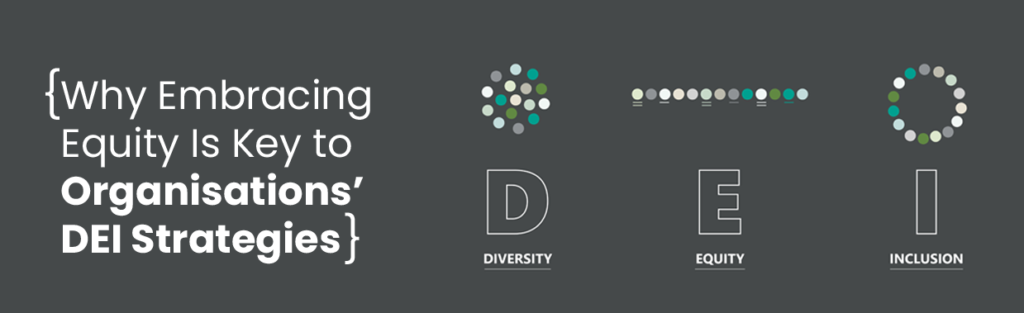
Why Embracing Equity Is Key to Organisations’ DEI Strategies

Why Embracing Equity Is Key to Organisations’ DEI Strategies

DEI (diversity, equity, and inclusion) is one of the biggest organisational goals today, with more companies tasked with adopting an equity-driven approach towards achieving the same. Equity has to be understood carefully in this context. It is not about every individual getting the same things, but rather an understanding of the fact that people are at different levels or starting points. This necessitates equity-centered decision-making where various interventions and tools are deployed for several groups to get people to the same end-stage. It encompasses not only employee engagement, but also career-development programs for women and other groups, internal networks of employees for support and assistance, flexible policies, gender representation objectives, and better parental leave guidelines. Here is a closer look at equity and why it is a key component of DEI strategies at organisations. Why is equity important for DEI? Equity is crucial for DEI (diversity, equity, and inclusion) objectives and decision-making alike. Here are some aspects that should be noted in this regard: How can organisations embrace equity? Organisations can embrace equity in several ways. Some of them include the following:  Challenges to achieving equity in the workplace There are a few challenges towards achieving equity in the workplace. These include the following:  Achieving equity at the workplace is possible with the right leadership, fostering suitable company cultures, and keeping DEI objectives at the forefront. Equitable workplaces are the future and it is high time that organisations embrace the same.  FAQs 1.What are the benefits and advantages of incorporating equity into DEI strategies within organisations? The benefits of incorporating equity into DEI objectives and blueprints are numerous, including higher employee productivity and engagement. Other advantages include higher retention, turnover rates, lower absenteeism, better customer satisfaction, and a healthier work environment.  2. How does addressing systemic bias and promoting equity lead to improved employee engagement and retention? Better employee engagement and retention is always possible through tackling systemic bias and promoting equity at work. Employees are more likely to stay at companies and dedicate themselves to the company’s goals when they get inclusive and welcoming spaces where they are respected. The absence of bias works as a motivator for employees.  3. What role does leadership play in fostering an environment that embraces equity within DEI strategies? Company leadership has a vital role to play in laying out the company culture, creating platforms and spaces for voicing thoughts, laying out inclusive policies, and scaling up diversity and openness in recruitment.  4. What metrics or indicators can organisations use to measure the progress and impact of equity-focused DEI strategies? There are several indicators or metrics that are used by organisations for tracking the effect of equity-based DEI strategies and overall progress. These include performance, attrition, leadership pipeline, inclusion, employment pipeline, pay equity, and promotions. 

Read More »
LIFE SCIENCE & PHARMA NEWS WWRAP

Life Science & Pharma News Wrap | Weekly Snippets

✅ NVIDIA is investing a whopping $50m to unlock the true potential of AI in the pharmaceutical landscape. This investment will empower researchers to explore vast datasets, accelerating drug development for faster relief to those in need. https://www.pharmaceutical-technology.com/news/nvidia-invests-50m-in-ai-enabled-drug-discovery/ ✅ Galmed is harnessing the power of AI to ensure that no patient is left behind. This inclusive approach will help in clinical trials, and reaching or recruiting underserved patients. https://www.outsourcing-pharma.com/Article/2023/07/12/galmed-uses-ai-to-recruit-underserved-patients-into-clinical-trials ✅ Plus91Labs is leveraging some brand new tech stacks to transform the pharma industry and supercharge MR efficiency. This will empower pharma professionals to make data-driven decisions, streamline operations, and deliver top-notch patient care. https://www.cxotoday.com/interviews/plus91labs-harnesses-technology-advancements-to-revolutionize-pharma-solutions-and-optimize-mr-efficiency/ ✅ Lupin is undergoing significant tech adoption and upgrades that will empower innovations which can elevate patient care to greater heights. https://www.businesstoday.in/industry/pharma/story/lupin-undergoing-significant-tech-adoption-upgrade-says-pharma-majors-top-exec-387247-2023-06-27

Read More »
Reviving Retail: The Role of Supply Chain Reorganization in Overcoming Challenges

Reviving Retail: The Role of Supply Chain Reorganisation in Overcoming Challenges

The global retail industry is facing numerous challenges in the current scenario, especially with regard to the supply chain, customer experience and overall sustainability. The complexities of supply chains worldwide are throwing up multiple issues for retailers in terms of management of risks and ensuring higher profitability at the same time. This is where thorough reorganisation is necessary to overcome these hurdles with gusto. Here’s looking at these aspects in this article. The future of retail and the role of supply chain reorganisation There is a steadily evolving retail and consumer landscape today, with more companies fighting to play catch-up with e-tailers who have completely disrupted the market. From on-shelf availability, there will be a switch towards on-demand availability. Greener supply chains will also be a major trend in the future, particularly with the higher focus on sustainability. Here is a look at how reorganisation of the supply chain can help retail brands overcome several common obstacles. How supply chain reorganisation can help retailers overcome challenges As can be seen, an intensive reorganisation of the supply chain is the need of the day, considering the current complexities that retailers are grappling with. The challenges facing the retail industry The retail sector is already facing several core challenges that are affecting their supply chains. Some of them include the following:  FAQs 1.What technologies and tools can support supply chain reorganization in retail? There are several technologies and other tools that can enable a better reorganization of supply chains in retail. These include artificial intelligence (AI), machine learning (ML), data analytics, digital supply chain twins in the Metaverse, robotics, drones, 3D printing, and more. 2. How long does it typically take for a retail organization to complete supply chain reorganization? Supply chain reorganization does not have any fixed timeline that all retail organizations have to follow. It depends on the technological capabilities and adaptability of the company along with its ability to bring together all stakeholders for implementation. It may take a few months to a year or more. 3.What are some successful examples of retailers that have undergone supply chain reorganization? There are many successful examples of retailers and brands that have already undergone supply chain reorganization. Adidas, for example, is already switching close to 20% of production to automated factories by 2023 while Burlington Coat Factory has revamped its supply chain with newer processes in Burlington, New Jersey. It has integrated its approach throughout IT and operations, getting a new WMS and warehouse control software in place. 4.Are there any specific legal or regulatory considerations to keep in mind during the supply chain reorganization process? There are a few regulatory and legal considerations to note during the reorganization process for supply chains. These include economic sanctions, trade policies, export controls, fraud, compliance needs, and so on.

Read More »
Targeting for Success: Customer Segmentation and Retention Strategies for BFS Companies

Targeting for Success: Customer Segmentation and Retention Strategies for BFS Companies

The importance of proper customer retention and customer segmentation is unparalleled in the banking and financial services sector. Retention is crucial since it is always more beneficial to retain more customers who not only add to the BFS company’s revenues and recommend it to others, but are also not as costly to retain in comparison to the acquisition of newer customers. Satisfied and long-term customers are not only more amenable towards price or other fluctuations, but are also more likely to engage in word of mouth recommendations. With proper segmentation, BFS firms can target customers better, depending on their specific needs. Customer retention strategies for BFS companies Here are a few customer retention strategies that BFS firms can use: Customer segmentation and how it is essential for BFS firms Customer segmentation is crucial for banking and financial services firms. Before venturing into data analytics, you should undertake segmentation on the basis of behavioral patterns. This will be influenced by things like preferences for rewards/loyal programs/promotions/deals and also buying patterns, overall frequencies for purchases, and other parameters. This will help you roll out targeted marketing and recommendation campaigns for various segments/groups based on these insights. Customer segmentation involves tailoring your content for ensuring the delivery of more relevant and useful marketing campaigns for specific customer groups in place of choosing generic messaging for everyone. Here are some segmentation strategies that you should follow: Segment-wise communication and engagement strategies, along with tailoring messaging for every segment will help you create better personas of your targeted customers. You can then leverage insights to come up with the best marketing campaigns tailored to customer requirements. FAQs 1. How can BFS companies effectively identify and define their target customer segments? BFS firms can more effectively identify their targeted customer segments and define them better through proper segmentation. They can do this on the basis of data analysis, helping them classify customers on the basis of parameters such as age group, buying habits, patterns, products/services most required, life stage or life cycle in the customer journey, and so on. 2. What are the key benefits of customer segmentation for BFS companies? Customer segmentation helps BFS companies in several ways, enabling them to target specific groups better with tailored marketing campaigns, recommendations, and products and services. BFS firms can know which target groups require specific solutions and offer the same accordingly. 3. What challenges or obstacles do BFS companies face when implementing customer segmentation and retention strategies? BFS companies face a few obstacles in the implementation of customer retention and segmentation strategies. These include the absence of technological expertise, compatibility and integration issues along with the inability to leverage data analytics for enhancing customer experiences and satisfaction alike. 4. How can BFS companies measure the effectiveness and ROI of their customer segmentation and retention initiatives? BFS companies can track the ROI and effectiveness of customer retention and segmentation initiatives by undertaking data analytics relating to parameters such as sales growth across segments, changes in consumer patterns, customer feedback trends, churn rates, and so on.

Read More »
The benefits of adopting telematics in auto insurance

The Benefits Of Adopting Telematics In Auto Insurance

Telematics systems have become mainstream throughout the automotive industry. Many experts feel they have the potential to completely revolutionise and transform the sector. Based on reports by Bloomberg NEF, close to 1.2 billion cars were plying in the year 2022, while this could reach a staggering 1.5 billion vehicles by the year 2039 as per estimates. This naturally calls for a revamped auto insurance mechanism, which takes things like driver behavior into account. This has been an offshoot of the usage-based insurance model in the automotive insurance space. Due to the continual increase in car volumes, the global auto sector is poised to touch a staggering USD$1.4 trillion in revenues by the year 2040. This will be backed by stringent regulations worldwide which make insurance coverage compulsory, along with systems for tracking and penalties, in order to scale up auto insurance penetration throughout owners. In a more traditional context, insurance companies usually emphasised upon things like the vehicle age, location, and motor vehicle reports for working out the premiums and risks.  However, telematics systems are now enabling the evaluation of driving habits with a view towards more effective estimates of risks and pricing. These programs are increasingly driven by technologies like IoT (Internet of Things) and data analytics, thereby becoming disruptors for the segment in recent years. If you look at it objectively, North America is already the biggest market for telematics-driven insurance, with close to a whopping 22 million policies active from top companies. The global market for telematics systems in insurance should touch USD$6.2 billion in 2025, indicating 22.7% in CAGR (compounded annual growth rate) as per Grand View Research reports. What does this tell us? Telematics is here to stay.  What is telematics and how is it relevant in insurance? UBI (usage-based interface) or telematics fuses informatics and telecommunications, which is the foundation for data processing, with an aim towards retrieval and storage.  Insurers put tracking devices into vehicles which receive, store, and send telemetry information/data on the onboard diagnostics of the vehicle, enabling wireless communication. Vehicle-based data is collected, including the location, speed, harsh braking, idle time, and fuel consumption. This is given on a real-time basis to car owners and insurance companies via tracking devices or smartphone apps. What are the biggest advantages of telematics? Some of the top advantages of telematics systems in vehicles include the following:  Insured policyholders can lower their premium costs through the adoption of safe driving practices/habits.  Insurance companies can better analyse risks of possible accidents and predict the possibilities of claims in the future.  Insurance companies can provide rewards and value-added incentives for scaling up customer retention, loyalty, and satisfaction.  Insurance companies have a much fairer and more effective method of risk and premium estimation with telematics.  Telematics offers valid and accurate data regarding the vehicle functions and driver behavior, which ensure actionable insights for processing claims. It also contributes towards reducing any fraudulent claims or losses.  Insurance companies are seeing the evolution of models like distance-based/pay how you drive/pay as you drive/control your drive insurance options.  Dashboard cameras in tandem with telematics can help insurers gain better insights on the reasons behind accidents and get more knowledge of the same.  Telematics in insurance removes several hurdles throughout the supply chain, right from underwriting and claims management to serving customers.  These devices also lead to higher awareness and alertness amongst drivers who wish to improve their driving behavior, patterns, and scores. Hence, it may contribute towards lower accidents on the road.  These technologies may contribute greatly towards lowering crime rates globally.  Telematics can thus be a major boon in the auto insurance space, with huge potential not just for personal vehicle insurance, but also for fleets and logistics players. It offers more transparency in premium and risk evaluation, while lowering the chances of accidents and other mishaps. It will keep evolving gradually throughout the world, until it becomes an accepted form of auto insurance. At the moment, it is steadily being recognised and implemented by insurance companies and should have its boom moment in the near future. FAQs How can telematics be used in auto insurance? Auto insurance companies can use telematics to determine the driving behavior and vehicle operations of policyholders, using actionable data for evaluating risks and premiums. Telematics can also offer higher insights on mishaps and accidents, thereby helping with claims management.  What are the benefits of using telematics in auto insurance? Telematics helps in accurately estimating risks of policyholders and their premiums. Good drivers get incentivised with lower premiums and rewards. At the same time, fraudulent claims and losses are minimised with this system.  What are the challenges of implementing telematics in auto insurance? Some of the challenges include data privacy and other regulations, since location-based information is received, stored, and shared. Other challenges include technological integration and awareness-building.  Are there any examples of successful implementation of telematics in auto insurance? Some examples of telematics-based auto insurance models include control your drive, pay as you drive, pay how you drive, and distance-based insurance.

Read More »
Lavin Mirchandani

Demystifying Web3.0 With Lavin Mirchandani at Digital Success Summit V3.0

Lavin Mirchandani, the founder at Mirc Media, discussed Web3.0 and its future potential with an engaged audience at Digital Success Summit V3.0. He left listeners in no doubt about how Web3.0 use cases are only going to increase in the future and how it is steadily shaping almost every aspect of our daily lives.  Web3.0 – Some Basics Lavin Mirchandani demystified Web3.0 at a very basic level, outlining how Web1.0 was about helping people read, while Web2.0 enabled people to not only read but also write or respond, ushering in the social media age. He talked of how Web3.0 enables not just reading and writing, but also ownership.  From a platform standpoint, according to him, Web1.0 had companies owning their platforms, while Web2.0 saw companies becoming platforms themselves.  However, Web3.0 is more inclined towards increasing user ownership of platforms. Previously companies earned revenues from users, business owners, and creators while Web3.0 will enable ownership and money-making from platforms all by oneself.  Some other pointers worth noting included the following:  Web3.0 ensures a permission-less economy minus multiple authorizations that we usually require for each activity in the Web2.0 world.  Web3.0 worlds have companies not owning data and this is instead stored on a decentralized database or blockchain. You pay differently for the same and there is no single source.  There are domains being sold as NFTs in the Web3.0 ecosphere as well, with everything established on the blockchain and without renewal requirements.  For every app or platform that is owned by a centralized entity in the Web2.0 world, Web3.0 has a decentralized counterpart.  Four Key Traits of Web3.0 Lavin Mirchandani also outlined the four key traits of Web3.0 which also help from an identification standpoint. These include the same:  Decentralization– Web3.0 shifts away from a central owner or deciding entity.  Blockchain Driven– Web3.0 platforms are driven by blockchain that enables smart contracts.  Universal Identity– Every Web2.0 app needs signing up and logging in, along with several details and IDs. Web3.0 will shift to a system of universal identity with something called a wallet. This does not function like a conventional payment wallet although it can also store money.  Pseudonymous– Web3.0 is not anonymous at all and transactions and their locations can be traced without difficulties.  Use Cases, Layers and More Use cases have already covered aspects like security, banking, finance, insurance, data storage, and identity across the blockchain framework. Other use cases include financial services, NFT marketplaces, social networks, and gaming.  There are several layers contributing toward the Web3.0 ecosystem.  There is a protocol or fundamental layer along with an access layer like the browser in Web2.0 or the wallet in Web3.0 and use case layer. There are products that are scaling up these infrastructure or fundamental layers.  There are apps being built on blockchain with self regulating or smart contracts. Valuations of different chains like Solana or Ethereum now depend on more apps being built on them, more user activity, and economic activity as well.  Every chain is building ecosystems equivalent to the Web2.0 framework in the first and fundamental layer.  Lavin Mirchandani also talked about deFI or decentralized finance where investments, savings, insurance, and banking are already being explored as financial services or use cases on most blockchains. He highlighted the pioneering AMM (automated market maker), citing the example of Uniswap, the self-regulated marketplace which functions like an exchange minus any governing body.  He also added that codes are replicable and transparent and this is what is propelling the development of exchanges. Success in this space is measured through TVL (total value locked) and this stands at $68.62 billion that has been locked across platforms globally today according to him.  NFTs are gaining prominence with their smart contracts, enabling people to gain membership, hold assets, and covering things like gaming and royalty rights as well.  DAOs (decentralized autonomous organizations) ensure on-chain governance which is spurred by smart contracts and voting that is community-based. There will also be more employee-driven organizations in future.  Cryptocurrency is another fast-emerging use case in the Web3.0 world and they encompass assets, stable coins (which mostly operate like currencies), security tokens, and utility tokens. He also outlined the need for more responsibility and awareness while using the platform. Greater freedom automatically underlines the need for more alertness in using and securing wallets. More education and awareness on Web3.0 is hence necessary according to him.  He also advised people who are absolutely new to the space to start interacting with others and create groups on Discord, Crypto Twitter, and Telegram among other platforms to gain a better understanding. 

Read More »

INTians, Here’s Your Monthly Digest

What’s New?  We received our first crypto payment from the USA We shifted to a new office building in Chennai and developed the ELCOT e-portal A terrific financial year closure with record results for INT. Exponential Java and .Net hiring for the 2X salary campaign Initiated #CelebratingInnovation campaign What’s Hot? What Happened Last Month? Big News. You are in a Great Place To Work. We are on the headline of ETCIO.com New Buzzes Unfair bias is the biggest issue in data handling. In the insurance sector, the Data Ethics Policy provides a unified framework that helps to use data properly. Read More.. Imagine a world without people and full of computers. So, will there be life? No, because creativity is the soul’s spark. It’s the people who have souls not machines. Read More.. The marriage of Indian healthcare with technology is a productive one, with both parties anticipating a never-ending honeymoon ahead and the opportunities are rising exponentially. Read More.. Banks worldwide are integrating e-money to offer an efficient currency transaction facility to their customers to conduct global money transactions at the speed of thought. Read More.. Holi Celebration Contributors Ashmita, Elvis, Priyobroto, Rajarshi That’s all folks, we will be back next month again.

Read More »
MENU
CONTACT US

Let’s connect!

Loading form…

CONTACT US

Let’s connect!

    Privacy Policy.

    Almost there!

    Download the report

      Privacy Policy.