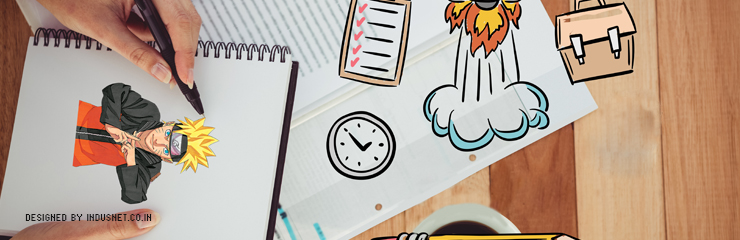
The most popular of Manga series is probably Naruto, the teenager who seeks recognition and a sort of revenge for things he endured as a youngster. Manga is a Japanese comic series, whose history dates back to 12th century. Naruto is one of the contemporary series, and is heavily influenced by American comic culture too. There are many different kinds of Manga, catering to different audiences. There are Manga series devoted to adventure, romance, science fiction, sports and even suspense. In fact, you can even find Manga related to business.
Japanese culture is heavily slanted towards Manga and this is reflected in the readership of Manga series. Manga has had an influence on design, character creation, and copy writing for years now, and this influence is likely to continue as we consume Japanese pop culture in India, the UK and the USA. Manga-influenced comics are available in France, China, South Korea and even Latin America. The form of expression and presentation in Manga is usually distinct, and the wide-eyed characters usually imply innocence.
Before World War II
Hokusai was one of the most prolific Manga artists, who created more than 30,000 works in late 18th and early 19th centuries. In the 17th century, artists began to use wood blocks and in the 18th, more adult-oriented comics began to appear. In the 18th century, Japan opened up to European influence, and this caused a tectonic shift in Japanese culture.
New printing techniques and colors from Europe helped Japanese artists to develop better Manga strips. It was around 19th century that the first Manga strips began to appear in US magazines such as New York World, published by John Pulitzer. As World War 1 began and things began to change rapidly in Japan, Manga artists were severely repressed and censored. Some of them self-censored too, fearing retribution from authorities. Until the end of World War II, censorship of Manga artists continued, and this was reflected in the sudden lull in production of graphic and violent manga.
Post World War II
America occupied Japan for 7 years, after the World War II. Japanese artists began to feel the burden of their own imperial history. The dropping of atom bombs on Hiroshima and Nagasaki and other difficult events and situations led to modern Manga, which looks at traditional Japanese culture with a combination of reverence and satire. Traditional Japanese roles, such as the samurai, ninja, etc are satirized and innocence is given more attention.
Some critics note that this change is probably due to the artists themselves being permanently scarred form the effects of Japanese imperialism and the subsequent damage of the war.
By the mid-1960s, Manga came to look like what we know of it today. Today, Manga serves audiences from all over the world, and with all kinds of interests. This makes Manga one of the most enduring forms of pop culture in the world.
Manga in content marketing
Manga can be a great source of inspiration for designers and graphic artists. Especially in a time when we are publishing explainer videos and infographics, manga can be seen as a viable platform for content marketing. Manga business comics already exist in Japan, and there is no reason why the same kind should not be used here and in Western countries. With a renewed focus on graphics and comic super heroes, corporate messages can be communicated to a target audience using Manga. This would be highly popular among the youth, and also among the older generation, who grew up reading traditional manga comics from the 1960s, which were published soon after the war.
Imagine publishing an explainer video based on a recurring character, who is already familiar with your target audience. Each time you launch a product or an update to a service, Manga strips can be released, complete with a strong storyline and evoking superhero characters. This helps in gaining the attention of those who are often not open to traditional forms of communication.
Moreover, Manga has not been limited to Japan, after the World War II. It has been equally popular in the USA and UK, and this is one of the reasons why we should take it more seriously, when it comes to designing our content. Certainly, Manga would make a great platform to convey our corporate and marketing messages to the right target audience. The future might warrant more focus on such pop culture inspired marketing campaigns in order to remain ahead of competitors.
Looking forward
Manga has existed in Japan since ancient times, and Buddhist monks used to create manga scrolls as early as 6th century. With time, Manga developed into a form of art which expressed violence, revenge, political satire and sensuality. One of the most famous today is Naruto, which continues to be popular across the world.
These Manga strips can be useful to position yourself as a contemporary brand when you communicate the way your audience likes you to.
Moreover, with a stiff competition from many organizations, it is imperative for each one of us to look towards alternative platforms and methods to market our products and services. Manga is a great way to diversify and offer marketing messages through an alternative platform. Speak to one of our design professionals about how we can incorporate Manga into your content marketing campaign.